Loading...
Alexander III of Scotland vs Parakramabahu II
Alexander III of Scotland leads by 3.7 pts · 2 figures compared
…
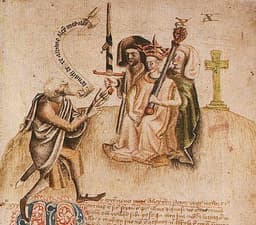
Alexander III of Scotland
Emperor · Medieval
55.4Total
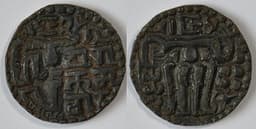
Parakramabahu II
Emperor · Medieval
51.7Total
Basic Information
Born
1241
1236
Died
1286
1270
Era
Medieval
Medieval
Nationality
Scotland
Sri Lanka
Occupation
Emperor
Emperor
Civilization
Western
Indian
Score Comparison
Military (10%)
50.0
40.0
Political (20%)
68.0
68.0
Influence (20%)
54.1
55.7
Legacy (20%)
49.2
48.3
Leadership (15%)
72.0
40.0
Strategy (15%)
35.7
55.0
TOTAL
55.4
51.7
Alexander III of Scotland — Complete Timeline
1251 AD
Marriage to Margaret of EnglandPolitical Action
Alexander III married Margaret, daughter of Henry III of England, at York Minster. The marriage was intended to secure peace between Scotland and England, but it also gave English kings a claim to interfere in Scottish affairs.
MarriageDiplomacyAnglo-Scottish Relations
Impact: national
1263 AD
Battle of LargsWar◆ Major
Alexander III's forces repelled a Norwegian invasion led by King Haakon IV at Largs in Ayrshire. The battle was indecisive but marked the end of Norwegian attempts to control the Hebrides and the Isle of Man.
BattleNorwegian InvasionHebrides
Impact: regionalconstructive
1266 AD
Treaty of PerthPolitical Action
Alexander III signed the Treaty of Perth with Norway, purchasing the Hebrides and the Isle of Man for 4,000 marks plus an annual payment of 100 marks. This extended Scottish sovereignty over the Western Isles.
TreatyTerritorial ExpansionHebrides
Impact: regionalconstructive
1286 AD
Death of Alexander IIIOther
Alexander III died after falling from his horse while riding from Edinburgh to Kinghorn in Fife during a storm. His death left no surviving legitimate children, triggering a succession crisis that led to the Wars of Scottish Independence.
DeathSuccession CrisisWars of Independence
Impact: nationaltragic
Parakramabahu II — Complete Timeline
1236 AD
Establishment of Dambadeniya as CapitalPolitical Action◆ Major
Parakramabahu II established Dambadeniya as the capital of the Sinhalese kingdom. This marked the beginning of the Dambadeniya period, a new era of Sinhalese history.
CapitalFoundationGovernance
Impact: nationalconstructive
1240 AD
Patronage of LiteratureCultural
Parakramabahu II was a noted patron of literature. He himself wrote the 'Kavyasekaraya', a Sinhalese poem, and encouraged the composition of other works, fostering a cultural renaissance.
LiteraturePatronageCulture
Impact: nationalconstructive
Construction of the Temple of the Tooth in DambadeniyaCultural◆ Major
Parakramabahu II built a temple to house the Tooth Relic of the Buddha in Dambadeniya. This ensured the relic's safety and reinforced the capital's religious significance.
BuddhismRelicArchitecture
Impact: nationalconstructive
1255 AD
Expulsion of Kalinga MaghaWar
Parakramabahu II led a successful campaign to expel Kalinga Magha, the invader from the Kalinga region of India, from Sri Lanka. This ended a period of foreign occupation and restored Sinhalese rule.
LiberationMilitary CampaignForeign Invasion
Impact: national
Expert Analysis
Origins
Alexander III was born in 1241, the only son of Alexander II and his second wife, Marie de Coucy. He became king at age seven after his father's death in 1249. His early reign was dominated by regents, including the powerful Comyn family. He was educated in the chivalric traditions of medieval Europe and married Margaret, daughter of Henry III of England, in 1251.
Parakramabahu II, born in the early 13th century, was a prince of the Sinhalese royal line that had been displaced by the invasion of Kalinga Magha in 1215. His father was King Vijayabahu III, who established a base at Dambadeniya. Parakramabahu was raised in the Buddhist monastic tradition, receiving a strong education in Pali and Sinhala literature. He authored the poem 'Kavyasekaraya'.
Rise to Power
Alexander III assumed full royal authority in 1262 at age 21. His early challenge was the Norwegian threat. King Haakon IV of Norway claimed the Hebrides and the Isle of Man. In 1263, Haakon led a large fleet to enforce his claim. Alexander's forces engaged the Norwegians at the Battle of Largs in October 1263. The battle was indecisive, but Haakon's fleet was scattered by storms, and he died in Orkney in December 1263. Alexander then negotiated the Treaty of Perth in 1266, by which Norway ceded the Hebrides and the Isle of Man for a lump sum of 4,000 marks and an annual payment of 100 marks. This treaty secured Scotland's western seaboard and extended its territory.
Parakramabahu II rose to power by continuing his father's resistance against Kalinga Magha. Vijayabahu III had already begun the reconquest of the island. Parakramabahu II succeeded him around 1236. His major achievement was the expulsion of Kalinga Magha from the Polonnaruwa region. He launched a series of campaigns, culminating in a decisive victory that forced Magha to flee to India. This ended the Chola-Kalinga occupation that had lasted over two decades. Parakramabahu then established Dambadeniya as the capital, marking the start of the Dambadeniya period.
Leadership & Governance
Alexander III governed a feudal kingdom with a strong central monarchy. He maintained peace with England through his marriage to Margaret of England, though tensions occasionally flared. He relied on a council of nobles and clergy, but his personal authority was unchallenged after 1262. He focused on consolidating royal control, especially in the Highlands and Islands. His political score is 68.0, reflecting his ability to navigate alliances and treaties.
Parakramabahu II ruled as a Buddhist monarch, emphasizing religious patronage and literary culture. He constructed the Temple of the Tooth in Dambadeniya to house the sacred relic, reinforcing his legitimacy. He also promoted agriculture and irrigation, restoring tanks and canals. His political score is also 68.0, but his leadership score is lower at 40.0, partly because his military campaigns were less decisive than Alexander's treaty.
Triumph & Tragedy
Alexander III's greatest triumph was the Treaty of Perth, which expanded Scotland's territory without prolonged war. His tragedy was his death: in 1286, while riding from Edinburgh to Kinghorn in a storm, he fell from his horse and died. He left no surviving legitimate children; his only surviving heir was his granddaughter Margaret, Maid of Norway, who died in 1290. This succession crisis led to the Wars of Scottish Independence.
Parakramabahu II's triumph was expelling Kalinga Magha and reuniting much of Sri Lanka under Sinhalese rule. He also fostered a literary renaissance, with his own work 'Kavyasekaraya' as a highlight. His tragedy was that his kingdom remained relatively small compared to the earlier Anuradhapura and Polonnaruwa kingdoms. The Dambadeniya period faced continued threats from India and internal fragmentation. His influence score is 55.7, slightly higher than Alexander's 54.1, but his military score is lower at 40.0 versus Alexander's 50.0.
Character & Destiny
Alexander III was a pragmatic and cautious ruler, known for his diplomatic skill rather than martial prowess. His strategy score of 35.7 reflects his reliance on negotiation over battle. His death was a random accident that had catastrophic consequences for Scotland. His character—perhaps overly confident in his ability to ride in bad weather—sealed his fate.
Parakramabahu II was a scholarly king, more interested in literature and religion than conquest. His strategy score of 55.0 is higher than Alexander's, indicating careful planning in his campaigns. Yet his leadership score is only 40.0, suggesting he was less effective in inspiring troops or managing nobles. His destiny was to restore Sinhalese rule but not to achieve lasting stability.
Legacy
Alexander III's legacy is mixed. He is remembered as the last king of the Dunkeld dynasty, whose death triggered the succession crisis that led to English intervention. However, his acquisition of the Hebrides permanently expanded Scotland's territory. His legacy score is 49.2.
Parakramabahu II is remembered as a patron of Sinhala literature and a restorer of Buddhist institutions. The Dambadeniya period is seen as a cultural revival. His legacy score is 48.3, slightly lower than Alexander's. Both kings are overshadowed by their successors: Alexander by Robert the Bruce, Parakramabahu by Parakramabahu I (though not a direct descendant).
Conclusion
Alexander III had a greater impact on his nation's history. His political maneuvering secured Scotland's western islands and maintained peace with England, while his accidental death set the stage for the Wars of Independence that forged Scottish national identity. Parakramabahu II's achievements were more localized and temporary. Though both scored similarly overall (Alexander 55.4, Parakramabahu 51.7), Alexander's influence on the trajectory of Scotland was more profound. His leadership score of 72.0 against Parakramabahu's 40.0 underscores his superior ability to govern effectively.
Rankings
🥇
Alexander III of ScotlandLeader
Mil: 50.0Pol: 68.0Inf: 54.1
55.4
🥈
Parakramabahu II
Mil: 40.0Pol: 68.0Inf: 55.7
51.7
+3.7 behind
How This Comparison Works
Algorithm
Each figure is scored on 6 dimensions (0—100 scale) based on structured historical data: Military (10%), Political (20%), Influence (20%), Legacy (20%), Leadership (15%), Strategy (15%). The weighted total produces the final ranking.
Data Sources
Scores are computed from structured sub-indicators in the database. Scale factors adjust for era (Ancient ×0.85, Modern ×1.0) and civilization size (Eastern ×1.05, Other ×0.80) to account for differences in population and military scale.
Maximum 3 Figures
Comparisons are limited to 2—3 figures to ensure readability and statistical meaningfulness.
Error Margins
±5 points per dimension — Sub-scores are derived from historical records with inherent uncertainty. Two figures within 5 points on a dimension should be considered roughly equivalent in that area.
Total Score Accuracy
±3 points overall — The weighted combination of 6 dimensions produces a total score with approximately ±3 points of uncertainty. Differences of less than 3 points are not statistically significant— the figures are effectively tied.
Known Limitations
- Historical records are incomplete and uneven across civilizations
- Figures from oral-tradition societies may be underrepresented
- Occupation labels can misclassify multi-role figures
- Scores measure capability and impact, not moral character
- Quantitative scoring is a comparison tool, not absolute truth
Capability Radar
Military (10%) — Battles & Warfare
Battles
20
45
Win Rate
25
50
Expansion
15
40
Political (20%) — Governance & Reform
Reform
55
50
Diplomacy
65
55
Economy
60
50
Influence (20%) — Cultural & Global Reach
Cultural
30
45
Global
25
30
Legacy (20%) — Historical Impact
Historical
55
50
Longevity
40
40
Leadership (15%) — Power & Stability
Tenure
60
60
Stability
70
55
Strategy (15%) — Tactics & Innovation
Strategy
20
55
Tactics
15
55
Reform
10
40
Similar Comparisons
Comments & Discussion
No comments yet. Be the first to share your thoughts!