Loading...
This comparison has not been analyzed yet.
One-time AI generation (~1 minute). Scores and timeline are already available below.
Al-Mutawakkil vs Bermudo III of Leon
Al-Mutawakkil leads by 17.3 pts · 2 figures compared
…

Al-Mutawakkil
Emperor · Medieval
52.9Total
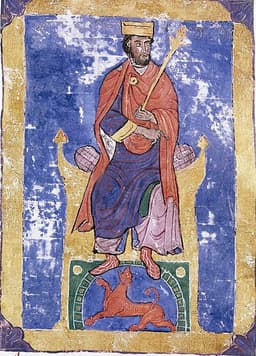
Bermudo III of Leon
Emperor · Medieval
35.6Total
Basic Information
Born
822
1017
Died
861
1037
Era
Medieval
Medieval
Nationality
Abbasid Caliphate
Leon
Occupation
Emperor
Emperor
Civilization
Middle Eastern
Western
Score Comparison
Military (10%)
50.0
21.2
Political (20%)
61.3
30.7
Influence (20%)
57.2
47.9
Legacy (20%)
50.0
37.5
Leadership (15%)
55.3
33.6
Strategy (15%)
35.7
25.0
TOTAL
52.9
35.6
Al-Mutawakkil — Complete Timeline
848 AD
End of the MihnaReform
Al-Mutawakkil ended the Mihna, the inquisition that enforced the Mu'tazilite doctrine of the createdness of the Quran. He restored traditionalist orthodoxy and ended the persecution of scholars who opposed the doctrine.
Religious ReformMihna
Impact: regionalprogressive
851 AD
Construction of the Great Mosque of SamarraCultural◆ Major
Al-Mutawakkil commissioned the construction of the Great Mosque of Samarra, featuring the famous Malwiya minaret. This mosque was one of the largest in the Islamic world and symbolized Abbasid architectural ambition.
ArchitectureMosque
Impact: regionalconstructive
861 AD
Assassination by Turkish GuardPolitical Action
Al-Mutawakkil was assassinated by his Turkish guard in Samarra. The murder was orchestrated by his son al-Muntasir, who succeeded him. This event marked the beginning of the 'Anarchy at Samarra' and the decline of Abbasid power.
AssassinationTurkish Guard
Impact: regionaltragic
Bermudo III of Leon — Complete Timeline
1028 AD
Minority RulePolitical Action
Bermudo III ascended to the throne as a minor after the death of his father Alfonso V at Viseu. His minority was marked by regency and internal strife, as nobles vied for power. This period of weak central authority allowed the County of Castile to assert its independence.
MinorityRegencyInstability
Impact: nationaldestructive
1029 AD
Loss of the County of CastilePolitical Action◆ Major
Bermudo III lost control of the County of Castile when his sister Sancha married Ferdinand I, who then claimed the county as her dowry. This transfer of power strengthened Castile and weakened Leon, setting the stage for the eventual Castilian dominance over Leon.
Loss of TerritoryCastileMarriage Alliance
Impact: regionaldestructive
1037 AD
Battle of TamaronWar
Bermudo III was killed in the Battle of Tamaron while fighting against his brother-in-law, Ferdinand I of Castile. The battle was a decisive Castilian victory, and Bermudo's death ended the Perez dynasty of Leon. Ferdinand I then claimed the Leonese throne, uniting Leon and Castile.
BattleDeathUnion of Leon and Castile
Impact: regionaltragic
This comparison has not been analyzed yet.
One-time AI generation (~1 minute). Scores and timeline are already available below.
Rankings
🥇
Al-MutawakkilLeader
Mil: 50.0Pol: 61.3Inf: 57.2
52.9
🥈
Bermudo III of Leon
Mil: 21.2Pol: 30.7Inf: 47.9
35.6
+17.3 behind
How This Comparison Works
Algorithm
Each figure is scored on 6 dimensions (0—100 scale) based on structured historical data: Military (10%), Political (20%), Influence (20%), Legacy (20%), Leadership (15%), Strategy (15%). The weighted total produces the final ranking.
Data Sources
Scores are computed from structured sub-indicators in the database. Scale factors adjust for era (Ancient ×0.85, Modern ×1.0) and civilization size (Eastern ×1.05, Other ×0.80) to account for differences in population and military scale.
Maximum 3 Figures
Comparisons are limited to 2—3 figures to ensure readability and statistical meaningfulness.
Error Margins
±5 points per dimension — Sub-scores are derived from historical records with inherent uncertainty. Two figures within 5 points on a dimension should be considered roughly equivalent in that area.
Total Score Accuracy
±3 points overall — The weighted combination of 6 dimensions produces a total score with approximately ±3 points of uncertainty. Differences of less than 3 points are not statistically significant— the figures are effectively tied.
Known Limitations
- Historical records are incomplete and uneven across civilizations
- Figures from oral-tradition societies may be underrepresented
- Occupation labels can misclassify multi-role figures
- Scores measure capability and impact, not moral character
- Quantitative scoring is a comparison tool, not absolute truth
Capability Radar
Military (10%) — Battles & Warfare
Battles
20
15
Win Rate
25
10
Expansion
10
5
Political (20%) — Governance & Reform
Reform
60
10
Diplomacy
40
15
Economy
45
10
Influence (20%) — Cultural & Global Reach
Cultural
40
10
Global
35
5
Legacy (20%) — Historical Impact
Historical
55
15
Longevity
40
10
Leadership (15%) — Power & Stability
Tenure
50
20
Stability
20
10
Strategy (15%) — Tactics & Innovation
Strategy
20
15
Tactics
15
15
Reform
10
5
Similar Comparisons
Comments & Discussion
No comments yet. Be the first to share your thoughts!