Loading...
Al-Muti vs Frederick the Fair
Al-Muti leads by 6.2 pts · 2 figures compared
…
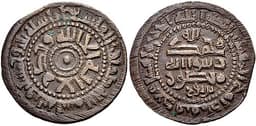
Al-Muti
Emperor · Medieval
42.5Total
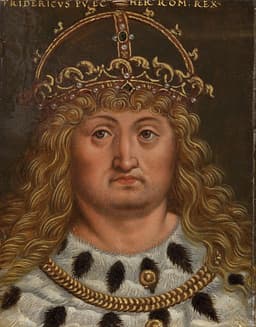
Frederick the Fair
Emperor · Medieval
36.3Total
Basic Information
Born
914
1289
Died
974
1330
Era
Medieval
Medieval
Nationality
Abbasid Caliphate
Holy Roman Empire
Occupation
Emperor
Emperor
Civilization
Middle Eastern
Western
Score Comparison
Military (10%)
34.8
21.2
Political (20%)
35.0
32.1
Influence (20%)
45.5
45.5
Legacy (20%)
35.8
35.8
Leadership (15%)
49.9
33.6
Strategy (15%)
60.0
39.6
TOTAL
42.5
36.3
Al-Muti — Complete Timeline
946 AD
Accession of Al-MutiPolitical Action◆ Major
Al-Muti became caliph after the deposition of Al-Mustakfi. He was the first Abbasid caliph to reign entirely under Buyid control, with no real political or military power.
AccessionBuyid ControlFigurehead
Impact: national
Reign under Buyid ControlPolitical Action◆ Major
Al-Muti's entire 28-year reign was spent as a puppet of the Buyid emirs. He performed ceremonial duties but had no authority over state affairs, marking the nadir of Abbasid power.
Buyid ControlPuppetDecline
Impact: national
974 AD
Abdication of Al-MutiPolitical Action◆ Major
Al-Muti abdicated the caliphate in favor of his son Al-Tai, possibly due to illness or pressure from the Buyids. His abdication was a peaceful transfer of power, but it did not change the caliph's powerless status.
AbdicationSuccessionBuyid
Impact: national
Frederick the Fair — Complete Timeline
1314 AD
Elected Anti-King of GermanyPolitical Action◆ Major
Frederick the Fair was elected anti-king of Germany by a faction of prince-electors, opposing Louis IV of Bavaria. This election was part of a double election that led to a civil war between the Habsburg and Wittelsbach dynasties.
ElectionHabsburgDouble Election
Impact: regional
1322 AD
Defeated and Captured at the Battle of MühldorfWar◆ Major
Frederick the Fair was defeated and captured by Louis IV of Bavaria at the Battle of M
BattleDefeatHabsburg
Impact: regionaltragic
1325 AD
Released from CaptivityPolitical Action
Frederick the Fair was released from captivity after agreeing to recognize Louis IV as king. However, he later renounced this agreement, leading to continued tensions between the Habsburgs and Wittelsbachs.
ReleaseHabsburgAgreement
Impact: regional
1330 AD
Died in GutensteinOther◆ Major
Frederick the Fair died in Gutenstein, Austria, without ever fully securing the German throne. His death ended his claim and allowed Louis IV to rule unchallenged, though the Habsburg dynasty continued to hold power in Austria.
DeathHabsburgEnd of Claim
Impact: regional
Expert Analysis
Origins
Al-Muti (born 914) was the son of Abbasid caliph Al-Muqtadir. He grew up in the splintering Abbasid court, where real power had already shifted to military commanders. His formative years were marked by political instability and the rising influence of the Buyid dynasty, a Persian Shi'a family that had taken control of Baghdad in 945. Al-Muti received a traditional Islamic education but was never prepared for actual governance. In contrast, Frederick the Fair (born 1289) was a member of the House of Habsburg, son of King Albert I of Germany. He was raised in the Austrian duchies, trained in knightly combat and administration, and expected to inherit significant territories. His early life was shaped by the ongoing conflict between the Habsburgs and the Luxembourg dynasty for control of the Holy Roman Empire.
Rise to Power
Al-Muti became caliph in 946 after the Buyid emir Mu'izz al-Dawla deposed Caliph Al-Mustakfi, blinding him on charges of conspiring with the Hamdanids. Al-Muti was installed as a compliant figurehead, marking the first time an Abbasid caliph reigned entirely under Buyid control. His accession was a direct result of Buyid military dominance. Frederick the Fair was elected anti-king of Germany in 1314 by a faction of prince-electors opposing Louis IV of Bavaria. This double election split the empire, leading to a civil war. Frederick's rise was based on Habsburg political maneuvering and electoral votes from Cologne, the Palatinate, and Bohemia, but he lacked the broader support that Louis enjoyed.
Leadership & Governance
Al-Muti's leadership score of 49.9 reflects his complete lack of real authority. He performed ceremonial religious duties—leading Friday prayers, confirming Buyid appointments—but had no control over administration, military, or finances. The Buyid emirs ruled through their own viziers and armies. Al-Muti's only political act of note was abdicating in 974 in favor of his son Al-Tai, possibly due to illness or Buyid pressure. Frederick the Fair, with a leadership score of 33.6, attempted to govern from his base in Austria but could never project power across the empire. His rule was contested, and his military strategy score of 39.6 proved insufficient. At the Battle of Mühldorf in 1322, Frederick was decisively defeated and captured by Louis IV. His governance was limited to issuing charters and seeking alliances, but he never controlled the imperial administration.
Triumph & Tragedy
Al-Muti's greatest success was surviving as caliph for 28 years (946–974) without being deposed or killed, a feat in the volatile Abbasid court. However, his tragedy was total irrelevance: he scored only 34.8 in military and 35.0 in political, leaving no mark on policy. His reign symbolized the final subjugation of the caliphate to secular power. Frederick's triumph was briefly being recognized as king by a significant minority of electors, but his capture at Mühldorf was a catastrophic failure. He spent years imprisoned in Trausnitz Castle, only released after renouncing his claim—a promise he later broke, leading to excommunication. His death in 1330 without securing the throne ended Habsburg ambitions for a generation.
Character & Destiny
Al-Muti was described by contemporaries as pious and passive, content to perform religious duties. His character of submission suited the Buyids, ensuring his long but powerless reign. Frederick was ambitious but rash; his decision to face Louis in open battle at Mühldorf, despite numerical inferiority, proved disastrous. The historian Thomas of Walsingham noted Frederick's stubbornness in refusing to accept defeat, which prolonged his imprisonment. Their personalities directly shaped their fates: Al-Muti's yielding nature kept him alive but impotent, while Frederick's aggression led to capture and failure.
Legacy
Al-Muti's legacy is minimal: he scored 35.8 in legacy, remembered only as the first puppet caliph under Buyid rule. His reign accelerated the decline of the Abbasid caliphate into a religious symbol. Frederick's legacy is similarly low at 35.8, mainly as a cautionary tale of failed kingship. The Habsburgs eventually recovered and dominated Europe, but Frederick's defeat delayed their rise. Neither figure changed the course of history significantly, but Al-Muti's longer reign and symbolic role as caliph give him a slight edge.
Conclusion
While both figures were ultimately unsuccessful rulers, Al-Muti had a greater impact due to his longer tenure and the symbolic significance of the caliphate. His total score of 42.5 versus Frederick's 36.3 reflects this. Al-Muti's reign marked the definitive shift of power from the caliph to secular emirs, a transition that shaped Islamic governance for centuries. Frederick's failed rebellion only reinforced Louis IV's authority and did not alter the imperial structure. Therefore, Al-Muti's historical role, however passive, was more consequential.
Rankings
🥇
Al-MutiLeader
Mil: 34.8Pol: 35.0Inf: 45.5
42.5
🥈
Frederick the Fair
Mil: 21.2Pol: 32.1Inf: 45.5
36.3
+6.2 behind
How This Comparison Works
Algorithm
Each figure is scored on 6 dimensions (0—100 scale) based on structured historical data: Military (10%), Political (20%), Influence (20%), Legacy (20%), Leadership (15%), Strategy (15%). The weighted total produces the final ranking.
Data Sources
Scores are computed from structured sub-indicators in the database. Scale factors adjust for era (Ancient ×0.85, Modern ×1.0) and civilization size (Eastern ×1.05, Other ×0.80) to account for differences in population and military scale.
Maximum 3 Figures
Comparisons are limited to 2—3 figures to ensure readability and statistical meaningfulness.
Error Margins
±5 points per dimension — Sub-scores are derived from historical records with inherent uncertainty. Two figures within 5 points on a dimension should be considered roughly equivalent in that area.
Total Score Accuracy
±3 points overall — The weighted combination of 6 dimensions produces a total score with approximately ±3 points of uncertainty. Differences of less than 3 points are not statistically significant— the figures are effectively tied.
Known Limitations
- Historical records are incomplete and uneven across civilizations
- Figures from oral-tradition societies may be underrepresented
- Occupation labels can misclassify multi-role figures
- Scores measure capability and impact, not moral character
- Quantitative scoring is a comparison tool, not absolute truth
Capability Radar
Military (10%) — Battles & Warfare
Battles
33
15
Win Rate
31
10
Expansion
38
5
Political (20%) — Governance & Reform
Reform
5
5
Diplomacy
10
15
Economy
5
10
Influence (20%) — Cultural & Global Reach
Cultural
5
5
Global
5
5
Legacy (20%) — Historical Impact
Historical
10
10
Longevity
5
5
Leadership (15%) — Power & Stability
Tenure
10
20
Stability
5
10
Strategy (15%) — Tactics & Innovation
Strategy
43
10
Tactics
43
10
Reform
49
5
Similar Comparisons
Comments & Discussion
No comments yet. Be the first to share your thoughts!