Loading...
David II of Scotland vs Frederick the Fair
David II of Scotland leads by 2.3 pts · 2 figures compared
…
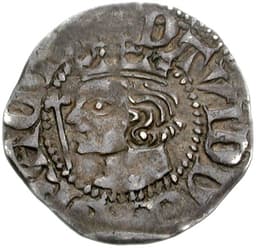
David II of Scotland
Emperor · Medieval
38.6Total
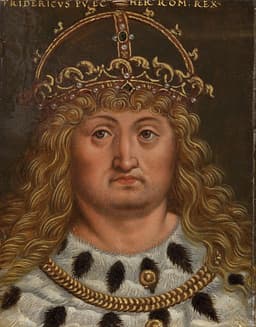
Frederick the Fair
Emperor · Medieval
36.3Total
Basic Information
Born
1324
1289
Died
1371
1330
Era
Medieval
Medieval
Nationality
Scotland
Holy Roman Empire
Occupation
Emperor
Emperor
Civilization
Western
Western
Score Comparison
Military (10%)
20.0
21.2
Political (20%)
30.7
32.1
Influence (20%)
47.9
45.5
Legacy (20%)
39.2
35.8
Leadership (15%)
38.1
33.6
Strategy (15%)
45.0
39.6
TOTAL
38.6
36.3
David II of Scotland — Complete Timeline
1329 AD
Coronation as King of ScotsPolitical Action◆ Major
David II was crowned King of Scots at Scone Abbey at age five, following the death of his father Robert the Bruce. The coronation was overseen by regents, as David was a minor, and it continued the Bruce dynasty's rule.
CoronationRegencyBruce Dynasty
Impact: national
1346 AD
Battle of Neville's CrossWar◆ Major
David II led a Scottish invasion of England but was defeated at Neville's Cross near Durham. He was wounded and captured by English forces, remaining a prisoner for eleven years. The defeat weakened Scotland and led to English occupation of southern Scotland.
BattleDefeatCapture
Impact: nationaldestructive
Imprisonment in EnglandOther◆ Major
David II was held captive in England for eleven years after his capture at Neville's Cross. He was imprisoned in the Tower of London and later at Odiham Castle, while Scotland was governed by regents and paid a large ransom for his release.
ImprisonmentRansomRegency
Impact: nationaltragic
1357 AD
Treaty of BerwickPolitical Action◆ Major
David II was released from English captivity after the Treaty of Berwick was signed. Scotland agreed to pay a ransom of 100,000 marks over ten years for his freedom, placing a heavy financial burden on the kingdom.
TreatyRansomRelease
Impact: nationaldestructive
1363 AD
Proposal to Make Edward III HeirPolitical Action
David II proposed to the Scottish Parliament that Edward III of England or his son be named heir to the Scottish throne if David died without children. The proposal was rejected by Parliament, who feared English domination.
SuccessionProposalParliament
Impact: nationaldestructive
Frederick the Fair — Complete Timeline
1314 AD
Elected Anti-King of GermanyPolitical Action◆ Major
Frederick the Fair was elected anti-king of Germany by a faction of prince-electors, opposing Louis IV of Bavaria. This election was part of a double election that led to a civil war between the Habsburg and Wittelsbach dynasties.
ElectionHabsburgDouble Election
Impact: regional
1322 AD
Defeated and Captured at the Battle of MühldorfWar◆ Major
Frederick the Fair was defeated and captured by Louis IV of Bavaria at the Battle of M
BattleDefeatHabsburg
Impact: regionaltragic
1325 AD
Released from CaptivityPolitical Action
Frederick the Fair was released from captivity after agreeing to recognize Louis IV as king. However, he later renounced this agreement, leading to continued tensions between the Habsburgs and Wittelsbachs.
ReleaseHabsburgAgreement
Impact: regional
1330 AD
Died in GutensteinOther◆ Major
Frederick the Fair died in Gutenstein, Austria, without ever fully securing the German throne. His death ended his claim and allowed Louis IV to rule unchallenged, though the Habsburg dynasty continued to hold power in Austria.
DeathHabsburgEnd of Claim
Impact: regional
Expert Analysis
Origins
David II of Scotland was born on March 5, 1324, the only surviving son of Robert the Bruce and his second wife, Elizabeth de Burgh. His father, the legendary king who secured Scottish independence, ensured David's early coronation at age five in 1329. Frederick the Fair, born around 1289, was the son of Albert I of Germany and Elizabeth of Carinthia, part of the Habsburg dynasty. He grew up in the turbulent politics of the Holy Roman Empire, where his family competed for the German throne.
Rise to Power
David II became king at five after his father's death, with a regency led by Thomas Randolph, Earl of Moray. The regency faced English invasions, but David's position was secured by the Treaty of Edinburgh–Northampton (1328) recognizing Scottish independence. Frederick was elected anti-king in 1314 by a faction of electors opposed to Louis IV of Bavaria. His election sparked a civil war, as both claimed the German throne. Frederick's Habsburg connections gave him initial support, but he lacked the resources to unify the empire.
Leadership & Governance
David II's leadership was hampered by his youth and captivity. He attempted to assert control after his release in 1357, but his reign was marked by financial strain from the ransom owed to England. He proposed making Edward III of England his heir, which alienated his subjects and was rejected by Parliament. Frederick's governance was limited by his status as anti-king; he never effectively ruled beyond his Habsburg territories. His capture at Mühldorf in 1322 ended his active challenge to Louis IV. Both rulers struggled to exercise real power: David scored 38.1 in leadership and Frederick 33.6.
Triumph & Tragedy
David II's greatest triumph was his eventual release from 11 years of English captivity through the Treaty of Berwick (1357), securing his return to Scotland. However, his greatest failure was the disastrous Battle of Neville's Cross (1346), where he was captured, leading to a ransom that crippled Scotland's economy. Frederick's triumph was his election as anti-king, challenging the dominant Louis IV. His tragedy was his defeat and capture at Mühldorf, followed by imprisonment and a forced renunciation of his claim. Both suffered from military defeats: David scored 20.0 in military, Frederick 21.2.
Character & Destiny
David II was pragmatic but flawed, willing to sacrifice national interests for personal freedom. His proposal to name an English heir showed desperation. Frederick was stubborn, refusing to accept Louis IV's rule even after release, leading to further conflict. Their characters led to prolonged instability: David's ransom burdened Scotland for decades; Frederick's challenge weakened the empire. Historical assessments note David's failure to live up to his father's legacy, while Frederick is seen as a symbol of Habsburg ambition.
Legacy
David II's legacy is mixed: he maintained Scottish independence but at great cost. His reign saw the erosion of Bruce's achievements. Frederick's legacy is as a failed anti-king, but his struggle contributed to the eventual Habsburg dominance in Germany. David scores 39.2 in legacy, Frederick 35.8. David's influence is slightly higher (47.9 vs 45.5) due to his role in Scottish history, while Frederick's impact is limited to German dynastic politics.
Conclusion
David II of Scotland had a greater impact than Frederick the Fair. Despite his low military score (20.0) and political score (30.7), his total score of 38.6 exceeds Frederick's 36.3. David's reign, though troubled, preserved Scottish sovereignty, while Frederick's challenge failed to unseat Louis IV. David's legacy endures in Scotland's continued independence, whereas Frederick is a footnote in imperial history. Thus, David II holds a more significant place in history.
Rankings
🥇
David II of ScotlandLeader
Mil: 20.0Pol: 30.7Inf: 47.9
38.6
🥈
Frederick the Fair
Mil: 21.2Pol: 32.1Inf: 45.5
36.3
+2.3 behind
How This Comparison Works
Algorithm
Each figure is scored on 6 dimensions (0—100 scale) based on structured historical data: Military (10%), Political (20%), Influence (20%), Legacy (20%), Leadership (15%), Strategy (15%). The weighted total produces the final ranking.
Data Sources
Scores are computed from structured sub-indicators in the database. Scale factors adjust for era (Ancient ×0.85, Modern ×1.0) and civilization size (Eastern ×1.05, Other ×0.80) to account for differences in population and military scale.
Maximum 3 Figures
Comparisons are limited to 2—3 figures to ensure readability and statistical meaningfulness.
Error Margins
±5 points per dimension — Sub-scores are derived from historical records with inherent uncertainty. Two figures within 5 points on a dimension should be considered roughly equivalent in that area.
Total Score Accuracy
±3 points overall — The weighted combination of 6 dimensions produces a total score with approximately ±3 points of uncertainty. Differences of less than 3 points are not statistically significant— the figures are effectively tied.
Known Limitations
- Historical records are incomplete and uneven across civilizations
- Figures from oral-tradition societies may be underrepresented
- Occupation labels can misclassify multi-role figures
- Scores measure capability and impact, not moral character
- Quantitative scoring is a comparison tool, not absolute truth
Capability Radar
Military (10%) — Battles & Warfare
Battles
5
15
Win Rate
5
10
Expansion
5
5
Political (20%) — Governance & Reform
Reform
10
5
Diplomacy
15
15
Economy
10
10
Influence (20%) — Cultural & Global Reach
Cultural
10
5
Global
5
5
Legacy (20%) — Historical Impact
Historical
15
10
Longevity
10
5
Leadership (15%) — Power & Stability
Tenure
30
20
Stability
15
10
Strategy (15%) — Tactics & Innovation
Strategy
5
10
Tactics
5
10
Reform
5
5
Similar Comparisons
Comments & Discussion
No comments yet. Be the first to share your thoughts!