Loading...
Al-Qahir vs Julius Caesar
Julius Caesar leads by 26.3 pts · 2 figures compared
…
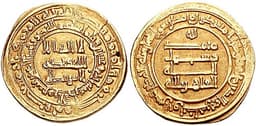
Al-Qahir
Emperor · Medieval
56.5Total

Julius Caesar
General · Ancient
82.8Total
Basic Information
Born
899
-100
Died
950
-44
Era
Medieval
Ancient
Nationality
Abbasid Caliphate
Roman Republic
Occupation
Emperor
General
Civilization
Middle Eastern
Western
Score Comparison
Military (10%)
33.0
88.0
Political (20%)
64.5
78.0
Influence (20%)
55.6
85.0
Legacy (20%)
57.3
82.0
Leadership (15%)
62.2
80.0
Strategy (15%)
60.0
85.0
TOTAL
56.5
82.8
Al-Qahir — Complete Timeline
932 AD
Accession of Al-QahirPolitical Action◆ Major
Al-Qahir became caliph after the assassination of his brother Al-Muqtadir. His reign was brief and marked by tyranny and paranoia, as he executed many officials and family members to secure his position.
AccessionTyrannyPurge
Impact: nationaldestructive
934 AD
Deposition and Blinding of Al-QahirPolitical Action◆ Major
Al-Qahir was deposed by court officials and military commanders after only two years. He was blinded and imprisoned, later living as a beggar in Baghdad. This event highlighted the powerlessness of the caliph against the military.
DepositionBlindingFall
Impact: nationaltragic
Life as a BeggarOther
After his deposition and blinding, Al-Qahir was released from prison and lived as a beggar in the streets of Baghdad. He was occasionally recognized and given alms by former subjects, a stark contrast to his former status.
BeggarHumiliationPost-Caliph
tragic
Julius Caesar — Complete Timeline
58 BC
Gallic WarsWar◆ Major
Caesar, as proconsul of Gaul, launched a series of campaigns that conquered all of Gaul (modern France, Belgium, and parts of Switzerland). He fought numerous battles, including against the Helvetii, the Belgae, and the Gallic chieftain Vercingetorix. The wars brought immense wealth and a loyal army to Caesar.
Gallic WarsConquestRoman Expansion
Impact: regional
49 BC
Crossing the RubiconPolitical Action◆ Major
Caesar led Legio XIII across the Rubicon River into Italy, defying the Roman Senate's order to disband his army. This act triggered a civil war against Pompey and the Optimates, ultimately leading to Caesar's dictatorship and the end of the Roman Republic.
Roman Civil WarEnd of RepublicPower Struggle
Impact: global
48 BC
Battle of PharsalusWar◆ Major
Caesar's outnumbered army defeated the larger forces of Pompey the Great at Pharsalus in Greece. Caesar's tactical use of a reserve line to counter Pompey's cavalry charge proved decisive. Pompey fled to Egypt, where he was assassinated, leaving Caesar as the undisputed master of the Roman world.
Roman Civil WarBattleDecisive Victory
Impact: regional
44 BC
Appointment as Dictator for LifePolitical Action◆ Major
The Roman Senate appointed Caesar dictator perpetuo (dictator for life), granting him unprecedented personal power. This move concentrated military, legislative, and judicial authority in one person, effectively ending the Roman Republic's traditional system of checks and balances and alarming many senators.
DictatorshipEnd of RepublicPower Consolidation
Impact: regionaldestructive
Assassination on the Ides of MarchPolitical Action◆ Major
A group of Roman senators, led by Marcus Junius Brutus and Gaius Cassius Longinus, stabbed Caesar to death at a meeting of the Senate in the Theatre of Pompey. The assassination was intended to restore the Republic, but instead triggered another civil war that led to the rise of the Roman Empire.
AssassinationRoman PoliticsEnd of Republic
Impact: globaldestructive
Expert Analysis
al-qahir-vs-julius-caesar
# The Dictator and the Beggar
On the Ides of March 44 BCE, a Roman senator named Casca struck the first blow. Within moments, sixty conspirators had surrounded Gaius Julius Caesar, stabbing him twenty-three times. He died at the foot of a statue of his rival Pompey, wrapped in his toga, the blood pooling on the marble floor of the Senate. Just over a thousand years later, in the streets of Baghdad, a blind man shuffled through the dust, his hand outstretched for alms. This was Al-Qahir, once the nineteenth caliph of the Abbasid dynasty, now a beggar who had outlived his own power by sixteen miserable years. What separates a man who conquers the world from one who cannot hold his own throne? The answer lies not in fate, but in the choices forged by character and circumstance.
Origins
Julius Caesar was born into the patrician Julian clan, one of Rome’s oldest families, but its fortunes had faded. His father died when Caesar was sixteen, leaving him to navigate a Republic torn by civil wars between populists and aristocrats. He was a child of the late Republic, an era of ambition unbound by tradition, where a man could rise through military glory and popular acclaim. Al-Qahir, by contrast, was born into the Abbasid Caliphate in 899 CE, a time when the once-mighty caliphate was crumbling. His father, Caliph Al-Mu’tadid, had fought to restore order, but the empire was bleeding power to provincial warlords and the Shia Buyids. Al-Qahir grew up in a palace of intrigue, where brothers were assassinated and caliphs were puppets. His world was one of decay, not opportunity.
Rise to Power
Caesar’s rise was a masterclass in calculated audacity. He served as a military tribune in Asia, then as quaestor in Spain, where he reportedly wept before a statue of Alexander the Great, lamenting that at his age Alexander had conquered the world while he had done nothing. He forged alliances with the wealthy Crassus and the legendary general Pompey, forming the First Triumvirate. In 58 BCE, he secured the governorship of Gaul, launching a nine-year campaign that brought him immense wealth, a loyal army, and a reputation as Rome’s greatest general. When the Senate ordered him to disband his legions, he crossed the Rubicon River in 49 BCE, plunging the Republic into civil war. He won.
Al-Qahir’s path was far narrower. In 932 CE, his brother Caliph Al-Muqtadir was assassinated by his own generals. The court, desperate for a figurehead, turned to Al-Qahir. He was not a conqueror; he was a placeholder. His rise required no genius, only the misfortune of being the last surviving son of Al-Mu’tadid. He accepted the caliphate not as a prize, but as a poisoned chalice.
Leadership & Governance
Caesar governed as a reformer, not a tyrant—at least not initially. As dictator, he overhauled the Roman calendar, introduced land reforms for veterans, extended citizenship to Gauls, and launched public works that employed the poor. He centralized power but kept the Senate intact, filling it with his supporters. His military genius was matched by political cunning: he pardoned former enemies, knowing that clemency could turn rivals into allies. Yet his rule was brittle. He refused a crown three times, but accepted the title “dictator for life,” a move that alarmed the senatorial class.
Al-Qahir’s rule was the opposite. His reign, from 932 to 934 CE, was marked by what historians call “tyranny.” He suspected everyone, executing officials and generals on whim. He hoarded the treasury, refusing to pay his own soldiers. Where Caesar built bridges, Al-Qahir burned them. In 934, after just two years, the court officials and military commanders he had alienated stormed the palace. They deposed him, gouged out his eyes, and threw him into prison. He had no loyal army, no popular support, no legacy of reform. He had only fear, and fear is a fragile throne.
Triumph & Tragedy
Caesar’s greatest moment was his triumph over Gaul, culminating in the siege of Alesia in 52 BCE, where he defeated a massive Gallic coalition led by Vercingetorix. It was a military masterpiece of fortification and patience. His tragedy came on the Ides of March, when his own senators—men he had pardoned and promoted—turned on him. His final words to Brutus, “You too, my child?” capture the betrayal that defined his end.
Al-Qahir’s greatest moment was simply surviving his accession. His tragedy was not death but degradation. After his blinding, he was eventually released from prison and lived as a beggar in Baghdad until his death in 950 CE. He had gone from caliph to shadow, a living reminder of how low a ruler can fall when he rules without wisdom.
Character & Destiny
Caesar was bold, charismatic, and ruthlessly pragmatic. He gambled on his own genius, and for a time, the dice rolled his way. But his arrogance blinded him to the hatred he inspired. He believed his presence alone could keep the Republic stable. It could not. Al-Qahir was paranoid, cruel, and short-sighted. He saw enemies everywhere because he made enemies everywhere. His destiny was sealed not by circumstance but by his own inability to inspire loyalty. One man trusted too much; the other trusted not at all.
Legacy
Caesar’s legacy is immeasurable. His conquests spread Latin and Roman law across Europe; his reforms set the template for imperial rule; his name became synonymous with autocracy. “Et tu, Brute?” echoes through Western literature. He is studied in military academies and political science courses. Al-Qahir’s legacy is almost nonexistent. He is a footnote in Abbasid history, a cautionary tale about the fragility of power. His name is remembered only by specialists, and even then, only as a failure.
Conclusion
The contrast between these two men is not simply one of success and failure. It is a lesson in what leadership requires: not just ambition, but the ability to build trust; not just power, but the wisdom to use it. Caesar crossed the Rubicon and changed the world. Al-Qahir crossed the threshold of his palace and lost it. Both men died in blood—one on marble, one in dust. But one left an empire, and the other left only silence.
Rankings
🥇
Julius CaesarLeader
Mil: 88.0Pol: 78.0Inf: 85.0
82.8
🥈
Al-Qahir
Mil: 33.0Pol: 64.5Inf: 55.6
56.5
+26.3 behind
How This Comparison Works
Algorithm
Each figure is scored on 6 dimensions (0—100 scale) based on structured historical data: Military (10%), Political (20%), Influence (20%), Legacy (20%), Leadership (15%), Strategy (15%). The weighted total produces the final ranking.
Data Sources
Scores are computed from structured sub-indicators in the database. Scale factors adjust for era (Ancient ×0.85, Modern ×1.0) and civilization size (Eastern ×1.05, Other ×0.80) to account for differences in population and military scale.
Maximum 3 Figures
Comparisons are limited to 2—3 figures to ensure readability and statistical meaningfulness.
Error Margins
±5 points per dimension — Sub-scores are derived from historical records with inherent uncertainty. Two figures within 5 points on a dimension should be considered roughly equivalent in that area.
Total Score Accuracy
±3 points overall — The weighted combination of 6 dimensions produces a total score with approximately ±3 points of uncertainty. Differences of less than 3 points are not statistically significant— the figures are effectively tied.
Known Limitations
- Historical records are incomplete and uneven across civilizations
- Figures from oral-tradition societies may be underrepresented
- Occupation labels can misclassify multi-role figures
- Scores measure capability and impact, not moral character
- Quantitative scoring is a comparison tool, not absolute truth
Capability Radar
Military (10%) — Battles & Warfare
Battles
33
95
Win Rate
32
92
Expansion
38
97
Political (20%) — Governance & Reform
Reform
59
90
Diplomacy
62
85
Economy
63
82
Influence (20%) — Cultural & Global Reach
Cultural
67
88
Global
78
94
Legacy (20%) — Historical Impact
Historical
73
95
Longevity
77
96
Leadership (15%) — Power & Stability
Tenure
58
75
Stability
66
60
Strategy (15%) — Tactics & Innovation
Strategy
41
94
Tactics
42
96
Reform
48
88
Similar Comparisons
Comments & Discussion
JuliusPWNer6/17/2026
This comparison is laughable. You're putting a military genius who conquered Gaul, crossed the Rubicon, and defeated Pompey's armies against a caliph who couldn't even hold Baghdad against a bunch of Persian mercenaries. Caesar didn't fall because of bad luck—he fell because his ambition outpaced his political survival instincts. Al-Qahir fell because he was never more than a puppet with a fancy title to begin with. There's no tragic flaw here, just incompetence. One man shaped history; the othe
剑指罗马6/17/2026
拿凯撒跟卡希尔比?凯撒死的时候,庞培的雕像还看着他呢,政敌的尸体铺就他的权力路。卡希尔呢?被自己人卖给布韦希王朝,连亲兄弟都踩他一脚。这不是命运不公,这是能力天差地别。凯撒的军团打到不列颠,卡希尔连底格里斯河都没跨过。都是帝王,一个是铁打的,一个是纸糊的。别拿历史给懦夫开脱了。
NileCrocodile6/17/2026
Frankly, I'm tired of this "great man" nonsense. Caesar was a monumentally overrated general whose Gallic Wars were mostly PR spin. Ever read his commentaries? Pure self-promotion. Meanwhile, Al-Qahir inherited a dying empire being carved up by Buyids and Hamdanids. Put Caesar in 10th century Baghdad with no loyal legions and a treasury full of IOUs, and see how far his genius gets him. Al-Qahir survived sixteen years as a blind beggar. That takes more grit than crossing the Rubicon ever did.
断水流大师兄6/17/2026
你们这些西方中心论者真可笑。凯撒有军团有银币有元老院表演舞台,卡希尔有什么?哈里发头衔值几个钱?阿拔斯王朝末期,一个月的工资都发不出,军队哗变跟吃饭一样平常。凯撒站在历史风口上,猪都能飞。卡希尔是站在火山口上,能活十六年没被剁成肉酱,已经是奇迹了。拿结果反推能力,这叫幸存者偏差懂吗?
AquilaNonCapit6/17/2026
As a military historian, I must object. Caesar's crossing of the Rubicon wasn't just dramatic theater—it was a calculated violation of Roman law that triggered a civil war he knew he could win. Compare that to Al-Qahir, who was literally dragged from his hiding place in a water cistern by his own supporters. The man had zero strategic instincts. Caesar understood that power requires both the sword and the Senate's seal. Al-Qahir understood neither. That's not circumstance. That's a failure to re