Loading...
Al-Rashid vs Louis VIII of France
Louis VIII of France leads by 0.9 pts · 2 figures compared
…
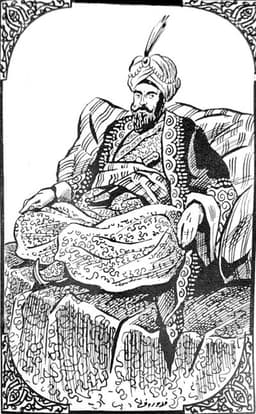
Al-Rashid
Emperor · Medieval
37.7Total

Louis VIII of France
Emperor · Medieval
38.6Total
Basic Information
Born
1109
1187
Died
1138
1226
Era
Medieval
Medieval
Nationality
Abbasid Caliphate
France
Occupation
Emperor
Emperor
Civilization
Middle Eastern
Western
Score Comparison
Military (10%)
20.0
25.0
Political (20%)
32.1
27.9
Influence (20%)
45.5
49.4
Legacy (20%)
33.3
38.3
Leadership (15%)
44.5
39.0
Strategy (15%)
45.0
41.7
TOTAL
37.7
38.6
Al-Rashid — Complete Timeline
1136 AD
Deposition by SeljuksPolitical Action◆ Major
Caliph Al-Rashid was deposed by the Seljuk Sultan Mas'ud after only one year of rule. The sultan accused him of incompetence and replaced him with his uncle, Al-Muqtafi. Al-Rashid fled to Isfahan.
DepositionSeljuk InterventionCaliphal Crisis
Impact: regionaldestructive
1138 AD
Death in ExileOther
Al-Rashid died in Isfahan under mysterious circumstances, possibly assassinated by Seljuk agents. His brief reign and violent end illustrated the complete subordination of the caliphate to Seljuk power.
ExileDeathSeljuk Era
tragic
Louis VIII of France — Complete Timeline
1216 AD
Invasion of EnglandWar◆ Major
Louis VIII led a French invasion of England at the invitation of English barons rebelling against King John. He was proclaimed King of England in London but failed to consolidate control after John's death and the barons' shift of allegiance to Henry III.
InvasionEnglish Civil WarCapetian
Impact: regional
1217 AD
Treaty of LambethPolitical Action◆ Major
Louis VIII signed the Treaty of Lambeth, formally abandoning his claim to the English throne. He renounced his invasion and received a financial settlement, ending the First Barons' War and securing peace between France and England.
TreatyPeaceCapetian
Impact: regional
1226 AD
Albigensian Crusade CampaignsWar◆ Major
Louis VIII led a royal campaign in the Albigensian Crusade against the Cathars in southern France. He captured Avignon and several strongholds, extending Capetian authority into Languedoc, but died before completing the conquest.
CrusadeCatharTerritorial Expansion
Impact: regionaldestructive
Expert Analysis
Origins
Al-Rashid (full name: Al-Rashid Billah) was born in 1109 in Baghdad, the capital of the Abbasid Caliphate. He was the son of Caliph Al-Mustarshid, who was killed in 1135 during a revolt against Seljuk influence. Al-Rashid grew up in a court dominated by Seljuk sultans, who held de facto power while the caliphs retained religious authority. His education focused on Islamic law and governance, but he lacked practical experience. His father's death and the Seljuk control shaped his worldview, yet he was determined to assert independence.
Louis VIII of France, known as "The Lion," was born on September 5, 1187, in Paris. He was the eldest son of King Philip II Augustus and Isabelle of Hainaut. His upbringing was martial and political; he accompanied his father on campaigns and learned statecraft from one of the most effective medieval kings. Louis was trained in chivalry and administration, and he married Blanche of Castile, a capable partner. His early life was marked by the ongoing conflict between France and the Angevin Empire (England).
Rise to Power
Al-Rashid became caliph in 1135 after his father's death. His accession was confirmed by the Seljuk Sultan Mas'ud, but tensions soon emerged. Al-Rashid attempted to reduce Seljuk influence by forming alliances with local emirs and the atabeg Zengi. However, his reign was cut short: in 1136, Sultan Mas'ud marched on Baghdad, accusing Al-Rashid of incompetence and plotting with enemies. The caliph was deposed after only one year, replaced by his uncle Al-Muqtafi. Al-Rashid fled to Isfahan, where he died in 1138, possibly murdered.
Louis VIII rose to power as the heir to the French throne. In 1216, English barons rebelling against King John offered the crown to Louis. He invaded England, landing at Sandwich in May 1216, and was proclaimed king in London. He controlled much of eastern England but failed to capture key castles. After John's death in October 1216, many barons switched allegiance to John's son Henry III. Louis's forces were defeated at Lincoln in 1217, and the Treaty of Lambeth (September 1217) ended his claim; he received a financial settlement and withdrew. He became king of France in 1223 upon his father's death, but his reign lasted only three years.
Leadership & Governance
Al-Rashid's leadership was reactive and short-lived. He scored 44.5 in leadership and 32.1 in political skill. He attempted to assert caliphal authority against the Seljuks but lacked the military power to back his ambitions. His governance focused on maintaining religious legitimacy but failed to build coalitions. In contrast, Louis VIII scored 39.0 in leadership and 27.9 in political skill. His governance style was more strategic: he consolidated royal power in France, continued his father's centralization, and led military campaigns. He was decisive but died before implementing lasting reforms.
Triumph & Tragedy
Al-Rashid's greatest triumph was briefly uniting opposition to Seljuk dominance, though it failed. His tragedy was his deposition and early death, ending any chance of restoring caliphal power. He scored 20.0 in military and 45.0 in strategy, reflecting his inability to execute plans.
Louis VIII's triumphs include his invasion of England, where he came close to becoming king, and his successful campaigns in the Albigensian Crusade, where he captured Avignon and expanded French influence. His tragedy was his short reign as king of France (1223-1226), which limited his impact. He died of dysentery, leaving his young son Louis IX (Saint Louis) to rule. His military score is 25.0, strategy 41.7.
Character & Destiny
Al-Rashid was ambitious but reckless, overestimating his power against the Seljuks. His character—prideful and uncompromising—led to his downfall. Historical assessments view him as a weak caliph who failed to adapt to political realities.
Louis VIII was determined and capable, but his destiny was cut short by illness. He was a competent commander and administrator, though overshadowed by his father Philip II and his son Louis IX. He is remembered as "The Lion" for his courage.
Legacy
Al-Rashid's legacy is minimal; he is a footnote in Abbasid history. His deposition further weakened the caliphate, accelerating its decline. He scores 45.5 in influence and 33.3 in legacy.
Louis VIII's legacy is more substantial: his Albigensian Crusade campaigns solidified French control over Languedoc, and his short reign paved the way for the more famous reign of Louis IX. He scored 49.4 in influence and 38.3 in legacy.
Conclusion
Neither figure achieved greatness, but Louis VIII had greater impact. His military actions in England and France shaped medieval European politics, while Al-Rashid's reign was a failure. Louis VIII scores 38.6 total to Al-Rashid's 37.7, a narrow margin, but his influence and legacy are more enduring. The data supports Louis VIII as the more significant historical figure, despite his brief tenure.
Rankings
🥇
Louis VIII of FranceLeader
Mil: 25.0Pol: 27.9Inf: 49.4
38.6
🥈
Al-Rashid
Mil: 20.0Pol: 32.1Inf: 45.5
37.7
+0.9 behind
How This Comparison Works
Algorithm
Each figure is scored on 6 dimensions (0—100 scale) based on structured historical data: Military (10%), Political (20%), Influence (20%), Legacy (20%), Leadership (15%), Strategy (15%). The weighted total produces the final ranking.
Data Sources
Scores are computed from structured sub-indicators in the database. Scale factors adjust for era (Ancient ×0.85, Modern ×1.0) and civilization size (Eastern ×1.05, Other ×0.80) to account for differences in population and military scale.
Maximum 3 Figures
Comparisons are limited to 2—3 figures to ensure readability and statistical meaningfulness.
Error Margins
±5 points per dimension — Sub-scores are derived from historical records with inherent uncertainty. Two figures within 5 points on a dimension should be considered roughly equivalent in that area.
Total Score Accuracy
±3 points overall — The weighted combination of 6 dimensions produces a total score with approximately ±3 points of uncertainty. Differences of less than 3 points are not statistically significant— the figures are effectively tied.
Known Limitations
- Historical records are incomplete and uneven across civilizations
- Figures from oral-tradition societies may be underrepresented
- Occupation labels can misclassify multi-role figures
- Scores measure capability and impact, not moral character
- Quantitative scoring is a comparison tool, not absolute truth
Capability Radar
Military (10%) — Battles & Warfare
Battles
5
35
Win Rate
5
40
Expansion
5
40
Political (20%) — Governance & Reform
Reform
10
10
Diplomacy
10
25
Economy
10
10
Influence (20%) — Cultural & Global Reach
Cultural
5
15
Global
5
10
Legacy (20%) — Historical Impact
Historical
5
20
Longevity
5
10
Leadership (15%) — Power & Stability
Tenure
10
15
Stability
10
10
Strategy (15%) — Tactics & Innovation
Strategy
5
35
Tactics
5
30
Reform
5
10
Similar Comparisons
Comments & Discussion
No comments yet. Be the first to share your thoughts!