Loading...
Charles IV of Anjou vs Louis VIII of France
Charles IV of Anjou leads by 0.3 pts · 2 figures compared
…
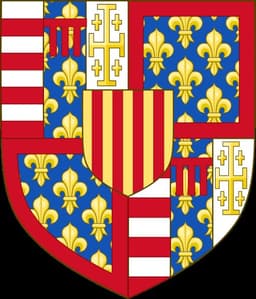
Charles IV of Anjou
Emperor · Medieval
38.9Total

Louis VIII of France
Emperor · Medieval
38.6Total
Basic Information
Born
1446
1187
Died
1481
1226
Era
Medieval
Medieval
Nationality
Anjou
France
Occupation
Emperor
Emperor
Civilization
Western
Western
Score Comparison
Military (10%)
21.2
25.0
Political (20%)
29.3
27.9
Influence (20%)
49.4
49.4
Legacy (20%)
39.2
38.3
Leadership (15%)
41.5
39.0
Strategy (15%)
39.6
41.7
TOTAL
38.9
38.6
Charles IV of Anjou — Complete Timeline
1480 AD
Inherited Duchy of Anjou and ProvencePolitical Action◆ Major
Charles IV inherited the Duchy of Anjou and the County of Provence from his father Ren
InheritanceSuccession
Impact: regional
1481 AD
Willed Provence to King Louis XI of FrancePolitical Action
On his deathbed, Charles IV willed the County of Provence to King Louis XI of France, bypassing his own heirs. This act permanently annexed Provence to the French crown.
AnnexationEnd of Angevin Dynasty
Impact: national
Louis VIII of France — Complete Timeline
1216 AD
Invasion of EnglandWar◆ Major
Louis VIII led a French invasion of England at the invitation of English barons rebelling against King John. He was proclaimed King of England in London but failed to consolidate control after John's death and the barons' shift of allegiance to Henry III.
InvasionEnglish Civil WarCapetian
Impact: regional
1217 AD
Treaty of LambethPolitical Action◆ Major
Louis VIII signed the Treaty of Lambeth, formally abandoning his claim to the English throne. He renounced his invasion and received a financial settlement, ending the First Barons' War and securing peace between France and England.
TreatyPeaceCapetian
Impact: regional
1226 AD
Albigensian Crusade CampaignsWar◆ Major
Louis VIII led a royal campaign in the Albigensian Crusade against the Cathars in southern France. He captured Avignon and several strongholds, extending Capetian authority into Languedoc, but died before completing the conquest.
CrusadeCatharTerritorial Expansion
Impact: regionaldestructive
Expert Analysis
Origins
Charles IV of Anjou (1446–1481) was born into the House of Valois-Anjou, the son of René of Anjou, a titular king of Naples and duke of Lorraine. His mother was Isabelle, Duchess of Lorraine. Charles inherited the Duchy of Anjou and the County of Provence upon René's death in 1480. His upbringing was steeped in the declining fortunes of the Angevin dynasty, which had once ruled vast territories in Italy and France. Charles's early life was marked by the political instability of the late Hundred Years' War and the shifting alliances of the French nobility.
Louis VIII of France (1187–1226), known as "The Lion," was born the son of King Philip II Augustus and Isabella of Hainault. As a Capetian prince, he was groomed for kingship from birth. His education emphasized military strategy and governance, reflecting his father's centralizing policies. Louis's early years were dominated by the ongoing conflict with the Plantagenets, particularly King John of England, and the Albigensian Crusade in southern France.
Rise to Power
Charles IV's rise was largely passive; he inherited his titles without significant personal ambition. He became Duke of Anjou and Count of Provence in 1480, but his rule was short and overshadowed by the superior power of the French crown. His key turning point came on his deathbed in 1481, when he willed Provence to King Louis XI of France, bypassing his own heirs. This act, though perhaps coerced, ensured the permanent annexation of Provence to the French kingdom.
Louis VIII rose to power through active military campaigns. In 1216, English barons rebelling against King John invited him to claim the English throne. Louis invaded England, was proclaimed king in London, and controlled much of the country. However, after John's death, the barons shifted allegiance to John's son Henry III. Louis was defeated at the Battle of Lincoln and the naval Battle of Sandwich, leading to the Treaty of Lambeth in 1217, where he renounced his claim for a financial settlement. He became king of France in 1223 upon his father's death.
Leadership & Governance
Charles IV's leadership was minimal; he ruled for less than two years and left no significant administrative reforms. His primary act was the bequest of Provence, which strengthened the French crown but ended his dynasty's independent power. He scored 41.5 in leadership, reflecting his limited influence.
Louis VIII, with a leadership score of 39.0, was more active. He continued his father's centralization policies, reducing the power of feudal lords. He also led the royal campaign in the Albigensian Crusade, capturing Avignon and other Cathar strongholds in 1226, extending Capetian authority into Languedoc. His governance focused on consolidating royal control, though his short reign (3 years) limited his impact.
Triumph & Tragedy
Charles IV's greatest success was the annexation of Provence to France, which ended the Angevin independence but secured the region for the French crown. His greatest failure was his inability to produce a lasting heir or maintain his dynasty's legacy; his titles reverted to the crown, and the Angevin line ended. He scored 39.2 in legacy.
Louis VIII's triumph was his invasion of England, where he was proclaimed king—a rare achievement for a French prince. However, his failure to hold the throne and the Treaty of Lambeth showed overreach. His successful Albigensian Crusade campaigns expanded French territory but also caused destruction. His legacy score is 38.3, slightly lower than Charles's.
Character & Destiny
Charles IV was a passive figure, perhaps ill-suited to the turbulent politics of his time. His decision to will Provence to Louis XI suggests either political realism or weakness. He died young at 35, without clear heirs, sealing his dynasty's fate. Historical assessments view him as a minor figure whose main significance was his deathbed decision.
Louis VIII was ambitious and militarily capable, earning the epithet "The Lion." His invasion of England showed boldness, but his inability to secure the throne indicated strategic miscalculation. His early death at 39 prevented him from fully implementing his policies. Contemporaries noted his piety and adherence to crusading ideals.
Legacy
Charles IV's legacy is the annexation of Provence, which permanently altered the map of France and strengthened the monarchy. However, his dynasty ended, and he is largely forgotten except in regional histories. His influence score is 49.4.
Louis VIII's legacy is more substantial: he consolidated Capetian power, extended royal domain into the south, and set the stage for his son Louis IX (Saint Louis). His English invasion, though failed, demonstrated French military capability. His influence score is also 49.4, tying with Charles.
Conclusion
Despite having a slightly higher total score (38.9 vs 38.6), Charles IV's impact was negative for his own dynasty but positive for France. However, Louis VIII's active military campaigns and governance reforms had a more direct and lasting effect on French state-building. Louis VIII's invasion of England and Crusade campaigns shaped medieval European politics, while Charles IV's main act was a passive bequest. Therefore, Louis VIII had greater overall impact, as his actions directly advanced Capetian centralization and territorial expansion.
Rankings
🥇
Charles IV of AnjouLeader
Mil: 21.2Pol: 29.3Inf: 49.4
38.9
🥈
Louis VIII of France
Mil: 25.0Pol: 27.9Inf: 49.4
38.6
+0.3 behind
How This Comparison Works
Algorithm
Each figure is scored on 6 dimensions (0—100 scale) based on structured historical data: Military (10%), Political (20%), Influence (20%), Legacy (20%), Leadership (15%), Strategy (15%). The weighted total produces the final ranking.
Data Sources
Scores are computed from structured sub-indicators in the database. Scale factors adjust for era (Ancient ×0.85, Modern ×1.0) and civilization size (Eastern ×1.05, Other ×0.80) to account for differences in population and military scale.
Maximum 3 Figures
Comparisons are limited to 2—3 figures to ensure readability and statistical meaningfulness.
Error Margins
±5 points per dimension — Sub-scores are derived from historical records with inherent uncertainty. Two figures within 5 points on a dimension should be considered roughly equivalent in that area.
Total Score Accuracy
±3 points overall — The weighted combination of 6 dimensions produces a total score with approximately ±3 points of uncertainty. Differences of less than 3 points are not statistically significant— the figures are effectively tied.
Known Limitations
- Historical records are incomplete and uneven across civilizations
- Figures from oral-tradition societies may be underrepresented
- Occupation labels can misclassify multi-role figures
- Scores measure capability and impact, not moral character
- Quantitative scoring is a comparison tool, not absolute truth
Capability Radar
Military (10%) — Battles & Warfare
Battles
10
35
Win Rate
10
40
Expansion
10
40
Political (20%) — Governance & Reform
Reform
20
10
Diplomacy
30
25
Economy
20
10
Influence (20%) — Cultural & Global Reach
Cultural
15
15
Global
10
10
Legacy (20%) — Historical Impact
Historical
20
20
Longevity
15
10
Leadership (15%) — Power & Stability
Tenure
30
15
Stability
20
10
Strategy (15%) — Tactics & Innovation
Strategy
10
35
Tactics
10
30
Reform
5
10
Similar Comparisons
Comments & Discussion
No comments yet. Be the first to share your thoughts!