Loading...
Al-Tai vs Eric of Pomerania
Eric of Pomerania leads by 5.6 pts · 2 figures compared
…

Al-Tai
Emperor · Medieval
37.6Total
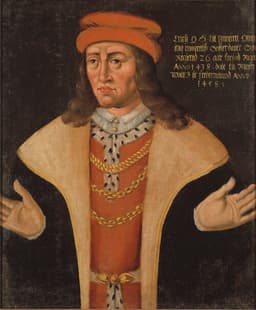
Eric of Pomerania
Emperor · Medieval
43.2Total
Basic Information
Born
932
1381
Died
1003
1459
Era
Medieval
Medieval
Nationality
Abbasid Caliphate
Denmark
Occupation
Emperor
Emperor
Civilization
Middle Eastern
Western
Score Comparison
Military (10%)
20.0
50.0
Political (20%)
32.1
35.1
Influence (20%)
46.3
49.4
Legacy (20%)
35.0
39.2
Leadership (15%)
33.6
48.4
Strategy (15%)
54.3
35.7
TOTAL
37.6
43.2
Al-Tai — Complete Timeline
974 AD
Accession of Al-TaiPolitical Action◆ Major
Al-Tai became caliph after the abdication of his father Al-Muti. His reign continued the pattern of Buyid domination, with the caliph serving as a ceremonial figurehead.
AccessionBuyid ControlFigurehead
Impact: national
991 AD
Deposition by the BuyidsPolitical Action◆ Major
Al-Tai was deposed by the Buyid emir Baha al-Dawla, who replaced him with Al-Qadir. This event demonstrated the Buyids' complete control over the caliphate, as they could appoint and depose caliphs at will.
DepositionBuyidEnd of Reign
Impact: nationaltragic
1003 AD
Death of Al-TaiPolitical Action
Al-Tai died in obscurity after his deposition, having lived under Buyid supervision. His death marked the end of a reign that symbolized the Abbasid caliphate's complete subordination to foreign dynasties.
DeathObscurityBuyid
Impact: nationaltragic
Eric of Pomerania — Complete Timeline
1397 AD
Crowned King of the Kalmar UnionPolitical Action◆ Major
Eric of Pomerania was crowned King of Denmark, Norway, and Sweden at the Kalmar Union meeting in 1397, under the regency of Margaret I. His coronation formalized the union of the three Scandinavian kingdoms, though Margaret retained real power until her death.
CoronationKalmar UnionScandinavia
Impact: regionalconstructive
1412 AD
Became sole ruler after Margaret I's deathPolitical Action◆ Major
After Margaret I's death, Eric of Pomerania became the sole ruler of the Kalmar Union. He attempted to centralize power and assert royal authority, but his policies often clashed with the nobility, leading to growing tensions within the union.
SuccessionKalmar UnionRule
Impact: regional
1426 AD
Fought the Dano-Hanseatic WarWar◆ Major
Eric of Pomerania engaged in a war with the Hanseatic League, a powerful trading confederation. The conflict, which lasted until 1435, resulted in Danish defeats and economic disruption, weakening the Kalmar Union's control over Baltic trade.
WarHanseatic LeagueTrade Conflict
Impact: regionaldestructive
1429 AD
Imposed the Sound DuesReform◆ Major
Eric of Pomerania introduced the Sound Dues, a toll on all ships passing through the
TaxTradeBaltic
Impact: regional
1439 AD
Deposed by the Danish and Swedish nobilityPolitical Action◆ Major
Eric of Pomerania was deposed as king of Denmark and Sweden by the nobility, who were dissatisfied with his rule and his handling of the union. He was forced into exile on the island of Gotland, and the Kalmar Union effectively collapsed.
DepositionKalmar UnionExile
Impact: regionaldestructive
Expert Analysis
Origins
Al-Tai (born 929, died 1003) was an Abbasid caliph who inherited a position of ceremonial authority under Buyid domination. His father, Al-Muti, abdicated in his favor in 974, but real power rested with the Buyid emirs. Al-Tai received a traditional Islamic education but never exercised independent rule. Eric of Pomerania (born 1382, died 1459) was born Eric of Pomerania-Stolp, the grandson of King Valdemar IV of Denmark. He was raised by Queen Margaret I, who orchestrated his election as king of the Kalmar Union (Denmark, Norway, Sweden) in 1397. His upbringing in the Danish court prepared him for a role that combined Scandinavian monarchies.
Rise to Power
Al-Tai became caliph in 974 after his father's abdication, but his rise was merely a transfer of the powerless office. The Buyid emir 'Adud al-Dawla controlled Baghdad, and Al-Tai served as a puppet. His reign saw the decline of Abbasid prestige. Eric of Pomerania was crowned king of the Kalmar Union in 1397 at age 15, with Margaret I as regent until her death in 1412. Upon becoming sole ruler, he sought to strengthen royal authority, centralize administration, and challenge the Hanseatic League. His early reign was marked by ambitious reforms, including the introduction of the Sound Dues in 1429, a toll on shipping through the Øresund.
Leadership & Governance
Al-Tai's leadership scored 33.6 in the analysis, reflecting his inability to govern independently. He was a figurehead: the Buyids appointed viziers and controlled the military. His only act of resistance was his deposition in 991 by Baha al-Dawla, who replaced him with Al-Qadir. Al-Tai's governance was passive, as he lacked the power to initiate reforms. Eric of Pomerania scored 48.4 in leadership. He attempted to modernize the Kalmar Union by imposing the Sound Dues (which provided revenue independent of the nobility), establishing a royal navy, and curbing the Hanseatic League's influence. However, his centralization efforts alienated the Swedish and Danish nobility, leading to rebellions. He lost control of Sweden in 1434 and was deposed in Denmark in 1439.
Triumph & Tragedy
Al-Tai's greatest success was surviving as caliph for 17 years despite Buyid dominance, but his tragedy was the complete loss of political power and his deposition. He died in obscurity, a symbol of Abbasid weakness. Eric of Pomerania's triumph was the Sound Dues, which became a lasting source of income for Denmark, funding its rise as a Baltic power. He also fought the Dano-Hanseatic War (1426–1435) to a stalemate. His tragedy was his deposition: he lost the thrones of Denmark and Sweden, and his dream of a unified Scandinavia collapsed. He ended his life as a pirate in Pomerania.
Character & Destiny
Al-Tai (political score 32.1, strategy 54.3) was passive and compliant, accepting Buyid control without rebellion. His character reflected the Abbasid caliphs' adaptation to servitude. Eric of Pomerania (political 35.1, strategy 35.7) was ambitious but inflexible. He alienated the nobility by overriding their privileges and waging expensive wars. His personality, marked by stubbornness and a desire for centralized power, led to his downfall. Historians note that he lacked the diplomatic finesse of his mentor Margaret I.
Legacy
Al-Tai's legacy (score 35.0) is minimal: he is a footnote in Abbasid history, representing the nadir of caliphal authority. His deposition paved the way for Al-Qadir, who restored some prestige. Eric of Pomerania's legacy (score 39.2) is more significant. The Sound Dues remained in place until 1857, shaping Danish finances. His failure to preserve the Kalmar Union contributed to the eventual dissolution of the union in 1523, but his efforts inspired later Scandinavian integration. He is remembered as a reformer whose methods were too aggressive.
Conclusion
Eric of Pomerania had a greater impact than Al-Tai. With a total score of 43.2 versus 37.6, Eric's policies (Sound Dues) endured for centuries, while Al-Tai's reign was inconsequential. Eric's attempt to unify Scandinavia, though failed, influenced later Nordic cooperation. Al-Tai, a mere puppet, left no lasting changes. The score gap of 5.6 points underlines Eric's superior leadership and legacy.
Rankings
🥇
Eric of PomeraniaLeader
Mil: 50.0Pol: 35.1Inf: 49.4
43.2
🥈
Al-Tai
Mil: 20.0Pol: 32.1Inf: 46.3
37.6
+5.6 behind
How This Comparison Works
Algorithm
Each figure is scored on 6 dimensions (0—100 scale) based on structured historical data: Military (10%), Political (20%), Influence (20%), Legacy (20%), Leadership (15%), Strategy (15%). The weighted total produces the final ranking.
Data Sources
Scores are computed from structured sub-indicators in the database. Scale factors adjust for era (Ancient ×0.85, Modern ×1.0) and civilization size (Eastern ×1.05, Other ×0.80) to account for differences in population and military scale.
Maximum 3 Figures
Comparisons are limited to 2—3 figures to ensure readability and statistical meaningfulness.
Error Margins
±5 points per dimension — Sub-scores are derived from historical records with inherent uncertainty. Two figures within 5 points on a dimension should be considered roughly equivalent in that area.
Total Score Accuracy
±3 points overall — The weighted combination of 6 dimensions produces a total score with approximately ±3 points of uncertainty. Differences of less than 3 points are not statistically significant— the figures are effectively tied.
Known Limitations
- Historical records are incomplete and uneven across civilizations
- Figures from oral-tradition societies may be underrepresented
- Occupation labels can misclassify multi-role figures
- Scores measure capability and impact, not moral character
- Quantitative scoring is a comparison tool, not absolute truth
Capability Radar
Military (10%) — Battles & Warfare
Battles
5
20
Win Rate
5
25
Expansion
5
15
Political (20%) — Governance & Reform
Reform
10
30
Diplomacy
10
35
Economy
10
25
Influence (20%) — Cultural & Global Reach
Cultural
10
20
Global
5
15
Legacy (20%) — Historical Impact
Historical
10
25
Longevity
10
20
Leadership (15%) — Power & Stability
Tenure
20
40
Stability
10
20
Strategy (15%) — Tactics & Innovation
Strategy
5
20
Tactics
5
15
Reform
5
10
Similar Comparisons
Comments & Discussion
No comments yet. Be the first to share your thoughts!