Loading...
Eric of Pomerania vs Julius Caesar
Julius Caesar leads by 39.6 pts · 2 figures compared
…
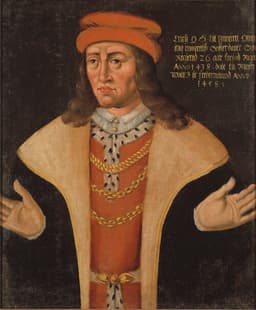
Eric of Pomerania
Emperor · Medieval
43.2Total

Julius Caesar
General · Ancient
82.8Total
Basic Information
Born
1381
-100
Died
1459
-44
Era
Medieval
Ancient
Nationality
Denmark
Roman Republic
Occupation
Emperor
General
Civilization
Western
Western
Score Comparison
Military (10%)
50.0
88.0
Political (20%)
35.1
78.0
Influence (20%)
49.4
85.0
Legacy (20%)
39.2
82.0
Leadership (15%)
48.4
80.0
Strategy (15%)
35.7
85.0
TOTAL
43.2
82.8
Eric of Pomerania — Complete Timeline
1397 AD
Crowned King of the Kalmar UnionPolitical Action◆ Major
Eric of Pomerania was crowned King of Denmark, Norway, and Sweden at the Kalmar Union meeting in 1397, under the regency of Margaret I. His coronation formalized the union of the three Scandinavian kingdoms, though Margaret retained real power until her death.
CoronationKalmar UnionScandinavia
Impact: regionalconstructive
1412 AD
Became sole ruler after Margaret I's deathPolitical Action◆ Major
After Margaret I's death, Eric of Pomerania became the sole ruler of the Kalmar Union. He attempted to centralize power and assert royal authority, but his policies often clashed with the nobility, leading to growing tensions within the union.
SuccessionKalmar UnionRule
Impact: regional
1426 AD
Fought the Dano-Hanseatic WarWar◆ Major
Eric of Pomerania engaged in a war with the Hanseatic League, a powerful trading confederation. The conflict, which lasted until 1435, resulted in Danish defeats and economic disruption, weakening the Kalmar Union's control over Baltic trade.
WarHanseatic LeagueTrade Conflict
Impact: regionaldestructive
1429 AD
Imposed the Sound DuesReform◆ Major
Eric of Pomerania introduced the Sound Dues, a toll on all ships passing through the
TaxTradeBaltic
Impact: regional
1439 AD
Deposed by the Danish and Swedish nobilityPolitical Action◆ Major
Eric of Pomerania was deposed as king of Denmark and Sweden by the nobility, who were dissatisfied with his rule and his handling of the union. He was forced into exile on the island of Gotland, and the Kalmar Union effectively collapsed.
DepositionKalmar UnionExile
Impact: regionaldestructive
Julius Caesar — Complete Timeline
58 BC
Gallic WarsWar◆ Major
Caesar, as proconsul of Gaul, launched a series of campaigns that conquered all of Gaul (modern France, Belgium, and parts of Switzerland). He fought numerous battles, including against the Helvetii, the Belgae, and the Gallic chieftain Vercingetorix. The wars brought immense wealth and a loyal army to Caesar.
Gallic WarsConquestRoman Expansion
Impact: regional
49 BC
Crossing the RubiconPolitical Action◆ Major
Caesar led Legio XIII across the Rubicon River into Italy, defying the Roman Senate's order to disband his army. This act triggered a civil war against Pompey and the Optimates, ultimately leading to Caesar's dictatorship and the end of the Roman Republic.
Roman Civil WarEnd of RepublicPower Struggle
Impact: global
48 BC
Battle of PharsalusWar◆ Major
Caesar's outnumbered army defeated the larger forces of Pompey the Great at Pharsalus in Greece. Caesar's tactical use of a reserve line to counter Pompey's cavalry charge proved decisive. Pompey fled to Egypt, where he was assassinated, leaving Caesar as the undisputed master of the Roman world.
Roman Civil WarBattleDecisive Victory
Impact: regional
44 BC
Appointment as Dictator for LifePolitical Action◆ Major
The Roman Senate appointed Caesar dictator perpetuo (dictator for life), granting him unprecedented personal power. This move concentrated military, legislative, and judicial authority in one person, effectively ending the Roman Republic's traditional system of checks and balances and alarming many senators.
DictatorshipEnd of RepublicPower Consolidation
Impact: regionaldestructive
Assassination on the Ides of MarchPolitical Action◆ Major
A group of Roman senators, led by Marcus Junius Brutus and Gaius Cassius Longinus, stabbed Caesar to death at a meeting of the Senate in the Theatre of Pompey. The assassination was intended to restore the Republic, but instead triggered another civil war that led to the rise of the Roman Empire.
AssassinationRoman PoliticsEnd of Republic
Impact: globaldestructive
Expert Analysis
eric-of-pomerania-vs-julius-caesar
# The Weight of a Crown: Julius Caesar and Eric of Pomerania
On the Ides of March, 44 BCE, a dictator lay bleeding on the floor of the Roman Senate, his body pierced by sixty daggers. Across the centuries and a thousand miles north, in 1439, another ruler—Eric of Pomerania—fled his own kingdoms, deposed by nobles who had grown weary of his ambitions. One man’s death became the birth cry of an empire; the other’s exile faded into a footnote of Nordic history. What separated these two figures, both born to rule, both consumed by the struggle for power?
Origins
Julius Caesar entered the world in 100 BCE, a scion of the patrician Julian clan, but his family was hardly wealthy. Rome itself was a republic in crisis—torn between senatorial oligarchy and populist reformers. Caesar grew up in the shadow of civil wars and the dictatorship of Sulla, learning early that survival meant navigating politics with cunning and ambition. He was a boy who wept when he saw a statue of Alexander the Great, lamenting that at his age, the Macedonian had already conquered the world.
Eric of Pomerania was born in 1381, a prince of a minor German dynasty, but his destiny was shaped by a woman—Margaret I of Denmark. The Kalmar Union, which united Denmark, Norway, and Sweden under a single crown, was Margaret’s creation, and she adopted young Eric as her heir. He was raised in her court, groomed for a throne he did not earn. Where Caesar had to claw his way upward through debt, military service, and oratory, Eric inherited a fragile confederation of resentful kingdoms.
Rise to Power
Caesar’s path was a masterpiece of calculated risk. He won military glory in Spain, forged the First Triumvirate with Pompey and Crassus, and then secured the governorship of Gaul. Between 58 and 50 BCE, he conquered the entire region, crossing the Rhine and invading Britain—feats that made him the most celebrated general in Rome. But his true genius lay in understanding that military fame alone was not enough. He built a political machine, cultivated the urban poor, and wrote his own commentaries to shape public opinion.
Eric, by contrast, ascended not through conquest but through inheritance. He was crowned King of the Kalmar Union in 1397, at age sixteen, but real power remained with Margaret until her death in 1412. When he finally became sole ruler, he faced a union already strained by regional loyalties. The Swedish nobility, in particular, resented Danish dominance. Eric’s rise was not a climb but a handover—and he lacked the charisma or military prowess to command loyalty.
Leadership & Governance
Caesar governed as he fought: boldly, innovatively, and often ruthlessly. As dictator, he reformed the calendar, granted citizenship to provincials, launched public works projects, and centralized authority in ways that broke the old republican order. His military leadership was extraordinary—at Alesia, he besieged a Gallic army while simultaneously fighting off a massive relief force, turning certain defeat into a textbook victory. Yet his political wisdom was brittle. He pardoned his enemies, only to have them stab him. He trusted too much in his own brilliance.
Eric’s governance was more cautious but less effective. He attempted to centralize the Kalmar Union by reducing the power of the nobility and the Hanseatic League, the dominant trading confederation in the Baltic. In 1426, he fought the Dano-Hanseatic War, a conflict that drained resources and alienated merchants. His most lasting achievement came in 1429, when he imposed the Sound Dues—a toll on all ships passing through the Øresund strait. This tax became a major source of revenue for Denmark for centuries, but in Eric’s time, it only deepened resentment. He was a reformer without the political capital to enforce his will.
Triumph & Tragedy
Caesar’s greatest moment was his final triumph: the crossing of the Rubicon in 49 BCE, when he defied the Senate and marched on Rome. It was a gamble that ignited civil war, but his victory at Pharsalus made him master of the Roman world. His tragedy was that he could not stop. He refused to restore the republic, accepted the title “dictator for life,” and wore the purple robe of a king in all but name. His assassination on the Ides of March was almost inevitable—a man who had conquered the world could not conquer his own ambition.
Eric’s triumph was quieter: the Sound Dues endured, a monument to his vision. But his tragedy was a slow unraveling. The Dano-Hanseatic War ended inconclusively. Swedish nobles rebelled, and by 1439, both Denmark and Sweden deposed him. He spent the last twenty years of his life as a pirate on the Baltic island of Gotland, a king without a kingdom. He died in 1459, forgotten by the courts he once ruled.
Character & Destiny
Caesar was restless, brilliant, and deeply human. He wept, he gambled, he seduced—and he wrote about it all with a clarity that still stuns readers. His personality drove him to break every boundary, and that same drive destroyed him. He could not imagine a world where he was not the center.
Eric was more cautious, perhaps more realistic, but also less inspiring. He tried to rule a union that had no natural unity, and he lacked the military genius to compel obedience. Where Caesar bent the world to his will, Eric was bent by it. Their different outcomes reflect not just skill but context: Caesar lived in a republic ripe for transformation; Eric inherited a union already cracking.
Legacy
Caesar’s legacy is the Roman Empire itself. His adopted son Octavian became Augustus, and the imperial system Caesar pioneered lasted for centuries. His name became synonymous with autocracy—Kaiser, Tsar—and his writings remain foundational texts in military strategy and Latin literature. He is remembered as both a tyrant and a visionary.
Eric’s legacy is more modest. The Sound Dues enriched Denmark until 1857, but his reign is largely forgotten outside Scandinavia. Historians score him low in military and strategy—37.7 and 52.0, respectively—while Caesar towers at 88.0 in both. Yet Eric’s political score of 73.4 is not far below Caesar’s 78.0. He understood power; he simply could not hold it.
Conclusion
Standing on the deck of a ship in the Øresund, watching the tolls flow in, Eric of Pomerania might have imagined himself a Caesar of the North. But history is not kind to those who inherit what they cannot defend. Caesar built an empire from a civil war; Eric lost a union to a quiet revolt. Both men reached for greatness, but only one understood that the crown is not a gift—it is a weapon, and you must be willing to use it.
Rankings
🥇
Julius CaesarLeader
Mil: 88.0Pol: 78.0Inf: 85.0
82.8
🥈
Eric of Pomerania
Mil: 50.0Pol: 35.1Inf: 49.4
43.2
+39.6 behind
How This Comparison Works
Algorithm
Each figure is scored on 6 dimensions (0—100 scale) based on structured historical data: Military (10%), Political (20%), Influence (20%), Legacy (20%), Leadership (15%), Strategy (15%). The weighted total produces the final ranking.
Data Sources
Scores are computed from structured sub-indicators in the database. Scale factors adjust for era (Ancient ×0.85, Modern ×1.0) and civilization size (Eastern ×1.05, Other ×0.80) to account for differences in population and military scale.
Maximum 3 Figures
Comparisons are limited to 2—3 figures to ensure readability and statistical meaningfulness.
Error Margins
±5 points per dimension — Sub-scores are derived from historical records with inherent uncertainty. Two figures within 5 points on a dimension should be considered roughly equivalent in that area.
Total Score Accuracy
±3 points overall — The weighted combination of 6 dimensions produces a total score with approximately ±3 points of uncertainty. Differences of less than 3 points are not statistically significant— the figures are effectively tied.
Known Limitations
- Historical records are incomplete and uneven across civilizations
- Figures from oral-tradition societies may be underrepresented
- Occupation labels can misclassify multi-role figures
- Scores measure capability and impact, not moral character
- Quantitative scoring is a comparison tool, not absolute truth
Capability Radar
Military (10%) — Battles & Warfare
Battles
20
95
Win Rate
25
92
Expansion
15
97
Political (20%) — Governance & Reform
Reform
30
90
Diplomacy
35
85
Economy
25
82
Influence (20%) — Cultural & Global Reach
Cultural
20
88
Global
15
94
Legacy (20%) — Historical Impact
Historical
25
95
Longevity
20
96
Leadership (15%) — Power & Stability
Tenure
40
75
Stability
20
60
Strategy (15%) — Tactics & Innovation
Strategy
20
94
Tactics
15
96
Reform
10
88
Similar Comparisons
Comments & Discussion
ERIC_THE_SMARTER6/17/2026
Caesar didn't just conquer—he actually kept his crown. Eric lost three kingdoms because he couldn't read the room. While Caesar manipulated the Roman Senate like a chessboard, Eric alienated the Swedish nobility by favoring Danes. Caesar understood that power requires constant political theater; Eric thought being king was a birthright. One died a legend, the other died forgotten in a Baltic castle. That's the difference between genuine political genius and a spoiled prince with a grandmother's
历史猎手6/17/2026
说白了,埃里克就是拼奶奶的富二代,恺撒才是真正的创业者。一个靠继承上位,一个靠高卢战争打出的声望和金钱买通元老院。埃里克丢了三国霸业,就因为不肯住在瑞典,非要赖在哥本哈根。恺撒要是在高卢躺平九年不搞宣传战,早被元老们当废物清算了。政治赌桌上,出生赢来的筹码永远不如自己赚来的烫手。
AETIUS_FANBOY6/17/2026
Military perspective: Caesar was a tactical revolutionary who wrote the book on siege warfare and counterinsurgency—literally. Eric left zero military legacy. While Caesar pacified Gaul with brilliant logistics and clemency, Eric's only real campaign was a failed naval war against the Hanseatic League. Imagine comparing Alexander to a guy who couldn't beat some German merchants. That's the gap here. One carved an empire with his sword; the other couldn't hold three kingdoms with a fleet.
罗马幽灵6/17/2026
你们历史党都忘了最关键的:恺撒杀的贵族比埃里克见过的亲王还多。元老院那六十刀不是谋杀,是对独裁者的终极投票。埃里克被废时,贵族们只是礼貌请他离场。恺撒的血在欧洲地图上烧了五百年;埃里克的退位令扔进波罗的海都溅不起水花。真相是——失败者的命运不由自己决定,而由敌人对你的恐惧程度决定。