Loading...
Al-Walid I vs Julius Caesar
Julius Caesar leads by 14.2 pts · 2 figures compared
…
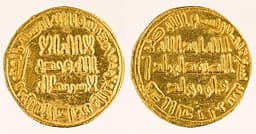
Al-Walid I
Emperor · Medieval
68.6Total

Julius Caesar
General · Ancient
82.8Total
Basic Information
Born
668
-100
Died
715
-44
Era
Medieval
Ancient
Nationality
Umayyad Caliphate
Roman Republic
Occupation
Emperor
General
Civilization
Middle Eastern
Western
Score Comparison
Military (10%)
76.0
88.0
Political (20%)
70.0
78.0
Influence (20%)
88.0
85.0
Legacy (20%)
40.0
82.0
Leadership (15%)
80.0
80.0
Strategy (15%)
65.4
85.0
TOTAL
68.6
82.8
Al-Walid I — Complete Timeline
700 AD
Patronage of Arabic language and administrationReform◆ Major
Al-Walid I made Arabic the official language of administration across the caliphate, replacing Greek and Persian. This standardized governance and promoted the spread of Arabic culture and Islam.
LanguageAdministrationArabization
Impact: globalprogressive
705 AD
Expansion of the Umayyad CaliphateWar
Al-Walid I oversaw the expansion of the Umayyad Caliphate to its greatest territorial extent. Conquests included Transoxiana, Sindh, and parts of Spain, making the caliphate one of the largest empires in history.
ConquestExpansionEmpire
Impact: global
706 AD
Construction of the Great Mosque of DamascusCultural◆ Major
Al-Walid I commissioned the construction of the Umayyad Mosque in Damascus, transforming a Christian basilica into a grand mosque. It became a masterpiece of Islamic architecture and a major pilgrimage site.
ArchitectureMosqueDamascus
Impact: globalconstructive
Julius Caesar — Complete Timeline
58 BC
Gallic WarsWar◆ Major
Caesar, as proconsul of Gaul, launched a series of campaigns that conquered all of Gaul (modern France, Belgium, and parts of Switzerland). He fought numerous battles, including against the Helvetii, the Belgae, and the Gallic chieftain Vercingetorix. The wars brought immense wealth and a loyal army to Caesar.
Gallic WarsConquestRoman Expansion
Impact: regional
49 BC
Crossing the RubiconPolitical Action◆ Major
Caesar led Legio XIII across the Rubicon River into Italy, defying the Roman Senate's order to disband his army. This act triggered a civil war against Pompey and the Optimates, ultimately leading to Caesar's dictatorship and the end of the Roman Republic.
Roman Civil WarEnd of RepublicPower Struggle
Impact: global
48 BC
Battle of PharsalusWar◆ Major
Caesar's outnumbered army defeated the larger forces of Pompey the Great at Pharsalus in Greece. Caesar's tactical use of a reserve line to counter Pompey's cavalry charge proved decisive. Pompey fled to Egypt, where he was assassinated, leaving Caesar as the undisputed master of the Roman world.
Roman Civil WarBattleDecisive Victory
Impact: regional
44 BC
Appointment as Dictator for LifePolitical Action◆ Major
The Roman Senate appointed Caesar dictator perpetuo (dictator for life), granting him unprecedented personal power. This move concentrated military, legislative, and judicial authority in one person, effectively ending the Roman Republic's traditional system of checks and balances and alarming many senators.
DictatorshipEnd of RepublicPower Consolidation
Impact: regionaldestructive
Assassination on the Ides of MarchPolitical Action◆ Major
A group of Roman senators, led by Marcus Junius Brutus and Gaius Cassius Longinus, stabbed Caesar to death at a meeting of the Senate in the Theatre of Pompey. The assassination was intended to restore the Republic, but instead triggered another civil war that led to the rise of the Roman Empire.
AssassinationRoman PoliticsEnd of Republic
Impact: globaldestructive
Expert Analysis
al-walid-i-vs-julius-caesar
# The Conqueror and the Builder: Caesar and Al-Walid I
On the Ides of March, 44 BCE, a Roman dictator lay bleeding on the floor of the Senate, his body pierced by sixty dagger wounds. In Damascus, seven centuries later, a caliph stood beneath the golden mosaics of a newly transformed mosque, watching sunlight dance across marble walls. Both men reached for eternity. One through conquest, the other through stone. Julius Caesar and Al-Walid I never met, never corresponded, never shared a language or a god. Yet each faced the same fundamental question: How does a ruler leave a mark that time cannot erase?
Origins
Caesar was born into the twilight of the Roman Republic, a world of senatorial intrigue, civil wars, and a political system straining under the weight of empire. His family, the Julii, claimed descent from the goddess Venus—a pedigree that mattered in a society obsessed with ancestry. But the Republic was crumbling, and a man of ambition needed more than a divine lineage. He needed legions.
Al-Walid ibn Abd al-Malik was born in 668 CE, a prince of the Umayyad dynasty, ruling from Damascus over an empire that stretched from Spain to the Indus. His father had crushed internal rebellions and centralized power. The Arab conquests had already transformed the Middle East, but the caliphate was still a patchwork of languages, religions, and administrative systems. Al-Walid inherited a realm that was vast but fragile. He understood that swords alone could not hold it together.
Rise to Power
Caesar’s ascent was a masterpiece of calculated risk. He climbed the political ladder through military commands in Spain and a shrewd alliance with Pompey and Crassus—the First Triumvirate. But his true springboard was Gaul. Between 58 and 50 BCE, he conquered a territory larger than Italy, fought over a million enemies, and wrote his own propaganda in *Commentaries on the Gallic War*. When the Senate ordered him to disband his army, he crossed the Rubicon River in 49 BCE, a decision that ignited a civil war and made him master of Rome.
Al-Walid became caliph in 705 CE, inheriting a throne rather than seizing it. His rise was smooth, but his challenges were profound. The Umayyad Caliphate had expanded so rapidly that its administration was a chaos of Greek-speaking bureaucrats, Persian tax collectors, and Arab governors. Al-Walid’s genius lay not in conquering new lands—though he did expand into Transoxiana and Spain—but in consolidating what his ancestors had taken.
Leadership & Governance
Caesar governed like a storm. He reformed the calendar, granted citizenship to provincials, initiated public works, and centralized power in his own hands. His military strategy was aggressive, opportunistic, and personal—he led from the front, shared hardships with his soldiers, and once said, “I would rather be the first man in a little village than the second man in Rome.” His political wisdom was more fragile. He pardoned his enemies, but they did not forgive him. He accumulated powers—dictator for ten years, then for life—but never built institutions that could survive without him.
Al-Walid governed like an architect. His most enduring act was the construction of the Great Mosque of Damascus, completed in 706 CE. He transformed a Christian basilica dedicated to John the Baptist into a monument of Islamic art, covering its walls with gold mosaics, marble, and intricate carvings. He also made Arabic the official language of administration across the caliphate, replacing Greek in Syria and Persian in Iraq. This was not a trivial reform—it unified a multilingual empire, shaped Islamic civilization, and ensured that the Quran would be studied in its original tongue. His military campaigns were competent but not legendary. He was not a general in the field like Caesar; he was a patron who sent armies east and west while he stayed in Damascus, building.
Triumph & Tragedy
Caesar’s greatest triumph was his conquest of Gaul, a feat of military brilliance that made him a legend. His greatest failure was his own assassination. He centralized power so completely that his enemies saw no alternative but murder. When he fell, the Republic fell with him, and the Empire rose from its ashes—but not under his name. His adopted heir, Octavian, became Augustus. Caesar’s tragedy was that he could not secure his own legacy while alive.
Al-Walid’s triumph was the Great Mosque, a building that still stands after thirteen centuries, a living testament to his vision. His tragedy was less dramatic, but real: much of his territorial expansion was reversed after his death, and his successors struggled to maintain his administrative reforms. The Umayyad dynasty itself fell in 750 CE, overthrown by the Abbasids. Yet the mosque remained, and Arabic remained, and the cultural unity he forged endured.
Character & Destiny
Caesar was restless, brilliant, and dangerously charismatic. He gambled everything—his life, his fortune, his reputation—on the belief that he could reshape history. He was right, but the cost was his own destruction. Al-Walid was different: patient, systematic, focused on legacy rather than glory. He understood that empires are built not only by armies but by bureaucracies, languages, and sacred spaces. His destiny was to be remembered not as a warrior but as a builder.
Legacy
Caesar’s legacy is immense and paradoxical. His name became synonymous with imperial power—*Kaiser* in German, *Tsar* in Russian. His writings shaped military strategy for two millennia. But his political model was unstable, and his assassination proved that even the greatest ruler cannot control what happens after his death.
Al-Walid’s legacy is quieter but more tangible. The Great Mosque of Damascus remains one of the most important buildings in Islamic history. The Arabic language, standardized under his reign, became the lingua franca of a civilization. He did not conquer the world; he organized it.
Conclusion
Caesar and Al-Walid represent two paths to immortality. One took the sword, crossed rivers, and challenged fate itself. The other took the pen, the chisel, and the administrative decree. Both succeeded. Both failed. Caesar’s name echoes through history, but his political system collapsed within a generation. Al-Walid’s name is less known, but his mosque still stands, and his language is still spoken by millions. In the end, perhaps the builder’s legacy is more durable than the conqueror’s—because stone outlasts flesh, and culture outlasts empire.
Rankings
🥇
Julius CaesarLeader
Mil: 88.0Pol: 78.0Inf: 85.0
82.8
🥈
Al-Walid I
Mil: 76.0Pol: 70.0Inf: 88.0
68.6
+14.2 behind
How This Comparison Works
Algorithm
Each figure is scored on 6 dimensions (0—100 scale) based on structured historical data: Military (10%), Political (20%), Influence (20%), Legacy (20%), Leadership (15%), Strategy (15%). The weighted total produces the final ranking.
Data Sources
Scores are computed from structured sub-indicators in the database. Scale factors adjust for era (Ancient ×0.85, Modern ×1.0) and civilization size (Eastern ×1.05, Other ×0.80) to account for differences in population and military scale.
Maximum 3 Figures
Comparisons are limited to 2—3 figures to ensure readability and statistical meaningfulness.
Error Margins
±5 points per dimension — Sub-scores are derived from historical records with inherent uncertainty. Two figures within 5 points on a dimension should be considered roughly equivalent in that area.
Total Score Accuracy
±3 points overall — The weighted combination of 6 dimensions produces a total score with approximately ±3 points of uncertainty. Differences of less than 3 points are not statistically significant— the figures are effectively tied.
Known Limitations
- Historical records are incomplete and uneven across civilizations
- Figures from oral-tradition societies may be underrepresented
- Occupation labels can misclassify multi-role figures
- Scores measure capability and impact, not moral character
- Quantitative scoring is a comparison tool, not absolute truth
Capability Radar
Military (10%) — Battles & Warfare
Battles
75
95
Win Rate
80
92
Expansion
85
97
Political (20%) — Governance & Reform
Reform
85
90
Diplomacy
70
85
Economy
80
82
Influence (20%) — Cultural & Global Reach
Cultural
85
88
Global
70
94
Legacy (20%) — Historical Impact
Historical
80
95
Longevity
75
96
Leadership (15%) — Power & Stability
Tenure
80
75
Stability
75
60
Strategy (15%) — Tactics & Innovation
Strategy
75
94
Tactics
70
96
Reform
65
88
Similar Comparisons
Comments & Discussion
ConquestApostle6/17/2026
Caesar conquered Gaul with iron and blood, Al-Walid built mosques with gold and prayer. But here's the truth: Caesar's Commentaries are still read, still debated, still alive. Al-Walid's Great Mosque? A beautiful tomb. One man wrote his legacy in the minds of men, the other in fading stone. The sword outlasts the stone every time. Hail Caesar, not the caliph.
数据铁匠6/17/2026
数据不会撒谎:凯撒在8年内征服了300个部落、800个城市,高卢战争死伤百万;而瓦利德一世统治10年,主要军事成就不过是攻占撒马尔罕。论征服密度,凯撒每秒都在流血,瓦利德却在悠闲地贴金砖。别被宗教光环骗了,数字站在罗马人这边。
ClassicistEagle6/17/2026
Caesar defeated the Gauls, crossed the Rubicon, and still found time to reform the calendar. Al-Walid built a mosque. Impressive, but let’s be honest—Julius changed how Romans *thought* about time itself. The Great Mosque of Damascus is a wonder, but it didn’t re-order the cosmos. Caesar’s legacy? The Julian calendar, still used in fragments today. Walid’s? Mosaics. Beautiful mosaics.
王朝重构者6/17/2026
你们都在吹瓦利德是“建筑之王”,可别忘了,他拆了基督教教堂才盖起那座清真寺。凯撒从不靠推倒对手的神庙来彰显伟大——他建广场、修水道、写战记。瓦利德是个宗教工具人,靠挪用异教遗产刷功绩。真正的文明建造者从不偷别人的砖来砌自己的庙。
SkepticQuill6/17/2026
Everyone fawns over Al-Walid's mosque, but the truth is darker. The tax base collapsed during his reign because of overspending on construction. Syria's economy? Strained. Meanwhile, Caesar's conquest of Gaul flooded Rome with gold and slaves—massive economic stimulus. Walid built beauty on borrowed time; Caesar built empire on cold, hard cash. I'll take the pragmatist over the spendthrift every time.