Loading...
Al-Wathiq vs Julius Caesar
Julius Caesar leads by 34.9 pts · 2 figures compared
…
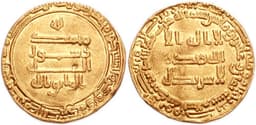
Al-Wathiq
Emperor · Medieval
47.9Total

Julius Caesar
General · Ancient
82.8Total
Basic Information
Born
812
-100
Died
847
-44
Era
Medieval
Ancient
Nationality
Abbasid Caliphate
Roman Republic
Occupation
Emperor
General
Civilization
Middle Eastern
Western
Score Comparison
Military (10%)
50.0
88.0
Political (20%)
42.3
78.0
Influence (20%)
51.8
85.0
Legacy (20%)
40.8
82.0
Leadership (15%)
65.7
80.0
Strategy (15%)
35.7
85.0
TOTAL
47.9
82.8
Al-Wathiq — Complete Timeline
842 AD
Reign during the Abbasid Golden AgeCultural◆ Major
Al-Wathiq's reign (842-847) occurred during the peak of the Abbasid Golden Age. He continued the patronage of scholars and the translation movement, though his rule was short and marked by internal stability.
Golden AgePatronage
Impact: globalconstructive
845 AD
Suppression of the Bedouin RevoltWar
Al-Wathiq sent forces to suppress a Bedouin revolt in the Arabian Peninsula. The rebellion was crushed, reaffirming Abbasid authority over the region.
RevoltInternal Conflict
Impact: regionaldestructive
Julius Caesar — Complete Timeline
58 BC
Gallic WarsWar◆ Major
Caesar, as proconsul of Gaul, launched a series of campaigns that conquered all of Gaul (modern France, Belgium, and parts of Switzerland). He fought numerous battles, including against the Helvetii, the Belgae, and the Gallic chieftain Vercingetorix. The wars brought immense wealth and a loyal army to Caesar.
Gallic WarsConquestRoman Expansion
Impact: regional
49 BC
Crossing the RubiconPolitical Action◆ Major
Caesar led Legio XIII across the Rubicon River into Italy, defying the Roman Senate's order to disband his army. This act triggered a civil war against Pompey and the Optimates, ultimately leading to Caesar's dictatorship and the end of the Roman Republic.
Roman Civil WarEnd of RepublicPower Struggle
Impact: global
48 BC
Battle of PharsalusWar◆ Major
Caesar's outnumbered army defeated the larger forces of Pompey the Great at Pharsalus in Greece. Caesar's tactical use of a reserve line to counter Pompey's cavalry charge proved decisive. Pompey fled to Egypt, where he was assassinated, leaving Caesar as the undisputed master of the Roman world.
Roman Civil WarBattleDecisive Victory
Impact: regional
44 BC
Appointment as Dictator for LifePolitical Action◆ Major
The Roman Senate appointed Caesar dictator perpetuo (dictator for life), granting him unprecedented personal power. This move concentrated military, legislative, and judicial authority in one person, effectively ending the Roman Republic's traditional system of checks and balances and alarming many senators.
DictatorshipEnd of RepublicPower Consolidation
Impact: regionaldestructive
Assassination on the Ides of MarchPolitical Action◆ Major
A group of Roman senators, led by Marcus Junius Brutus and Gaius Cassius Longinus, stabbed Caesar to death at a meeting of the Senate in the Theatre of Pompey. The assassination was intended to restore the Republic, but instead triggered another civil war that led to the rise of the Roman Empire.
AssassinationRoman PoliticsEnd of Republic
Impact: globaldestructive
Expert Analysis
al-wathiq-vs-julius-caesar
The Ides of March and the Throne of Silence
On a March morning in 44 BCE, a man in a purple toga fell at the base of a marble statue, stabbed twenty-three times by men who had called him friend. Julius Caesar, master of the known world, died not in battle but in a chamber of betrayal. Across the Mediterranean, nearly nine centuries later, another ruler sat on a throne in Baghdad. Al-Wathiq, the ninth Caliph of the Abbasid dynasty, reigned for just five years, then died quietly in his palace at the age of thirty-five—no daggers, no conspiracy, no empire-shaking fall. Between these two ends lies a chasm not merely of time, but of ambition, power, and the very meaning of leadership.
Origins
Caesar was born into the chaos of the late Roman Republic, a world of civil wars, senatorial intrigue, and the crumbling of old aristocratic norms. His family, the Julii, claimed descent from the goddess Venus, but they were not among the ruling elite. His father died when Caesar was sixteen, leaving him to navigate a treacherous political landscape with little inherited influence. The Republic rewarded ruthlessness, and Caesar learned early that survival meant seizing every opportunity.
Al-Wathiq was born into the opposite: stability. By 812 CE, the Abbasid Caliphate had already weathered its greatest storms. His father, Caliph al-Mu'tasim, and his grandfather, the legendary Harun al-Rashid, had established a state where power flowed from the palace, not the forum. Al-Wathiq grew up surrounded by scholars, poets, and administrators, the heir to a system that had perfected the art of courtly governance. He never knew hunger, exile, or the sting of defeat. His world was one of order, not upheaval.
Rise to Power
Caesar’s path to supremacy was a long, grinding climb. He served as a military tribune in Asia, was captured by pirates (whom he later crucified), and climbed the Roman political ladder—quaestor, aedile, praetor—each step a gamble. His true breakthrough came in 58 BCE, when he secured the governorship of Gaul. Over the next eight years, he conquered a territory larger than Italy itself, amassing a personal army loyal to him, not the Republic. When the Senate ordered him to disband his legions, he crossed the Rubicon River in 49 BCE, igniting a civil war. By 45 BCE, he was dictator of Rome.
Al-Wathiq’s rise was bloodless. He was designated heir by his father, and when al-Mu'tasim died in 842 CE, the caliphate passed to him without a sword drawn. There was no rival general, no rebellious province, no contested election. The Abbasid bureaucracy simply transferred its loyalty. It was, in its own way, a triumph of statecraft—a system so refined that the death of a ruler caused barely a ripple.
Leadership & Governance
Caesar governed like a storm. As dictator, he reformed the calendar, expanded citizenship to provincials, launched massive building projects, and planned invasions of Parthia and Germania. His military genius was unmatched: at the Battle of Alesia in 52 BCE, he besieged a Gallic army while simultaneously fighting off a relief force, a feat of strategy that still earns study in war colleges. But his political wisdom was flawed. He centralized power so completely that he made enemies of the very senators who had once supported him, and his arrogance—accepting a crown, naming himself dictator for life—turned allies into assassins.
Al-Wathiq ruled like a patron. His reign (842–847) was the quiet apex of the Abbasid Golden Age. He continued his father’s support for the *Mu'tazila* theological school, which championed rationalism and free will, and funded the translation of Greek philosophy into Arabic. In 845, when Bedouin tribes revolted in the Arabian Peninsula, he dispatched an army that crushed the rebellion efficiently, reaffirming Abbasid control. But he did not lead the troops himself; he remained in Baghdad, surrounded by books and courtiers. His military score of 16.8 reflects not cowardice but a different conception of power—the caliph as symbol, not soldier.
Triumph & Tragedy
Caesar’s greatest triumph was his conquest of Gaul, which doubled Rome’s territory and made him the most powerful man in the Republic. His most devastating failure was his inability to read the conspiracy forming around him. On the Ides of March, 44 BCE, he walked into the Senate and died, his blood pooling on the floor where Pompey’s statue stood—a tragic irony, for Pompey had been his greatest rival. His last recorded words, according to some accounts, were "Et tu, Brute?"—a cry of personal betrayal that echoed through history.
Al-Wathiq’s triumph was cultural, not martial. His court produced some of the finest works of Islamic philosophy and literature, including the compilations of the *One Thousand and One Nights* that later enchanted the world. His tragedy was his obscurity. He died of illness in 847, possibly from a fever, and was buried quietly. No one stabbed him, no one betrayed him, no one even remembers his death as a turning point. He simply ceased to exist, his name fading into the footnotes of a golden age that belonged to others.
Character & Destiny
Caesar was driven by an insatiable hunger for glory. He wrote his own commentaries, staged lavish triumphs, and even had his image stamped on coins—a break with Roman tradition that proclaimed his personal supremacy. His personality shaped every decision: the crossing of the Rubicon was not a strategic necessity but a declaration of self. He could not imagine a world where he was not first. This ambition made him great, but it also made him blind. He saw the Senate as tools, not threats.
Al-Wathiq was driven by intellectual curiosity. He debated theology with scholars, corresponded with philosophers, and surrounded himself with men of learning. His personality was that of a connoisseur, not a conqueror. He saw the caliphate as a garden to be tended, not a battlefield to be won. This made him beloved by his court but invisible to history. He left no mark because he sought none.
Legacy
Caesar’s legacy is the Roman Empire. His reforms, his military conquests, and his assassination set the stage for Augustus to transform the Republic into an imperial system that lasted five hundred years in the West and another thousand in the East. His name became synonymous with power: *Kaiser*, *Tsar*, *Caesar*—every emperor who followed borrowed his title. He is remembered as a genius, a tyrant, and a martyr, depending on who tells the story.
Al-Wathiq’s legacy is the Abbasid Golden Age itself—but as a contributor, not a creator. The great caliphs of that era are Harun al-Rashid and al-Ma'mun; al-Wathiq is the bridge between them, a caretaker who kept the flame burning but did not light it. His influence score of 65.5 reflects a man who mattered in his time but vanished from the collective memory. He is remembered, if at all, as the caliph who died young, leaving the throne to his less capable brother.
Conclusion
Two rulers, two worlds. Caesar fell because he reached too high; al-Wathiq faded because he reached too low. One shaped history through ambition; the other through absence. Between them lies a profound truth: power, in the end, is not about what you inherit but what you dare. Caesar dared everything and lost everything—but in losing, won eternity. Al-Wathiq dared nothing and kept everything—but in keeping, lost even his name. The Ides of March echo still; the throne of Baghdad is silent.
Rankings
🥇
Julius CaesarLeader
Mil: 88.0Pol: 78.0Inf: 85.0
82.8
🥈
Al-Wathiq
Mil: 50.0Pol: 42.3Inf: 51.8
47.9
+34.9 behind
How This Comparison Works
Algorithm
Each figure is scored on 6 dimensions (0—100 scale) based on structured historical data: Military (10%), Political (20%), Influence (20%), Legacy (20%), Leadership (15%), Strategy (15%). The weighted total produces the final ranking.
Data Sources
Scores are computed from structured sub-indicators in the database. Scale factors adjust for era (Ancient ×0.85, Modern ×1.0) and civilization size (Eastern ×1.05, Other ×0.80) to account for differences in population and military scale.
Maximum 3 Figures
Comparisons are limited to 2—3 figures to ensure readability and statistical meaningfulness.
Error Margins
±5 points per dimension — Sub-scores are derived from historical records with inherent uncertainty. Two figures within 5 points on a dimension should be considered roughly equivalent in that area.
Total Score Accuracy
±3 points overall — The weighted combination of 6 dimensions produces a total score with approximately ±3 points of uncertainty. Differences of less than 3 points are not statistically significant— the figures are effectively tied.
Known Limitations
- Historical records are incomplete and uneven across civilizations
- Figures from oral-tradition societies may be underrepresented
- Occupation labels can misclassify multi-role figures
- Scores measure capability and impact, not moral character
- Quantitative scoring is a comparison tool, not absolute truth
Capability Radar
Military (10%) — Battles & Warfare
Battles
20
95
Win Rate
25
92
Expansion
10
97
Political (20%) — Governance & Reform
Reform
30
90
Diplomacy
35
85
Economy
50
82
Influence (20%) — Cultural & Global Reach
Cultural
30
88
Global
20
94
Legacy (20%) — Historical Impact
Historical
25
95
Longevity
20
96
Leadership (15%) — Power & Stability
Tenure
40
75
Stability
45
60
Strategy (15%) — Tactics & Innovation
Strategy
20
94
Tactics
15
96
Reform
10
88
Similar Comparisons
Comments & Discussion
DaggerBrokenRome6/17/2026
Caesar’s assassination proves that centralized power without institutional loyalty is a ticking bomb. Al-Wathiq died peacefully because the Abbasid system had centuries of bureaucratic inertia—Caesar’s Republic was a fragile patchwork of personal loyalties. The real lesson: never confuse charisma with stability. Caesar’s twenty-three stab wounds are what happens when you think you’re the state, not just its temporary manager.
SilkRoadSkeptic6/17/2026
Seriously, comparing a five-year caliph to Caesar is like comparing a firefly to a supernova. Al-Wathiq’s reign was so unremarkable we barely have sources beyond court gossip. Caesar crossed the Rubicon, conquered Gaul, and rewrote history. One had empire-shaking ambition, the other was basically a placeholder between Harun al-Rashid’s glory and al-Mutawakkil’s purges. Let’s not inflate quiet deaths into deep wisdom.
沙漠留声机6/17/2026
瓦提克死于平静的寝宫,正是伊斯兰哈里发制度最致命的谎言。宫廷政治把一切冲突都包装成安拉的旨意,连一场政变都省了。凯撒二十三个伤口,至少证明共和制的腐败是公开的、血腥的。你们歌颂瓦提克的"安宁",其实是在赞扬独裁者不被背叛的幸运。真正的权力从来不应该是无声的妥协。
古典学考据派6/17/2026
凯撒在元老院遇刺前,曾有预言家警告他警惕三月望日。而瓦提克呢?史料记载他死前三天还在与诗人辩论逻辑学。一个领袖死于历史最戏剧性的背叛,另一个死于庸常的三十四岁。你说谁的死亡更有力量?凯撒的鲜血浇灌了帝国,瓦提克的沉默只留下了几段颂诗。
叛教者札记6/17/2026
拿瓦提克跟凯撒比,是在侮辱权力本身的重量。凯撒死在叛徒手中,瓦提克死在病榻上——但别忘了,瓦提克的父亲穆塔西姆靠突厥奴隶兵清洗了旧贵族,而瓦提克自己连清洗都懒得干。他的"平静"是懦夫的选择。权力从来不是安然离世,而是在墓志铭上刻下活着的证据。