Loading...
Ala-ud-din Khalji vs King Chungnyeol of Goryeo
Ala-ud-din Khalji leads by 17.8 pts · 2 figures compared
…
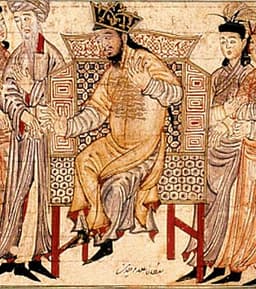
Ala-ud-din Khalji
Emperor · Medieval
64.9Total

King Chungnyeol of Goryeo
Emperor · Medieval
47.1Total
Basic Information
Born
1266
1236
Died
1316
1308
Era
Medieval
Medieval
Nationality
India
Korea
Occupation
Emperor
Emperor
Civilization
Indian
Eastern
Score Comparison
Military (10%)
82.2
21.2
Political (20%)
65.7
46.6
Influence (20%)
58.3
53.3
Legacy (20%)
58.0
45.0
Leadership (15%)
72.0
65.0
Strategy (15%)
69.2
36.8
TOTAL
64.9
47.1
Ala-ud-din Khalji — Complete Timeline
1296 AD
Accession to the Delhi SultanatePolitical Action
Ala-ud-din Khalji ascended the throne of the Delhi Sultanate after assassinating his uncle Jalal-ud-din Khalji. He consolidated power by eliminating rivals and implementing a centralized administration.
Delhi SultanateKhaljiAssassination
Impact: regional
1299 AD
Repulsion of the Mongol InvasionsWar◆ Major
Ala-ud-din Khalji defeated a Mongol invasion led by Qutlugh Khwaja near Delhi. He subsequently repelled several Mongol incursions between 1299 and 1306, using a combination of fortifications and military tactics, securing the Delhi Sultanate's northern frontier.
Mongol InvasionsDelhiDefense
Impact: regional
Conquest of GujaratWar◆ Major
Ala-ud-din Khalji led a campaign against the Vaghela kingdom of Gujarat, defeating King Karna II. He annexed Gujarat and plundered the Somnath temple, bringing immense wealth to the Delhi Sultanate.
GujaratSomnathAnnexation
Impact: regional
1300 AD
Economic Reforms and Price ControlReform◆ Major
Ala-ud-din Khalji implemented a system of price controls for essential goods, including grain, cloth, and horses. He established state granaries and fixed wages, aiming to maintain a stable economy and support his large army.
Price ControlEconomic ReformAdministration
Impact: regionalconstructive
1303 AD
Conquest of the DeccanWar◆ Major
Ala-ud-din Khalji's general Malik Kafur led campaigns into the Deccan, defeating the Yadava, Kakatiya, and Hoysala kingdoms. These conquests extended Delhi's rule to the southern tip of India and brought tribute from the Deccan states.
DeccanMalik KafurSouthern India
Impact: regional
King Chungnyeol of Goryeo — Complete Timeline
1274 AD
Participated in Mongol Invasion of JapanWar◆ Major
King Chungnyeol provided Goryeo ships, troops, and supplies for the first Mongol invasion of Japan. Goryeo forces suffered heavy losses in the failed campaign, which ended with the destruction of the fleet by a typhoon. This strained Goryeo's resources and population.
Mongol CampaignsJapanMilitary
Impact: regionaldestructive
Married Mongol PrincessPolitical Action◆ Major
King Chungnyeol married Princess Jeguk, a daughter of Kublai Khan, becoming the first Goryeo king to take a Mongol wife. This marriage formalized the Mongol-Goryeo alliance and made Chungnyeol a Mongol son-in-law (kuregen), strengthening ties with the Yuan dynasty.
Marriage AllianceMongol InfluenceDiplomacy
Impact: national
1275 AD
Adopted Mongol Customs and DressCultural
King Chungnyeol ordered Goryeo officials to adopt Mongol hairstyles and clothing, and introduced Mongol court ceremonies. This policy aimed to appease the Yuan court but caused resentment among Korean nobles who saw it as a betrayal of Korean identity.
Cultural ChangeMongolizationControversy
Impact: national
1281 AD
Participated in Second Mongol Invasion of JapanWar◆ Major
King Chungnyeol again mobilized Goryeo's navy and army for the second Mongol invasion of Japan. The campaign ended in disaster when a typhoon (kamikaze) destroyed the combined Mongol-Goryeo fleet, resulting in massive casualties and further draining Goryeo's economy.
Mongol CampaignsJapanMilitary
Impact: regionaltragic
Expert Analysis
Origins
Ala-ud-din Khalji (born c. 1266) was the nephew and son-in-law of Sultan Jalal-ud-din Khalji, founder of the Khalji dynasty in the Delhi Sultanate. He received military training and administrative experience under his uncle's reign. His early life was marked by ambition and a keen understanding of power dynamics, leading him to assassinate his uncle in 1296. In contrast, King Chungnyeol of Goryeo (born 1236) was born into the Goryeo royal family during a period of Mongol domination. His father, King Wonjong, had already submitted to the Mongol Empire, and Chungnyeol spent his youth as a hostage in the Mongol court. This formative experience deeply influenced his later policies of appeasement.
Rise to Power
Ala-ud-din Khalji seized the throne by murdering his uncle Jalal-ud-din Khalji in 1296, after a successful military campaign in Devagiri. He immediately consolidated power by eliminating rivals and executing nobles who opposed him. Within two years, he repelled the first major Mongol invasion (1299) led by Qutlugh Khwaja, securing his reputation. King Chungnyeol's rise was more passive: he ascended the throne in 1274 upon his father's abdication, largely because of his marriage to Princess Jeguk, daughter of Kublai Khan, which had been arranged to strengthen ties with the Mongols. His legitimacy came from Mongol approval rather than domestic support.
Leadership & Governance
Ala-ud-din Khalji's leadership was authoritarian and centralized. He implemented sweeping economic reforms, including price controls on grain, cloth, and horses, and established state granaries to prevent famine. He created an efficient spy network and enforced strict discipline in the army. His military campaigns were aggressive, expanding the sultanate into Gujarat (1299), the Deccan (1308-1311), and repelling multiple Mongol invasions. King Chungnyeol, by contrast, ruled as a vassal under Mongol suzerainty. He adopted Mongol customs, ordered officials to wear Mongol hairstyles and clothing, and introduced Mongol court ceremonies. He mobilized Goryeo's resources for Mongol campaigns, including the invasions of Japan (1274 and 1281), which drained the kingdom's economy and manpower. His governance prioritized pleasing the Mongols over domestic welfare.
Triumph & Tragedy
Ala-ud-din Khalji's greatest triumph was repelling the Mongol invasions, scoring 82.2 in military acumen. He also conquered the Deccan kingdoms, bringing vast wealth and territory to the Delhi Sultanate. His price control system, though controversial, stabilized the economy during his reign. However, his later years saw failures: his attempted conquest of Chittor (1303) failed, and his campaigns into the Deccan overstretched resources. His death in 1316 led to a succession crisis and the decline of the Khalji dynasty. King Chungnyeol's triumphs were limited: he maintained Goryeo's autonomy within the Mongol sphere, and his marriage to a Mongol princess brought temporary peace. But his tragedies were profound: his participation in the Mongol invasions of Japan resulted in massive losses—Goryeo ships and troops suffered heavily, and the second invasion ended in a typhoon (kamikaze) that destroyed the fleet. His adoption of Mongol culture alienated his subjects and weakened Goryeo's national identity.
Character & Destiny
Ala-ud-din Khalji was ambitious, ruthless, and strategic. He personally led troops and made decisions based on intelligence from his spy network. His character drove him to centralize power and expand aggressively, but his paranoia led him to purge potential successors, leaving no strong heir. King Chungnyeol was pragmatic and submissive, shaped by his years as a hostage. He chose cooperation over resistance, believing it was the only way to preserve his kingdom. This character led to a quiet reign but also to the erosion of Goryeo's sovereignty. Historians note that Chungnyeol's policies set a precedent for further Mongol intervention.
Legacy
Ala-ud-din Khalji's legacy is mixed: he is remembered as a strong sultan who defended India from Mongol invasions and expanded its territory. His economic reforms influenced later rulers, but his authoritarian methods and short-lived dynasty limited his lasting impact. He scores 58.0 in legacy. King Chungnyeol's legacy is that of a subservient ruler who preserved Goryeo's existence but at a high cost. His adoption of Mongol customs accelerated cultural blending but also sparked resentment. His scores in influence (53.3) and leadership (65.0) reflect his role as a stabilizing figure under difficult circumstances, but his overall impact is lower due to his lack of independent achievements.
Conclusion
Ala-ud-din Khalji had a greater impact than King Chungnyeol, as evidenced by his higher total score (64.9 vs 47.1). While both ruled during periods of Mongol threat, Khalji actively resisted and expanded his realm, whereas Chungnyeol submitted and served Mongol interests. Khalji's military and political achievements—repelling invasions, conquering territories, and implementing reforms—demonstrate a more significant and independent influence on history. Chungnyeol's legacy is largely defined by his subordination to the Mongols, making him a less impactful figure. The score gap of 17.8 points underscores this disparity.
Rankings
🥇
Ala-ud-din KhaljiLeader
Mil: 82.2Pol: 65.7Inf: 58.3
64.9
🥈
King Chungnyeol of Goryeo
Mil: 21.2Pol: 46.6Inf: 53.3
47.1
+17.8 behind
How This Comparison Works
Algorithm
Each figure is scored on 6 dimensions (0—100 scale) based on structured historical data: Military (10%), Political (20%), Influence (20%), Legacy (20%), Leadership (15%), Strategy (15%). The weighted total produces the final ranking.
Data Sources
Scores are computed from structured sub-indicators in the database. Scale factors adjust for era (Ancient ×0.85, Modern ×1.0) and civilization size (Eastern ×1.05, Other ×0.80) to account for differences in population and military scale.
Maximum 3 Figures
Comparisons are limited to 2—3 figures to ensure readability and statistical meaningfulness.
Error Margins
±5 points per dimension — Sub-scores are derived from historical records with inherent uncertainty. Two figures within 5 points on a dimension should be considered roughly equivalent in that area.
Total Score Accuracy
±3 points overall — The weighted combination of 6 dimensions produces a total score with approximately ±3 points of uncertainty. Differences of less than 3 points are not statistically significant— the figures are effectively tied.
Known Limitations
- Historical records are incomplete and uneven across civilizations
- Figures from oral-tradition societies may be underrepresented
- Occupation labels can misclassify multi-role figures
- Scores measure capability and impact, not moral character
- Quantitative scoring is a comparison tool, not absolute truth
Capability Radar
Military (10%) — Battles & Warfare
Battles
85
10
Win Rate
90
10
Expansion
82
10
Political (20%) — Governance & Reform
Reform
78
30
Diplomacy
70
70
Economy
80
30
Influence (20%) — Cultural & Global Reach
Cultural
60
30
Global
50
20
Legacy (20%) — Historical Impact
Historical
70
40
Longevity
55
30
Leadership (15%) — Power & Stability
Tenure
75
60
Stability
65
40
Strategy (15%) — Tactics & Innovation
Strategy
85
10
Tactics
88
10
Reform
80
10
Similar Comparisons
Comments & Discussion
No comments yet. Be the first to share your thoughts!