Loading...
Ala-ud-din Khalji vs Napoleon Bonaparte
Napoleon Bonaparte leads by 6.0 pts · 2 figures compared
…
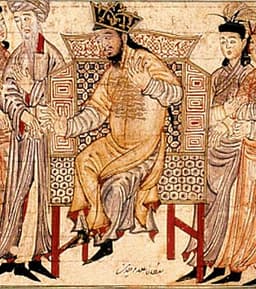
Ala-ud-din Khalji
Emperor · Medieval
64.9Total

Napoleon Bonaparte
General · Modern
70.9Total
Basic Information
Born
1266
1769
Died
1316
1821
Era
Medieval
Modern
Nationality
India
France
Occupation
Emperor
General
Civilization
Indian
Western
Score Comparison
Military (10%)
82.2
94.0
Political (20%)
65.7
72.0
Influence (20%)
58.3
40.0
Legacy (20%)
58.0
80.0
Leadership (15%)
72.0
78.0
Strategy (15%)
69.2
90.0
TOTAL
64.9
70.9
Ala-ud-din Khalji — Complete Timeline
1296 AD
Accession to the Delhi SultanatePolitical Action
Ala-ud-din Khalji ascended the throne of the Delhi Sultanate after assassinating his uncle Jalal-ud-din Khalji. He consolidated power by eliminating rivals and implementing a centralized administration.
Delhi SultanateKhaljiAssassination
Impact: regional
1299 AD
Repulsion of the Mongol InvasionsWar◆ Major
Ala-ud-din Khalji defeated a Mongol invasion led by Qutlugh Khwaja near Delhi. He subsequently repelled several Mongol incursions between 1299 and 1306, using a combination of fortifications and military tactics, securing the Delhi Sultanate's northern frontier.
Mongol InvasionsDelhiDefense
Impact: regional
Conquest of GujaratWar◆ Major
Ala-ud-din Khalji led a campaign against the Vaghela kingdom of Gujarat, defeating King Karna II. He annexed Gujarat and plundered the Somnath temple, bringing immense wealth to the Delhi Sultanate.
GujaratSomnathAnnexation
Impact: regional
1300 AD
Economic Reforms and Price ControlReform◆ Major
Ala-ud-din Khalji implemented a system of price controls for essential goods, including grain, cloth, and horses. He established state granaries and fixed wages, aiming to maintain a stable economy and support his large army.
Price ControlEconomic ReformAdministration
Impact: regionalconstructive
1303 AD
Conquest of the DeccanWar◆ Major
Ala-ud-din Khalji's general Malik Kafur led campaigns into the Deccan, defeating the Yadava, Kakatiya, and Hoysala kingdoms. These conquests extended Delhi's rule to the southern tip of India and brought tribute from the Deccan states.
DeccanMalik KafurSouthern India
Impact: regional
Napoleon Bonaparte — Complete Timeline
1799 AD
Coup of 18 BrumaireOther◆ Major
Napoleon Bonaparte, with support from his brother Lucien and key political figures, overthrew the Directory in a bloodless coup. He established the Consulate with himself as First Consul, effectively becoming the ruler of France. This event ended the French Revolution's most unstable period.
French RevolutionCoupRise to Power
Impact: regional
1804 AD
Promulgation of the Napoleonic CodeOther◆ Major
Napoleon enacted the Civil Code of the French, known as the Napoleonic Code, a comprehensive set of laws that replaced the fragmented feudal legal systems. The code established legal equality, protected property rights, and secularized law. It became the basis for legal systems in many European and world countries.
Legal ReformNapoleonic CodeCivil Law
Impact: globalconstructive
1805 AD
Battle of AusterlitzWar◆ Major
Napoleon's Grande Arm
Napoleonic WarsBattleDecisive Victory
Impact: global
1812 AD
Invasion of RussiaWar◆ Major
Napoleon led the Grande Arm
Napoleonic WarsInvasionDisaster
Impact: globaldestructive
1815 AD
Battle of WaterlooWar◆ Major
Napoleon's French army was defeated by the combined forces of the Duke of Wellington's Anglo-Allied army and Gebhard Leberecht von Bl
Napoleonic WarsBattleFinal Defeat
Impact: globaldestructive
Expert Analysis
ala-ud-din-khalji-vs-napoleon-bonaparte
# The Conqueror's Mirror: Napoleon Bonaparte and Ala-ud-din Khalji
On a June morning in 1815, Napoleon Bonaparte watched his imperial guard march into the killing fields of Waterloo, knowing that one mistake could undo twenty years of conquest. Five centuries earlier and half a world away, another emperor stood on the ramparts of Delhi, watching Mongol horsemen retreat for the final time, his price controls keeping grain cheap and his spies ensuring no noble grew too powerful. Both men remade their worlds through war and reform. Both fell to the very forces they tried to control. Yet their stories diverge in ways that reveal something profound about the relationship between ambition and the societies that contain it.
Origins
Napoleon was born in 1769 on Corsica, an island that France had purchased from Genoa the year before. His family were minor nobles of Italian origin, speaking Corsican dialect at home. The French Revolution, which erupted when he was twenty, shattered the old order and created opportunities unimaginable under the Bourbon monarchy. A gifted artillery officer could become emperor because the revolution had destroyed the aristocracy's monopoly on command.
Ala-ud-din Khalji entered the world in 1266, a nephew of the Sultan of Delhi. His India was a patchwork of warring kingdoms, with the Delhi Sultanate controlling the north while Hindu rulers held the Deccan and the south. The Mongol Empire, under Genghis Khan's descendants, pressed against India's northwestern frontiers. Unlike Napoleon, who rose through merit in a revolutionary army, Ala-ud-din's path lay through palace intrigue and assassination. He was born into a system where power flowed through blood, not talent.
Rise to Power
Napoleon's ascent was meteoric. In 1793, at age twenty-four, he drove British forces from Toulon. By 1796, he commanded the Army of Italy and defeated the Austrians in a campaign that still features in military academies. His 1798 Egyptian expedition, though strategically dubious, burnished his legend. When he returned to France in 1799, the Directory was collapsing. He seized power in a coup, becoming First Consul, then Emperor in 1804. Each step was a gamble, and each gamble paid off.
Ala-ud-din's rise was darker. In 1296, he invited his uncle, Sultan Jalal-ud-din Khalji, to meet him at Kara, near Allahabad. When the elderly sultan arrived, Ala-ud-din's men struck off his head. He then marched on Delhi, distributed gold to win the army's loyalty, and proclaimed himself sultan. Where Napoleon's legitimacy came from victory and the revolution's promise of opportunity, Ala-ud-din's came from ruthlessness and the medieval logic that the strongest man deserved the throne.
Leadership & Governance
Their ruling styles could not have been more different. Napoleon governed through the Napoleonic Code, a legal system that enshrined equality before the law, protected property rights, and abolished feudalism. He centralized administration, created the Bank of France, and established lycées to educate a meritocratic elite. He believed that good laws and efficient institutions could transform society.
Ala-ud-din governed through fear and control. In 1300, he imposed a system of price controls on grain, cloth, and horses, fixing prices at levels that made speculation impossible. He established state granaries, regulated markets, and employed spies to report any merchant charging above the official rate. His military campaigns—the conquest of Gujarat in 1299, the subjugation of the Deccan kingdoms after 1303—were funded by plunder and tribute. Where Napoleon built institutions, Ala-ud-din built systems of surveillance.
Militarily, both were geniuses. Napoleon's 1796 Italian campaign demonstrated his ability to divide his forces, concentrate at the decisive point, and destroy his enemies piecemeal. His 1805 victory at Austerlitz remains a masterpiece of maneuver. Ala-ud-din, facing Mongol invasions in 1299 and subsequent years, understood that India's best defense was a mobile army that could intercept raiders before they reached Delhi. He also understood that his generals, particularly Malik Kafur, needed immense rewards to remain loyal.
Triumph & Tragedy
Napoleon's greatest moment was Austerlitz in 1805, where he lured the combined Russian and Austrian armies into a trap and destroyed them. His empire then stretched from Spain to Poland. His greatest failure was the 1812 invasion of Russia, which cost him half a million men. He never recovered. Exiled to Elba in 1814, he escaped in 1815, raised another army, and met his final defeat at Waterloo.
Ala-ud-din's triumph was securing India's frontiers. Between 1299 and 1306, he repelled multiple Mongol invasions, including a massive assault led by Qutlugh Khwaja that nearly reached Delhi. His Deccan campaigns extended sultanate rule to the southern tip of India. Yet his tragedy was internal. His own paranoia grew as his power did. He imprisoned his most capable general, Malik Kafur, in a cycle of suspicion that would consume his court after his death in 1316.
Character & Destiny
Napoleon was driven by an almost cosmic ambition. "Impossible is not French," he supposedly said. He believed that a man of talent could shape history, and for a time, he was right. But his character contained the seeds of his downfall: he could not stop. After Austerlitz, he could have made peace. Instead, he invaded Spain, then Russia. His need for constant victory became an addiction.
Ala-ud-din was driven by fear. He knew that every noble in his court had seen how he treated his uncle. He trusted no one, and his price controls and spy networks reflected a ruler who saw betrayal everywhere. His reforms worked because he enforced them with terror. But that same terror prevented the emergence of the loyal, capable subordinates that sustainable empires require.
Legacy
Napoleon's legacy is written into the fabric of modern Europe. The Napoleonic Code influenced legal systems from France to Egypt to Louisiana. He destroyed the Holy Roman Empire, redrew borders, and spread nationalism across the continent. Even his enemies adopted his reforms. He is remembered as both tyrant and reformer, a man who liberated and enslaved in equal measure.
Ala-ud-din's legacy is more contained. His price controls are remembered as a model of economic intervention, but they died with him. His military victories prevented Mongol domination of India, but his empire fragmented after his death. He is remembered in Indian history as a strong ruler who protected his realm, but also as a tyrant who ruled through blood.
Conclusion
Napoleon and Ala-ud-din both tried to impose order on chaos through war and reform. Both succeeded brilliantly, and both failed catastrophically. But their differences reveal something essential: Napoleon's revolution gave him a vision of a new society; Ala-ud-din's inheritance gave him only the tools of control. One built for eternity, the other for survival. In the end, eternity is not given to conquerors. What remains are the laws, the institutions, and the stories we tell about men who tried to remake the world.
Rankings
🥇
Napoleon BonaparteLeader
Mil: 94.0Pol: 72.0Inf: 40.0
70.9
🥈
Ala-ud-din Khalji
Mil: 82.2Pol: 65.7Inf: 58.3
64.9
+6.0 behind
How This Comparison Works
Algorithm
Each figure is scored on 6 dimensions (0—100 scale) based on structured historical data: Military (10%), Political (20%), Influence (20%), Legacy (20%), Leadership (15%), Strategy (15%). The weighted total produces the final ranking.
Data Sources
Scores are computed from structured sub-indicators in the database. Scale factors adjust for era (Ancient ×0.85, Modern ×1.0) and civilization size (Eastern ×1.05, Other ×0.80) to account for differences in population and military scale.
Maximum 3 Figures
Comparisons are limited to 2—3 figures to ensure readability and statistical meaningfulness.
Error Margins
±5 points per dimension — Sub-scores are derived from historical records with inherent uncertainty. Two figures within 5 points on a dimension should be considered roughly equivalent in that area.
Total Score Accuracy
±3 points overall — The weighted combination of 6 dimensions produces a total score with approximately ±3 points of uncertainty. Differences of less than 3 points are not statistically significant— the figures are effectively tied.
Known Limitations
- Historical records are incomplete and uneven across civilizations
- Figures from oral-tradition societies may be underrepresented
- Occupation labels can misclassify multi-role figures
- Scores measure capability and impact, not moral character
- Quantitative scoring is a comparison tool, not absolute truth
Capability Radar
Military (10%) — Battles & Warfare
Battles
85
95
Win Rate
90
90
Expansion
82
95
Political (20%) — Governance & Reform
Reform
78
95
Diplomacy
70
80
Economy
80
85
Influence (20%) — Cultural & Global Reach
Cultural
60
85
Global
50
90
Legacy (20%) — Historical Impact
Historical
70
95
Longevity
55
90
Leadership (15%) — Power & Stability
Tenure
75
85
Stability
65
70
Strategy (15%) — Tactics & Innovation
Strategy
85
95
Tactics
88
98
Reform
80
92
Similar Comparisons
Comments & Discussion
No comments yet. Be the first to share your thoughts!