Loading...
Emperor Tenmu vs King Chungnyeol of Goryeo
Emperor Tenmu leads by 12.0 pts · 2 figures compared
…
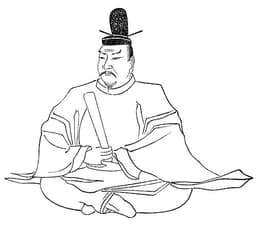
Emperor Tenmu
Emperor · Medieval
59.1Total

King Chungnyeol of Goryeo
Emperor · Medieval
47.1Total
Basic Information
Born
631
1236
Died
686
1308
Era
Medieval
Medieval
Nationality
Japan
Korea
Occupation
Emperor
Emperor
Civilization
Eastern
Eastern
Score Comparison
Military (10%)
55.0
21.2
Political (20%)
60.0
46.6
Influence (20%)
58.3
53.3
Legacy (20%)
55.0
45.0
Leadership (15%)
72.0
65.0
Strategy (15%)
55.0
36.8
TOTAL
59.1
47.1
Emperor Tenmu — Complete Timeline
672 AD
Jinshin WarWar
Prince Ōama, later Emperor Tenmu, led a rebellion against his nephew Emperor Kōbun after a succession dispute. The Jinshin War lasted a year and ended with Ōama's victory at the Battle of Sekigahara (not the later one). Tenmu then ascended the throne, consolidating imperial power.
Civil WarSuccessionImperial Power
Impact: national
680 AD
Promotion of Buddhism as State ReligionCultural◆ Major
Emperor Tenmu actively promoted Buddhism, ordering the construction of temples and the copying of sutras. He established the position of s
BuddhismState ReligionImperial Legitimacy
Impact: nationalconstructive
681 AD
Establishment of the Ritsuryō SystemReform
Emperor Tenmu initiated the codification of the ritsury
Legal CodeCentralizationTang Model
Impact: nationalconstructive
Compilation of the Kojiki and Nihon ShokiCultural◆ Major
Emperor Tenmu ordered the compilation of the Kojiki (Records of Ancient Matters) and the Nihon Shoki (Chronicles of Japan), though the Kojiki was completed after his death. These texts recorded Japanese mythology, history, and the imperial lineage, establishing a national narrative.
HistoriographyMythologyImperial Lineage
Impact: nationalconstructive
684 AD
Reform of the Imperial Court HierarchyReform
Emperor Tenmu reorganized the imperial court hierarchy, creating new ranks and titles to strengthen his control over the nobility. He reduced the power of powerful clans and promoted officials based on merit, further centralizing authority under the emperor.
Court ReformMeritocracyNobility
Impact: nationalconstructive
King Chungnyeol of Goryeo — Complete Timeline
1274 AD
Participated in Mongol Invasion of JapanWar◆ Major
King Chungnyeol provided Goryeo ships, troops, and supplies for the first Mongol invasion of Japan. Goryeo forces suffered heavy losses in the failed campaign, which ended with the destruction of the fleet by a typhoon. This strained Goryeo's resources and population.
Mongol CampaignsJapanMilitary
Impact: regionaldestructive
Married Mongol PrincessPolitical Action◆ Major
King Chungnyeol married Princess Jeguk, a daughter of Kublai Khan, becoming the first Goryeo king to take a Mongol wife. This marriage formalized the Mongol-Goryeo alliance and made Chungnyeol a Mongol son-in-law (kuregen), strengthening ties with the Yuan dynasty.
Marriage AllianceMongol InfluenceDiplomacy
Impact: national
1275 AD
Adopted Mongol Customs and DressCultural
King Chungnyeol ordered Goryeo officials to adopt Mongol hairstyles and clothing, and introduced Mongol court ceremonies. This policy aimed to appease the Yuan court but caused resentment among Korean nobles who saw it as a betrayal of Korean identity.
Cultural ChangeMongolizationControversy
Impact: national
1281 AD
Participated in Second Mongol Invasion of JapanWar◆ Major
King Chungnyeol again mobilized Goryeo's navy and army for the second Mongol invasion of Japan. The campaign ended in disaster when a typhoon (kamikaze) destroyed the combined Mongol-Goryeo fleet, resulting in massive casualties and further draining Goryeo's economy.
Mongol CampaignsJapanMilitary
Impact: regionaltragic
Expert Analysis
Origins
Emperor Tenmu (c. 631-686) was born Prince Ōama, a son of Emperor Jomei and Empress Kōgyoku. He grew up in the Yamato court, receiving a classical Chinese education and training in military arts. His early life was overshadowed by his older brother Emperor Tenji, who initially favored his own son for succession.
King Chungnyeol of Goryeo (1236-1308) was born Wang Geo, the eldest son of King Wonjong. He grew up during the Mongol invasions of Korea, which devastated the country. His father was a puppet ruler under Mongol control, and Chungnyeol was sent to the Mongol court as a hostage, where he learned Mongol customs and formed ties with Kublai Khan.
Rise to Power
Tenmu came to power through the Jinshin War (672), a civil war against his nephew Emperor Kōbun. After Emperor Tenji's death, Tenmu gathered support from eastern provinces and defeated Kōbun's forces. He ascended the throne in 673, bypassing the usual succession.
Chungnyeol became king in 1274 after his father's death. He had already secured Mongol favor by marrying Princess Jeguk, daughter of Kublai Khan, in 1271. This marriage formalized Goryeo's vassal status under the Yuan dynasty. His power derived from Mongol support rather than domestic legitimacy.
Leadership & Governance
Tenmu centralized power by establishing the ritsuryō system, a legal code based on Tang China. He reorganized the court hierarchy, created 48 ranks for officials, and reduced the influence of powerful clans. He promoted Buddhism as a state religion, building temples and sponsoring sutra copying. His reign saw the compilation of the Kojiki and Nihon Shoki, which standardized mythology and history.
Chungnyeol's governance was constrained by Mongol overlordship. He adopted Mongol customs, including hairstyles and clothing, and introduced Mongol court ceremonies. He cooperated with Yuan demands, providing ships and troops for invasions of Japan. Domestically, he faced resistance from Confucian scholars who opposed Mongol influence. His political score of 46.6 reflects his limited autonomy.
Triumph & Tragedy
Tenmu's greatest success was consolidating imperial authority. The ritsuryō system lasted for centuries, and his cultural projects shaped Japanese identity. However, his military score of 55.0 reflects that his victory in the Jinshin War was a civil conflict, not foreign conquest. His death led to succession struggles.
Chungnyeol's major achievements were maintaining Goryeo's existence under Mongol domination. He preserved the kingdom's autonomy to some degree. His tragedies include participating in the failed Mongol invasions of Japan (1274 and 1281), which cost many Korean lives and resources. His military score of 21.2 and strategy score of 36.8 reflect his subordinate role.
Character & Destiny
Tenmu was decisive and ambitious, using military force to seize power and then legitimizing it through legal and cultural reforms. His leadership score of 72.0 indicates strong command. He was pragmatic, adopting Chinese models while preserving Japanese traditions.
Chungnyeol was accommodating and survival-oriented. His leadership score of 65.0 shows effectiveness in navigating Mongol demands, but his strategy score of 36.8 reveals a lack of independent initiative. He prioritized the kingdom's survival over national pride.
Legacy
Tenmu's legacy is profound: the ritsuryō system became the foundation of Japanese governance until the samurai era. The Kojiki and Nihon Shoki remain key historical sources. Buddhism flourished under his patronage. His total score of 59.1 reflects high influence and leadership.
Chungnyeol's legacy is mixed. He is remembered as a king who submitted to Mongols, but his policies allowed Goryeo to endure. His influence score of 53.3 is comparable to Tenmu's 58.3, but his military and political scores are lower. The marriage alliance with Yuan set a precedent for later kings.
Conclusion
Emperor Tenmu had greater impact on his nation's development. He scored 59.1 overall, 12 points higher than Chungnyeol's 47.1. Tenmu actively shaped Japan's political and cultural foundations, while Chungnyeol reacted to external pressures. Tenmu's reforms endured for centuries; Chungnyeol's accommodations were temporary. Tenmu's leadership score of 72.0 against Chungnyeol's 65.0 underscores his stronger agency. Thus, Tenmu emerges as the more transformative figure.
Rankings
🥇
Emperor TenmuLeader
Mil: 55.0Pol: 60.0Inf: 58.3
59.1
🥈
King Chungnyeol of Goryeo
Mil: 21.2Pol: 46.6Inf: 53.3
47.1
+12.0 behind
How This Comparison Works
Algorithm
Each figure is scored on 6 dimensions (0—100 scale) based on structured historical data: Military (10%), Political (20%), Influence (20%), Legacy (20%), Leadership (15%), Strategy (15%). The weighted total produces the final ranking.
Data Sources
Scores are computed from structured sub-indicators in the database. Scale factors adjust for era (Ancient ×0.85, Modern ×1.0) and civilization size (Eastern ×1.05, Other ×0.80) to account for differences in population and military scale.
Maximum 3 Figures
Comparisons are limited to 2—3 figures to ensure readability and statistical meaningfulness.
Error Margins
±5 points per dimension — Sub-scores are derived from historical records with inherent uncertainty. Two figures within 5 points on a dimension should be considered roughly equivalent in that area.
Total Score Accuracy
±3 points overall — The weighted combination of 6 dimensions produces a total score with approximately ±3 points of uncertainty. Differences of less than 3 points are not statistically significant— the figures are effectively tied.
Known Limitations
- Historical records are incomplete and uneven across civilizations
- Figures from oral-tradition societies may be underrepresented
- Occupation labels can misclassify multi-role figures
- Scores measure capability and impact, not moral character
- Quantitative scoring is a comparison tool, not absolute truth
Capability Radar
Military (10%) — Battles & Warfare
Battles
35
10
Win Rate
40
10
Expansion
30
10
Political (20%) — Governance & Reform
Reform
85
30
Diplomacy
65
70
Economy
60
30
Influence (20%) — Cultural & Global Reach
Cultural
65
30
Global
45
20
Legacy (20%) — Historical Impact
Historical
75
40
Longevity
70
30
Leadership (15%) — Power & Stability
Tenure
60
60
Stability
70
40
Strategy (15%) — Tactics & Innovation
Strategy
50
10
Tactics
45
10
Reform
55
10
Similar Comparisons
Comments & Discussion
No comments yet. Be the first to share your thoughts!