Loading...
Alan Brooke vs Auguste de Marmont
Alan Brooke leads by 13.4 pts · 2 figures compared
…
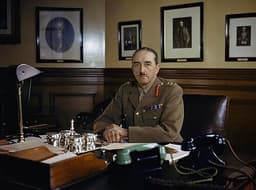
Alan Brooke
General · Modern
64.5Total
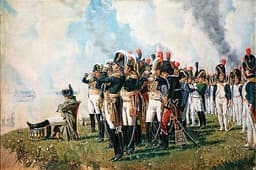
Auguste de Marmont
General · Modern
51.1Total
Basic Information
Born
1883
1774
Died
1963
1852
Era
Modern
Modern
Nationality
United Kingdom
France
Occupation
General
General
Civilization
Western
Western
Score Comparison
Military (10%)
55.0
60.0
Political (20%)
72.0
39.4
Influence (20%)
61.0
52.5
Legacy (20%)
55.0
46.7
Leadership (15%)
80.0
57.6
Strategy (15%)
72.0
57.5
TOTAL
64.5
51.1
Alan Brooke — Complete Timeline
1941 AD
Appointed Chief of the Imperial General StaffOther◆ Major
In December 1941, Alan Brooke was appointed Chief of the Imperial General Staff (CIGS), the professional head of the British Army. He served in this role throughout World War II, overseeing military strategy and operations, and was a key member of the Chiefs of Staff Committee that advised Prime Minister Winston Churchill.
World War IIBritish ArmyMilitary Leadership
Impact: global
1943 AD
Participated in the Casablanca ConferenceOther◆ Major
In January 1943, Brooke attended the Casablanca Conference with Churchill and Roosevelt, where Allied strategy for the remainder of World War II was discussed. The conference agreed on the policy of 'unconditional surrender' for the Axis powers and the invasion of Sicily, with Brooke playing a key role in shaping military plans.
World War IIAllied StrategyCasablanca
Impact: global
Attended the Tehran ConferenceOther◆ Major
In November-December 1943, Brooke attended the Tehran Conference with Churchill, Roosevelt, and Stalin. The conference coordinated Allied military strategy against Germany, including the timing of the cross-channel invasion (Operation Overlord) and the Soviet offensive, with Brooke providing military advice on the feasibility of operations.
World War IIAllied StrategyTehran
Impact: global
1944 AD
Oversaw the D-Day PlanningOther◆ Major
As CIGS, Brooke was instrumental in planning the Normandy landings (D-Day) on June 6, 1944. He coordinated with Allied commanders to develop the invasion strategy, including the selection of landing beaches and the allocation of forces, which led to the successful liberation of Western Europe from Nazi occupation.
World War IID-DayNormandy Invasion
Impact: globalconstructive
Promoted to Field MarshalOther◆ Major
On January 1, 1944, Alan Brooke was promoted to the rank of Field Marshal, the highest rank in the British Army. This promotion recognized his exceptional service as CIGS and his contributions to Allied victory in World War II.
World War IIPromotionField Marshal
Impact: nationalconstructive
Auguste de Marmont — Complete Timeline
1809 AD
Battle of WagramWar◆ Major
Marmont commanded the XI Corps at Wagram. His corps held the French left flank against Austrian attacks, and he was promoted to Marshal of the Empire for his performance.
Napoleonic WarsBattlePromotion
Impact: regional
Governor-General of Illyrian ProvincesPolitical Action◆ Major
Marmont was appointed Governor-General of the Illyrian Provinces. He administered the region, implemented French legal and administrative reforms, and improved infrastructure.
GovernorshipIllyriaReforms
Impact: regionalconstructive
1812 AD
Battle of SalamancaWar◆ Major
Marmont commanded the French Army of Portugal at Salamanca. His forces were defeated by Wellington's Anglo-Portuguese army, and Marmont was wounded, leading to a French retreat from Spain.
Peninsular WarBattleDefeatWounded
Impact: regional
1814 AD
Battle of ParisWar◆ Major
Marmont commanded the French VI Corps defending Paris. After a day of fighting, he surrendered the city to the Allies, a decision that contributed to Napoleon's abdication.
Napoleonic WarsBattleSurrender
Impact: global
Defection to the BourbonsPolitical Action◆ Major
Marmont defected to the Bourbon monarchy after the fall of Paris. He led his corps to the Allied lines, a move seen as betrayal by Napoleon and his supporters.
BetrayalBourbon RestorationNapoleonic Era
Impact: nationaldestructive
1852 AD
Exile and DeathPolitical Action
Marmont went into exile after the July Revolution of 1830, refusing to serve Louis-Philippe. He died in Venice, having spent his final years writing memoirs defending his actions.
ExileMemoirsDeath
tragic
Expert Analysis
Origins
Alan Brooke was born on July 23, 1883, in Bagnères-de-Bigorre, France, to a British family with military traditions. His father was an artillery officer. Brooke was educated at the Royal Military Academy, Woolwich, and commissioned into the Royal Artillery in 1902. His early career included service in India and World War I, where he distinguished himself as a staff officer.
Auguste de Marmont was born on July 20, 1774, in Châtillon-sur-Seine, France, into a noble family. He studied at the Brienne military school and later at the artillery school in Châlons. Marmont became a protégé of Napoleon Bonaparte, serving as his aide-de-camp during the Italian campaign in 1796.
Rise to Power
Brooke rose through the ranks of the British Army through competence and staff work. By 1939, he was commander of II Corps in France. During the evacuation of Dunkirk in 1940, he organized the retreat of British forces. His performance led to his appointment as Commander-in-Chief, Home Forces in July 1940. In December 1941, he became Chief of the Imperial General Staff (CIGS), the highest military position in the British Army, a role he held until 1946.
Marmont rose quickly under Napoleon. He fought at Marengo (1800) and was promoted to general of division in 1801. In 1805, he commanded a corps at Ulm and Austerlitz. He became Governor-General of Dalmatia in 1806, where he administered the Illyrian Provinces. His success at the Battle of Wagram in 1809 earned him promotion to Marshal of the Empire at age 35.
Leadership & Governance
As CIGS, Brooke was the principal military adviser to Prime Minister Winston Churchill. He chaired the Chiefs of Staff Committee and coordinated British strategy with Allies. Brooke was known for his sharp intellect and blunt manner, often clashing with Churchill on strategic matters. He opposed Churchill's Mediterranean-focused strategy, advocating for a cross-channel invasion. Brooke's leadership style was methodical and detail-oriented, ensuring logistical preparation for D-Day. He scored 80.0 in leadership and 72.0 in strategy.
Marmont governed the Illyrian Provinces from 1809 to 1811, implementing French legal and administrative reforms. As a military commander, he led the Army of Portugal in the Peninsular War. However, his leadership was inconsistent: at Salamanca in 1812, he was caught off guard by Wellington's attack and defeated. He was wounded and his army nearly destroyed. Marmont's political acumen was lower, scoring 39.4, reflecting his eventual defection.
Triumph & Tragedy
Brooke's greatest triumph was his role in planning and executing the Allied victory in World War II. He was instrumental in the success of D-Day and the defeat of Nazi Germany. His tragedy was that he never commanded troops in the field during the war, a role he desired. He also suffered from self-doubt and depression, often feeling overshadowed by Churchill.
Marmont's triumph was at Wagram, where his corps held the left flank against Austrian attacks, leading to his marshalate. His tragedy was the defeat at Salamanca and his defection in 1814. During the Battle of Paris, he surrendered the city to the Allies, a decision that led to Napoleon's abdication. Marmont was branded a traitor by Bonapartists and lived in exile after the Bourbon restoration.
Character & Destiny
Brooke was meticulous, intelligent, and stubborn. His diaries reveal a man prone to anxiety and frustration with Churchill's impulsiveness. Yet his strategic vision and organizational skills were crucial to Allied success. His character shaped his destiny as the architect of British military strategy, but he remained less famous than field commanders like Montgomery.
Marmont was ambitious and loyal to Napoleon until 1814, but his sense of self-preservation led him to defect. He wrote memoirs defending his actions, but his betrayal defined his legacy. His character reflected a pragmatism that, in his view, prevented further bloodshed, but it cost him his reputation.
Legacy
Brooke's legacy is as the chief strategist behind Britain's World War II victory. He helped shape the Allied command structure and the post-war NATO alliance. His papers and diaries provide insight into wartime decision-making. He scored 55.0 in legacy, reflecting his behind-the-scenes role.
Marmont's legacy is mixed. He is remembered as a capable marshal who ultimately betrayed Napoleon. His administrative work in Illyria had lasting impact, but his military record is marred by Salamanca and Paris. He scored 46.7 in legacy.
Conclusion
Alan Brooke had a greater impact than Auguste de Marmont. Brooke's strategic decisions shaped the outcome of World War II, while Marmont's defection contributed to Napoleon's fall but was a single act. Brooke's total score of 64.5 versus Marmont's 51.1 reflects his superior leadership and political influence. While Marmont was a competent general, Brooke's role as CIGS placed him at the center of global conflict, making his contribution more significant.
Rankings
🥇
Alan BrookeLeader
Mil: 55.0Pol: 72.0Inf: 61.0
64.5
🥈
Auguste de Marmont
Mil: 60.0Pol: 39.4Inf: 52.5
51.1
+13.4 behind
How This Comparison Works
Algorithm
Each figure is scored on 6 dimensions (0—100 scale) based on structured historical data: Military (10%), Political (20%), Influence (20%), Legacy (20%), Leadership (15%), Strategy (15%). The weighted total produces the final ranking.
Data Sources
Scores are computed from structured sub-indicators in the database. Scale factors adjust for era (Ancient ×0.85, Modern ×1.0) and civilization size (Eastern ×1.05, Other ×0.80) to account for differences in population and military scale.
Maximum 3 Figures
Comparisons are limited to 2—3 figures to ensure readability and statistical meaningfulness.
Error Margins
±5 points per dimension — Sub-scores are derived from historical records with inherent uncertainty. Two figures within 5 points on a dimension should be considered roughly equivalent in that area.
Total Score Accuracy
±3 points overall — The weighted combination of 6 dimensions produces a total score with approximately ±3 points of uncertainty. Differences of less than 3 points are not statistically significant— the figures are effectively tied.
Known Limitations
- Historical records are incomplete and uneven across civilizations
- Figures from oral-tradition societies may be underrepresented
- Occupation labels can misclassify multi-role figures
- Scores measure capability and impact, not moral character
- Quantitative scoring is a comparison tool, not absolute truth
Capability Radar
Military (10%) — Battles & Warfare
Battles
60
65
Win Rate
55
55
Expansion
20
40
Political (20%) — Governance & Reform
Reform
60
20
Diplomacy
80
30
Economy
50
25
Influence (20%) — Cultural & Global Reach
Cultural
30
20
Global
65
25
Legacy (20%) — Historical Impact
Historical
75
40
Longevity
60
30
Leadership (15%) — Power & Stability
Tenure
70
45
Stability
85
15
Strategy (15%) — Tactics & Innovation
Strategy
90
55
Tactics
75
60
Reform
85
30
Similar Comparisons
Comments & Discussion
No comments yet. Be the first to share your thoughts!