Loading...
Alan Brooke vs Feng Yuxiang
Alan Brooke leads by 7.7 pts · 2 figures compared
…
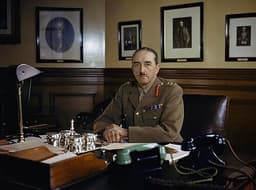
Alan Brooke
General · Modern
64.5Total
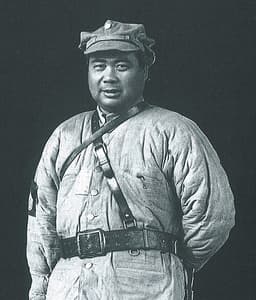
Feng Yuxiang
General · Modern
56.8Total
Basic Information
Born
1883
1882
Died
1963
1948
Era
Modern
Modern
Nationality
United Kingdom
China
Occupation
General
General
Civilization
Western
Eastern
Score Comparison
Military (10%)
55.0
50.0
Political (20%)
72.0
62.7
Influence (20%)
61.0
58.0
Legacy (20%)
55.0
50.0
Leadership (15%)
80.0
62.0
Strategy (15%)
72.0
60.7
TOTAL
64.5
56.8
Alan Brooke — Complete Timeline
1941 AD
Appointed Chief of the Imperial General StaffOther◆ Major
In December 1941, Alan Brooke was appointed Chief of the Imperial General Staff (CIGS), the professional head of the British Army. He served in this role throughout World War II, overseeing military strategy and operations, and was a key member of the Chiefs of Staff Committee that advised Prime Minister Winston Churchill.
World War IIBritish ArmyMilitary Leadership
Impact: global
1943 AD
Participated in the Casablanca ConferenceOther◆ Major
In January 1943, Brooke attended the Casablanca Conference with Churchill and Roosevelt, where Allied strategy for the remainder of World War II was discussed. The conference agreed on the policy of 'unconditional surrender' for the Axis powers and the invasion of Sicily, with Brooke playing a key role in shaping military plans.
World War IIAllied StrategyCasablanca
Impact: global
Attended the Tehran ConferenceOther◆ Major
In November-December 1943, Brooke attended the Tehran Conference with Churchill, Roosevelt, and Stalin. The conference coordinated Allied military strategy against Germany, including the timing of the cross-channel invasion (Operation Overlord) and the Soviet offensive, with Brooke providing military advice on the feasibility of operations.
World War IIAllied StrategyTehran
Impact: global
1944 AD
Oversaw the D-Day PlanningOther◆ Major
As CIGS, Brooke was instrumental in planning the Normandy landings (D-Day) on June 6, 1944. He coordinated with Allied commanders to develop the invasion strategy, including the selection of landing beaches and the allocation of forces, which led to the successful liberation of Western Europe from Nazi occupation.
World War IID-DayNormandy Invasion
Impact: globalconstructive
Promoted to Field MarshalOther◆ Major
On January 1, 1944, Alan Brooke was promoted to the rank of Field Marshal, the highest rank in the British Army. This promotion recognized his exceptional service as CIGS and his contributions to Allied victory in World War II.
World War IIPromotionField Marshal
Impact: nationalconstructive
Feng Yuxiang — Complete Timeline
1914 AD
Conversion to ChristianityCultural
Feng Yuxiang converted to Christianity, earning him the nickname 'The Christian General'. He required his soldiers to attend Christian services and promoted Christian ethics within his army. This conversion was unusual among Chinese warlords and influenced his governance style.
ReligionChristianityWarlord
Impact: regionalconstructive
1924 AD
Beijing Coup of 1924Political Action◆ Major
Feng Yuxiang staged the Beijing Coup, overthrowing the Zhili clique government and capturing Beijing. He invited Sun Yat-sen to discuss national unification. The coup led to the establishment of a provisional government under Duan Qirui and temporarily shifted the balance of power among warlords.
CoupWarlord EraBeijing
Impact: national
1927 AD
Defection to the Nationalist GovernmentPolitical Action◆ Major
Feng Yuxiang defected from the Fengtian clique and allied with the Nationalist government under Chiang Kai-shek. He participated in the Northern Expedition, helping to defeat other warlords. This alliance strengthened the Nationalist cause but also led to conflicts with other warlords.
AllianceNationalistNorthern Expedition
Impact: nationalconstructive
1930 AD
Defeat in the Central Plains WarWar◆ Major
Feng Yuxiang joined the anti-Chiang Kai-shek coalition in the Central Plains War. His forces were defeated by Chiang's National Revolutionary Army. The defeat ended Feng's military power and forced him into retirement. He later fled to the Soviet Union.
WarDefeatWarlord
Impact: nationaldestructive
Expert Analysis
Origins
Alan Brooke (1883–1963) was born in Bagnères-de-Bigorre, France, to an Anglo-Irish family with a strong military tradition. His father was a British army officer. Brooke was educated at the Royal Military Academy, Woolwich, and commissioned into the Royal Artillery in 1902. He served in India and France during World War I, earning a reputation for meticulous planning and technical expertise. His early experiences in staff roles shaped his methodical approach to warfare.
Feng Yuxiang (1882–1948) was born in Hebei, China, into a poor farming family. His father served as a minor official in the Qing army. Feng joined the army as a boy and rose through the ranks. He was influenced by both Confucian values and Christian missionaries, converting to Christianity in 1914. Feng's early career included service under various warlords, where he developed a reputation for strict discipline and reformist ideas.
Rise to Power
Brooke's rise accelerated during World War II. In 1940, he commanded II Corps during the Dunkirk evacuation, successfully extracting his troops. His organizational skills caught Winston Churchill's attention, and in December 1941, he was appointed Chief of the Imperial General Staff (CIGS), the professional head of the British Army. As CIGS, Brooke attended major Allied conferences, including Casablanca (January 1943), Tehran (November 1943), and Yalta (February 1945), shaping global strategy.
Feng Yuxiang rose to power as a warlord during the chaotic Warlord Era. In 1924, he staged the Beijing Coup, overthrowing the Zhili clique government and controlling Beijing. He invited Sun Yat-sen to discuss national unification, but Sun's death in 1925 ended that effort. Feng allied with the Nationalist government in 1926, joining the Northern Expedition against the Beiyang government. His forces captured Beijing in 1928, but his influence waned after the Central Plains War (1930), where his coalition was defeated by Chiang Kai-shek.
Leadership & Governance
Brooke's leadership was characterized by strategic coordination and bureaucratic efficiency. As CIGS, he managed relations between British and American commanders, often mediating between Churchill's aggressive ideas and military realities. He oversaw the planning of D-Day, ensuring logistical support for the largest amphibious invasion in history. Brooke scored 80.0 in leadership and 72.0 in strategy, reflecting his ability to manage complex operations. However, his cautious nature sometimes clashed with Churchill's boldness.
Feng Yuxiang governed his territories with a mix of military discipline and social reform. He was known for his Christian piety, requiring soldiers to attend services and banning opium, gambling, and foot-binding. He established schools and promoted literacy among his troops. Feng's leadership scored 62.0, lower than Brooke's, as his reforms were limited to his domains and his political alliances were unstable. He frequently switched sides, undermining his long-term authority.
Triumph & Tragedy
Brooke's greatest triumph was his role in Allied victory in World War II. His strategic foresight helped prioritize the Mediterranean theater and delay the cross-channel invasion until conditions were favorable. He was promoted to Field Marshal in 1944. However, his greatest failure was his inability to fully coordinate with American generals like George Marshall, leading to tensions. Brooke also underestimated the Soviet threat after the war, focusing on defeating Germany.
Feng Yuxiang's triumph was the Beijing Coup, which briefly made him a key figure in Chinese unification. His reforms improved the lives of soldiers and peasants under his control. However, his defeat in the Central Plains War marked his decline. He later opposed Chiang during the Second Sino-Japanese War but was sidelined. Feng died in 1948 in a ship fire under suspicious circumstances, possibly assassinated.
Character & Destiny
Brooke was methodical, reserved, and highly analytical. He kept detailed diaries, revealing his frustrations with Churchill's impulsiveness. His character shaped his destiny: his caution ensured careful planning but also limited his willingness to take risks. Historians describe him as the 'master of military logistics' but note his lack of charisma. His total score of 64.5 reflects a balanced but unflashy career.
Feng Yuxiang was idealistic, religious, and opportunistic. His nickname 'Christian General' reflected his unique blend of piety and pragmatism. He consistently sought reform but lacked a consistent political base. His character led him to switch alliances frequently, which ultimately eroded trust. His total score of 56.8 is lower, reflecting his inability to sustain influence.
Legacy
Brooke's legacy is as the architect of British military strategy in World War II. He established the modern British command structure and influenced NATO's post-war planning. His diaries remain a crucial historical source. Brooke scored 55.0 in legacy, reflecting his impact on military institutions rather than popular memory.
Feng Yuxiang is remembered as a colorful warlord who attempted reform during China's turbulent era. His Christian influence on his troops was unique, but his legacy is overshadowed by the rise of the Communists and Nationalists. He scored 50.0 in legacy, indicating limited long-term impact.
Conclusion
Alan Brooke had a greater impact than Feng Yuxiang. Brooke's strategic decisions shaped the outcome of World War II, a global conflict that determined the modern world order. His coordination of Allied forces and planning of D-Day directly contributed to the defeat of Nazi Germany. Feng Yuxiang, while influential in Chinese warlord politics, failed to achieve lasting change or unify China. Brooke's total score of 64.5 exceeds Feng's 56.8, and his leadership and strategy scores (80.0 and 72.0) significantly outpace Feng's (62.0 and 60.7). Thus, Brooke's influence on history is more substantial and enduring.
Rankings
🥇
Alan BrookeLeader
Mil: 55.0Pol: 72.0Inf: 61.0
64.5
🥈
Feng Yuxiang
Mil: 50.0Pol: 62.7Inf: 58.0
56.8
+7.7 behind
How This Comparison Works
Algorithm
Each figure is scored on 6 dimensions (0—100 scale) based on structured historical data: Military (10%), Political (20%), Influence (20%), Legacy (20%), Leadership (15%), Strategy (15%). The weighted total produces the final ranking.
Data Sources
Scores are computed from structured sub-indicators in the database. Scale factors adjust for era (Ancient ×0.85, Modern ×1.0) and civilization size (Eastern ×1.05, Other ×0.80) to account for differences in population and military scale.
Maximum 3 Figures
Comparisons are limited to 2—3 figures to ensure readability and statistical meaningfulness.
Error Margins
±5 points per dimension — Sub-scores are derived from historical records with inherent uncertainty. Two figures within 5 points on a dimension should be considered roughly equivalent in that area.
Total Score Accuracy
±3 points overall — The weighted combination of 6 dimensions produces a total score with approximately ±3 points of uncertainty. Differences of less than 3 points are not statistically significant— the figures are effectively tied.
Known Limitations
- Historical records are incomplete and uneven across civilizations
- Figures from oral-tradition societies may be underrepresented
- Occupation labels can misclassify multi-role figures
- Scores measure capability and impact, not moral character
- Quantitative scoring is a comparison tool, not absolute truth
Capability Radar
Military (10%) — Battles & Warfare
Battles
60
55
Win Rate
55
50
Expansion
20
45
Political (20%) — Governance & Reform
Reform
60
60
Diplomacy
80
55
Economy
50
40
Influence (20%) — Cultural & Global Reach
Cultural
30
45
Global
65
35
Legacy (20%) — Historical Impact
Historical
75
50
Longevity
60
40
Leadership (15%) — Power & Stability
Tenure
70
50
Stability
85
35
Strategy (15%) — Tactics & Innovation
Strategy
90
55
Tactics
75
60
Reform
85
65
Similar Comparisons
Comments & Discussion
No comments yet. Be the first to share your thoughts!