Loading...
Alassane Ouattara vs Boun Oum
Alassane Ouattara leads by 5.4 pts · 2 figures compared
…
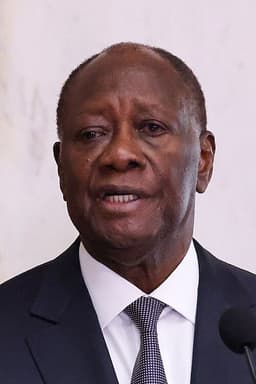
Alassane Ouattara
Politician · Modern
52.7Total
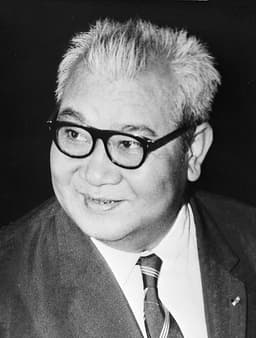
Boun Oum
Politician · Modern
47.3Total
Basic Information
Born
1942
1912
Died
—
1980
Era
Modern
Modern
Nationality
Ivory Coast
Laos
Occupation
Politician
Politician
Civilization
Other
Eastern
Score Comparison
Military (10%)
23.0
36.6
Political (20%)
65.7
40.8
Influence (20%)
55.7
49.4
Legacy (20%)
45.8
40.0
Leadership (15%)
72.0
65.7
Strategy (15%)
43.9
52.8
TOTAL
52.7
47.3
Alassane Ouattara — Complete Timeline
1990 AD
Appointed Prime Minister of Ivory CoastPolitical Action◆ Major
Ouattara was appointed Prime Minister by President F
Prime MinisterEconomic ReformIvory Coast
Impact: nationalconstructive
2000 AD
Excluded from Presidential ElectionsPolitical Action◆ Major
Ouattara was barred from running for president due to a nationality law requiring both parents to be Ivorian. His exclusion fueled political tensions and contributed to the country's instability and civil war.
ExclusionNationality LawIvory Coast
Impact: nationaldestructive
2010 AD
Elected President of Ivory CoastPolitical Action
Ouattara won the presidential election against incumbent Laurent Gbagbo, but Gbagbo refused to step down. The disputed result led to a five-month civil war, ending with Ouattara assuming office after Gbagbo's arrest.
ElectionCivil WarIvory Coast
Impact: regionalconstructive
2015 AD
Re-elected President of Ivory CoastPolitical Action◆ Major
Ouattara won a second term with 83.7% of the vote in an election deemed peaceful and credible by observers. His victory reflected support for his economic recovery policies and post-war reconciliation efforts.
ElectionIvory CoastRe-election
Impact: nationalconstructive
2020 AD
Controversial Third Term BidPolitical Action◆ Major
Ouattara announced he would run for a third term after the death of his chosen successor, sparking opposition protests and violence. The election was boycotted by the opposition, and Ouattara won with 94% of the vote.
Third TermElectionIvory Coast
Impact: nationaldestructive
Boun Oum — Complete Timeline
1960 AD
Role in the Battle of VientianeWar◆ Major
Boun Oum allied with General Phoumi Nosavan to retake Vientiane from neutralist forces led by Kong Le. The battle resulted in heavy casualties and destruction in the capital, and Boun Oum's forces emerged victorious, installing a right-wing government.
BattleCivil WarVientiane
Impact: nationaldestructive
Formation of the Right-Wing Government in ChampasakPolitical Action◆ Major
Boun Oum, as prince of Champasak, formed a right-wing government in southern Laos with support from the United States and Thailand. His government opposed the neutralist coalition of Souvanna Phouma and the communist Pathet Lao, deepening the Laotian Civil War.
Civil WarRight-WingUS Support
Impact: nationaldestructive
1975 AD
Exile to ThailandPolitical Action◆ Major
Following the communist takeover of Laos, Boun Oum fled to Thailand, where he lived in exile. He continued to oppose the Pathet Lao government but never returned to Laos. His exile marked the end of the traditional Lao aristocracy's political influence.
ExileCommunist TakeoverAristocracy
Impact: nationaltragic
Expert Analysis
Origins
Alassane Ouattara was born on January 1, 1942, in Dimbokro, Ivory Coast, to a Muslim family. His father was a businessman and traditional chief. Ouattara studied in the United States, earning a PhD in economics from the University of Pennsylvania. He worked at the International Monetary Fund (IMF) from 1968 to 1988, rising to become Director of the African Department. His technocratic background shaped his economic approach.
Boun Oum na Champasak was born on December 2, 1912, in Champasak, Laos, as a prince of the royal house. He was educated at the Lycée Sisowath in Phnom Penh and later at the École Coloniale in Paris. As a member of the Lao elite, he was deeply involved in the country's politics from a young age, inheriting a traditional role but also navigating colonial and Cold War dynamics.
Rise to Power
Ouattara's rise began when he was appointed Prime Minister of Ivory Coast in 1990 by President Félix Houphouët-Boigny. He implemented economic reforms that stabilized the economy but also caused social unrest. After Houphouët-Boigny's death in 1993, Ouattara fell out of favor and was excluded from the 1995 presidential election due to a nationality law requiring both parents to be Ivorian. His exclusion fueled political tensions. In 2000, he again was barred from running. The 2010 election was a turning point: Ouattara won against incumbent Laurent Gbagbo, but Gbagbo refused to step down, leading to a five-month civil war. With international support, Ouattara assumed the presidency in 2011.
Boun Oum rose to power as a prince and right-wing leader during the Laotian Civil War. In 1960, after the Battle of Vientiane, he allied with General Phoumi Nosavan to form a right-wing government in southern Laos, backed by the United States and Thailand. He became Prime Minister in 1961, but his government was short-lived. The Geneva Accords of 1962 established a neutralist coalition, sidelining Boun Oum. He continued to oppose the Pathet Lao but never regained national leadership.
Leadership & Governance
Ouattara's leadership focused on economic recovery and reconciliation. He inherited a country devastated by civil war. His government invested in infrastructure, agriculture, and energy, achieving average GDP growth of 8% per year from 2012 to 2019. He also pursued national reconciliation, though critics argue he did not do enough to address the roots of conflict. In 2020, his decision to run for a third term sparked violence, revealing persistent divisions.
Boun Oum's governance was characterized by traditional authority and reliance on foreign support. As prince, he maintained a feudal-style administration in Champasak. His government opposed the communist Pathet Lao but was unable to unify the country. His tenure as Prime Minister was marked by political instability and reliance on US military aid.
Triumph & Tragedy
Ouattara's greatest success was stabilizing Ivory Coast's economy and ending the civil war. His economic policies earned him an IMF score of 65.7 in political leadership. However, his third-term bid was a tragedy: it led to protests and violence, with over 85 people killed in 2020. His legacy is tarnished by this decision.
Boun Oum's triumph was his role in the Battle of Vientiane in 1960, which temporarily secured right-wing control. His tragedy was the ultimate failure to prevent the Pathet Lao takeover in 1975, forcing him into exile in Thailand. His military score of 36.6 reflects limited strategic success.
Character & Destiny
Ouattara is methodical and technocratic, shaped by his IMF background. He is patient but can be ruthless, as seen in his pursuit of power despite controversies. His character drove him to rebuild Ivory Coast but also to cling to power, leading to his third-term gamble.
Boun Oum was a traditional prince, more comfortable with hierarchy than modern politics. He relied on charisma and alliances but lacked strategic depth. His destiny was tied to the Cold War; when US support waned, his cause collapsed.
Legacy
Ouattara's legacy is mixed: he revived Ivory Coast's economy but deepened political divisions. His score of 45.8 in legacy reflects this. He is remembered as a reformer who oversaw a decade of growth but also as a leader who undermined democracy.
Boun Oum is largely forgotten outside Laos. His legacy is as a symbol of the old royalist order that failed to adapt. His influence score of 49.4 is higher than his political score, reflecting his symbolic role.
Conclusion
Alassane Ouattara had a greater impact than Boun Oum. His total score of 52.7 versus 47.3 reflects his role in shaping modern Ivory Coast, a country of 25 million, while Boun Oum operated in a smaller, landlocked nation. Ouattara's economic reforms and leadership during crisis had lasting effects, whereas Boun Oum's influence was temporary. Despite his flaws, Ouattara's impact is more significant.
Rankings
🥇
Alassane OuattaraLeader
Mil: 23.0Pol: 65.7Inf: 55.7
52.7
🥈
Boun Oum
Mil: 36.6Pol: 40.8Inf: 49.4
47.3
+5.4 behind
How This Comparison Works
Algorithm
Each figure is scored on 6 dimensions (0—100 scale) based on structured historical data: Military (10%), Political (20%), Influence (20%), Legacy (20%), Leadership (15%), Strategy (15%). The weighted total produces the final ranking.
Data Sources
Scores are computed from structured sub-indicators in the database. Scale factors adjust for era (Ancient ×0.85, Modern ×1.0) and civilization size (Eastern ×1.05, Other ×0.80) to account for differences in population and military scale.
Maximum 3 Figures
Comparisons are limited to 2—3 figures to ensure readability and statistical meaningfulness.
Error Margins
±5 points per dimension — Sub-scores are derived from historical records with inherent uncertainty. Two figures within 5 points on a dimension should be considered roughly equivalent in that area.
Total Score Accuracy
±3 points overall — The weighted combination of 6 dimensions produces a total score with approximately ±3 points of uncertainty. Differences of less than 3 points are not statistically significant— the figures are effectively tied.
Known Limitations
- Historical records are incomplete and uneven across civilizations
- Figures from oral-tradition societies may be underrepresented
- Occupation labels can misclassify multi-role figures
- Scores measure capability and impact, not moral character
- Quantitative scoring is a comparison tool, not absolute truth
Capability Radar
Military (10%) — Battles & Warfare
Battles
20
5
Win Rate
23
5
Expansion
27
5
Political (20%) — Governance & Reform
Reform
70
30
Diplomacy
68
40
Economy
75
25
Influence (20%) — Cultural & Global Reach
Cultural
30
20
Global
45
15
Legacy (20%) — Historical Impact
Historical
40
25
Longevity
35
15
Leadership (15%) — Power & Stability
Tenure
65
45
Stability
55
20
Strategy (15%) — Tactics & Innovation
Strategy
30
5
Tactics
32
5
Reform
38
5
Similar Comparisons
Comments & Discussion
No comments yet. Be the first to share your thoughts!