Loading...
Albert I of Germany vs Julius Caesar
Julius Caesar leads by 36.7 pts · 2 figures compared
…
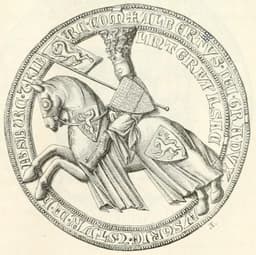
Albert I of Germany
Emperor · Medieval
46.1Total

Julius Caesar
General · Ancient
82.8Total
Basic Information
Born
1255
-100
Died
1308
-44
Era
Medieval
Ancient
Nationality
Holy Roman Empire
Roman Republic
Occupation
Emperor
General
Civilization
Western
Western
Score Comparison
Military (10%)
55.0
88.0
Political (20%)
37.9
78.0
Influence (20%)
50.2
85.0
Legacy (20%)
41.7
82.0
Leadership (15%)
51.9
80.0
Strategy (15%)
41.7
85.0
TOTAL
46.1
82.8
Albert I of Germany — Complete Timeline
1298 AD
Election as King of GermanyPolitical Action◆ Major
Following the death of Adolf of Nassau at the Battle of G
ElectionHabsburg Restoration
Impact: national
1301 AD
Conflict with the Rhineland ElectorsWar◆ Major
Albert I waged war against the archbishops of Mainz, Cologne, and Trier, who formed a coalition against him. He defeated them, asserting royal authority over the ecclesiastical princes.
WarEcclesiastical Princes
Impact: regional
1308 AD
Assassination by John ParricidaPolitical Action
Albert I was murdered by his nephew John Parricida, whom he had deprived of his inheritance. The assassination occurred near Windisch, Switzerland, and led to a period of instability.
AssassinationDynastic Feud
Impact: nationaltragic
Julius Caesar — Complete Timeline
58 BC
Gallic WarsWar◆ Major
Caesar, as proconsul of Gaul, launched a series of campaigns that conquered all of Gaul (modern France, Belgium, and parts of Switzerland). He fought numerous battles, including against the Helvetii, the Belgae, and the Gallic chieftain Vercingetorix. The wars brought immense wealth and a loyal army to Caesar.
Gallic WarsConquestRoman Expansion
Impact: regional
49 BC
Crossing the RubiconPolitical Action◆ Major
Caesar led Legio XIII across the Rubicon River into Italy, defying the Roman Senate's order to disband his army. This act triggered a civil war against Pompey and the Optimates, ultimately leading to Caesar's dictatorship and the end of the Roman Republic.
Roman Civil WarEnd of RepublicPower Struggle
Impact: global
48 BC
Battle of PharsalusWar◆ Major
Caesar's outnumbered army defeated the larger forces of Pompey the Great at Pharsalus in Greece. Caesar's tactical use of a reserve line to counter Pompey's cavalry charge proved decisive. Pompey fled to Egypt, where he was assassinated, leaving Caesar as the undisputed master of the Roman world.
Roman Civil WarBattleDecisive Victory
Impact: regional
44 BC
Appointment as Dictator for LifePolitical Action◆ Major
The Roman Senate appointed Caesar dictator perpetuo (dictator for life), granting him unprecedented personal power. This move concentrated military, legislative, and judicial authority in one person, effectively ending the Roman Republic's traditional system of checks and balances and alarming many senators.
DictatorshipEnd of RepublicPower Consolidation
Impact: regionaldestructive
Assassination on the Ides of MarchPolitical Action◆ Major
A group of Roman senators, led by Marcus Junius Brutus and Gaius Cassius Longinus, stabbed Caesar to death at a meeting of the Senate in the Theatre of Pompey. The assassination was intended to restore the Republic, but instead triggered another civil war that led to the rise of the Roman Empire.
AssassinationRoman PoliticsEnd of Republic
Impact: globaldestructive
Expert Analysis
albert-i-of-germany-vs-julius-caesar
# The Crossing and the Crown: Why Caesar Remade the World While Albert of Germany Was Forgotten
On a cold January morning in 49 BCE, Julius Caesar stood at the banks of the Rubicon, a small river that marked the boundary between his province and Italy proper. To cross with his legions was to declare war on the Roman Senate—an act of treason that would either make him master of the world or destroy him. He hesitated, then uttered a phrase that would echo through millennia: *"Alea iacta est"—the die is cast.* Fifteen hundred years later, in the summer of 1298, another man stood at a similar precipice. Albert of Habsburg, Duke of Austria, had just defeated and killed his rival King Adolf of Nassau at the Battle of Göllheim. The German crown lay within his grasp. Yet where Caesar’s crossing ignited a transformation of civilization, Albert’s victory led only to a forgotten reign, ending with his nephew’s dagger on a lonely road in 1308. The difference between these two men is not merely one of talent—it is a story of timing, ambition, and the cruel architecture of history.
Origins
Caesar was born into the twilight of the Roman Republic, a world of senatorial intrigue, civil wars, and expanding frontiers. His family, the Julii, claimed descent from the goddess Venus, but they were not among the ruling elite. From childhood, Caesar learned that in Rome, power came not from birth alone but from audacity, alliances, and the ability to seize moments. He was educated in rhetoric, philosophy, and military arts, and his youth was marked by exile and danger—he once was captured by pirates and famously told them he would crucify them, then did exactly that after his ransom was paid.
Albert I was born in 1255 into a very different world: the Holy Roman Empire, a patchwork of kingdoms, duchies, and free cities that had not seen true central authority for generations. His father, Rudolf I of Habsburg, was the first Habsburg to be elected King of Germany, a title that came with little real power. The empire was a place where princes and archbishops treated the crown as a ceremonial ornament. Albert grew up in the shadow of his father’s exhausting struggle to secure the family’s newly won status—a struggle that taught him patience, calculation, and the art of survival in a system designed to prevent any single ruler from rising too high.
Rise to Power
Caesar’s ascent was a masterclass in political engineering. He formed the First Triumvirate with Pompey and Crassus, two of the most powerful men in Rome, then used his governorship of Gaul to build a personal army and a reputation. Over eight years, from 58 to 50 BCE, he conquered all of Gaul—a land of fierce tribes that had resisted Rome for centuries—and wrote his own account of the campaigns, the *Commentarii*, which remains a masterpiece of propaganda and military literature. By the time the Senate ordered him to disband his army, he had become a legend.
Albert’s path was narrower. After his father’s death in 1291, the electors passed him over for the crown, fearing Habsburg power. Instead they chose Adolf of Nassau, a minor count. Albert spent seven years maneuvering, building alliances with discontented princes, and waiting. When Adolf proved inept, the electors invited Albert to challenge him. At Göllheim in 1298, Albert’s forces defeated and killed Adolf. The electors then formally elected Albert as King of Germany. Where Caesar had created his opportunity through conquest and charisma, Albert had simply outlasted a weaker rival. It was a triumph of patience, not genius.
Leadership & Governance
Caesar’s rule was a revolution disguised as reform. As dictator, he overhauled the Roman calendar—giving us the Julian calendar that served Europe for 1,600 years—reorganized local government, extended citizenship to provincials, launched massive public works, and began plans for a comprehensive codification of Roman law. His military genius was undeniable: at the Siege of Alesia in 52 BCE, he defeated a Gallic army three times his size through brilliant fortification and psychological warfare. But he ruled by personal authority, not by building institutions. He centralized power in himself, alienated the Senate, and made enemies of men who had once been his allies.
Albert’s governance was the opposite: cautious, traditional, and ultimately futile. He tried to assert royal authority over the Rhineland electors—the archbishops of Mainz, Cologne, and Trier—who had formed a coalition against him. In 1301 he defeated them in battle, but the victory was hollow. The empire’s structure meant that no king could command lasting obedience; each prince remained sovereign in his own lands. Albert’s most significant achievement was securing the election of his son as his successor, a dynastic victory that laid the groundwork for Habsburg dominance centuries later. But in his own time, he could not reform the empire’s feudal chaos. He was a manager, not a transformer.
Triumph & Tragedy
Caesar’s greatest moment was his triumph: the conquest of Gaul, the crossing of the Rubicon, the defeat of Pompey at Pharsalus in 48 BCE, and his return to Rome as dictator for life. He had remade the Republic in his image. But his tragedy was equally monumental. On the Ides of March, 44 BCE, a conspiracy of senators—men he had pardoned and promoted—stabbed him to death in the Senate chamber. He fell at the foot of a statue of Pompey, his old rival. His last words, according to tradition, were *"Et tu, Brute?"*—"And you, Brutus?" The Republic died with him, but from its ashes rose the Roman Empire.
Albert’s triumph was smaller: the victory at Göllheim, the crown, the defeat of the Rhineland coalition. His tragedy came in 1308, when his nephew John Parricida, whom Albert had deprived of his inheritance, ambushed and murdered him near Windisch. The assassination was personal, not political; John was a bitter young man seeking revenge. Albert died alone on a country road, his body left in the mud. The empire barely noticed. No civil war followed, no transformation. The crown passed to another family, and Albert was buried in a modest tomb.
Character & Destiny
Caesar was driven by an insatiable hunger for glory. He was brilliant, ruthless, and generous to his enemies—often to a fault. He believed that history belonged to those who dared. His character was a forge: every decision, from the Rubicon to the Ides of March, was a calculated risk that reshaped the world. He died because he could not imagine his enemies would act with the same audacity he had shown.
Albert was cautious, dutiful, and pragmatic. He lacked Caesar’s charisma and vision. He saw the crown as a responsibility, not a tool for transformation. His assassination was not a political statement but a family squabble. He was a victim of the empire’s fragmentation: even a capable king could not overcome the structural weaknesses of medieval Germany.
Legacy
Caesar’s name became synonymous with absolute power—the title "Kaiser" and "Tsar" derive from his name. His writings shaped military strategy for two millennia. His reforms laid the foundation for the Roman Empire, which endured for another five centuries in the West and a thousand years in the East. He is remembered as a genius, a tyrant, and a martyr, debated by every generation.
Albert I is remembered, if at all, as a footnote. His reign was a brief episode in the long, slow decline of the Holy Roman Empire. His greatest legacy was dynastic: his son became the first Habsburg to be elected Holy Roman Emperor, beginning a line that would rule Central Europe until 1918. But Albert himself—his policies, his battles, his death—faded into obscurity.
Conclusion
The difference between Caesar and Albert is not a matter of talent. Both were capable men in difficult positions. But Caesar lived in a world that could be remade—a Republic ripe for transformation, where one man’s ambition could topple centuries of tradition. Albert lived in a world that resisted change—an empire of entrenched powers, where even a king could not bend the iron framework of feudalism. Caesar crossed the Rubicon and changed history. Albert crossed the field at Göllheim and was forgotten. The die is cast, but the game is never the same.
Rankings
🥇
Julius CaesarLeader
Mil: 88.0Pol: 78.0Inf: 85.0
82.8
🥈
Albert I of Germany
Mil: 55.0Pol: 37.9Inf: 50.2
46.1
+36.7 behind
How This Comparison Works
Algorithm
Each figure is scored on 6 dimensions (0—100 scale) based on structured historical data: Military (10%), Political (20%), Influence (20%), Legacy (20%), Leadership (15%), Strategy (15%). The weighted total produces the final ranking.
Data Sources
Scores are computed from structured sub-indicators in the database. Scale factors adjust for era (Ancient ×0.85, Modern ×1.0) and civilization size (Eastern ×1.05, Other ×0.80) to account for differences in population and military scale.
Maximum 3 Figures
Comparisons are limited to 2—3 figures to ensure readability and statistical meaningfulness.
Error Margins
±5 points per dimension — Sub-scores are derived from historical records with inherent uncertainty. Two figures within 5 points on a dimension should be considered roughly equivalent in that area.
Total Score Accuracy
±3 points overall — The weighted combination of 6 dimensions produces a total score with approximately ±3 points of uncertainty. Differences of less than 3 points are not statistically significant— the figures are effectively tied.
Known Limitations
- Historical records are incomplete and uneven across civilizations
- Figures from oral-tradition societies may be underrepresented
- Occupation labels can misclassify multi-role figures
- Scores measure capability and impact, not moral character
- Quantitative scoring is a comparison tool, not absolute truth
Capability Radar
Military (10%) — Battles & Warfare
Battles
30
95
Win Rate
35
92
Expansion
40
97
Political (20%) — Governance & Reform
Reform
30
90
Diplomacy
40
85
Economy
30
82
Influence (20%) — Cultural & Global Reach
Cultural
25
88
Global
15
94
Legacy (20%) — Historical Impact
Historical
30
95
Longevity
20
96
Leadership (15%) — Power & Stability
Tenure
45
75
Stability
20
60
Strategy (15%) — Tactics & Innovation
Strategy
25
94
Tactics
30
96
Reform
20
88
Similar Comparisons
Comments & Discussion
CROSSING GUARDIAN6/17/2026
This misses the real story. Caesar crossed a political Rubicon he engineered for maximum impact; Albert crushed a king in open battle and still fumbled the crown. Caesar’s talent was stagecraft—the Rubicon was a calculated drama, not a gamble. Albert lacked that flair. In 1301, he failed to unite the German princes against the Pope, while Caesar swayed Cicero with a dinner party. One changed history, the other got knifed by his own nephew. Talent plus timing wins, period.
数据冷眼6/17/2026
这分析的“建筑计划”完全是事后诸葛亮。恺撒的政局动荡使权力真空,英国脱欧式混乱给了机会;阿尔伯特的胜利却是在神圣罗马帝国相对稳定时期,谁都懒得推翻旧主。1299年他的加冕谈判被教皇和选帝侯双重否决,不是因为他差劲,而是制度上根本锁死了边界。所谓“翻天覆地”,不过是时机的马后炮说法罢了。
CLASSICS TRAPPER6/17/2026
You bury the lede: Caesar wrote his own narrative. His *Commentaries* frame the crossing as a fateful, heroic choice, but Albert left no memoirs, only dry charters. In 49 BCE, Caesar looted the Treasury before crossing—he had cash and spin. Albert, after Göllheim, wasted months haggling with princes for loyalties. History remembers the storyteller, not the hesitant ruler. If Albert had a Livy, we'd speak of his "austere ambition." He didn't. So he's forgotten.
古史迷云6/17/2026
你把恺撒神化了,把阿尔伯特简化成路人。罗马共和国末期,元老院腐败到连征兵都靠私人赞助,恺撒只是填了那个权力黑洞;而德国的选帝侯系统在1300年代已经严苛到不允许个人称霸。阿尔伯特不是缺乏野心,他靠联姻蚕食领地,比恺撒更务农经营。可惜历史只记剑花,不记犁沟。他的死不是偶然,是制度堵死了个人命运的出口。
REVISIONIST EDGE6/17/2026
Stop romanticizing the "genius" narrative. Caesar's crossing triggered a decade of civil war that killed hundreds of thousands and ended the Republic. Albert's forgotten reign brought stability to the HRE: his reforms standardized coinage and curbed robber barons. He failed at PR, not governance. The real difference? Caesar starved Massilia into surrender; Albert negotiated with Swiss rebels. History loves butchers more than bureaucrats. He's "forgotten" because he wasn't spectacularly violent.
欧陆复盘员6/17/2026
这个比较忽略了一个致命变数:继承人。恺撒有养子屋大维这个超级接力棒,把独裁变成帝国;阿尔伯特的儿子们内斗不断,哈