Loading...
Albert II vs Julius Caesar
Julius Caesar leads by 40.5 pts · 2 figures compared
…
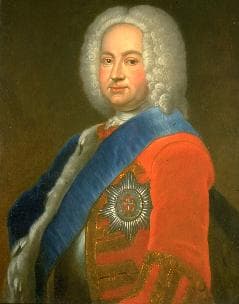
Albert II
Emperor · Medieval
42.3Total

Julius Caesar
General · Ancient
82.8Total
Basic Information
Born
1397
-100
Died
1439
-44
Era
Medieval
Ancient
Nationality
Holy Roman Empire
Roman Republic
Occupation
Emperor
General
Civilization
Western
Western
Score Comparison
Military (10%)
50.0
88.0
Political (20%)
30.8
78.0
Influence (20%)
51.0
85.0
Legacy (20%)
42.5
82.0
Leadership (15%)
38.1
80.0
Strategy (15%)
35.7
85.0
TOTAL
42.3
82.8
Albert II — Complete Timeline
1437 AD
Inheritance of Bohemia and HungaryPolitical Action◆ Major
Upon the death of his father-in-law Sigismund, Albert II inherited the crowns of Bohemia and Hungary. He was crowned King of Hungary in 1438 and King of Bohemia in 1438, though his rule in Bohemia was contested by the Hussites. This expanded Habsburg influence in Central Europe.
InheritanceBohemiaHungary
Impact: regionalconstructive
1438 AD
Election as King of the RomansPolitical Action◆ Major
Following the death of Sigismund, Albert II was elected King of the Romans, becoming the first Habsburg to hold the title. His election marked the beginning of the Habsburgs' near-continuous hold on the imperial throne until 1806. Albert's reign was brief, lasting only two years.
ElectionHabsburg DynastyImperial Politics
Impact: regionalconstructive
1439 AD
Campaign against the Ottoman EmpireWar◆ Major
Albert II led a military campaign against the Ottoman Empire in Serbia, aiming to halt their advance into the Balkans. The campaign was cut short by an outbreak of dysentery in the Christian army. Albert himself fell ill and died on the return journey, leaving his infant son Ladislaus the Posthumous as his heir.
Ottoman WarsMilitary CampaignDeath
Impact: regionaltragic
Julius Caesar — Complete Timeline
58 BC
Gallic WarsWar◆ Major
Caesar, as proconsul of Gaul, launched a series of campaigns that conquered all of Gaul (modern France, Belgium, and parts of Switzerland). He fought numerous battles, including against the Helvetii, the Belgae, and the Gallic chieftain Vercingetorix. The wars brought immense wealth and a loyal army to Caesar.
Gallic WarsConquestRoman Expansion
Impact: regional
49 BC
Crossing the RubiconPolitical Action◆ Major
Caesar led Legio XIII across the Rubicon River into Italy, defying the Roman Senate's order to disband his army. This act triggered a civil war against Pompey and the Optimates, ultimately leading to Caesar's dictatorship and the end of the Roman Republic.
Roman Civil WarEnd of RepublicPower Struggle
Impact: global
48 BC
Battle of PharsalusWar◆ Major
Caesar's outnumbered army defeated the larger forces of Pompey the Great at Pharsalus in Greece. Caesar's tactical use of a reserve line to counter Pompey's cavalry charge proved decisive. Pompey fled to Egypt, where he was assassinated, leaving Caesar as the undisputed master of the Roman world.
Roman Civil WarBattleDecisive Victory
Impact: regional
44 BC
Appointment as Dictator for LifePolitical Action◆ Major
The Roman Senate appointed Caesar dictator perpetuo (dictator for life), granting him unprecedented personal power. This move concentrated military, legislative, and judicial authority in one person, effectively ending the Roman Republic's traditional system of checks and balances and alarming many senators.
DictatorshipEnd of RepublicPower Consolidation
Impact: regionaldestructive
Assassination on the Ides of MarchPolitical Action◆ Major
A group of Roman senators, led by Marcus Junius Brutus and Gaius Cassius Longinus, stabbed Caesar to death at a meeting of the Senate in the Theatre of Pompey. The assassination was intended to restore the Republic, but instead triggered another civil war that led to the rise of the Roman Empire.
AssassinationRoman PoliticsEnd of Republic
Impact: globaldestructive
Expert Analysis
albert-ii-vs-julius-caesar
# The Gilded Crown and the Iron Sword
On a winter afternoon in January 49 BCE, a middle-aged Roman general stood at the banks of a small river in northern Italy. The Rubicon was little more than a stream, but it marked the boundary between his province and the heart of the Republic. Julius Caesar paused, knowing that crossing meant civil war, the death of the old order, and—if he failed—a traitor's end. Fifteen centuries later, in the autumn of 1437, a Habsburg prince named Albert received news that his father-in-law, the aging Emperor Sigismund, had died. Albert did not hesitate. He rode for Prague and Buda, not to conquer, but to inherit. Two men, both crowned with power, yet separated by an abyss of ambition, circumstance, and fate.
Origins
Caesar was born into the chaos of a dying republic. His family, the Julii, claimed descent from Venus, but their political fortunes had faded. Rome in the first century BCE was a world of ruthless competition—senators bribed voters, generals slaughtered rivals, and the poor crowded into tenements while the rich built villas. Caesar learned early that survival meant audacity. He was kidnapped by pirates as a young man, laughed at their ransom demand, and later crucified them. He studied rhetoric in Rhodes, fought in the east, and watched the dictatorship of Sulla teach him a lesson: power is taken, not given.
Albert II entered a different world. Born in 1397, he was a Habsburg, a dynasty that had learned to accumulate power not through battlefield brilliance but through marriage, patience, and legal maneuvering. The Holy Roman Empire was a patchwork of princes, bishops, and free cities, where a king ruled by election, not conquest. Albert's father had been a competent but unremarkable duke. The young Albert grew up in the shadow of Sigismund, the last Luxembourg emperor, a man who had burned heretics at Constance and fought the Ottomans at Nicopolis. Albert inherited not a sword, but a claim.
Rise to Power
Caesar's ascent was a masterpiece of calculated risk. He climbed the traditional ladder of Roman offices—quaestor, aedile, praetor—but he did so by spending fortunes he did not have on games and bribes. In 60 BCE, he formed the First Triumvirate with Pompey and Crassus, a private alliance that controlled Rome. Then he secured Gaul, a province that gave him an army. For eight years, he conquered a land that stretched from the Rhine to the Atlantic, writing his own propaganda in *The Gallic Wars*. When the Senate ordered him to disband his legions, he refused. The Rubicon was the final gamble.
Albert's rise was quieter. He married Sigismund's daughter Elizabeth in 1422, a union that tied the Habsburgs to the Luxembourg legacy. For fifteen years, he waited. When Sigismund died in 1437, Albert was elected King of Hungary and Bohemia, then, in 1438, King of the Romans—the first Habsburg to hold the imperial title. He did not fight for it. He was chosen, because the electors feared chaos and wanted a stable, Catholic hand. Where Caesar had forced history, Albert simply stepped into its vacancy.
Leadership & Governance
Caesar governed like a storm. As dictator, he reformed the calendar, granted citizenship to Gauls, launched public works, and planned a campaign against Parthia. His military genius was unmatched: at Alesia, he besieged a Gallic fortress while simultaneously defeating a relief army, a double ring of fortifications that still astounds strategists. But his political wisdom was brittle. He pardoned his enemies, but they did not forgive. He accepted the title "dictator for life," but the Senate saw a king. He centralized power, but destroyed the Republic's delicate balance.
Albert governed like a steward. In Bohemia and Hungary, he faced the Hussite wars, a religious rebellion that had burned the previous king's reputation. Albert negotiated, offered compromises, and tried to hold the Catholic line without provoking another crusade. In 1439, he marched against the Ottoman Turks, who were pressing into Serbia. It was a defensive campaign, cautious and limited. Albert was no Caesar; he commanded perhaps 20,000 men, not legions. But he was fighting for survival, not glory.
Triumph & Tragedy
Caesar's greatest moment was his triumph. In 46 BCE, he celebrated four victories in one month—over Gaul, Egypt, Pontus, and Africa—parading captives and gold through Rome. He had conquered the known world. But the tragedy came on the Ides of March, 44 BCE, when sixty senators stabbed him to death in the Senate house. He fell at the feet of a statue of Pompey, his old enemy. The Republic died with him, though it took a civil war to bury it.
Albert's triumph was the crown itself. He was king of three realms, emperor-elect, the first Habsburg to unite Central Europe. But his tragedy was brevity. In 1439, during the Ottoman campaign, he died of dysentery at the age of forty-two. He had reigned for less than two years. His only son, Ladislaus the Posthumous, was born four months after his death—a child who would inherit a world of war and die young. Albert left no legacy of conquest, only a dynasty.
Character & Destiny
Caesar was driven by an insatiable hunger for glory. He once said, "It is better to be the first in a village than second in Rome." He took risks that would have destroyed lesser men, and he charmed everyone—soldiers, rivals, even his assassins. But his arrogance blinded him. He dismissed omens, ignored warnings, and walked into the Senate unarmed. He believed his luck was infinite.
Albert was cautious, dutiful, and pious. He did not seek greatness; he accepted responsibility. The chroniclers describe him as "peace-loving" and "just," but also as a man worn down by the weight of thrones. Where Caesar saw history as a stage, Albert saw it as a burden. One burned bright and was extinguished; the other flickered and was forgotten.
Legacy
Caesar's legacy reshaped the world. His name became synonymous with emperor—Kaiser, Tsar, Qaysar. His reforms outlived him, and his adopted heir, Octavian, founded an empire that lasted five hundred years. His writings are still read, his battles still studied. He is the archetype of the conqueror.
Albert's legacy is institutional. He established the Habsburgs as the dominant dynasty in Central Europe for four centuries. Every Habsburg emperor after him—Charles V, Maria Theresa, Franz Joseph—owed their throne to the precedent Albert set. But his name is barely remembered outside specialized histories. He was a bridge, not a destination.
Conclusion
Standing at the Rubicon, Caesar knew he was choosing between a world and nothing. Albert, receiving the news of Sigismund's death, knew only that duty called. One man gambled everything on his own genius; the other accepted what fate delivered. The difference between them is not talent—for Caesar had more—but the shape of their eras. The Roman Republic rewarded audacity; the Holy Roman Empire rewarded patience. Caesar created an empire. Albert inherited one. History remembers the maker, not the caretaker. But perhaps the caretaker deserves a moment of reflection: for every conqueror who crosses a river, there are a hundred kings who simply hold the shore.
Rankings
🥇
Julius CaesarLeader
Mil: 88.0Pol: 78.0Inf: 85.0
82.8
🥈
Albert II
Mil: 50.0Pol: 30.8Inf: 51.0
42.3
+40.5 behind
How This Comparison Works
Algorithm
Each figure is scored on 6 dimensions (0—100 scale) based on structured historical data: Military (10%), Political (20%), Influence (20%), Legacy (20%), Leadership (15%), Strategy (15%). The weighted total produces the final ranking.
Data Sources
Scores are computed from structured sub-indicators in the database. Scale factors adjust for era (Ancient ×0.85, Modern ×1.0) and civilization size (Eastern ×1.05, Other ×0.80) to account for differences in population and military scale.
Maximum 3 Figures
Comparisons are limited to 2—3 figures to ensure readability and statistical meaningfulness.
Error Margins
±5 points per dimension — Sub-scores are derived from historical records with inherent uncertainty. Two figures within 5 points on a dimension should be considered roughly equivalent in that area.
Total Score Accuracy
±3 points overall — The weighted combination of 6 dimensions produces a total score with approximately ±3 points of uncertainty. Differences of less than 3 points are not statistically significant— the figures are effectively tied.
Known Limitations
- Historical records are incomplete and uneven across civilizations
- Figures from oral-tradition societies may be underrepresented
- Occupation labels can misclassify multi-role figures
- Scores measure capability and impact, not moral character
- Quantitative scoring is a comparison tool, not absolute truth
Capability Radar
Military (10%) — Battles & Warfare
Battles
15
95
Win Rate
20
92
Expansion
25
97
Political (20%) — Governance & Reform
Reform
20
90
Diplomacy
35
85
Economy
20
82
Influence (20%) — Cultural & Global Reach
Cultural
20
88
Global
15
94
Legacy (20%) — Historical Impact
Historical
25
95
Longevity
20
96
Leadership (15%) — Power & Stability
Tenure
30
75
Stability
15
60
Strategy (15%) — Tactics & Innovation
Strategy
20
94
Tactics
15
96
Reform
10
88
Similar Comparisons
Comments & Discussion
No comments yet. Be the first to share your thoughts!