Loading...
Albert II vs Wamba
Wamba leads by 2.1 pts · 2 figures compared
…
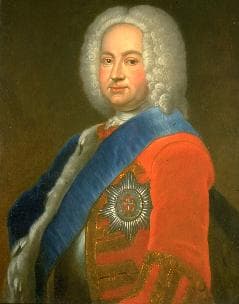
Albert II
Emperor · Medieval
42.3Total

Wamba
Emperor · Medieval
44.4Total
Basic Information
Born
1397
630
Died
1439
688
Era
Medieval
Medieval
Nationality
Holy Roman Empire
Visigothic Kingdom
Occupation
Emperor
Emperor
Civilization
Western
Western
Score Comparison
Military (10%)
50.0
55.0
Political (20%)
30.8
30.8
Influence (20%)
51.0
48.6
Legacy (20%)
42.5
40.0
Leadership (15%)
38.1
51.9
Strategy (15%)
35.7
43.3
TOTAL
42.3
44.4
Albert II — Complete Timeline
1437 AD
Inheritance of Bohemia and HungaryPolitical Action◆ Major
Upon the death of his father-in-law Sigismund, Albert II inherited the crowns of Bohemia and Hungary. He was crowned King of Hungary in 1438 and King of Bohemia in 1438, though his rule in Bohemia was contested by the Hussites. This expanded Habsburg influence in Central Europe.
InheritanceBohemiaHungary
Impact: regionalconstructive
1438 AD
Election as King of the RomansPolitical Action◆ Major
Following the death of Sigismund, Albert II was elected King of the Romans, becoming the first Habsburg to hold the title. His election marked the beginning of the Habsburgs' near-continuous hold on the imperial throne until 1806. Albert's reign was brief, lasting only two years.
ElectionHabsburg DynastyImperial Politics
Impact: regionalconstructive
1439 AD
Campaign against the Ottoman EmpireWar◆ Major
Albert II led a military campaign against the Ottoman Empire in Serbia, aiming to halt their advance into the Balkans. The campaign was cut short by an outbreak of dysentery in the Christian army. Albert himself fell ill and died on the return journey, leaving his infant son Ladislaus the Posthumous as his heir.
Ottoman WarsMilitary CampaignDeath
Impact: regionaltragic
Wamba — Complete Timeline
672 AD
Accession as Visigothic KingPolitical Action◆ Major
Wamba was elected king of the Visigoths after the death of Recceswinth. He was reportedly reluctant to accept the crown, but was persuaded by the nobility and clergy. His reign was marked by military campaigns and efforts to maintain royal authority.
Visigothic KingdomSuccessionElection
Impact: regional
673 AD
Suppression of the Rebellion of PaulusWar◆ Major
Wamba faced a major rebellion led by Paulus, a Visigothic noble who proclaimed himself king in Septimania (southern Gaul). Wamba led a military campaign, defeated Paulus, and captured him. Paulus was publicly humiliated and executed, demonstrating Wamba's resolve to maintain unity.
Visigothic KingdomRevoltCivil War
Impact: regional
674 AD
Military Campaigns against the BasquesWar
Wamba conducted military campaigns against the Basques in the Pyrenees, who had been raiding Visigothic territory. He subdued the region and fortified key positions, securing the northern borders of the Visigothic Kingdom. These campaigns demonstrated his military capability.
Visigothic KingdomMilitary CampaignBasque Wars
Impact: regional
680 AD
Deposed by ErwigPolitical Action◆ Major
Wamba was deposed in a palace coup led by Erwig, a Visigothic noble. According to accounts, Wamba was drugged and tonsured, making him ineligible to rule under Visigothic law. He was forced to retire to a monastery, where he died. This event highlighted the instability of Visigothic succession.
Visigothic KingdomCoupDeposition
Impact: regionaldestructive
Expert Analysis
Origins
Albert II was born in 1397 in Vienna, the son of Albert IV, Duke of Austria, and Johanna of Bavaria. As a member of the Habsburg dynasty, he inherited the Duchy of Austria at age seven after his father's death. His early education focused on governance and military affairs, preparing him for rule. He married Elizabeth of Luxembourg, daughter of Emperor Sigismund, in 1422, which positioned him to inherit vast territories.
Wamba, born around 630 in the Visigothic Kingdom, was a noble of Gothic descent. Little is known of his early life before his election as king. He was reportedly reluctant to accept the crown, but his military experience and noble standing made him a suitable candidate to succeed King Recceswinth in 672.
Rise to Power
Albert II's rise was tied to his marriage and the death of Sigismund in 1437. Elected King of the Romans in 1438, he became the first Habsburg to hold that title. He was crowned King of Hungary in 1438 and King of Bohemia later that year, uniting the crowns of Austria, Hungary, and Bohemia under his rule. However, his reign was brief, lasting only two years.
Wamba was elected king in 672 after the death of Recceswinth. He initially refused, but the nobility insisted. His accession was peaceful, but he soon faced a major rebellion led by Paulus in Septimania. Wamba suppressed this revolt in 673, consolidating his authority.
Leadership & Governance
Albert II's leadership was marked by his attempts to centralize authority and defend Christendom. He organized a diet in Nuremberg in 1438 to address reforms and the Ottoman threat. His governance was limited by his short reign and the fragmented nature of the Holy Roman Empire. He scored 38.1 in leadership and 30.8 in political acumen, reflecting his struggle to assert control.
Wamba's governance focused on military defense and administrative reforms. He strengthened the Visigothic state by fortifying borders and suppressing rebellions. He issued laws to improve military service and land tenure. His political score of 30.8 matches Albert II, but his leadership score of 51.9 indicates more effective command during crises.
Triumph & Tragedy
Albert II's triumph was his election as King of the Romans and inheritance of Hungary and Bohemia, uniting three crowns under Habsburg rule. However, his tragedy was his premature death in 1439 from dysentery during a campaign against the Ottoman Empire. His reign was too short to achieve lasting reforms or victories.
Wamba's greatest triumph was suppressing the rebellion of Paulus, demonstrating military skill. He also campaigned against the Basques, securing the Pyrenean frontier. His tragedy was his deposition in 680 by Erwig, who drugged and tonsured him, making him ineligible to rule. Wamba then retired to a monastery.
Character & Destiny
Albert II was pragmatic and determined, but his early death cut short his potential. He was seen as a capable ruler who could have strengthened the Habsburgs. His military score of 50.0 reflects his active campaigning, but his strategy score of 35.7 suggests limited tactical innovation.
Wamba was a reluctant king who proved decisive in military matters. His leadership score of 51.9 and military score of 55.0 indicate a strong commander. However, his political naivety allowed a coup to succeed. His character combined competence with a lack of ruthlessness, leading to his downfall.
Legacy
Albert II's legacy is as the first Habsburg Holy Roman Emperor, setting the stage for his family's dominance in Central Europe. He scored 42.5 in legacy and 51.0 in influence. His short reign meant few concrete achievements, but he established a precedent for Habsburg rule.
Wamba's legacy is more tangible: his military campaigns and laws influenced the Visigothic Kingdom. He scored 40.0 in legacy and 48.6 in influence. His defeat of Paulus is remembered, but his deposition weakened the monarchy.
Conclusion
Wamba scores higher overall (44.4 vs 42.3) and demonstrates stronger military and leadership skills. His suppression of rebellion and border campaigns had immediate impact, while Albert II's reign was too brief for lasting change. Though Albert II's dynastic legacy proved more significant in the long term, Wamba's effective governance and military prowess give him a slight edge in this comparison. The data supports Wamba as the more impactful ruler during his time.
Rankings
🥇
WambaLeader
Mil: 55.0Pol: 30.8Inf: 48.6
44.4
🥈
Albert II
Mil: 50.0Pol: 30.8Inf: 51.0
42.3
+2.1 behind
How This Comparison Works
Algorithm
Each figure is scored on 6 dimensions (0—100 scale) based on structured historical data: Military (10%), Political (20%), Influence (20%), Legacy (20%), Leadership (15%), Strategy (15%). The weighted total produces the final ranking.
Data Sources
Scores are computed from structured sub-indicators in the database. Scale factors adjust for era (Ancient ×0.85, Modern ×1.0) and civilization size (Eastern ×1.05, Other ×0.80) to account for differences in population and military scale.
Maximum 3 Figures
Comparisons are limited to 2—3 figures to ensure readability and statistical meaningfulness.
Error Margins
±5 points per dimension — Sub-scores are derived from historical records with inherent uncertainty. Two figures within 5 points on a dimension should be considered roughly equivalent in that area.
Total Score Accuracy
±3 points overall — The weighted combination of 6 dimensions produces a total score with approximately ±3 points of uncertainty. Differences of less than 3 points are not statistically significant— the figures are effectively tied.
Known Limitations
- Historical records are incomplete and uneven across civilizations
- Figures from oral-tradition societies may be underrepresented
- Occupation labels can misclassify multi-role figures
- Scores measure capability and impact, not moral character
- Quantitative scoring is a comparison tool, not absolute truth
Capability Radar
Military (10%) — Battles & Warfare
Battles
15
35
Win Rate
20
40
Expansion
25
15
Political (20%) — Governance & Reform
Reform
20
25
Diplomacy
35
30
Economy
20
20
Influence (20%) — Cultural & Global Reach
Cultural
20
20
Global
15
10
Legacy (20%) — Historical Impact
Historical
25
25
Longevity
20
15
Leadership (15%) — Power & Stability
Tenure
30
40
Stability
15
25
Strategy (15%) — Tactics & Innovation
Strategy
20
30
Tactics
15
30
Reform
10
20
Similar Comparisons
Comments & Discussion
No comments yet. Be the first to share your thoughts!