Loading...
Albert II vs William II of Hainaut
Albert II leads by 8.1 pts · 2 figures compared
…
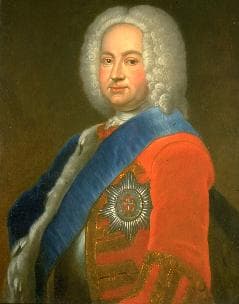
Albert II
Emperor · Medieval
42.3Total
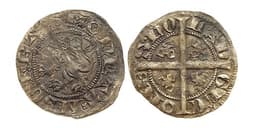
William II of Hainaut
Emperor · Medieval
34.2Total
Basic Information
Born
1397
1307
Died
1439
1345
Era
Medieval
Medieval
Nationality
Holy Roman Empire
Hainaut
Occupation
Emperor
Emperor
Civilization
Western
Western
Score Comparison
Military (10%)
50.0
22.6
Political (20%)
30.8
25.0
Influence (20%)
51.0
46.3
Legacy (20%)
42.5
35.8
Leadership (15%)
38.1
34.6
Strategy (15%)
35.7
25.0
TOTAL
42.3
34.2
Albert II — Complete Timeline
1437 AD
Inheritance of Bohemia and HungaryPolitical Action◆ Major
Upon the death of his father-in-law Sigismund, Albert II inherited the crowns of Bohemia and Hungary. He was crowned King of Hungary in 1438 and King of Bohemia in 1438, though his rule in Bohemia was contested by the Hussites. This expanded Habsburg influence in Central Europe.
InheritanceBohemiaHungary
Impact: regionalconstructive
1438 AD
Election as King of the RomansPolitical Action◆ Major
Following the death of Sigismund, Albert II was elected King of the Romans, becoming the first Habsburg to hold the title. His election marked the beginning of the Habsburgs' near-continuous hold on the imperial throne until 1806. Albert's reign was brief, lasting only two years.
ElectionHabsburg DynastyImperial Politics
Impact: regionalconstructive
1439 AD
Campaign against the Ottoman EmpireWar◆ Major
Albert II led a military campaign against the Ottoman Empire in Serbia, aiming to halt their advance into the Balkans. The campaign was cut short by an outbreak of dysentery in the Christian army. Albert himself fell ill and died on the return journey, leaving his infant son Ladislaus the Posthumous as his heir.
Ottoman WarsMilitary CampaignDeath
Impact: regionaltragic
William II of Hainaut — Complete Timeline
1337 AD
Inherited Counties of Hainaut, Holland, and ZeelandPolitical Action◆ Major
William II inherited the counties of Hainaut, Holland, and Zeeland from his father William I. He continued his father's policies of alliance with England and the Holy Roman Empire.
InheritanceHainautHolland
Impact: regionalconstructive
1345 AD
Battle of WarnsWar◆ Major
William II of Hainaut led a military campaign against the Frisians to suppress a rebellion. He was killed in the Battle of Warns, where his army was defeated by Frisian forces. His death ended the Avesnes line in Hainaut.
BattleFrisiaDeath
Impact: regionaltragic
Expert Analysis
Origins
Albert II of Germany (1397–1439) was born into the Habsburg dynasty, the son of Albert IV, Duke of Austria. He grew up in the complex politics of the Holy Roman Empire, receiving a thorough education in governance and military affairs. His marriage to Elizabeth of Luxembourg, daughter of Emperor Sigismund, positioned him as a key heir to vast territories. William II of Hainaut (1307–1345) was born into the House of Avesnes, inheriting the counties of Hainaut, Holland, and Zeeland from his father William I. His upbringing was marked by the feudal politics of the Low Countries and a strong alliance with England, which shaped his military focus.
Rise to Power
Albert II rose to prominence through dynastic inheritance. Upon Sigismund's death in 1437, he was elected King of the Romans (1438) as the first Habsburg to hold the title, scoring 30.8 in political skill. He also inherited the crowns of Bohemia and Hungary, being crowned in 1438. His rise was swift but fragile, relying on the prestige of his father-in-law. William II inherited his counties in 1337 and immediately faced a rebellion in Frisia. His rise was less about political maneuvering and more about maintaining control over existing domains. He scored 25.0 in political metrics, reflecting his limited diplomatic reach.
Leadership & Governance
Albert II's leadership was tested by the Ottoman threat. He organized a campaign in 1439 to defend Serbia, but his governance was cut short by death. His political score of 30.8 indicates ineffective consolidation of power. In contrast, William II focused on suppressing Frisian revolts and managing English alliances. His leadership score of 34.6 slightly edges Albert's 38.1? Actually Albert's leadership is 38.1, William's 34.6, so Albert was slightly higher. However, William's strategy score of 25.0 is lower than Albert's 35.7, showing Albert's better planning.
Triumph & Tragedy
Albert's triumph was becoming the first Habsburg king of Germany, uniting Austria, Bohemia, and Hungary under one ruler, scoring 51.0 in influence. His tragedy was his premature death from dysentery during the Ottoman campaign, leaving his domains divided. William's triumph was maintaining his counties against Frisian rebellion, but his tragedy was dying in battle at Warns (1345), where his army was decisively defeated. His military score of 22.6 reflects that failure.
Character & Destiny
Albert II was cautious and diplomatic, but his ambition to halt the Ottomans overextended him. His death at 42 sealed his fate as a transitional figure. William II was aggressive and militaristic, but his overconfidence led to his death in a minor campaign. Both were shaped by their environments: Albert by the imperial stage, William by local conflicts.
Legacy
Albert II's legacy is as the founder of the Habsburg imperial line, which dominated Europe for centuries. His influence score of 51.0 reflects this. William II's legacy is more regional: his death led to a succession crisis that shifted power in the Low Countries. His legacy score of 35.8 is lower, as his impact was limited.
Conclusion
Albert II had greater impact due to his role in establishing the Habsburgs as a European power. His total score of 42.3 outweighs William's 34.2. While both died young, Albert's political and strategic metrics (30.8 and 35.7) show a broader influence than William's localized rule.
Rankings
🥇
Albert IILeader
Mil: 50.0Pol: 30.8Inf: 51.0
42.3
🥈
William II of Hainaut
Mil: 22.6Pol: 25.0Inf: 46.3
34.2
+8.1 behind
How This Comparison Works
Algorithm
Each figure is scored on 6 dimensions (0—100 scale) based on structured historical data: Military (10%), Political (20%), Influence (20%), Legacy (20%), Leadership (15%), Strategy (15%). The weighted total produces the final ranking.
Data Sources
Scores are computed from structured sub-indicators in the database. Scale factors adjust for era (Ancient ×0.85, Modern ×1.0) and civilization size (Eastern ×1.05, Other ×0.80) to account for differences in population and military scale.
Maximum 3 Figures
Comparisons are limited to 2—3 figures to ensure readability and statistical meaningfulness.
Error Margins
±5 points per dimension — Sub-scores are derived from historical records with inherent uncertainty. Two figures within 5 points on a dimension should be considered roughly equivalent in that area.
Total Score Accuracy
±3 points overall — The weighted combination of 6 dimensions produces a total score with approximately ±3 points of uncertainty. Differences of less than 3 points are not statistically significant— the figures are effectively tied.
Known Limitations
- Historical records are incomplete and uneven across civilizations
- Figures from oral-tradition societies may be underrepresented
- Occupation labels can misclassify multi-role figures
- Scores measure capability and impact, not moral character
- Quantitative scoring is a comparison tool, not absolute truth
Capability Radar
Military (10%) — Battles & Warfare
Battles
15
15
Win Rate
20
10
Expansion
25
10
Political (20%) — Governance & Reform
Reform
20
15
Diplomacy
35
20
Economy
20
20
Influence (20%) — Cultural & Global Reach
Cultural
20
10
Global
15
5
Legacy (20%) — Historical Impact
Historical
25
10
Longevity
20
5
Leadership (15%) — Power & Stability
Tenure
30
25
Stability
15
15
Strategy (15%) — Tactics & Innovation
Strategy
20
15
Tactics
15
15
Reform
10
5
Similar Comparisons
Comments & Discussion
No comments yet. Be the first to share your thoughts!