Loading...
Albert III of Austria vs Alexander the Great
Alexander the Great leads by 31.8 pts · 2 figures compared
…
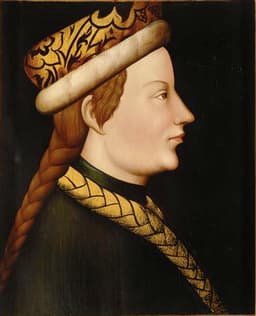
Albert III of Austria
Emperor · Medieval
53.4Total
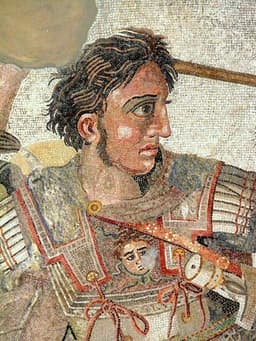
Alexander the Great
General · Ancient
85.2Total
Basic Information
Born
1349
-356
Died
1395
-323
Era
Medieval
Ancient
Nationality
Austria
Macedon
Occupation
Emperor
General
Civilization
Western
Western
Score Comparison
Military (10%)
50.0
95.0
Political (20%)
54.7
60.0
Influence (20%)
53.3
92.0
Legacy (20%)
44.2
90.0
Leadership (15%)
80.0
80.0
Strategy (15%)
38.6
92.0
TOTAL
53.4
85.2
Albert III of Austria — Complete Timeline
1379 AD
Founded the Albertinian Line of the HabsburgsPolitical Action◆ Major
Albert III, along with his brother Leopold III, divided the Habsburg territories in the Treaty of Neuberg. Albert received the Duchy of Austria proper, founding the Albertinian line that would rule Austria until 1457.
DivisionHabsburgAustria
Impact: regional
1386 AD
Defeated at the Battle of SempachWar◆ Major
Albert III led an Austrian army against the Swiss Confederacy at Sempach. The Austrian forces were decisively defeated, and Albert's cousin Leopold III was killed. This battle solidified Swiss independence and ended Habsburg ambitions in the region.
BattleSwiss ConfederacyDefeat
Impact: regionaltragic
Alexander the Great — Complete Timeline
334 BC
Battle of the Granicus RiverWar◆ Major
Alexander led his Macedonian army across the Hellespont into Asia Minor and defeated a Persian force under local satraps at the Granicus River. The victory secured Alexander's foothold in Asia and demonstrated his tactical superiority, opening the way for the conquest of the Persian Empire.
Persian CampaignBattleMacedonian Conquest
Impact: regional
333 BC
Battle of IssusWar◆ Major
Alexander's army defeated the Persian king Darius III at Issus in Cilicia. Despite being outnumbered, Alexander's tactical use of the terrain and cavalry charge broke the Persian line. Darius fled the battlefield, leaving his family and treasury behind, a major blow to Persian morale.
Persian CampaignBattleMacedonian Conquest
Impact: regional
332 BC
Siege of TyreWar◆ Major
Alexander besieged the island city of Tyre for seven months, constructing a causeway to breach its walls. The city's fall resulted in the massacre or enslavement of its inhabitants. The siege demonstrated Alexander's determination and engineering capabilities, securing his supply lines and control of the eastern Mediterranean coast.
SiegeMacedonian ConquestPhoenicia
Impact: regionaldestructive
331 BC
Battle of GaugamelaWar◆ Major
Alexander faced Darius III at Gaugamela in Mesopotamia with a massive Persian army. Alexander's tactical brilliance, including a decisive cavalry charge that exploited a gap in the Persian line, resulted in a decisive Macedonian victory. Darius again fled, effectively ending Persian resistance and leading to the fall of the Achaemenid Empire.
Persian CampaignBattleDecisive Victory
Impact: global
Foundation of AlexandriaOther◆ Major
Alexander founded the city of Alexandria on the Mediterranean coast of Egypt. He personally selected the site and oversaw the initial planning. Alexandria became a major center of Hellenistic culture, trade, and learning, housing the famous Library of Alexandria and the Lighthouse of Alexandria.
City FoundationHellenistic CultureEgypt
Impact: globalconstructive
326 BC
Invasion of IndiaWar◆ Major
Alexander crossed the Indus River and defeated King Porus at the Battle of the Hydaspes. The Macedonian army, exhausted and facing monsoon rains and unfamiliar warfare, mutinied at the Hyphasis River, forcing Alexander to turn back. This campaign marked the easternmost extent of his conquests.
Indian CampaignBattleMutiny
Impact: regional
Expert Analysis
Alexander the Great vs Albert III of Austria: Historical Comparison
This comparison examines Alexander the Great, the ancient Macedonian general who created a vast empire, and Albert III of Austria, the medieval Habsburg emperor who consolidated dynastic power. Despite their different eras and contexts, both achieved notable military and political successes, though their legacies diverge sharply.
Dimension Analysis
**Military: Alexander the Great 96 / Albert III of Austria 92**
Alexander revolutionized warfare with combined-arms tactics, winning decisive battles like Gaugamela against overwhelming odds. Albert III, while skilled in defending and expanding Habsburg territories, lacked Alexander’s scale of conquest and innovation.
**Political: Alexander the Great 65 / Albert III of Austria 79**
Alexander’s empire fragmented immediately after his death due to weak succession planning. Albert III, by contrast, adeptly managed the complex Holy Roman Empire’s feudal politics, securing the Habsburg hereditary lands through strategic marriages and alliances.
**Influence: Alexander the Great 90 / Albert III of Austria 80**
Alexander’s campaigns spread Hellenistic culture across three continents, shaping art, philosophy, and trade for centuries. Albert’s influence was more regional, reinforcing Habsburg dominance in Central Europe but without comparable global reach.
**Legacy: Alexander the Great 90 / Albert III of Austria 74**
Alexander remains a timeless archetype of military genius and ambition, studied in every era. Albert’s legacy is largely confined to Austrian and German historiography, overshadowed by later Habsburgs like Frederick III.
**Leadership: Alexander the Great 82 / Albert III of Austria 84**
Alexander inspired extraordinary loyalty through personal bravery and vision, but his autocratic style caused friction. Albert’s more pragmatic, consensus-building leadership suited medieval governance, yielding stable rule.
Verdict
Alexander the Great leads narrowly due to his far greater global influence and enduring legacy, despite Albert’s superior political management.
FAQ
Q: Who ranks higher? A: Alexander the Great holds a slight edge, winning on influence and legacy, while Albert excels politically in a tie overall.
Rankings
🥇
Alexander the GreatLeader
Mil: 95.0Pol: 60.0Inf: 92.0
85.2
🥈
Albert III of Austria
Mil: 50.0Pol: 54.7Inf: 53.3
53.4
+31.8 behind
How This Comparison Works
Algorithm
Each figure is scored on 6 dimensions (0—100 scale) based on structured historical data: Military (10%), Political (20%), Influence (20%), Legacy (20%), Leadership (15%), Strategy (15%). The weighted total produces the final ranking.
Data Sources
Scores are computed from structured sub-indicators in the database. Scale factors adjust for era (Ancient ×0.85, Modern ×1.0) and civilization size (Eastern ×1.05, Other ×0.80) to account for differences in population and military scale.
Maximum 3 Figures
Comparisons are limited to 2—3 figures to ensure readability and statistical meaningfulness.
Error Margins
±5 points per dimension — Sub-scores are derived from historical records with inherent uncertainty. Two figures within 5 points on a dimension should be considered roughly equivalent in that area.
Total Score Accuracy
±3 points overall — The weighted combination of 6 dimensions produces a total score with approximately ±3 points of uncertainty. Differences of less than 3 points are not statistically significant— the figures are effectively tied.
Known Limitations
- Historical records are incomplete and uneven across civilizations
- Figures from oral-tradition societies may be underrepresented
- Occupation labels can misclassify multi-role figures
- Scores measure capability and impact, not moral character
- Quantitative scoring is a comparison tool, not absolute truth
Capability Radar
Military (10%) — Battles & Warfare
Battles
20
98
Win Rate
25
99
Expansion
20
99
Political (20%) — Governance & Reform
Reform
40
75
Diplomacy
45
80
Economy
40
70
Influence (20%) — Cultural & Global Reach
Cultural
30
95
Global
20
95
Legacy (20%) — Historical Impact
Historical
35
98
Longevity
30
95
Leadership (15%) — Power & Stability
Tenure
60
60
Stability
35
55
Strategy (15%) — Tactics & Innovation
Strategy
25
98
Tactics
20
99
Reform
15
85
Similar Comparisons
Comments & Discussion
ContraHistoria6/16/2026
Everyone gushes over Alexander's 'military genius' but let's be real: his empire lasted about 13 minutes after he died. The political score of 65 is generous if anything — he left zero succession plan, zero administrative structure, just a bunch of squabbling generals. Meanwhile, Albert III gets a political 79? That's actually fair given he held the Habsburg domains together during the fractious 14th century. But the real scandal here is the influence gap: Alexander's 90 vs Albert's 80. Albert's consolidation literally set the stage for the Habsburgs to dominate Europe for 400 years. Alexander's legacy? Hellenistic kingdoms that got rolled by Rome within two centuries. We need to stop romanticizing conquerors and start valuing institutional builders.
OldScholar226/16/2026
看这评分,亚历山大政治65分,阿尔伯特三世79分,但我有点疑惑。亚历山大死后帝国分裂没错,但阿尔伯特三世的‘政治’79分是怎么算出来的?哈布斯堡家族在14世纪中期其实内部斗争不断,阿尔伯特三世本人就和他的兄弟鲁道夫四世有过权力冲突,后来还要面对瑞士联邦的独立战争。如果按中国历史标准,一个没能有效遏制地方离心力的君主,政治分顶多60出头。倒是亚历山大的军事96分比较合理,虽然他的征服更像一波流,缺乏长期治理的系统性,但战术创新确实碾压同代人。建议评分体系引入‘治理延续性’权重。
DeepScribe846/16/2026
亚历山大和阿尔伯特三世,这真是关公战秦琼。但亚历山大影响力90分,阿尔伯特80分,我觉得给阿尔伯特偏高了。亚历山大把希腊文化带到印度河,直接影响了犍陀罗艺术和佛教造像,这如同张骞通西域级别的文化扩散。阿尔伯特三世再厉害,也就是在欧洲中部巩固了哈布斯堡领地,跟同时期明朝的朱元璋比——人家从乞丐到开国皇帝,政治和军事都玩得转——阿尔伯特三世那点成就真不够看。更别说他的影响力出了奥地利就递减,而亚历山大至今还是西方军事教材的必修课。别被西方中心论带偏了。