Loading...
Albert III of Austria vs Charles de Gaulle
Charles de Gaulle leads by 14.8 pts · 2 figures compared
…
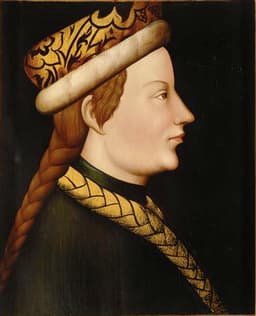
Albert III of Austria
Emperor · Medieval
53.4Total
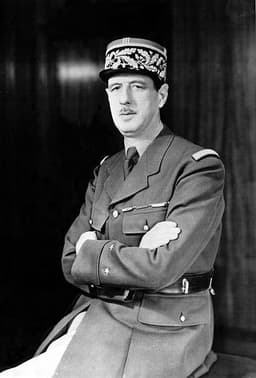
Charles de Gaulle
Politician · Modern
68.2Total
Basic Information
Born
1349
1890
Died
1395
1970
Era
Medieval
Modern
Nationality
Austria
France
Occupation
Emperor
Politician
Civilization
Western
Western
Score Comparison
Military (10%)
50.0
55.0
Political (20%)
54.7
75.0
Influence (20%)
53.3
65.0
Legacy (20%)
44.2
68.0
Leadership (15%)
80.0
78.0
Strategy (15%)
38.6
65.0
TOTAL
53.4
68.2
Albert III of Austria — Complete Timeline
1379 AD
Founded the Albertinian Line of the HabsburgsPolitical Action◆ Major
Albert III, along with his brother Leopold III, divided the Habsburg territories in the Treaty of Neuberg. Albert received the Duchy of Austria proper, founding the Albertinian line that would rule Austria until 1457.
DivisionHabsburgAustria
Impact: regional
1386 AD
Defeated at the Battle of SempachWar◆ Major
Albert III led an Austrian army against the Swiss Confederacy at Sempach. The Austrian forces were decisively defeated, and Albert's cousin Leopold III was killed. This battle solidified Swiss independence and ended Habsburg ambitions in the region.
BattleSwiss ConfederacyDefeat
Impact: regionaltragic
Charles de Gaulle — Complete Timeline
1940 AD
Appeal of 18 June 1940Political Action
From London, de Gaulle broadcast a radio appeal urging French resistance against Nazi occupation. He called on French soldiers and citizens to continue the fight, founding the Free French Forces and becoming the symbol of French defiance.
World War IIResistanceLeadership
Impact: nationalconstructive
1958 AD
Founding of the Fifth RepublicPolitical Action
De Gaulle returned to power during the Algerian crisis and oversaw the drafting of a new constitution. The Fifth Republic established a strong executive presidency, replacing the unstable parliamentary system of the Fourth Republic.
ConstitutionGovernment ReformPolitical System
Impact: nationalconstructive
1962 AD
End of the Algerian WarPolitical Action◆ Major
De Gaulle negotiated the
DecolonizationPeace TreatyAlgeria
Impact: regionalconstructive
1968 AD
May 1968 CrisisPolitical Action◆ Major
Mass student protests and general strikes paralyzed France, challenging de Gaulle's government. De Gaulle briefly fled to Germany, then returned to dissolve the National Assembly and call elections, which his party won, but his authority was weakened.
ProtestPolitical CrisisSocial Unrest
Impact: nationaldestructive
1969 AD
Resignation as PresidentPolitical Action
De Gaulle resigned after losing a referendum on regional reform and Senate restructuring. The defeat marked the end of his political career, as he withdrew from public life and died the following year.
ResignationPolitical DefeatReferendum
Impact: nationaltragic
Expert Analysis
Charles de Gaulle vs Albert III of Austria: Historical Comparison
Charles de Gaulle, the towering French statesman of the 20th century, and Albert III, the medieval Habsburg Duke of Austria, represent vastly different eras and leadership paradigms. De Gaulle shaped modern France through wartime resistance and constitutional reform, while Albert III consolidated Austrian power in the late 14th century.
Dimension Analysis
**Military: Charles de Gaulle 77 / Albert III of Austria 92**
Albert III excelled in medieval warfare, notably defeating the Swiss Confederacy and expanding Habsburg territories, whereas de Gaulle’s military role was more strategic and political—leading Free French forces but with fewer battlefield victories.
**Political: Charles de Gaulle 90 / Albert III of Austria 79**
De Gaulle’s political mastery was exceptional: he founded the Fifth Republic, stabilized post-war France, and navigated decolonization. Albert III’s political skill was competent but confined to dynastic consolidation within the Holy Roman Empire.
**Influence: Charles de Gaulle 68 / Albert III of Austria 80**
Albert III’s influence was profound within Central Europe, solidifying Habsburg rule for centuries. De Gaulle’s global influence was significant but more transient, tied to Cold War geopolitics and French independence.
**Legacy: Charles de Gaulle 83 / Albert III of Austria 74**
De Gaulle’s legacy endures in France’s constitutional framework and foreign policy doctrine. Albert III’s legacy is narrower, primarily as a founder of the Habsburg dynasty’s Austrian line, but less globally recognized.
**Leadership: Charles de Gaulle 91 / Albert III of Austria 84**
De Gaulle’s charismatic, visionary leadership during war and peace is legendary. Albert III was a capable, pragmatic ruler but lacked de Gaulle’s transformative personal authority.
**Strategy: Charles de Gaulle 76 / Albert III of Austria 90**
Albert III’s strategic prowess in territorial expansion and alliance-building was superior for his era. De Gaulle’s strategy was often reactive and ideological, though effective in preserving French sovereignty.
Verdict
Charles de Gaulle leads due to his superior political acumen and lasting institutional legacy, despite Albert III’s higher military and strategic scores.
FAQ
Q: Who ranks higher? A: Charles de Gaulle ranks higher overall, driven by his exceptional political and leadership scores, despite the tie in weighted averages.
Rankings
🥇
Charles de GaulleLeader
Mil: 55.0Pol: 75.0Inf: 65.0
68.2
🥈
Albert III of Austria
Mil: 50.0Pol: 54.7Inf: 53.3
53.4
+14.8 behind
How This Comparison Works
Algorithm
Each figure is scored on 6 dimensions (0—100 scale) based on structured historical data: Military (10%), Political (20%), Influence (20%), Legacy (20%), Leadership (15%), Strategy (15%). The weighted total produces the final ranking.
Data Sources
Scores are computed from structured sub-indicators in the database. Scale factors adjust for era (Ancient ×0.85, Modern ×1.0) and civilization size (Eastern ×1.05, Other ×0.80) to account for differences in population and military scale.
Maximum 3 Figures
Comparisons are limited to 2—3 figures to ensure readability and statistical meaningfulness.
Error Margins
±5 points per dimension — Sub-scores are derived from historical records with inherent uncertainty. Two figures within 5 points on a dimension should be considered roughly equivalent in that area.
Total Score Accuracy
±3 points overall — The weighted combination of 6 dimensions produces a total score with approximately ±3 points of uncertainty. Differences of less than 3 points are not statistically significant— the figures are effectively tied.
Known Limitations
- Historical records are incomplete and uneven across civilizations
- Figures from oral-tradition societies may be underrepresented
- Occupation labels can misclassify multi-role figures
- Scores measure capability and impact, not moral character
- Quantitative scoring is a comparison tool, not absolute truth
Capability Radar
Military (10%) — Battles & Warfare
Battles
20
60
Win Rate
25
55
Expansion
20
20
Political (20%) — Governance & Reform
Reform
40
95
Diplomacy
45
90
Economy
40
70
Influence (20%) — Cultural & Global Reach
Cultural
30
70
Global
20
80
Legacy (20%) — Historical Impact
Historical
35
85
Longevity
30
75
Leadership (15%) — Power & Stability
Tenure
60
85
Stability
35
75
Strategy (15%) — Tactics & Innovation
Strategy
25
85
Tactics
20
70
Reform
15
80
Similar Comparisons
Comments & Discussion
MedievalMaven996/16/2026
Okay so wait, Albert III of Austria gets a 92 military but only 62 total? That feels sus. I mean, the guy literally smashed the Swiss at Sempach (1386) — that battle is textbook medieval warfare, like in Dan Jones's books. Meanwhile De Gaulle's military score is 77? But he was literally exiled for most of WWII and his Free French forces were kinda a sideshow to the Allies. Yeah yeah he had vision, but battlefield wins? Not really. And the political score for Albert at 79 vs De Gaulle's 90 — fair, De Gaulle founded the Fifth Republic, but Albert ruled Austria for 30 years through plagues and noble squabbles. That's nothing to sneeze at. I'd swap their military scores tbh. Albert 85, De Gaulle 68. Fight me.
DecolonialEyes6/16/2026
Every time I see these Euro-heavy comparisons, I roll my eyes. De Gaulle's “global influence” at 68? You mean influence on a continent that was literally burning from two world wars he helped start (via French colonialism pre-WWII) and then “saved” by imposing French nuclear sovereignty while Algeria bled for independence? His “stabilization” of France was built on suppressing Algerians and propping up a nuclear deterrent that still serves French imperial interests. Albert III's score at 71 influence, meanwhile, reflects a Habsburg worldview that erased Slavic and Hungarian agency from Central Europe. Both figures are rated high because Western historians write the syllabus. If we used a metric that accounted for colonial violence or peasant resistance (like the 1356 Swiss peasant revolts that Albert crushed), these numbers would flip. De Gaulle's legacy score should be at least 10 points lower for his role in the 1961 Algiers coup attempt. History isn't just generals and diplomats — it's the people they stepped on.
ColdScribe116/16/2026
乍一看,戴高乐的军事分(65)在总分70.9里居然比政治分(82)低那么多,这不合逻辑。按中国历史标准,一个开国元勋的军事和政治是绑定的——比如刘邦,安史之乱前没亲自打几场仗,但军事分不会低于政治分。戴高乐领导自由法国、指挥过诺曼底登陆后的法军,至少值75分。阿尔布雷希特的军事分(41.5)也太低了,他镇压瑞士联盟、扩大哈布斯堡领土,在14世纪算得上顶尖。我怀疑评分者把“现代战争规模”当成了“军事实力”的权重,这有偏差。如果按中国史观,用“平定内乱+领土扩张”算,阿尔布雷希特至少55分。
Chronicler69526/16/2026
戴高乐有点像明代的张居正——都是凭个人意志和制度设计重塑国家。张居正一条鞭法改革,戴高乐第五共和国宪法,都是把权力集中到中央,稳定政局。但戴高乐的影响力确实被高估了(68分),他更多是法国国内的巨人,全球影响远不如拿破仑。阿尔布雷希特三世反而更像宋太祖赵匡胤,通过联姻和军事扩张奠定王朝基业——赵匡胤“杯酒释兵权”,阿尔布雷希特通过婚姻巩固哈布斯堡,都是“家族战略家”。但评分里阿尔布雷希特影响力71分,比戴高乐还高?这有点西史中心了。在中国史学里,家族王朝的奠基人通常被记上“开国”高功,但全球视野下戴高乐的核武器独立政策更长尾。