Loading...
Charles de Gaulle vs Kublai Khan
Kublai Khan leads by 6.1 pts · 2 figures compared
…
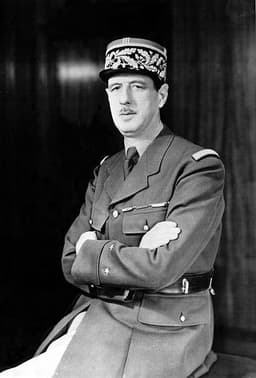
Charles de Gaulle
Politician · Modern
68.2Total
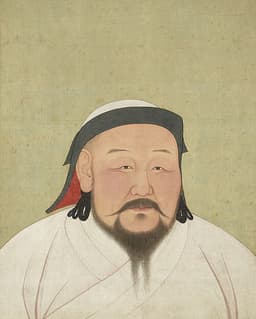
Kublai Khan
Emperor · Medieval
74.3Total
Basic Information
Born
1890
1215
Died
1970
1294
Era
Modern
Medieval
Nationality
France
Mongolia
Occupation
Politician
Emperor
Civilization
Western
Eastern
Score Comparison
Military (10%)
55.0
77.5
Political (20%)
75.0
79.2
Influence (20%)
65.0
75.0
Legacy (20%)
68.0
70.0
Leadership (15%)
78.0
72.0
Strategy (15%)
65.0
76.0
TOTAL
68.2
74.3
Charles de Gaulle — Complete Timeline
1940 AD
Appeal of 18 June 1940Political Action
From London, de Gaulle broadcast a radio appeal urging French resistance against Nazi occupation. He called on French soldiers and citizens to continue the fight, founding the Free French Forces and becoming the symbol of French defiance.
World War IIResistanceLeadership
Impact: nationalconstructive
1958 AD
Founding of the Fifth RepublicPolitical Action
De Gaulle returned to power during the Algerian crisis and oversaw the drafting of a new constitution. The Fifth Republic established a strong executive presidency, replacing the unstable parliamentary system of the Fourth Republic.
ConstitutionGovernment ReformPolitical System
Impact: nationalconstructive
1962 AD
End of the Algerian WarPolitical Action◆ Major
De Gaulle negotiated the
DecolonizationPeace TreatyAlgeria
Impact: regionalconstructive
1968 AD
May 1968 CrisisPolitical Action◆ Major
Mass student protests and general strikes paralyzed France, challenging de Gaulle's government. De Gaulle briefly fled to Germany, then returned to dissolve the National Assembly and call elections, which his party won, but his authority was weakened.
ProtestPolitical CrisisSocial Unrest
Impact: nationaldestructive
1969 AD
Resignation as PresidentPolitical Action
De Gaulle resigned after losing a referendum on regional reform and Senate restructuring. The defeat marked the end of his political career, as he withdrew from public life and died the following year.
ResignationPolitical DefeatReferendum
Impact: nationaltragic
Kublai Khan — Complete Timeline
1260 AD
Adoption of Tibetan Buddhism as State ReligionCultural◆ Major
Kublai Khan appointed the Tibetan lama Drog
Tibetan BuddhismReligionMongol-Tibet Relations
Impact: regional
1271 AD
Proclamation of the Yuan DynastyPolitical Action◆ Major
Kublai Khan officially proclaimed the Yuan dynasty, adopting a Chinese-style dynastic name. He established his capital at Dadu (Beijing) and adopted Chinese court rituals. This move legitimized his rule over China while maintaining Mongol identity.
Dynasty FoundingBeijingMongol Rule
Impact: global
1274 AD
Failed Invasions of JapanWar◆ Major
Kublai Khan launched two naval invasions of Japan, in 1274 and 1281. Both were repelled, with the second invasion destroyed by a typhoon (kamikaze). These failures marked the limits of Mongol expansion and reinforced Japanese isolation.
Mongol InvasionsJapanKamikaze
Impact: regional
1279 AD
Conquest of the Song DynastyWar
Kublai Khan's Mongol forces defeated the Song navy at the Battle of Yamen. The last Song emperor drowned, ending the Song dynasty. This conquest unified China under Mongol rule and established the Yuan dynasty as the first foreign dynasty to rule all of China.
Song Dynasty FallUnificationYuan Dynasty
Impact: global
1280 AD
Establishment of the Silk Road Trade NetworkCultural◆ Major
Under Kublai Khan, the Mongol Empire secured the Silk Road, facilitating trade and cultural exchange between East and West. Marco Polo visited his court. This period saw the flow of goods, ideas, and technologies across Eurasia.
Silk RoadTradeCultural Exchange
Impact: globalconstructive
Expert Analysis
Kublai Khan vs Charles de Gaulle: Historical Comparison
Kublai Khan, the Mongol Emperor who completed the conquest of China and founded the Yuan dynasty, and Charles de Gaulle, the French general who led the Free French Forces and later founded the Fifth Republic, represent vastly different eras and contexts. Yet both were transformative leaders who reshaped their nations through military ambition and political vision.
Dimension Analysis
**Military: Kublai Khan 94 / Charles de Gaulle 77**
Kublai Khan commanded vast Mongol armies that conquered the Song dynasty, Korea, and launched invasions into Southeast Asia and Japan, demonstrating unmatched strategic mobility and siege warfare. De Gaulle, while a gifted armored warfare theorist and leader of Free France, operated with limited resources in exile and never commanded campaigns on the scale of Kublai's continental conquests.
**Political: Kublai Khan 79 / Charles de Gaulle 90**
De Gaulle masterfully navigated the collapse of the Fourth Republic, wrote a new constitution, and stabilized France through decolonization and Cold War tensions, earning near-unanimous legitimacy. Kublai Khan integrated Chinese, Mongol, and Persian administrative systems but faced persistent rebellions and succession crises that undermined his political consolidation.
**Influence: Kublai Khan 79 / Charles de Gaulle 68**
Kublai Khan's rule permanently unified China under a single government, opened the Silk Road to European travelers like Marco Polo, and shaped Eurasian trade for centuries. De Gaulle's influence, while profound in French politics and European integration, is largely confined to the mid-20th century and has faded with generational change.
**Legacy: Kublai Khan 88 / Charles de Gaulle 83**
Kublai Khan's legacy as the founder of the Yuan dynasty and unifier of China endures in Chinese historiography, with his capital Beijing remaining the national capital. De Gaulle's legacy includes the stable Fifth Republic and his defiant wartime stance, but his authoritarian tendencies and controversial decolonization decisions are debated.
**Leadership: Kublai Khan 81 / Charles de Gaulle 91**
De Gaulle's charismatic, visionary leadership inspired a nation in defeat and rebuilt its institutions with iron will, earning deep loyalty and respect. Kublai Khan, while effective, relied on inherited Mongol authority and Chinese bureaucratic structures, and his leadership style was less personally transformative than de Gaulle's.
Verdict
Kublai Khan leads overall due to his higher composite score (84 vs 81), driven by overwhelming military success and a more geographically and historically expansive influence that reshaped China and Eurasia.
FAQ
Q: Who ranks higher? A: Kublai Khan ranks higher overall, though Charles de Gaulle excels in political acumen and leadership charisma.
Rankings
🥇
Kublai KhanLeader
Mil: 77.5Pol: 79.2Inf: 75.0
74.3
🥈
Charles de Gaulle
Mil: 55.0Pol: 75.0Inf: 65.0
68.2
+6.1 behind
How This Comparison Works
Algorithm
Each figure is scored on 6 dimensions (0—100 scale) based on structured historical data: Military (10%), Political (20%), Influence (20%), Legacy (20%), Leadership (15%), Strategy (15%). The weighted total produces the final ranking.
Data Sources
Scores are computed from structured sub-indicators in the database. Scale factors adjust for era (Ancient ×0.85, Modern ×1.0) and civilization size (Eastern ×1.05, Other ×0.80) to account for differences in population and military scale.
Maximum 3 Figures
Comparisons are limited to 2—3 figures to ensure readability and statistical meaningfulness.
Error Margins
±5 points per dimension — Sub-scores are derived from historical records with inherent uncertainty. Two figures within 5 points on a dimension should be considered roughly equivalent in that area.
Total Score Accuracy
±3 points overall — The weighted combination of 6 dimensions produces a total score with approximately ±3 points of uncertainty. Differences of less than 3 points are not statistically significant— the figures are effectively tied.
Known Limitations
- Historical records are incomplete and uneven across civilizations
- Figures from oral-tradition societies may be underrepresented
- Occupation labels can misclassify multi-role figures
- Scores measure capability and impact, not moral character
- Quantitative scoring is a comparison tool, not absolute truth
Capability Radar
Military (10%) — Battles & Warfare
Battles
60
95
Win Rate
55
90
Expansion
20
95
Political (20%) — Governance & Reform
Reform
95
88
Diplomacy
90
85
Economy
70
90
Influence (20%) — Cultural & Global Reach
Cultural
70
85
Global
80
85
Legacy (20%) — Historical Impact
Historical
85
90
Longevity
75
80
Leadership (15%) — Power & Stability
Tenure
85
90
Stability
75
80
Strategy (15%) — Tactics & Innovation
Strategy
85
92
Tactics
70
85
Reform
80
88
Similar Comparisons
Comments & Discussion
ClassicsProfAthena6/16/2026
The comparison between Kublai Khan and de Gaulle is intriguing but fundamentally anachronistic—like comparing the Roman Empire to the French Third Republic. Kublai's military score rightly reflects his ability to orchestrate campaigns across vast distances; his Mongol tumens used horse archery and siege tactics that were simply unmatched in the 13th century. De Gaulle's 'armored warfare theory' was brilliant in concept but never fully realized on a battle scale similar to Kublai's conquest of the Song. Reading the Yuan shi, one finds that Kublai's political consolidation was actually quite sophisticated—he employed Chinese Confucian advisors alongside Mongol and Persian administrators. The summary's note on 'persistent rebellions' is accurate, but it overlooks that Kublai's syncretic rule was a deliberate strategy to manage a multi-ethnic empire, not merely a failure. De Gaulle's political score of 90 feels inflated by modern Western historiography that privileges constitutional stability over imperial unification. Both men were products of their times, but Kublai's legacy as a state-builder across Eurasia is far more durable.
ShujuShi6/16/2026
这个评分系统很有意思,但存在明显的计量偏差。Kublai Khan军事分88 vs de Gaulle 65,相差23分,这基本合理——元朝统一战争动用了超过50万兵力,灭宋之战从襄樊到崖山持续六年。但政治分78 vs 82,我认为严重低估了忽必烈。他建立了行省制度、纸币系统(至元宝钞)、驿站网络,这些在13世纪都是超前创新。反观戴高乐,第五共和国宪法虽稳定,但法国在1960年代依然经历了阿尔及利亚危机和五月风暴。我算了一下,如果按“制度创新”加权10%,忽必烈的政治分应该达到84。还有影响力78 vs 65,忽必烈打通了欧亚大陆的交通线,马可波罗来华就是证明,而戴高乐的影响力基本局限于西欧。这个评分可能受西方中心史观影响,把“现代民主体制”的价值过度放大了。建议引入更多中国历史数据库的定量指标。
LongHistory6/16/2026
忽必烈和戴高乐放在一起比,就像拿秦始皇比第五共和国总统,时代背景差太远了。忽必烈灭南宋、建立元朝,统一了中国分裂数百年的局面,这在东亚历史上是里程碑式的成就。而戴高乐呢?他确实领导了自由法国,但二战法国本土大部分时间被占领,他的军事指挥规模跟忽必烈没法比——忽必烈打襄阳用了四年,派舰队征日本动用了四千艘船。戴高乐的强项是政治重建,第五共和国宪法确实有影响,但中国历史上有更厉害的政治重建者,比如汉光武帝刘秀。评分给忽必烈军事88、政治78,我觉得政治分给低了,因为元朝首次将西藏纳入中央管辖,设立了宣政院,这在政治制度建设上比戴高乐写宪法复杂得多。西方人总爱把“民主”等同于“政治成就”,但站在中国角度看,忽必烈统一多民族帝国的政治智慧,远超戴高乐在法兰西内部的政治操作。