Loading...
Albert of Sweden vs Ivan I Kalita
Ivan I Kalita leads by 11.3 pts · 2 figures compared
…
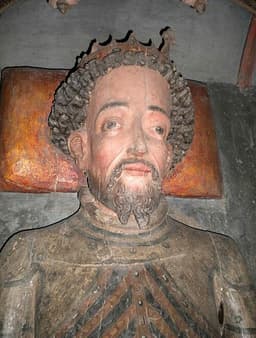
Albert of Sweden
Emperor · Medieval
41.3Total
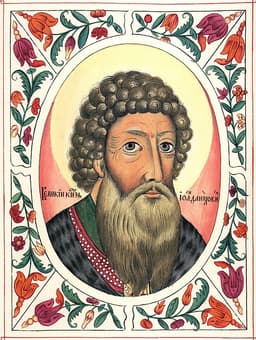
Ivan I Kalita
Emperor · Medieval
52.6Total
Basic Information
Born
1338
1288
Died
1412
1341
Era
Medieval
Medieval
Nationality
Sweden
Muscovy
Occupation
Emperor
Emperor
Civilization
Western
Western
Score Comparison
Military (10%)
50.0
25.9
Political (20%)
27.9
72.0
Influence (20%)
47.9
51.8
Legacy (20%)
39.2
48.3
Leadership (15%)
45.0
68.0
Strategy (15%)
35.7
39.6
TOTAL
41.3
52.6
Albert of Sweden — Complete Timeline
1364 AD
Election as King of SwedenPolitical Action◆ Major
Albert of Mecklenburg was elected King of Sweden by Swedish nobles who deposed Magnus IV. His election was part of a power struggle between the Mecklenburg dynasty and the Norwegian-backed Magnus IV.
ElectionPower Struggle
Impact: national
1370 AD
Conflict with the Hanseatic LeagueWar
Albert's reign saw conflict with the Hanseatic League over trade privileges and control of Baltic ports. The war weakened his position and led to increased influence of German merchants in Swedish affairs.
WarTrade Conflict
Impact: regionaldestructive
1389 AD
Defeat at the Battle of ÅsleWar
Albert was decisively defeated by Margaret I of Denmark at the Battle of
BattleDepositionKalmar Union
Impact: regionaltragic
Imprisonment and releasePolitical Action
After his defeat, Albert was imprisoned by Margaret I for six years. He was released in 1395 after agreeing to renounce his claims to the Swedish throne and paying a ransom.
ImprisonmentRansom
Impact: nationaltragic
Ivan I Kalita — Complete Timeline
1325 AD
Appointed as Grand Prince of MoscowPolitical Action◆ Major
Ivan I became Grand Prince of Moscow after his brother Yuri's death. He secured the title by cooperating with the Mongol Golden Horde, using his position to collect tribute from other Russian principalities on behalf of the Khan.
MoscowGolden HordeTribute
Impact: regional
1326 AD
Moved the Metropolitan See to MoscowPolitical Action◆ Major
Ivan I persuaded Metropolitan Peter to move his residence from Vladimir to Moscow. This made Moscow the ecclesiastical center of the Russian Orthodox Church, greatly enhancing its political and religious authority.
MoscowOrthodox ChurchMetropolitan
Impact: regionalconstructive
1327 AD
Suppressed the Tver UprisingWar◆ Major
When Tver rebelled against Mongol tax collectors, Ivan I led a Mongol-Muscovite army to crush the uprising. The destruction of Tver eliminated Moscow's main rival for supremacy in northeastern Russia.
TverGolden HordeUprising
Impact: regionaldestructive
1328 AD
Acquired the title of Grand Prince of VladimirPolitical Action◆ Major
Ivan I obtained the yarlyk (patent) for the Grand Principality of Vladimir from the Mongol Khan Uzbek. This made Moscow the primary collector of tribute for the Horde and the most powerful Russian principality.
MoscowGolden HordeVladimir
Impact: regional
Expert Analysis
Origins
Albert of Sweden (c. 1338–1412) was born into the House of Mecklenburg, a German princely family. His father was Albert II, Duke of Mecklenburg, and his mother was Euphemia of Sweden, a sister of King Magnus IV. This Swedish connection gave Albert a claim to the throne. He grew up in the culturally German environment of Mecklenburg, influenced by the Hanseatic League's commercial networks. His early life was shaped by the dynastic politics of the Baltic region, where Scandinavian and German interests intertwined.
Ivan I Kalita (c. 1288–1340) was born in Moscow, the son of Prince Daniel of Moscow (the youngest son of Alexander Nevsky). The Moscow principality was then a minor appanage within the Vladimir-Suzdal realm. Ivan's early years were marked by his brother Yuri's struggles for power against the princes of Tver. Ivan likely assisted Yuri in diplomatic and military affairs, learning the art of navigating Mongol suzerainty. His family background provided him with a claim to the Moscow throne but little else; the principality's rise was not guaranteed.
Rise to Power
Albert's rise came in 1364 when Swedish nobles, discontented with King Magnus IV, offered him the crown. He was elected King of Sweden in 1364, landing with a German mercenary army. His claim was based on his mother's lineage, but his power rested on noble support and German military might. However, his reign was immediately contested by Magnus's son Haakon and his wife Margaret I of Denmark. Albert's initial years saw him consolidate control over much of Sweden, but he failed to secure lasting alliances. By the 1380s, Margaret's forces had gained momentum.
Ivan I became Grand Prince of Moscow after his brother Yuri's death in 1325. He inherited a principality that had already gained some favor with the Mongols. Ivan's crucial move was to secure the yarlyk (patent) for the Grand Principality of Vladimir from Khan Uzbek in 1328. This made Moscow the chief tax collector for the Golden Horde in northeastern Russia. Ivan used this position to enrich Moscow, suppress rivals, and expand his territory. His cooperation with the Mongols, while controversial, was a pragmatic strategy that elevated Moscow above other Russian principalities.
Leadership & Governance
Albert's leadership style was that of a medieval German prince: he relied on feudal levies and Hanseatic support. He granted privileges to German merchants and nobles, alienating Swedish traditionalists. His governance was marked by conflict with the Swedish Council (Riksråd) and the church. He failed to build a broad domestic base, instead depending on Mecklenburg and Hanseatic allies. This led to fiscal problems and military weakness.
Ivan I's governance was centralized and pragmatic. He systematically bought up land, villages, and even entire principalities. He used his control over tribute collection to amass wealth, earning the nickname "Kalita" (moneybag). He moved the Metropolitan of the Russian Orthodox Church from Vladimir to Moscow, making it the spiritual capital. Ivan also built the first stone Kremlin in Moscow, symbolizing its permanence. His political score of 72.0 reflects his skill in manipulating Mongol favor and internal rivals.
Triumph & Tragedy
Albert's greatest success was his election as king, which briefly united Mecklenburg and Swedish interests. His greatest failure was the Battle of Åsle (1389), where he was decisively defeated by Margaret I. He was captured and imprisoned for six years, then released after renouncing his throne. His military score of 50.0 reflects this defeat, while his political score of 27.9 indicates his inability to maintain power.
Ivan I's triumphs include securing the Grand Principality of Vladimir, moving the metropolitan see, and crushing the Tver uprising in 1327, which eliminated Moscow's main rival. His failures include his subservience to the Mongols, which later historians criticized. However, his policies laid the foundation for Moscow's dominance. His leadership score of 68.0 shows his effectiveness within the constraints of Mongol rule.
Character & Destiny
Albert was brave but politically inept. He gambled on German support and lost. His character was that of a typical medieval adventurer, but he lacked the diplomatic finesse to counter Margaret's statecraft. His destiny was sealed by his inability to adapt.
Ivan I was cautious, calculating, and patient. He never fought a major battle; his military score is 25.9. Instead, he used wealth and diplomacy. His character—parsimonious, devout, and ruthless—shaped Moscow's rise. He died peacefully in 1340, having secured his dynasty's future.
Legacy
Albert's legacy is minimal. He is remembered as a failed king who opened the door for the Kalmar Union. His rule did not leave lasting institutions or cultural marks. His influence score is 47.9, but his legacy is 39.2.
Ivan I's legacy is enormous. He established Moscow as the center of Russian power, both political and ecclesiastical. His successors, including Dmitry Donskoy and Ivan III, built on his foundations. The Muscovite state that eventually became Russia owes its origins to Ivan's policies. His legacy score of 48.3 reflects this, though his total score of 52.6 is modest due to low military marks.
Conclusion
Ivan I Kalita had a greater impact than Albert of Sweden. While Albert's reign ended in failure and obscurity, Ivan's strategies created the conditions for Moscow's unification of Russia. Ivan's political score of 72.0 versus Albert's 27.9 is decisive. Albert's defeat at Åsle and subsequent imprisonment mark him as a historical footnote. Ivan, however, is a key figure in Russian history, despite his controversial collaboration with the Mongols. The score gap of 11.3 points understates the difference in lasting influence. Ivan's legacy shaped a nation; Albert's did not.
Rankings
🥇
Ivan I KalitaLeader
Mil: 25.9Pol: 72.0Inf: 51.8
52.6
🥈
Albert of Sweden
Mil: 50.0Pol: 27.9Inf: 47.9
41.3
+11.3 behind
How This Comparison Works
Algorithm
Each figure is scored on 6 dimensions (0—100 scale) based on structured historical data: Military (10%), Political (20%), Influence (20%), Legacy (20%), Leadership (15%), Strategy (15%). The weighted total produces the final ranking.
Data Sources
Scores are computed from structured sub-indicators in the database. Scale factors adjust for era (Ancient ×0.85, Modern ×1.0) and civilization size (Eastern ×1.05, Other ×0.80) to account for differences in population and military scale.
Maximum 3 Figures
Comparisons are limited to 2—3 figures to ensure readability and statistical meaningfulness.
Error Margins
±5 points per dimension — Sub-scores are derived from historical records with inherent uncertainty. Two figures within 5 points on a dimension should be considered roughly equivalent in that area.
Total Score Accuracy
±3 points overall — The weighted combination of 6 dimensions produces a total score with approximately ±3 points of uncertainty. Differences of less than 3 points are not statistically significant— the figures are effectively tied.
Known Limitations
- Historical records are incomplete and uneven across civilizations
- Figures from oral-tradition societies may be underrepresented
- Occupation labels can misclassify multi-role figures
- Scores measure capability and impact, not moral character
- Quantitative scoring is a comparison tool, not absolute truth
Capability Radar
Military (10%) — Battles & Warfare
Battles
20
10
Win Rate
15
10
Expansion
15
20
Political (20%) — Governance & Reform
Reform
20
55
Diplomacy
25
70
Economy
20
75
Influence (20%) — Cultural & Global Reach
Cultural
15
30
Global
10
20
Legacy (20%) — Historical Impact
Historical
20
50
Longevity
15
40
Leadership (15%) — Power & Stability
Tenure
40
60
Stability
15
65
Strategy (15%) — Tactics & Innovation
Strategy
15
15
Tactics
20
5
Reform
10
5
Similar Comparisons
Comments & Discussion
No comments yet. Be the first to share your thoughts!