Loading...
This comparison has not been analyzed yet.
One-time AI generation (~1 minute). Scores and timeline are already available below.
Albertina Sisulu vs Babrak Karmal
Albertina Sisulu leads by 26.4 pts · 2 figures compared
…

Albertina Sisulu
Politician · Modern
69.4Total
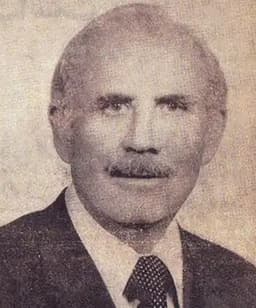
Babrak Karmal
Politician · Modern
43.0Total
Basic Information
Born
1918
1929
Died
2011
—
Era
Modern
Modern
Nationality
South Africa
Afghanistan
Occupation
Politician
Politician
Civilization
Other
Middle Eastern
Score Comparison
Military (10%)
50.0
33.2
Political (20%)
72.0
29.3
Influence (20%)
82.0
48.6
Legacy (20%)
72.0
38.3
Leadership (15%)
72.0
55.3
Strategy (15%)
42.8
52.8
TOTAL
69.4
43.0
Albertina Sisulu — Complete Timeline
1940 AD
Joined ANC and Anti-Apartheid ActivismPolitical Action◆ Major
Albertina Sisulu joined the ANC and became a prominent anti-apartheid activist. She was a key organizer of the 1956 Women's March against pass laws and was repeatedly arrested and banned by the apartheid regime.
Women's MarchAnti-ApartheidActivism
Impact: nationalconstructive
1991 AD
Elected President of the ANC Women's LeaguePolitical Action◆ Major
Sisulu was elected President of the ANC Women's League, advocating for women's rights within the liberation movement. She played a key role in ensuring gender equality was included in South Africa's new constitution.
Women's LeagueGender EqualityANC
Impact: nationalconstructive
1994 AD
Served as ANC Deputy PresidentPolitical Action◆ Major
Sisulu was elected Deputy President of the ANC, becoming one of the highest-ranking women in the party. She served in Parliament and was a respected elder stateswoman until her retirement.
ANCLeadershipParliament
Impact: nationalconstructive
Babrak Karmal — Complete Timeline
1979 AD
Presidency of Afghanistan (1979-1986)Political Action◆ Major
Babrak Karmal was installed as President of Afghanistan by the Soviet Union in December 1979, following the Soviet invasion. He led the Democratic Republic of Afghanistan during the early years of the Soviet-Afghan War, implementing unpopular reforms and relying on Soviet military support.
Soviet InvasionPuppet GovernmentCommunist
Impact: national
1986 AD
Replacement by Najibullah (1986)Political Action◆ Major
Karmal was replaced as General Secretary of the People's Democratic Party by Mohammad Najibullah in May 1986, under Soviet pressure. He was effectively sidelined, though he remained in Afghanistan until his death. This marked the end of his direct political influence.
Power StruggleNajibullahSoviet Policy
Impact: national
1996 AD
Death in Moscow (1996)Other
Babrak Karmal died in Moscow in 1996, reportedly from liver cancer. He had been living in exile in the Soviet Union since his removal from power. His death went largely unnoticed in Afghanistan, where the civil war was raging.
ExileDeathMoscow
Impact: national
This comparison has not been analyzed yet.
One-time AI generation (~1 minute). Scores and timeline are already available below.
Rankings
🥇
Albertina SisuluLeader
Mil: 50.0Pol: 72.0Inf: 82.0
69.4
🥈
Babrak Karmal
Mil: 33.2Pol: 29.3Inf: 48.6
43.0
+26.4 behind
How This Comparison Works
Algorithm
Each figure is scored on 6 dimensions (0—100 scale) based on structured historical data: Military (10%), Political (20%), Influence (20%), Legacy (20%), Leadership (15%), Strategy (15%). The weighted total produces the final ranking.
Data Sources
Scores are computed from structured sub-indicators in the database. Scale factors adjust for era (Ancient ×0.85, Modern ×1.0) and civilization size (Eastern ×1.05, Other ×0.80) to account for differences in population and military scale.
Maximum 3 Figures
Comparisons are limited to 2—3 figures to ensure readability and statistical meaningfulness.
Error Margins
±5 points per dimension — Sub-scores are derived from historical records with inherent uncertainty. Two figures within 5 points on a dimension should be considered roughly equivalent in that area.
Total Score Accuracy
±3 points overall — The weighted combination of 6 dimensions produces a total score with approximately ±3 points of uncertainty. Differences of less than 3 points are not statistically significant— the figures are effectively tied.
Known Limitations
- Historical records are incomplete and uneven across civilizations
- Figures from oral-tradition societies may be underrepresented
- Occupation labels can misclassify multi-role figures
- Scores measure capability and impact, not moral character
- Quantitative scoring is a comparison tool, not absolute truth
Capability Radar
Military (10%) — Battles & Warfare
Battles
22
5
Win Rate
26
5
Expansion
27
5
Political (20%) — Governance & Reform
Reform
75
20
Diplomacy
80
20
Economy
30
15
Influence (20%) — Cultural & Global Reach
Cultural
75
15
Global
65
15
Legacy (20%) — Historical Impact
Historical
80
20
Longevity
70
10
Leadership (15%) — Power & Stability
Tenure
40
40
Stability
70
10
Strategy (15%) — Tactics & Innovation
Strategy
32
5
Tactics
34
5
Reform
36
5
Similar Comparisons
Comments & Discussion
No comments yet. Be the first to share your thoughts!