Loading...
Antonio Costa vs Babrak Karmal
Antonio Costa leads by 10.5 pts · 2 figures compared
…

Antonio Costa
Politician · Modern
53.5Total
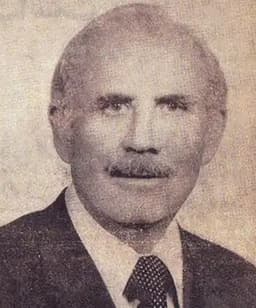
Babrak Karmal
Politician · Modern
43.0Total
Basic Information
Born
1961
1929
Died
—
—
Era
Modern
Modern
Nationality
Portugal
Afghanistan
Occupation
Politician
Politician
Civilization
Western
Middle Eastern
Score Comparison
Military (10%)
40.6
33.2
Political (20%)
62.7
29.3
Influence (20%)
54.9
48.6
Legacy (20%)
41.7
38.3
Leadership (15%)
66.0
55.3
Strategy (15%)
60.0
52.8
TOTAL
53.5
43.0
Antonio Costa — Complete Timeline
2015 AD
Election as Prime MinisterPolitical Action◆ Major
Costa became Prime Minister after the Socialist Party formed a minority government supported by the Left Bloc and Communist Party. This 'geringon
ElectionCoalitionGovernment
Impact: nationalconstructive
2016 AD
Reversal of Austerity PoliciesReform◆ Major
Costa's government reversed many austerity measures imposed during the bailout, restoring public sector wages, pensions, and social benefits. This led to economic growth and reduced inequality.
AusteritySocial PolicyEconomic Recovery
Impact: nationalconstructive
2022 AD
Hosting of the UN Ocean ConferencePolitical Action◆ Major
Costa hosted the United Nations Ocean Conference in Lisbon, positioning Portugal as a leader in ocean conservation and sustainable blue economy. The conference produced the Lisbon Declaration.
EnvironmentOceanDiplomacy
Impact: globalconstructive
2023 AD
Resignation amid Corruption InvestigationPolitical Action◆ Major
Costa resigned as Prime Minister after a corruption investigation involving his chief of staff and potential conflicts of interest in lithium and hydrogen projects. He denied wrongdoing but stepped down.
CorruptionResignationCrisis
Impact: nationaltragic
Babrak Karmal — Complete Timeline
1979 AD
Presidency of Afghanistan (1979-1986)Political Action◆ Major
Babrak Karmal was installed as President of Afghanistan by the Soviet Union in December 1979, following the Soviet invasion. He led the Democratic Republic of Afghanistan during the early years of the Soviet-Afghan War, implementing unpopular reforms and relying on Soviet military support.
Soviet InvasionPuppet GovernmentCommunist
Impact: national
1986 AD
Replacement by Najibullah (1986)Political Action◆ Major
Karmal was replaced as General Secretary of the People's Democratic Party by Mohammad Najibullah in May 1986, under Soviet pressure. He was effectively sidelined, though he remained in Afghanistan until his death. This marked the end of his direct political influence.
Power StruggleNajibullahSoviet Policy
Impact: national
1996 AD
Death in Moscow (1996)Other
Babrak Karmal died in Moscow in 1996, reportedly from liver cancer. He had been living in exile in the Soviet Union since his removal from power. His death went largely unnoticed in Afghanistan, where the civil war was raging.
ExileDeathMoscow
Impact: national
Expert Analysis
Origins
**Antonio Costa** was born in 1961 in Lisbon, Portugal, to a Goan Indian father and a Portuguese mother. His father, Orlando Costa, was a writer and anti-fascist activist. Costa studied law at the University of Lisbon and later earned a master's degree in European Studies. He entered politics early, joining the Socialist Party in 1988.
**Babrak Karmal** was born in 1929 in Kamari, Afghanistan, into a middle-class Pashtun family. His father was a military officer. Karmal studied law at Kabul University but was expelled for political activities. He joined the People's Democratic Party of Afghanistan (PDPA) and became a key figure in the communist movement.
Rise to Power
Costa's rise was gradual. He served as Lisbon City Councilor (1997-2004), Minister of Parliamentary Affairs (2005-2007), and Mayor of Lisbon (2007-2015). In 2014, he became Secretary-General of the Socialist Party. In 2015, after a political crisis, Costa formed a minority government with the support of left-wing parties, known as the 'geringonça', becoming Prime Minister in November 2015.
Karmal rose through the PDPA ranks during the 1960s and 1970s. He was a member of the Parcham faction. After the Saur Revolution in 1978, he served as Deputy Prime Minister but was exiled to the Soviet Union. Following the Soviet invasion in December 1979, Karmal was installed as President and General Secretary, replacing Hafizullah Amin.
Leadership & Governance
Costa's leadership focused on reversing austerity measures imposed during Portugal's 2011-2014 bailout. He increased public sector wages, restored pensions, and lowered taxes. His government achieved budget surplus by 2019 while reducing unemployment from 12% to 6%. Costa also advanced progressive policies, including legalizing euthanasia and drug decriminalization. His political score of 62.7 reflects his ability to maintain coalition stability and economic growth.
Karmal's governance was marked by heavy reliance on Soviet military and economic support. He attempted to consolidate PDPA rule but faced widespread resistance from mujahideen rebels. His policies included land reform and women's rights, but implementation was hampered by violence. The Soviet occupation led to massive civilian casualties and displacement. Karmal's leadership score of 55.3 is tempered by his inability to quell the insurgency or gain popular support.
Triumph & Tragedy
Costa's greatest triumph was stabilizing Portugal's economy and exiting the bailout program with restored social welfare. His hosting of the UN Ocean Conference in 2022 enhanced Portugal's international profile. However, his tenure ended in tragedy: in November 2023, he resigned amid a corruption investigation involving his chief of staff and lithium/hydrogen deals. While Costa himself was not charged, the scandal tainted his legacy.
Karmal's triumph was briefly stabilizing the PDPA regime after the Soviet invasion, but his tragedy was his complete dependence on Soviet forces. He failed to build a broad base, and the war escalated. He was ousted in 1986 by Najibullah, and died in obscurity in Moscow in 1996. His military score of 33.2 reflects the disastrous Soviet-Afghan War under his nominal leadership.
Character & Destiny
Costa is described as pragmatic and conciliatory, able to forge alliances across the political spectrum. His strategy score of 60.0 indicates competent political maneuvering. However, his resignation suggests a failure to control his inner circle, leading to corruption allegations.
Karmal was seen as an ideologue but weak and indecisive. His inability to assert independence from Moscow doomed his rule. His character led to a destiny where he became a symbol of foreign intervention and failure.
Legacy
Costa's legacy is mixed: he restored economic stability and social welfare but left under a cloud. His policies on drug decriminalization and euthanasia have lasting impact in Portugal. His influence score of 54.9 reflects moderate global impact.
Karmal's legacy is overwhelmingly negative. He is remembered as a Soviet puppet who presided over a brutal war. The PDPA regime collapsed in 1992, and Karmal's name is associated with failure. His legacy score of 38.3 is among the lowest.
Conclusion
Antonio Costa had significantly greater impact than Babrak Karmal. Costa's political score of 62.7 dwarfs Karmal's 29.3. While Costa's resignation marred his tenure, he successfully governed a democracy, improved living standards, and left institutional reforms. Karmal, with a total score of 43.0, failed to achieve any sustainable progress and contributed to decades of conflict. Costa's impact, though limited to Portugal, was positive and constructive, whereas Karmal's was destructive and ephemeral. The data clearly favors Costa as the more effective leader.
Rankings
🥇
Antonio CostaLeader
Mil: 40.6Pol: 62.7Inf: 54.9
53.5
🥈
Babrak Karmal
Mil: 33.2Pol: 29.3Inf: 48.6
43.0
+10.5 behind
How This Comparison Works
Algorithm
Each figure is scored on 6 dimensions (0—100 scale) based on structured historical data: Military (10%), Political (20%), Influence (20%), Legacy (20%), Leadership (15%), Strategy (15%). The weighted total produces the final ranking.
Data Sources
Scores are computed from structured sub-indicators in the database. Scale factors adjust for era (Ancient ×0.85, Modern ×1.0) and civilization size (Eastern ×1.05, Other ×0.80) to account for differences in population and military scale.
Maximum 3 Figures
Comparisons are limited to 2—3 figures to ensure readability and statistical meaningfulness.
Error Margins
±5 points per dimension — Sub-scores are derived from historical records with inherent uncertainty. Two figures within 5 points on a dimension should be considered roughly equivalent in that area.
Total Score Accuracy
±3 points overall — The weighted combination of 6 dimensions produces a total score with approximately ±3 points of uncertainty. Differences of less than 3 points are not statistically significant— the figures are effectively tied.
Known Limitations
- Historical records are incomplete and uneven across civilizations
- Figures from oral-tradition societies may be underrepresented
- Occupation labels can misclassify multi-role figures
- Scores measure capability and impact, not moral character
- Quantitative scoring is a comparison tool, not absolute truth
Capability Radar
Military (10%) — Battles & Warfare
Battles
47
5
Win Rate
48
5
Expansion
55
5
Political (20%) — Governance & Reform
Reform
55
20
Diplomacy
60
20
Economy
55
15
Influence (20%) — Cultural & Global Reach
Cultural
30
15
Global
40
15
Legacy (20%) — Historical Impact
Historical
30
20
Longevity
20
10
Leadership (15%) — Power & Stability
Tenure
60
40
Stability
55
10
Strategy (15%) — Tactics & Innovation
Strategy
57
5
Tactics
59
5
Reform
64
5
Similar Comparisons
Comments & Discussion
No comments yet. Be the first to share your thoughts!