Loading...
Alboin vs Stefan Nemanja
Stefan Nemanja leads by 15.2 pts · 2 figures compared
…
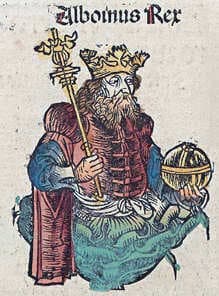
Alboin
Emperor · Medieval
50.1Total
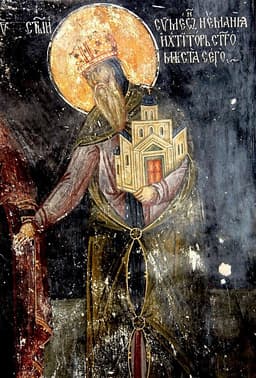
Stefan Nemanja
Emperor · Medieval
65.3Total
Basic Information
Born
530
1113
Died
572
1199
Era
Medieval
Medieval
Nationality
Lombards
Serbia
Occupation
Emperor
Emperor
Civilization
Western
Western
Score Comparison
Military (10%)
72.5
61.7
Political (20%)
32.2
60.0
Influence (20%)
54.1
68.0
Legacy (20%)
45.0
65.0
Leadership (15%)
48.4
72.0
Strategy (15%)
60.0
60.7
TOTAL
50.1
65.3
Alboin — Complete Timeline
568 AD
Invasion of ItalyWar
Alboin led the Lombards, along with Saxon, Gepid, and other allies, across the Alps into Italy. This invasion began the Lombard conquest of the Italian peninsula, which had been devastated by the Gothic War, and established the Lombard Kingdom.
Migration PeriodLombard KingdomItaly
Impact: regionaldestructive
569 AD
Siege of PaviaWar◆ Major
Alboin besieged the city of Pavia, which resisted for three years. After its capture in 572, Alboin made Pavia the capital of the Lombard Kingdom, a status it retained for centuries, becoming a center of Lombard power.
SiegeLombard KingdomCapital
Impact: regional
572 AD
Murder of AlboinOther◆ Major
Alboin was assassinated in Verona at the instigation of his wife, Rosamund, who sought revenge for his forcing her to drink from her father's skull. His death led to a period of instability among the Lombards, though the kingdom survived.
AssassinationLombard KingdomSuccession
Impact: regionaltragic
Stefan Nemanja — Complete Timeline
1166 AD
Grand Župan of RaškaPolitical Action◆ Major
Stefan Nemanja overthrew his brothers Tihomir, Stracimir, and Miroslav to become the sole Grand
Serbian unificationDynasty foundationPower consolidation
Impact: regionalconstructive
1186 AD
Council of 1186 against BogomilismPolitical Action
Stefan Nemanja convened a church council that condemned Bogomilism as heresy. He ordered the persecution of Bogomils, confiscating their property and expelling them from Serbia. This action aligned the Serbian church with Orthodox orthodoxy and strengthened state control over religious life.
Religious persecutionOrthodox consolidationHeresy suppression
Impact: nationaldestructive
1190 AD
Construction of the Studenica MonasteryCultural◆ Major
Stefan Nemanja founded the Studenica Monastery, which became the most important monastic foundation of the Nemanji
Monastery foundationCultural legacyReligious architecture
Impact: nationalconstructive
1196 AD
Abdication and monastic tonsure as SimeonPolitical Action
Stefan Nemanja abdicated the throne in favor of his son Stefan (later Stefan the First-Crowned) and took monastic vows under the name Simeon. He retired to the Hilandar Monastery on Mount Athos, which he had helped restore. This act set a precedent for Serbian rulers retiring to monastic life.
AbdicationMonasticismHilandar
Impact: national
1200 AD
Canonization as Saint Simeon the Myrrh-streamingCultural◆ Major
Stefan Nemanja, as the monk Simeon, was canonized by the Serbian Orthodox Church shortly after his death. His relics at Studenica were reported to exude myrrh, leading to his veneration as a saint. This canonization elevated the Nemanji
CanonizationSaint venerationDynastic legitimacy
Impact: nationalconstructive
Expert Analysis
Origins
Alboin (born c. 530s) was the son of Audoin, king of the Lombards, a Germanic people then settled in Pannonia (modern Hungary). Raised in a warrior culture, Alboin gained early military experience fighting the Gepids. His marriage to Rosamund, daughter of the Gepid king Cunimund, was a political alliance that later turned deadly. Stefan Nemanja (born 1113) was a younger son of Zavida, a Serbian prince from the Vukanović dynasty. He grew up in the fragmented Serbian principalities, receiving education at the Byzantine court in Constantinople. His early life was marked by rivalry with his brothers for control of Raška (Rascia).
Rise to Power
Alboin became king of the Lombards around 560. He defeated the Gepids in 567 with help from the Avars, killing King Cunimund and reportedly making a drinking cup from his skull. In 568, he led a confederation of Lombards, Saxons, and others across the Alps into Italy, exploiting the weakened Byzantine defenses after the Gothic War. By 569, he had captured Milan, and after a three-year siege, Pavia fell in 572, which he made his capital. Stefan Nemanja rose by overthrowing his older brothers in the 1160s to become Grand Župan of Raška. He initially acknowledged Byzantine suzerainty but rebelled in 1183, allying with Hungary to attack Byzantine territories. By the 1190s, he had secured independence and expanded Serbian control over Kosovo, Zeta, and parts of the Adriatic coast.
Leadership & Governance
Alboin ruled as a Germanic war leader, distributing conquered lands to his followers and allowing semi-autonomous Lombard dukes. His governance was decentralized, with little administrative innovation. He focused on military expansion rather than state-building. In contrast, Stefan Nemanja centralized authority, suppressed rival nobles, and established hereditary succession for the Nemanjić dynasty. He patronized the Serbian Orthodox Church, building the Studenica Monastery (completed 1196) and convening the 1186 council against Bogomilism, which strengthened religious unity. His political score of 60.0 reflects his state-building, while Alboin's 32.2 indicates weak institutional legacy.
Triumph & Tragedy
Alboin's greatest triumph was leading the Lombard invasion of Italy, conquering much of the peninsula and establishing a kingdom that lasted until 774. His greatest failure was his brutal treatment of his wife's father, forcing Rosamund to drink from Cunimund's skull, which led to his assassination in 572 after a short reign. His murder plunged the Lombards into a decade of civil war. Stefan Nemanja's triumph was founding a dynasty that ruled Serbia for over 200 years and securing autocephaly for the Serbian Church (though achieved by his son). His failure included the persecution of Bogomils, which alienated some subjects, and his abdication in 1196, which led to conflicts between his sons. However, his canonization as Saint Simeon ensured lasting spiritual influence.
Character & Destiny
Alboin was a skilled military commander (scoring 72.5 in military) but politically reckless and cruel. His decision to humiliate Rosamund sealed his fate, demonstrating a lack of diplomatic foresight. Stefan Nemanja was more calculating and pious. He abdicated to become a monk, a move that enhanced his legacy and allowed him to die in peace. His leadership score of 72.0 reflects his ability to build institutions and manage succession.
Legacy
Alboin's legacy is mixed: he founded a Lombard kingdom that influenced Italian history, but his short reign and lack of administrative reforms limited its durability. The Lombards were eventually conquered by Charlemagne. Stefan Nemanja's legacy is more profound: the Nemanjić dynasty shaped medieval Serbia, with his son Stefan the First-Crowned becoming king, and his other son Saint Saba establishing the Serbian Orthodox Church. The Studenica Monastery remains a UNESCO World Heritage site. Nemanja's influence score of 68.0 and legacy of 65.0 reflect this enduring impact, compared to Alboin's 54.1 and 45.0.
Conclusion
Stefan Nemanja had a greater historical impact than Alboin. Nemanja's total score of 65.3 versus Alboin's 50.1 reflects his superior state-building, political acumen, and lasting legacy. While Alboin's military conquest was impressive, it did not create a durable political structure. Nemanja founded a dynasty that defined Serbian identity for centuries, whereas Alboin's kingdom fragmented after his death. The data supports this: Nemanja scored higher in every category except military (72.5 vs 61.7), but leadership (72.0 vs 48.4) and political (60.0 vs 32.2) are more critical for long-term impact.
Rankings
🥇
Stefan NemanjaLeader
Mil: 61.7Pol: 60.0Inf: 68.0
65.3
🥈
Alboin
Mil: 72.5Pol: 32.2Inf: 54.1
50.1
+15.2 behind
How This Comparison Works
Algorithm
Each figure is scored on 6 dimensions (0—100 scale) based on structured historical data: Military (10%), Political (20%), Influence (20%), Legacy (20%), Leadership (15%), Strategy (15%). The weighted total produces the final ranking.
Data Sources
Scores are computed from structured sub-indicators in the database. Scale factors adjust for era (Ancient ×0.85, Modern ×1.0) and civilization size (Eastern ×1.05, Other ×0.80) to account for differences in population and military scale.
Maximum 3 Figures
Comparisons are limited to 2—3 figures to ensure readability and statistical meaningfulness.
Error Margins
±5 points per dimension — Sub-scores are derived from historical records with inherent uncertainty. Two figures within 5 points on a dimension should be considered roughly equivalent in that area.
Total Score Accuracy
±3 points overall — The weighted combination of 6 dimensions produces a total score with approximately ±3 points of uncertainty. Differences of less than 3 points are not statistically significant— the figures are effectively tied.
Known Limitations
- Historical records are incomplete and uneven across civilizations
- Figures from oral-tradition societies may be underrepresented
- Occupation labels can misclassify multi-role figures
- Scores measure capability and impact, not moral character
- Quantitative scoring is a comparison tool, not absolute truth
Capability Radar
Military (10%) — Battles & Warfare
Battles
55
65
Win Rate
60
70
Expansion
65
70
Political (20%) — Governance & Reform
Reform
20
80
Diplomacy
35
70
Economy
25
60
Influence (20%) — Cultural & Global Reach
Cultural
30
75
Global
25
60
Legacy (20%) — Historical Impact
Historical
40
80
Longevity
30
85
Leadership (15%) — Power & Stability
Tenure
40
75
Stability
20
65
Strategy (15%) — Tactics & Innovation
Strategy
55
65
Tactics
50
60
Reform
30
55
Similar Comparisons
Comments & Discussion
No comments yet. Be the first to share your thoughts!