Loading...
Alboin vs Chagatai Khan
Chagatai Khan leads by 4.6 pts · 2 figures compared
…
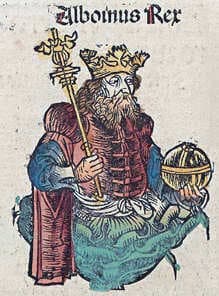
Alboin
Emperor · Medieval
50.1Total
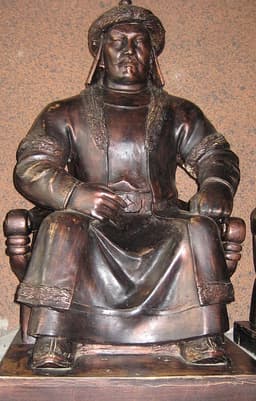
Chagatai Khan
Emperor · Medieval
54.7Total
Basic Information
Born
530
1183
Died
572
1242
Era
Medieval
Medieval
Nationality
Lombards
Mongol Empire
Occupation
Emperor
Emperor
Civilization
Western
Eastern
Score Comparison
Military (10%)
72.5
55.0
Political (20%)
32.2
45.1
Influence (20%)
54.1
55.7
Legacy (20%)
45.0
45.8
Leadership (15%)
48.4
74.0
Strategy (15%)
60.0
60.0
TOTAL
50.1
54.7
Alboin — Complete Timeline
568 AD
Invasion of ItalyWar
Alboin led the Lombards, along with Saxon, Gepid, and other allies, across the Alps into Italy. This invasion began the Lombard conquest of the Italian peninsula, which had been devastated by the Gothic War, and established the Lombard Kingdom.
Migration PeriodLombard KingdomItaly
Impact: regionaldestructive
569 AD
Siege of PaviaWar◆ Major
Alboin besieged the city of Pavia, which resisted for three years. After its capture in 572, Alboin made Pavia the capital of the Lombard Kingdom, a status it retained for centuries, becoming a center of Lombard power.
SiegeLombard KingdomCapital
Impact: regional
572 AD
Murder of AlboinOther◆ Major
Alboin was assassinated in Verona at the instigation of his wife, Rosamund, who sought revenge for his forcing her to drink from her father's skull. His death led to a period of instability among the Lombards, though the kingdom survived.
AssassinationLombard KingdomSuccession
Impact: regionaltragic
Chagatai Khan — Complete Timeline
1221 AD
Conflict with JochiPolitical Action
Chagatai had a longstanding rivalry with his brother Jochi, questioning Jochi's legitimacy as Genghis's son. This conflict caused tension within the Mongol royal family and influenced succession disputes after Genghis's death.
Mongol Family FeudSuccession
Impact: regionaldestructive
1227 AD
Enforcement of Yassa LawReform
Chagatai was known for strictly enforcing the Yassa, the Mongol legal code established by Genghis Khan. He imposed harsh punishments for violations, maintaining order in his khanate and preserving Mongol traditions.
Mongol LawYassa
Impact: regional
Appointed as Ruler of the Chagatai KhanatePolitical Action◆ Major
Following Genghis Khan's death, Chagatai was granted the Central Asian territories of the Mongol Empire, forming the Chagatai Khanate. He ruled from his capital at Almaligh, overseeing the region's administration and military.
Mongol EmpireSuccessionChagatai Khanate
Impact: regional
Expert Analysis
Origins
Alboin was born around 530 AD, son of Audoin, king of the Lombards, a Germanic tribe then settled in Pannonia (modern Hungary). His mother was Rodelinda, sister of the Ostrogothic king Amalafrid. Raised in a warrior culture, Alboin first distinguished himself at age 15 in battle against the Gepids. His early life was shaped by tribal warfare and the shifting alliances of the post-Roman world.
Chagatai Khan was born around 1185, the second son of Genghis Khan (then Temüjin) and his chief wife Börte. While his exact birthplace is unknown, he grew up in the harsh Mongolian steppe, learning horseback riding, archery, and tribal law. Unlike his brothers, Chagatai was known for his strict adherence to Mongol customs and his deep respect for his father's authority.
Rise to Power
Alboin became king of the Lombards around 560 AD after his father's death. He immediately faced the Gepids, defeating them decisively in 567 with help from the Avars. After killing the Gepid king Cunimund, he made a drinking cup from his skull and married the king's daughter Rosamund. In 568, sensing an opportunity in Italy weakened by the Byzantine-Gothic wars, Alboin led a confederation of Lombards, Saxons, Gepids, and others across the Alps. By 569, he had captured Milan and much of the Po Valley, establishing the Lombard Kingdom.
Chagatai rose to power as part of Genghis Khan's inner circle. He participated in the Mongol conquest of the Khwarezmian Empire (1219-1221), commanding a contingent alongside his brothers. After Genghis's death in 1227, the empire was divided among his sons. Chagatai received the Central Asian territories, forming the Chagatai Khanate, which stretched from the Altai Mountains to the Oxus River. His rule was recognized by his brother Ögedei, the Great Khan, though Chagatai maintained considerable autonomy.
Leadership & Governance
Alboin's leadership was charismatic but brutal. He united diverse tribes through military success and plunder, but his governance was thin: he relied on local dukes (duces) to administer conquered lands, leading to fragmentation. His total score of 48.4 in leadership reflects this autocratic yet unstable style. He made Pavia his capital after a three-year siege, but never established lasting institutions.
Chagatai, scoring 74.0 in leadership, was a strict enforcer of the Yassa, the Mongol legal code. He imposed harsh punishments for theft, adultery, and military indiscipline, earning a reputation for rigidity. He also maintained the Mongol military structure and ensured the safety of trade routes through his territory. However, his conflict with his brother Jochi (scoring political 45.1) weakened internal unity.
Triumph & Tragedy
Alboin's greatest triumph was the swift conquest of northern Italy, achieving a military score of 72.5. He captured Pavia after a three-year siege, turning it into the Lombard capital. His tragedy was his murder in 572 at the instigation of his wife Rosamund, who sought revenge for being forced to drink from her father's skull. His death led to a decade of instability.
Chagatai's triumph was establishing the Chagatai Khanate, which endured for centuries and became a center of Islamic culture. His legacy score of 45.8 reflects this endurance. His tragedy was his rivalry with Jochi, which contributed to Mongol internal strife and the eventual fragmentation of the empire.
Character & Destiny
Alboin was a warrior king typical of the Migration Period: brave, ruthless, and short-sighted. His forcing Rosamund to drink from her father's skull was a psychological blunder that directly caused his death. His personality score aligns with his political 32.2, indicating poor judgment in personal relations.
Chagatai was disciplined, conservative, and loyal to his father's legacy. His strict enforcement of the Yassa maintained order but also alienated some. His character shaped his destiny as a stable but unremarkable ruler, overshadowed by his brothers.
Legacy
Alboin's legacy is the Lombard Kingdom in Italy, which lasted until 774 AD when conquered by Charlemagne. He is remembered as a barbarian conqueror in historical chronicles, with his skull-cup story becoming legendary. His influence score of 54.1 reflects this lasting memory.
Chagatai's legacy is the Chagatai Khanate, which evolved into a major Central Asian power and later influenced the Mughal Empire in India. His name lives on in the Chagatai language and literary tradition. His legacy score of 45.8 is similar to Alboin's but more substantive in terms of lasting political structures.
Conclusion
Chagatai Khan had greater long-term impact. While Alboin's military conquest (72.5) was impressive, his kingdom collapsed within two centuries. Chagatai's Khanate endured for over 400 years, shaping the history of Central Asia. His leadership score (74.0) and enforcement of the Yassa created stable governance, whereas Alboin's political score (32.2) led to instability. Chagatai's total score of 54.7 edges out Alboin's 50.1, and history confirms that building institutions outlasts personal prowess.
Rankings
🥇
Chagatai KhanLeader
Mil: 55.0Pol: 45.1Inf: 55.7
54.7
🥈
Alboin
Mil: 72.5Pol: 32.2Inf: 54.1
50.1
+4.6 behind
How This Comparison Works
Algorithm
Each figure is scored on 6 dimensions (0—100 scale) based on structured historical data: Military (10%), Political (20%), Influence (20%), Legacy (20%), Leadership (15%), Strategy (15%). The weighted total produces the final ranking.
Data Sources
Scores are computed from structured sub-indicators in the database. Scale factors adjust for era (Ancient ×0.85, Modern ×1.0) and civilization size (Eastern ×1.05, Other ×0.80) to account for differences in population and military scale.
Maximum 3 Figures
Comparisons are limited to 2—3 figures to ensure readability and statistical meaningfulness.
Error Margins
±5 points per dimension — Sub-scores are derived from historical records with inherent uncertainty. Two figures within 5 points on a dimension should be considered roughly equivalent in that area.
Total Score Accuracy
±3 points overall — The weighted combination of 6 dimensions produces a total score with approximately ±3 points of uncertainty. Differences of less than 3 points are not statistically significant— the figures are effectively tied.
Known Limitations
- Historical records are incomplete and uneven across civilizations
- Figures from oral-tradition societies may be underrepresented
- Occupation labels can misclassify multi-role figures
- Scores measure capability and impact, not moral character
- Quantitative scoring is a comparison tool, not absolute truth
Capability Radar
Military (10%) — Battles & Warfare
Battles
55
45
Win Rate
60
50
Expansion
65
50
Political (20%) — Governance & Reform
Reform
20
40
Diplomacy
35
45
Economy
25
40
Influence (20%) — Cultural & Global Reach
Cultural
30
35
Global
25
30
Legacy (20%) — Historical Impact
Historical
40
40
Longevity
30
35
Leadership (15%) — Power & Stability
Tenure
40
55
Stability
20
50
Strategy (15%) — Tactics & Innovation
Strategy
55
45
Tactics
50
40
Reform
30
30
Similar Comparisons
Comments & Discussion
No comments yet. Be the first to share your thoughts!