Loading...
Alboin vs Authari
Alboin leads by 3.7 pts · 2 figures compared
…
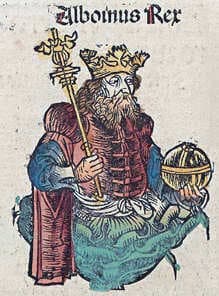
Alboin
Emperor · Medieval
50.1Total
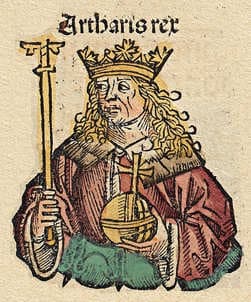
Authari
Emperor · Medieval
46.4Total
Basic Information
Born
530
540
Died
572
590
Era
Medieval
Medieval
Nationality
Lombards
Lombards
Occupation
Emperor
Emperor
Civilization
Western
Western
Score Comparison
Military (10%)
72.5
10.0
Political (20%)
32.2
39.4
Influence (20%)
54.1
56.4
Legacy (20%)
45.0
45.0
Leadership (15%)
48.4
64.5
Strategy (15%)
60.0
45.0
TOTAL
50.1
46.4
Alboin — Complete Timeline
568 AD
Invasion of ItalyWar
Alboin led the Lombards, along with Saxon, Gepid, and other allies, across the Alps into Italy. This invasion began the Lombard conquest of the Italian peninsula, which had been devastated by the Gothic War, and established the Lombard Kingdom.
Migration PeriodLombard KingdomItaly
Impact: regionaldestructive
569 AD
Siege of PaviaWar◆ Major
Alboin besieged the city of Pavia, which resisted for three years. After its capture in 572, Alboin made Pavia the capital of the Lombard Kingdom, a status it retained for centuries, becoming a center of Lombard power.
SiegeLombard KingdomCapital
Impact: regional
572 AD
Murder of AlboinOther◆ Major
Alboin was assassinated in Verona at the instigation of his wife, Rosamund, who sought revenge for his forcing her to drink from her father's skull. His death led to a period of instability among the Lombards, though the kingdom survived.
AssassinationLombard KingdomSuccession
Impact: regionaltragic
Authari — Complete Timeline
568 AD
Invasion of ItalyWar
Authari led the Lombard invasion of Italy, crossing the Alps and establishing a kingdom. This conquest seized large parts of the Italian peninsula from Byzantine control, founding the Lombard Kingdom in Italy.
Lombard InvasionConquestItaly
Impact: regionaldestructive
572 AD
Establishment of the Lombard KingdomPolitical Action◆ Major
Authari established Pavia as the capital of the Lombard Kingdom, consolidating Lombard rule over northern and central Italy. He organized the kingdom into duchies, creating a stable political structure that lasted for centuries.
State FormationCapitalLombard Kingdom
Impact: regionalconstructive
589 AD
Marriage to TheudelindaPolitical Action
Authari married Theudelinda, a Bavarian princess, to strengthen alliances with the Bavarians and promote Catholic conversion among the Lombards. The marriage produced no heir, but Theudelinda later became a key figure in Lombard politics.
Marriage AllianceDynastic PoliticsCatholic Conversion
Impact: nationalconstructive
Expert Analysis
Origins
Alboin (born c. 530s) was the son of Audoin, king of the Lombards, and his wife Rodelinda. He grew up among the Lombards in Pannonia (modern-day Hungary) and was trained as a warrior. His early life was marked by conflict with the Gepids, a neighboring tribe. Alboin gained military experience fighting alongside his father and later leading his own forces. He married Chlotsuinda, daughter of the Frankish king Chlothar I, to secure an alliance, but she died young.
Authari (born c. 540s) was the son of Cleph, king of the Lombards. His early life is less documented, but he likely received a similar martial upbringing. After Cleph's death in 574, the Lombards entered a period of interregnum without a king for ten years, during which Authari may have been a minor or in hiding. He emerged as king in 584, facing the challenge of unifying a fragmented Lombard nobility.
Rise to Power
Alboin became king of the Lombards around 560 after his father's death. He quickly proved his military prowess by defeating the Gepids in a series of battles. In 567, he allied with the Avars to crush the Gepids, killing their king Cunimund. According to legend, Alboin made a drinking cup from Cunimund's skull and forced Cunimund's daughter, Rosamund, to marry him. This act later led to his downfall. In 568, Alboin led a massive invasion of Italy, crossing the Alps with Lombards, Saxons, and other allies. The invasion was swift; many Byzantine-held cities fell without resistance. By 569, he controlled much of northern Italy.
Authari rose to power during a crisis. After the death of his father Cleph in 574, the Lombard dukes refused to elect a new king for ten years, leading to fragmentation. In 584, facing pressure from the Franks and Byzantines, the dukes elected Authari as king. He immediately worked to centralize authority, reclaiming lands lost to the dukes and reasserting royal power. His marriage to Theudelinda, a Bavarian princess, in 589 strengthened his position and fostered conversion to Catholicism.
Leadership & Governance
Alboin's leadership relied on military conquest and personal charisma. He scored 48.4 in leadership and 60.0 in strategy. He was a warrior king who led from the front, but he failed to establish lasting administrative structures. After capturing Pavia in 572 after a three-year siege, he made it his capital but did not create a unified governance system. His rule was decentralized, relying on dukes who often acted independently. This lack of political structure (political score 32.2) contributed to the instability after his death.
Authari, with a leadership score of 64.5, focused on consolidation. He reasserted royal authority over the dukes, reclaiming crown lands and limiting their power. He established Pavia as the capital and organized the kingdom into duchies under royal control. Authari also promoted Catholicism, marrying the Catholic Theudelinda, which helped integrate the Lombards with the native Roman population. His political score of 39.4 reflects his efforts, though still limited by medieval constraints.
Triumph & Tragedy
Alboin's greatest triumph was the conquest of Italy. In just a few years, he seized most of the peninsula from the Byzantines, establishing the Lombard Kingdom. His military score of 72.5 reflects his success in battle. However, his tragedy was his brutal treatment of enemies. Forcing Rosamund to drink from her father's skull led to his assassination in 572 in Verona, plotted by Rosamund and her lover Helmichis. His death plunged the Lombards into chaos, with no strong successor, leading to the ten-year interregnum.
Authari's triumph was stabilizing the kingdom after the interregnum. He restored royal authority and secured borders against Frankish and Byzantine threats. His marriage to Theudelinda brought religious unity and Bavarian support. His tragedy was his short reign; he died in 590, possibly poisoned, leaving the kingdom to his successor Agilulf (who married Theudelinda). He never fully completed the consolidation, and some dukes remained rebellious.
Character & Destiny
Alboin was a fearless warrior but politically reckless. His cruelty, exemplified by the skull cup, alienated allies and provoked his wife. He lacked diplomatic finesse, scoring only 32.2 politically. His destiny was shaped by his inability to transition from conqueror to ruler. Authari, by contrast, was more cautious and diplomatic. He understood the need for unity and religious integration. His character was more suited to governance, though his early death prevented him from fully realizing his vision.
Legacy
Alboin is remembered as the conqueror who brought the Lombards to Italy, but his legacy is tarnished by his violent end. He scored 45.0 in legacy. The Lombard Kingdom survived, but his assassination set back its development. Authari, with a legacy score of 45.0 as well, is credited with establishing the kingdom's institutions. Under his rule, the Lombards began to integrate into Italian society, a process that continued under his successors. The capital Pavia remained a Lombard stronghold for centuries.
Conclusion
While Alboin scored higher overall (50.1 vs 46.4), his impact was more destructive than constructive. His military achievements were impressive, but his political failures led to chaos. Authari, despite lower military scores (10.0), provided the stable governance that allowed the Lombard Kingdom to endure. In terms of lasting influence, Authari had a greater positive impact on Italian history. His policies of consolidation and Catholic conversion laid the groundwork for the Lombard identity that persisted into the Middle Ages. Therefore, Authari is the more significant figure for the long-term development of Italy.
Rankings
🥇
AlboinLeader
Mil: 72.5Pol: 32.2Inf: 54.1
50.1
🥈
Authari
Mil: 10.0Pol: 39.4Inf: 56.4
46.4
+3.7 behind
How This Comparison Works
Algorithm
Each figure is scored on 6 dimensions (0—100 scale) based on structured historical data: Military (10%), Political (20%), Influence (20%), Legacy (20%), Leadership (15%), Strategy (15%). The weighted total produces the final ranking.
Data Sources
Scores are computed from structured sub-indicators in the database. Scale factors adjust for era (Ancient ×0.85, Modern ×1.0) and civilization size (Eastern ×1.05, Other ×0.80) to account for differences in population and military scale.
Maximum 3 Figures
Comparisons are limited to 2—3 figures to ensure readability and statistical meaningfulness.
Error Margins
±5 points per dimension — Sub-scores are derived from historical records with inherent uncertainty. Two figures within 5 points on a dimension should be considered roughly equivalent in that area.
Total Score Accuracy
±3 points overall — The weighted combination of 6 dimensions produces a total score with approximately ±3 points of uncertainty. Differences of less than 3 points are not statistically significant— the figures are effectively tied.
Known Limitations
- Historical records are incomplete and uneven across civilizations
- Figures from oral-tradition societies may be underrepresented
- Occupation labels can misclassify multi-role figures
- Scores measure capability and impact, not moral character
- Quantitative scoring is a comparison tool, not absolute truth
Capability Radar
Military (10%) — Battles & Warfare
Battles
55
35
Win Rate
60
40
Expansion
65
45
Political (20%) — Governance & Reform
Reform
20
30
Diplomacy
35
35
Economy
25
25
Influence (20%) — Cultural & Global Reach
Cultural
30
30
Global
25
20
Legacy (20%) — Historical Impact
Historical
40
35
Longevity
30
25
Leadership (15%) — Power & Stability
Tenure
40
40
Stability
20
30
Strategy (15%) — Tactics & Innovation
Strategy
55
35
Tactics
50
30
Reform
30
25
Similar Comparisons
Comments & Discussion
No comments yet. Be the first to share your thoughts!