Loading...
Albrecht von Wallenstein vs Jung Bahadur Rana
Albrecht von Wallenstein leads by 12.1 pts · 2 figures compared
…

Albrecht von Wallenstein
General · Modern
73.5Total
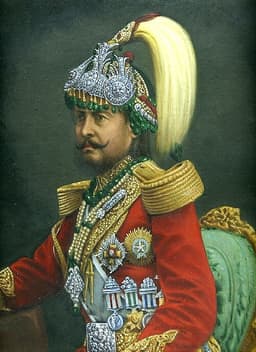
Jung Bahadur Rana
General · Modern
61.4Total
Basic Information
Born
1583
1817
Died
1634
1877
Era
Modern
Modern
Nationality
Bohemia
Nepal
Occupation
General
General
Civilization
Western
Indian
Score Comparison
Military (10%)
72.0
55.0
Political (20%)
62.7
72.0
Influence (20%)
82.0
56.7
Legacy (20%)
68.0
55.0
Leadership (15%)
79.8
78.0
Strategy (15%)
74.4
55.0
TOTAL
73.5
61.4
Albrecht von Wallenstein — Complete Timeline
1620 AD
Battle of White MountainWar◆ Major
Wallenstein fought as a mercenary commander for the Catholic League at the Battle of White Mountain near Prague. The battle was a decisive victory for the Habsburgs, crushing the Bohemian Revolt and beginning the Thirty Years' War.
Thirty Years' WarBohemian RevoltHabsburg
Impact: regional
1625 AD
Appointment as Imperial GeneralissimoPolitical Action◆ Major
Holy Roman Emperor Ferdinand II appointed Wallenstein as commander-in-chief of the imperial army. Wallenstein raised and financed a massive army of 50,000 men, becoming one of the most powerful figures in the empire.
Thirty Years' WarImperial ArmyMilitary Command
Impact: regional
1626 AD
Battle of Dessau BridgeWar◆ Major
Wallenstein defeated the Protestant forces of Ernst von Mansfeld at the Dessau Bridge. The victory secured imperial control over northern Germany and eliminated a major Protestant threat.
Thirty Years' WarProtestant UnionImperial Victory
Impact: regional
1628 AD
Siege of StralsundWar◆ Major
Wallenstein besieged the Baltic port of Stralsund, but failed to capture it. The city was aided by Danish and Swedish forces. The failure marked the first major setback for Wallenstein and prevented imperial control of the Baltic.
Thirty Years' WarBalticSiege
Impact: regional
1630 AD
Dismissal by Ferdinand IIPolitical Action◆ Major
Under pressure from the Catholic League, Emperor Ferdinand II dismissed Wallenstein from command. The League feared Wallenstein's power and ambition. Wallenstein retired to his estates in Bohemia.
Thirty Years' WarImperial PoliticsDismissal
Impact: regional
1634 AD
Assassination of WallensteinPolitical Action
Wallenstein was assassinated in Eger by imperial officers loyal to Ferdinand II. He had been plotting with Protestant powers and was declared a traitor. His death removed a major figure from the Thirty Years' War.
AssassinationThirty Years' WarTreason
Impact: regionaltragic
Jung Bahadur Rana — Complete Timeline
1846 AD
Kot MassacrePolitical Action
Jung Bahadur Runa orchestrated the Kot Massacre in Kathmandu, where dozens of nobles and courtiers were killed. This event eliminated his political rivals and allowed him to seize effective control of the Nepalese government, establishing the hereditary Rana prime ministership.
CoupMassacreRana Dynasty
Impact: nationaldestructive
Establishment of Rana DynastyPolitical Action◆ Major
Following the Kot Massacre, Jung Bahadur Rana appointed himself prime minister and commander-in-chief. He made the position hereditary, founding the Rana dynasty that ruled Nepal for over a century, reducing the Shah monarchs to figureheads.
DynastyGovernmentNepal
Impact: national
1850 AD
Visit to EuropeCultural
Jung Bahadur Rana traveled to Britain and France, becoming the first South Asian ruler to visit Europe. He observed Western military and industrial technology, which influenced his modernization efforts in Nepal, including army reforms.
DiplomacyModernizationTravel
Impact: nationalconstructive
1856 AD
Nepal-Tibet War and Treaty of ThapathaliWar◆ Major
Jung Bahadur Rana led a Nepalese military campaign into Tibet. The conflict ended with the Treaty of Thapathali, which secured Nepalese territorial claims and established a tributary relationship with Tibet, enhancing Nepal's regional influence.
WarTreatyTibet
Impact: regional
Expert Analysis
Origins
Albrecht von Wallenstein was born in 1583 in the Kingdom of Bohemia (modern Czech Republic) into a Protestant noble family. Orphaned early, he was raised by his uncle and converted to Catholicism. He studied at the University of Altdorf and later at Padua, but left without a degree. He married a wealthy widow, Lucrezia Nekšová, whose fortune allowed him to purchase estates and begin his military career.
Jung Bahadur Rana was born in 1817 in Kathmandu, Nepal, into the Kunwar family, a minor noble house. His father, Bal Narsingh Kunwar, served as a courtier. Jung Bahadur received a traditional education in Sanskrit and martial skills. He entered the Nepalese army as a young officer and gained early experience in the court intrigues of the Shah dynasty.
Rise to Power
Wallenstein's rise began during the Bohemian Revolt (1618-1620). He supplied mercenaries to the Catholic League and fought at the Battle of White Mountain in 1620, where his forces helped secure a decisive victory. In 1625, Emperor Ferdinand II appointed him Generalissimo, tasking him with raising an army. Wallenstein used his own credit to finance 50,000 troops, offering them plunder instead of pay. His victories at Dessau Bridge (1626) and over the Danes made him indispensable. However, his power and ambition alarmed the German princes, leading to his dismissal in 1630.
Jung Bahadur's rise came through the Kot Massacre of 1846. As a young general, he exploited a power struggle between Queen Rajyalakshmi and her stepson, King Surendra. He invited rival nobles to the Kot palace armory and had them slaughtered, killing over 30 high-ranking officials. He then appointed himself prime minister and commander-in-chief, making the positions hereditary. He sidelined the king and established the Rana dynasty, which ruled Nepal for 104 years.
Leadership & Governance
Wallenstein was a master of military logistics and finance. He created a self-sustaining army through a system of contributions—requisitioning supplies from occupied territories. His leadership style was authoritarian but pragmatic; he allowed his officers autonomy in return for loyalty. He attempted to build a personal power base independent of the emperor, negotiating with Protestant powers during the Thirty Years' War. Politically, Wallenstein scored 62.7, reflecting his inability to secure lasting political power beyond military command.
Jung Bahadur Rana scored 72.0 in political acumen. He centralized power in his own hands, abolishing the traditional council of ministers. He modernized Nepal's administration, introducing a civil code (Muluki Ain) that codified laws and reduced the power of the clergy. He also traveled to Europe in 1850, observing industrial and military technology. He adopted Western firearms and training for the Nepalese army. However, his rule was autocratic; he suppressed dissent and executed rivals, ensuring his family's monopoly on power.
Triumph & Tragedy
Wallenstein's greatest triumph was his military success: he scored 72.0 in military, with victories that restored imperial control over much of Germany. His army, once 100,000 strong, was the largest in Europe. His tragedy was his assassination in 1634. After being dismissed, he plotted with Sweden and Saxony, but his indecision and betrayal by subordinates led to his death at the hands of imperial officers in Eger. His downfall was due to overreaching ambition and loss of imperial trust.
Jung Bahadur's triumph was founding the Rana dynasty, which provided Nepal with stable, hereditary leadership for over a century. He successfully defended Nepal's borders in the Nepal-Tibet War (1855-1856), securing favorable terms in the Treaty of Thapathali. His tragedy was the Kot Massacre itself—while it secured his power, it set a precedent of violent political purges. His legacy also includes the stagnation of Nepalese society under an oligarchic system that resisted modernization.
Character & Destiny
Wallenstein was calculating and secretive, often keeping his plans to himself. He was superstitious, consulting astrologers like Johannes Kepler. His character—ambitious, ruthless, and politically naive—led to his downfall. He believed he could command loyalty independent of the emperor, but his troops ultimately obeyed the emperor's order to arrest him. He scored 79.8 in leadership, reflecting his ability to command large armies but not to secure his own survival.
Jung Bahadur was pragmatic and cunning. He understood the importance of centralized power and used both violence and diplomacy to maintain control. He was a reformer in administration but a conservative in social matters. His character—decisive and manipulative—allowed him to found a dynasty, but also concentrated power so heavily that later Rana rulers became corrupt and inefficient.
Legacy
Wallenstein's legacy is mixed. He is remembered as a brilliant military commander who transformed warfare through large-scale logistics and private armies. His influence scored 82.0, as his methods influenced later military entrepreneurs. However, his political legacy is negligible; the imperial cause he served ultimately lost the Thirty Years' War. He is memorialized in literature, notably in Schiller's Wallenstein trilogy.
Jung Bahadur's legacy is the Rana dynasty, which ruled Nepal until 1951. His administrative reforms, including the Muluki Ain, remained in effect for decades. His visit to Europe introduced Western technology to Nepal, but the country remained isolated under his successors. He scored 55.0 in legacy, reflecting the eventual overthrow of his dynasty and the limited modernization he achieved.
Conclusion
Albrecht von Wallenstein achieved a higher total score (73.5 vs. 61.4) and had greater impact on European military history. His innovations in army financing and logistics were centuries ahead of their time. Jung Bahadur Rana, while politically more astute, left a legacy of autocracy that hindered Nepal's development. Wallenstein's influence on warfare and his role in the Thirty Years' War—a conflict that reshaped Europe—was more profound. Therefore, Wallenstein had greater historical impact.
Rankings
🥇
Albrecht von WallensteinLeader
Mil: 72.0Pol: 62.7Inf: 82.0
73.5
🥈
Jung Bahadur Rana
Mil: 55.0Pol: 72.0Inf: 56.7
61.4
+12.1 behind
How This Comparison Works
Algorithm
Each figure is scored on 6 dimensions (0—100 scale) based on structured historical data: Military (10%), Political (20%), Influence (20%), Legacy (20%), Leadership (15%), Strategy (15%). The weighted total produces the final ranking.
Data Sources
Scores are computed from structured sub-indicators in the database. Scale factors adjust for era (Ancient ×0.85, Modern ×1.0) and civilization size (Eastern ×1.05, Other ×0.80) to account for differences in population and military scale.
Maximum 3 Figures
Comparisons are limited to 2—3 figures to ensure readability and statistical meaningfulness.
Error Margins
±5 points per dimension — Sub-scores are derived from historical records with inherent uncertainty. Two figures within 5 points on a dimension should be considered roughly equivalent in that area.
Total Score Accuracy
±3 points overall — The weighted combination of 6 dimensions produces a total score with approximately ±3 points of uncertainty. Differences of less than 3 points are not statistically significant— the figures are effectively tied.
Known Limitations
- Historical records are incomplete and uneven across civilizations
- Figures from oral-tradition societies may be underrepresented
- Occupation labels can misclassify multi-role figures
- Scores measure capability and impact, not moral character
- Quantitative scoring is a comparison tool, not absolute truth
Capability Radar
Military (10%) — Battles & Warfare
Battles
85
45
Win Rate
80
50
Expansion
75
40
Political (20%) — Governance & Reform
Reform
75
75
Diplomacy
65
70
Economy
80
65
Influence (20%) — Cultural & Global Reach
Cultural
65
55
Global
65
40
Legacy (20%) — Historical Impact
Historical
80
65
Longevity
70
60
Leadership (15%) — Power & Stability
Tenure
70
80
Stability
60
60
Strategy (15%) — Tactics & Innovation
Strategy
90
60
Tactics
88
55
Reform
85
70
Similar Comparisons
Comments & Discussion
No comments yet. Be the first to share your thoughts!