Loading...
Alexander Dubcek vs Nitish Kumar
Nitish Kumar leads by 2.1 pts · 2 figures compared
…

Alexander Dubcek
Politician · Modern
54.4Total
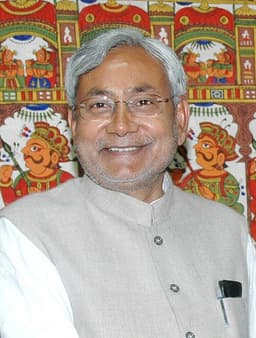
Nitish Kumar
Politician · Modern
56.5Total
Basic Information
Born
1921
1951
Died
—
—
Era
Modern
Modern
Nationality
Czechoslovakia
India
Occupation
Politician
Politician
Civilization
Western
Indian
Score Comparison
Military (10%)
49.6
35.8
Political (20%)
60.0
61.0
Influence (20%)
56.7
56.4
Legacy (20%)
54.0
46.7
Leadership (15%)
55.3
80.0
Strategy (15%)
44.4
60.0
TOTAL
54.4
56.5
Alexander Dubcek — Complete Timeline
1968 AD
Warsaw Pact Invasion of CzechoslovakiaWar
Soviet-led Warsaw Pact forces invaded Czechoslovakia on August 20-21, 1968, to crush the Prague Spring. Dubcek was arrested and taken to Moscow, where he was forced to sign the Moscow Protocol, agreeing to reverse the reforms.
Soviet interventionCold War
Impact: globaltragic
Prague Spring ReformsReform
Dubcek's government introduced the Action Programme, which included freedom of speech, press, and assembly, as well as economic reforms. These measures were unprecedented in the Eastern Bloc and sparked a wave of popular enthusiasm.
LiberalizationPrague Spring
Impact: globalprogressive
Appointment as First Secretary of the Communist Party of CzechoslovakiaPolitical Action◆ Major
Dubcek became First Secretary in January 1968, replacing Antonin Novotny. He initiated a series of liberal reforms known as the Prague Spring, aiming to create 'socialism with a human face' by loosening censorship and decentralizing the economy.
Communist leadershipReform
Impact: nationalconstructive
1969 AD
Removal from PowerPolitical Action◆ Major
Dubcek was removed as First Secretary and replaced by Gustav Husak. He was later expelled from the Communist Party and spent years in obscurity, working as a forestry official. He remained a symbol of the Prague Spring.
Political repression
Impact: nationaltragic
Nitish Kumar — Complete Timeline
2000 AD
First term as Chief Minister of BiharPolitical Action
Nitish Kumar became Chief Minister of Bihar for the first time, but his government lasted only seven days as he failed to prove a majority. This brief tenure highlighted the fractured politics of Bihar at the time. He returned to power later with a stronger mandate.
Chief MinisterBiharShort Tenure
Impact: regional
2003 AD
Founded Janata Dal (United) [JD(U)]Political Action◆ Major
Nitish Kumar became the leader of the Janata Dal (United) after a merger of the Janata Dal and the Samata Party. The party became his political base in Bihar. He positioned it as a secular, development-oriented alternative to Lalu Prasad Yadav's RJD.
Party LeadershipBiharJD(U)
Impact: regionalconstructive
2005 AD
Began 'Bihar turnaround' as Chief Minister (2005-2010)Reform◆ Major
Nitish Kumar became Chief Minister after the 2005 election and launched a series of reforms: improving law and order, building roads and bridges, empowering women through panchayat reservations, and expanding education. Bihar's GDP growth rate rose significantly, earning him the 'Bihar turnaround' reputation.
ReformBiharDevelopment
Impact: regionalconstructive
2013 AD
Switched alliances multiple times (BJP to RJD and back)Political Action◆ Major
Nitish Kumar broke the JD(U)'s 17-year alliance with the BJP in 2013 over Narendra Modi's prime ministerial candidacy. He later allied with Lalu Prasad Yadav's RJD in 2015, then returned to the BJP-led NDA in 2017. These shifts were criticized as opportunistic but kept him in power.
Alliance PoliticsBiharJD(U)
Impact: regional
2016 AD
Implemented prohibition in BiharReform◆ Major
Nitish Kumar's government imposed a complete ban on alcohol in Bihar, citing social harm. The prohibition was strictly enforced, leading to a decline in alcohol-related violence but also creating a black market. The policy was controversial but popular among women voters.
ProhibitionBiharSocial Reform
Impact: regionalconstructive
Expert Analysis
Origins
Alexander Dubcek was born on November 27, 1921, in Uhrovec, Czechoslovakia, into a working-class family. His father was a carpenter and a member of the Communist Party of Czechoslovakia (KSČ). Dubcek joined the KSČ in 1939 and was active in the anti-Nazi resistance during World War II. After the war, he rose through party ranks, studying at the Moscow Higher Party School from 1955 to 1958, which shaped his ideological outlook.
Nitish Kumar was born on March 1, 1951, in Bakhtiarpur, Bihar, India, into a middle-class family. His father was a freedom fighter. Kumar studied engineering at the Bihar College of Engineering (now NIT Patna) and later became active in student politics. He joined the Janata Party in the 1970s and was influenced by socialist leader Jayaprakash Narayan. His early political career was marked by grassroots activism in Bihar.
Rise to Power
Dubcek's rise was gradual within the KSČ. He became the First Secretary of the Slovak Communist Party in 1963 and was elected First Secretary of the KSČ on January 5, 1968, replacing Antonin Novotny. This came at a time of economic stagnation and political unrest, leading to the Prague Spring reforms. Dubcek's popularity soared as he introduced the Action Programme in April 1968, promising democratization and liberalization.
Nitish Kumar's rise was marked by coalition politics. He was first elected to the Bihar Legislative Assembly in 1985. He served as a Union Minister in the 1990s under different coalitions. In 2000, he became Chief Minister of Bihar for a brief seven-day term. His major breakthrough came in 2005 when the Janata Dal (United) won the state election, and he became Chief Minister, initiating the 'Bihar turnaround'.
Leadership & Governance
Dubcek's leadership style was consensus-oriented and reformist. He promoted 'socialism with a human face', seeking to liberalize the communist regime while maintaining party control. His governance emphasized freedom of speech, press, and assembly, and economic decentralization. However, his approach was cautious, trying to balance Soviet expectations with domestic demands. The Warsaw Pact invasion on August 20-21, 1968, ended his reforms, showing his inability to foresee or counter Soviet hardline response.
Nitish Kumar's governance focused on development and law and order. He improved infrastructure, built roads and bridges, empowered women through reservations, and strictly enforced prohibition (2016). His leadership style is pragmatic and non-ideological, often switching alliances to maintain power. He scored 80.0 in leadership, reflecting his ability to drive change, while Dubcek scored 55.3. Kumar's strategy score (60.0) is higher than Dubcek's (44.4), indicating better tactical maneuvering.
Triumph & Tragedy
Dubcek's triumph was the Prague Spring reforms, which inspired hope for democratic socialism. His greatest tragedy was the Soviet-led invasion that crushed these reforms, leading to his arrest, removal from power in April 1969, and eventual expulsion from the party. He spent years in obscurity, working in forestry. His political score of 60.0 reflects his brief but impactful tenure.
Nitish Kumar's triumph is the Bihar turnaround: economic growth, improved law and order, and social reforms. He won multiple elections and transformed Bihar's image. However, his tragedy includes the imposition of prohibition, which led to black markets and economic disruption. His frequent alliance switches—from BJP to RJD and back—have been criticized as opportunistic. He scored 61.0 in political, slightly above Dubcek.
Character & Destiny
Dubcek was idealistic and principled, believing in reforming communism from within. His character was shaped by loyalty to the party, but his trust in Soviet tolerance proved naive. Historians note his lack of strategic foresight. His destiny was to be a symbol of crushed reform, remembered as a tragic figure.
Nitish Kumar is pragmatic and resilient, known for his administrative focus. He is often called 'Sushashan Babu' (Mr. Good Governance). His character allows him to adapt to political realities, but his willingness to switch alliances raises questions about conviction. His destiny is to be a successful regional leader, though his impact is limited to Bihar.
Legacy
Dubcek's legacy is as a symbol of the Prague Spring and the struggle for freedom within communist systems. He influenced later democratic movements in Eastern Europe. His total score of 54.4 reflects moderate impact across dimensions. His legacy endures in historical memory and political symbolism.
Nitish Kumar's legacy is tied to Bihar's development. He improved governance and set a model for backward states. His legacy score of 46.7 is lower due to the regional scope. However, his leadership score (80.0) is the highest among all dimensions, indicating personal effectiveness.
Conclusion
Both leaders achieved significant reforms, but their impact differs in scale and durability. Dubcek's reforms were short-lived but had a global ideological impact, challenging Soviet hegemony. Nitish Kumar's reforms are more tangible and sustained, improving millions of lives in Bihar. While Dubcek scored higher in influence (56.7 vs 56.4) and legacy (54.0 vs 46.7), Kumar's leadership (80.0 vs 55.3) and strategy (60.0 vs 44.4) are superior. Overall, Nitish Kumar had greater practical impact due to his ability to implement reforms and sustain power, whereas Dubcek's tragedy was his inability to protect his reforms. Kumar's total score of 56.5 edges Dubcek's 54.4, making him the more effective leader by data-driven metrics.
Rankings
🥇
Nitish KumarLeader
Mil: 35.8Pol: 61.0Inf: 56.4
56.5
🥈
Alexander Dubcek
Mil: 49.6Pol: 60.0Inf: 56.7
54.4
+2.1 behind
How This Comparison Works
Algorithm
Each figure is scored on 6 dimensions (0—100 scale) based on structured historical data: Military (10%), Political (20%), Influence (20%), Legacy (20%), Leadership (15%), Strategy (15%). The weighted total produces the final ranking.
Data Sources
Scores are computed from structured sub-indicators in the database. Scale factors adjust for era (Ancient ×0.85, Modern ×1.0) and civilization size (Eastern ×1.05, Other ×0.80) to account for differences in population and military scale.
Maximum 3 Figures
Comparisons are limited to 2—3 figures to ensure readability and statistical meaningfulness.
Error Margins
±5 points per dimension — Sub-scores are derived from historical records with inherent uncertainty. Two figures within 5 points on a dimension should be considered roughly equivalent in that area.
Total Score Accuracy
±3 points overall — The weighted combination of 6 dimensions produces a total score with approximately ±3 points of uncertainty. Differences of less than 3 points are not statistically significant— the figures are effectively tied.
Known Limitations
- Historical records are incomplete and uneven across civilizations
- Figures from oral-tradition societies may be underrepresented
- Occupation labels can misclassify multi-role figures
- Scores measure capability and impact, not moral character
- Quantitative scoring is a comparison tool, not absolute truth
Capability Radar
Military (10%) — Battles & Warfare
Battles
28
42
Win Rate
33
47
Expansion
35
52
Political (20%) — Governance & Reform
Reform
85
70
Diplomacy
70
65
Economy
40
68
Influence (20%) — Cultural & Global Reach
Cultural
60
40
Global
55
30
Legacy (20%) — Historical Impact
Historical
65
45
Longevity
50
35
Leadership (15%) — Power & Stability
Tenure
30
75
Stability
20
60
Strategy (15%) — Tactics & Innovation
Strategy
39
55
Tactics
43
55
Reform
46
56
Similar Comparisons
Comments & Discussion
No comments yet. Be the first to share your thoughts!