Loading...
This comparison has not been analyzed yet.
One-time AI generation (~1 minute). Scores and timeline are already available below.
Georgi Dimitrov vs Nitish Kumar
Georgi Dimitrov leads by 1.1 pts · 2 figures compared
…

Georgi Dimitrov
Politician · Modern
57.6Total
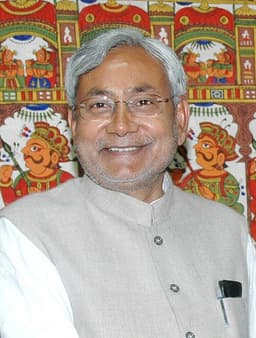
Nitish Kumar
Politician · Modern
56.5Total
Basic Information
Born
1882
1951
Died
1949
—
Era
Modern
Modern
Nationality
Bulgaria
India
Occupation
Politician
Politician
Civilization
Western
Indian
Score Comparison
Military (10%)
50.0
35.8
Political (20%)
68.0
61.0
Influence (20%)
62.0
56.4
Legacy (20%)
52.0
46.7
Leadership (15%)
64.0
80.0
Strategy (15%)
43.4
60.0
TOTAL
57.6
56.5
Georgi Dimitrov — Complete Timeline
1933 AD
Reichstag Fire Trial defensePolitical Action
Dimitrov was arrested in Germany for alleged involvement in the Reichstag fire. At his trial, he conducted his own defense, cross-examining witnesses including Hermann Goering, and was acquitted due to lack of evidence.
TrialNazi GermanyCommunist Resistance
Impact: global
1935 AD
Election as General Secretary of the CominternPolitical Action◆ Major
Dimitrov was elected General Secretary of the Communist International (Comintern), a position he held until 1943. He promoted the Popular Front strategy, urging communists to ally with socialists and democrats against fascism.
CominternPopular FrontAnti-Fascism
Impact: globalconstructive
1946 AD
Establishment of the People's Republic of BulgariaPolitical Action
As Prime Minister, Dimitrov oversaw the abolition of the monarchy and the proclamation of the People's Republic of Bulgaria. The new constitution was modeled on the Soviet system, nationalizing industry and collectivizing agriculture.
Communist TakeoverConstitutionNationalization
Impact: national
Nitish Kumar — Complete Timeline
2000 AD
First term as Chief Minister of BiharPolitical Action
Nitish Kumar became Chief Minister of Bihar for the first time, but his government lasted only seven days as he failed to prove a majority. This brief tenure highlighted the fractured politics of Bihar at the time. He returned to power later with a stronger mandate.
Chief MinisterBiharShort Tenure
Impact: regional
2003 AD
Founded Janata Dal (United) [JD(U)]Political Action◆ Major
Nitish Kumar became the leader of the Janata Dal (United) after a merger of the Janata Dal and the Samata Party. The party became his political base in Bihar. He positioned it as a secular, development-oriented alternative to Lalu Prasad Yadav's RJD.
Party LeadershipBiharJD(U)
Impact: regionalconstructive
2005 AD
Began 'Bihar turnaround' as Chief Minister (2005-2010)Reform◆ Major
Nitish Kumar became Chief Minister after the 2005 election and launched a series of reforms: improving law and order, building roads and bridges, empowering women through panchayat reservations, and expanding education. Bihar's GDP growth rate rose significantly, earning him the 'Bihar turnaround' reputation.
ReformBiharDevelopment
Impact: regionalconstructive
2013 AD
Switched alliances multiple times (BJP to RJD and back)Political Action◆ Major
Nitish Kumar broke the JD(U)'s 17-year alliance with the BJP in 2013 over Narendra Modi's prime ministerial candidacy. He later allied with Lalu Prasad Yadav's RJD in 2015, then returned to the BJP-led NDA in 2017. These shifts were criticized as opportunistic but kept him in power.
Alliance PoliticsBiharJD(U)
Impact: regional
2016 AD
Implemented prohibition in BiharReform◆ Major
Nitish Kumar's government imposed a complete ban on alcohol in Bihar, citing social harm. The prohibition was strictly enforced, leading to a decline in alcohol-related violence but also creating a black market. The policy was controversial but popular among women voters.
ProhibitionBiharSocial Reform
Impact: regionalconstructive
This comparison has not been analyzed yet.
One-time AI generation (~1 minute). Scores and timeline are already available below.
Rankings
🥇
Georgi DimitrovLeader
Mil: 50.0Pol: 68.0Inf: 62.0
57.6
🥈
Nitish Kumar
Mil: 35.8Pol: 61.0Inf: 56.4
56.5
+1.1 behind
How This Comparison Works
Algorithm
Each figure is scored on 6 dimensions (0—100 scale) based on structured historical data: Military (10%), Political (20%), Influence (20%), Legacy (20%), Leadership (15%), Strategy (15%). The weighted total produces the final ranking.
Data Sources
Scores are computed from structured sub-indicators in the database. Scale factors adjust for era (Ancient ×0.85, Modern ×1.0) and civilization size (Eastern ×1.05, Other ×0.80) to account for differences in population and military scale.
Maximum 3 Figures
Comparisons are limited to 2—3 figures to ensure readability and statistical meaningfulness.
Error Margins
±5 points per dimension — Sub-scores are derived from historical records with inherent uncertainty. Two figures within 5 points on a dimension should be considered roughly equivalent in that area.
Total Score Accuracy
±3 points overall — The weighted combination of 6 dimensions produces a total score with approximately ±3 points of uncertainty. Differences of less than 3 points are not statistically significant— the figures are effectively tied.
Known Limitations
- Historical records are incomplete and uneven across civilizations
- Figures from oral-tradition societies may be underrepresented
- Occupation labels can misclassify multi-role figures
- Scores measure capability and impact, not moral character
- Quantitative scoring is a comparison tool, not absolute truth
Capability Radar
Military (10%) — Battles & Warfare
Battles
29
42
Win Rate
30
47
Expansion
36
52
Political (20%) — Governance & Reform
Reform
55
70
Diplomacy
65
65
Economy
30
68
Influence (20%) — Cultural & Global Reach
Cultural
45
40
Global
55
30
Legacy (20%) — Historical Impact
Historical
60
45
Longevity
50
35
Leadership (15%) — Power & Stability
Tenure
40
75
Stability
35
60
Strategy (15%) — Tactics & Innovation
Strategy
40
55
Tactics
43
55
Reform
43
56
Similar Comparisons
Comments & Discussion
No comments yet. Be the first to share your thoughts!