Loading...
Antonio Costa vs Nitish Kumar
Nitish Kumar leads by 3.0 pts · 2 figures compared
…

Antonio Costa
Politician · Modern
53.5Total
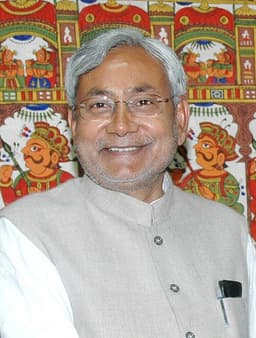
Nitish Kumar
Politician · Modern
56.5Total
Basic Information
Born
1961
1951
Died
—
—
Era
Modern
Modern
Nationality
Portugal
India
Occupation
Politician
Politician
Civilization
Western
Indian
Score Comparison
Military (10%)
40.6
35.8
Political (20%)
62.7
61.0
Influence (20%)
54.9
56.4
Legacy (20%)
41.7
46.7
Leadership (15%)
66.0
80.0
Strategy (15%)
60.0
60.0
TOTAL
53.5
56.5
Antonio Costa — Complete Timeline
2015 AD
Election as Prime MinisterPolitical Action◆ Major
Costa became Prime Minister after the Socialist Party formed a minority government supported by the Left Bloc and Communist Party. This 'geringon
ElectionCoalitionGovernment
Impact: nationalconstructive
2016 AD
Reversal of Austerity PoliciesReform◆ Major
Costa's government reversed many austerity measures imposed during the bailout, restoring public sector wages, pensions, and social benefits. This led to economic growth and reduced inequality.
AusteritySocial PolicyEconomic Recovery
Impact: nationalconstructive
2022 AD
Hosting of the UN Ocean ConferencePolitical Action◆ Major
Costa hosted the United Nations Ocean Conference in Lisbon, positioning Portugal as a leader in ocean conservation and sustainable blue economy. The conference produced the Lisbon Declaration.
EnvironmentOceanDiplomacy
Impact: globalconstructive
2023 AD
Resignation amid Corruption InvestigationPolitical Action◆ Major
Costa resigned as Prime Minister after a corruption investigation involving his chief of staff and potential conflicts of interest in lithium and hydrogen projects. He denied wrongdoing but stepped down.
CorruptionResignationCrisis
Impact: nationaltragic
Nitish Kumar — Complete Timeline
2000 AD
First term as Chief Minister of BiharPolitical Action
Nitish Kumar became Chief Minister of Bihar for the first time, but his government lasted only seven days as he failed to prove a majority. This brief tenure highlighted the fractured politics of Bihar at the time. He returned to power later with a stronger mandate.
Chief MinisterBiharShort Tenure
Impact: regional
2003 AD
Founded Janata Dal (United) [JD(U)]Political Action◆ Major
Nitish Kumar became the leader of the Janata Dal (United) after a merger of the Janata Dal and the Samata Party. The party became his political base in Bihar. He positioned it as a secular, development-oriented alternative to Lalu Prasad Yadav's RJD.
Party LeadershipBiharJD(U)
Impact: regionalconstructive
2005 AD
Began 'Bihar turnaround' as Chief Minister (2005-2010)Reform◆ Major
Nitish Kumar became Chief Minister after the 2005 election and launched a series of reforms: improving law and order, building roads and bridges, empowering women through panchayat reservations, and expanding education. Bihar's GDP growth rate rose significantly, earning him the 'Bihar turnaround' reputation.
ReformBiharDevelopment
Impact: regionalconstructive
2013 AD
Switched alliances multiple times (BJP to RJD and back)Political Action◆ Major
Nitish Kumar broke the JD(U)'s 17-year alliance with the BJP in 2013 over Narendra Modi's prime ministerial candidacy. He later allied with Lalu Prasad Yadav's RJD in 2015, then returned to the BJP-led NDA in 2017. These shifts were criticized as opportunistic but kept him in power.
Alliance PoliticsBiharJD(U)
Impact: regional
2016 AD
Implemented prohibition in BiharReform◆ Major
Nitish Kumar's government imposed a complete ban on alcohol in Bihar, citing social harm. The prohibition was strictly enforced, leading to a decline in alcohol-related violence but also creating a black market. The policy was controversial but popular among women voters.
ProhibitionBiharSocial Reform
Impact: regionalconstructive
Expert Analysis
Origins
Antonio Costa was born in 1961 in Lisbon, Portugal, the son of writer Orlando da Costa and journalist Maria Antónia Palla. His father was of Goan Indian descent, giving Costa a multicultural background. He studied law at the University of Lisbon and became a lawyer before entering politics in the Socialist Party. Costa served as Secretary of State for Parliamentary Affairs, Minister of Internal Administration, and Mayor of Lisbon before becoming Prime Minister.
Nitish Kumar was born in 1951 in Bakhtiarpur, Bihar, India, into a lower-middle-class farmer family. He studied mechanical engineering at the Bihar College of Engineering (now NIT Patna) and later earned a diploma in business management. Kumar began his political career as a student activist and joined the Janata Party in the 1970s, later becoming a founding member of the Janata Dal (United). He served as a minister in Bihar and at the national level before becoming Chief Minister.
Rise to Power
Costa rose to prominence as the Mayor of Lisbon from 2007 to 2015, where he gained recognition for improving urban infrastructure and financial management. In 2015, he led the Socialist Party to victory in the general election, but fell short of a majority. He formed a minority government known as the 'geringonça' (contraption) with the support of the Left Bloc and Communist Party, becoming Prime Minister in November 2015. This coalition was unprecedented in Portuguese politics and allowed him to take power despite the center-right coalition winning the most seats.
Kumar's rise was more gradual and marked by political maneuvering. He became Chief Minister of Bihar for the first time in 2000, but his government lasted only seven days as he failed to prove a majority. He returned to power in 2005 after leading the Janata Dal (United) to victory in alliance with the BJP. His first full term (2005-2010) is credited with the 'Bihar turnaround', focusing on law and order, infrastructure, and education. He won re-election in 2010 and again in 2015, but his later terms were marred by controversial decisions like prohibition.
Leadership & Governance
Costa's leadership style is pragmatic and coalition-oriented. His 'geringonça' government successfully reversed many austerity measures imposed during Portugal's 2011-2014 bailout, restoring public sector wages, pensions, and social benefits. This led to economic growth and reduced unemployment, though critics argue it increased public debt. Costa also prioritized environmental issues, hosting the UN Ocean Conference in Lisbon in 2022 and positioning Portugal as a leader in ocean conservation. His governance score of 66.0 reflects his ability to navigate minority government and deliver stability.
Kumar's leadership is characterized by a focus on development and social reform. He improved law and order in Bihar by cracking down on crime and building roads and bridges to connect rural areas. His government implemented a ban on alcohol in 2016, citing social harm, which was strictly enforced but led to a black market and criticism. Kumar also emphasized women's empowerment through reservations in local elections and education initiatives. His leadership score of 80.0 is the highest among the two, but his political strategy (60.0) has been erratic due to frequent alliance switches.
Triumph & Tragedy
Costa's greatest success is the reversal of austerity and the subsequent economic recovery. Under his tenure, Portugal's GDP grew, unemployment fell from 12.6% in 2015 to 6.5% in 2020, and the budget deficit was reduced. He also gained international recognition for Portugal's progressive drug policies and environmental leadership. However, his tenure ended in tragedy: in November 2023, he resigned amid a corruption investigation involving his chief of staff and potential conflicts of interest in lithium and hydrogen projects. This tarnished his legacy and led to early elections.
Kumar's triumph is the 'Bihar turnaround', transforming a state known for poverty and crime into one with better infrastructure and law and order. His government built over 10,000 km of roads, increased school enrollment, and reduced crime rates. However, his prohibition policy was a double-edged sword: while it reduced alcohol consumption, it fueled a black market, led to deaths from spurious liquor, and cost the state revenue. His frequent alliance switches (from BJP to RJD and back) have been seen as opportunistic, damaging his political credibility. His legacy score of 46.7 reflects these mixed outcomes.
Character & Destiny
Costa is seen as a calm and calculated politician, skilled at building consensus. His ability to manage a diverse coalition and maintain stability until the corruption scandal shows both his strengths and weaknesses. The scandal revealed a potential blind spot in his oversight of his inner circle. His character led to a successful tenure but ultimately a sudden downfall.
Kumar is known for his stubbornness and moralizing style. His decision to impose prohibition despite economic costs reflects his conviction, but also his inflexibility. His repeated alliance switches suggest a pragmatic survival instinct, but have eroded trust. His character has shaped Bihar's development but also limited his national ambitions. Historical assessments vary: some see him as a reformer, others as a political chameleon.
Legacy
Costa's legacy is mixed: he will be remembered for ending austerity and fostering economic growth, but also for the corruption scandal that ended his term. His environmental initiatives, like the Ocean Conference, have lasting impact. However, the scandal may overshadow his achievements in the short term.
Kumar's legacy is more substantial in terms of tangible change in Bihar. The 'Bihar turnaround' is a recognized case of state-level development. His prohibition policy, though controversial, is a bold social experiment. However, his legacy is tied to Bihar alone, and his national influence is limited. He scored 46.7 in legacy, higher than Costa's 41.7.
Conclusion
Nitish Kumar had a greater impact than Antonio Costa, as reflected in his higher total score of 56.5 versus 53.5. While Costa governed a nation and steered Portugal through post-bailout recovery, his resignation under a cloud of corruption diminishes his long-term legacy. Kumar, despite his flaws, engineered a tangible transformation in Bihar, a state with deep-rooted problems. His leadership score of 80.0 demonstrates his effectiveness in governance, even if his political strategy was inconsistent. The score gap of 3.0 points may seem small, but Kumar's impact on the lives of over 100 million people in Bihar and his role as a model for development in poorer regions give him the edge. Costa's achievements are significant but more conventional and ultimately marred by scandal. Thus, Nitish Kumar emerges as the more impactful leader.
Rankings
🥇
Nitish KumarLeader
Mil: 35.8Pol: 61.0Inf: 56.4
56.5
🥈
Antonio Costa
Mil: 40.6Pol: 62.7Inf: 54.9
53.5
+3.0 behind
How This Comparison Works
Algorithm
Each figure is scored on 6 dimensions (0—100 scale) based on structured historical data: Military (10%), Political (20%), Influence (20%), Legacy (20%), Leadership (15%), Strategy (15%). The weighted total produces the final ranking.
Data Sources
Scores are computed from structured sub-indicators in the database. Scale factors adjust for era (Ancient ×0.85, Modern ×1.0) and civilization size (Eastern ×1.05, Other ×0.80) to account for differences in population and military scale.
Maximum 3 Figures
Comparisons are limited to 2—3 figures to ensure readability and statistical meaningfulness.
Error Margins
±5 points per dimension — Sub-scores are derived from historical records with inherent uncertainty. Two figures within 5 points on a dimension should be considered roughly equivalent in that area.
Total Score Accuracy
±3 points overall — The weighted combination of 6 dimensions produces a total score with approximately ±3 points of uncertainty. Differences of less than 3 points are not statistically significant— the figures are effectively tied.
Known Limitations
- Historical records are incomplete and uneven across civilizations
- Figures from oral-tradition societies may be underrepresented
- Occupation labels can misclassify multi-role figures
- Scores measure capability and impact, not moral character
- Quantitative scoring is a comparison tool, not absolute truth
Capability Radar
Military (10%) — Battles & Warfare
Battles
47
42
Win Rate
48
47
Expansion
55
52
Political (20%) — Governance & Reform
Reform
55
70
Diplomacy
60
65
Economy
55
68
Influence (20%) — Cultural & Global Reach
Cultural
30
40
Global
40
30
Legacy (20%) — Historical Impact
Historical
30
45
Longevity
20
35
Leadership (15%) — Power & Stability
Tenure
60
75
Stability
55
60
Strategy (15%) — Tactics & Innovation
Strategy
57
55
Tactics
59
55
Reform
64
56
Similar Comparisons
Comments & Discussion
No comments yet. Be the first to share your thoughts!