Loading...
Alexander I of Yugoslavia vs Eric XIV of Sweden
Alexander I of Yugoslavia leads by 6.3 pts · 2 figures compared
…
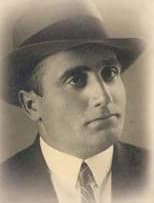
Alexander I of Yugoslavia
Emperor · Modern
51.4Total

Eric XIV of Sweden
Emperor · Modern
45.1Total
Basic Information
Born
1888
1533
Died
1934
1577
Era
Modern
Modern
Nationality
Yugoslavia
Sweden
Occupation
Emperor
Emperor
Civilization
Western
Western
Score Comparison
Military (10%)
22.6
25.0
Political (20%)
68.0
45.1
Influence (20%)
53.3
49.4
Legacy (20%)
42.5
40.8
Leadership (15%)
74.0
48.4
Strategy (15%)
38.6
60.0
TOTAL
51.4
45.1
Alexander I of Yugoslavia — Complete Timeline
1928 AD
Assassination of Stjepan RadićPolitical Action◆ Major
During a parliamentary session in Belgrade, Montenegrin deputy Puni
AssassinationParliamentary CrisisCroat-Serb Conflict
Impact: nationaltragic
1929 AD
Proclamation of the January 6 DictatorshipPolitical Action◆ Major
Alexander I abolished the Vidovdan Constitution, dissolved parliament, and established a royal dictatorship. He renamed the country the Kingdom of Yugoslavia and sought to centralize power, suppress ethnic nationalism, and impose a unified Yugoslav identity, which intensified ethnic tensions.
DictatorshipCentralizationYugoslavia
Impact: nationaldestructive
Creation of the Kingdom of YugoslaviaPolitical Action◆ Major
Alexander I officially renamed the Kingdom of Serbs, Croats, and Slovenes to the Kingdom of Yugoslavia on October 3, 1929. This was part of his effort to promote national unity and centralize the state, but it failed to resolve deep ethnic divisions.
State FormationNational IdentityYugoslavia
Impact: national
1934 AD
Assassination in MarseillePolitical Action◆ Major
Alexander I was assassinated in Marseille, France, by Vlado Chernozemski, a member of the Internal Macedonian Revolutionary Organization. The assassination, which also killed French Foreign Minister Louis Barthou, destabilized the Balkan region and contributed to rising tensions before World War II.
AssassinationBalkan PoliticsInterwar Period
Impact: regionaltragic
Eric XIV of Sweden — Complete Timeline
1561 AD
Coronation of Eric XIVPolitical Action◆ Major
Eric XIV was crowned King of Sweden in Uppsala, succeeding his father Gustav Vasa. His coronation marked the beginning of a reign characterized by centralization of power, expansion of the nobility's privileges, and increasing paranoia.
CoronationSuccession
Impact: national
1567 AD
Murder of the Sture FamilyPolitical Action◆ Major
In a paranoid rage, Eric XIV personally killed the nobleman Nils Sture and ordered the execution of several members of the Sture family, including the elderly Svante Sture. This act of violence against the aristocracy deepened his isolation and led to rebellion.
MurderNobilityParanoia
Impact: nationaltragic
1568 AD
Deposition of Eric XIVPolitical Action
Eric XIV was deposed by his half-brothers John and Charles, who led a rebellion against his increasingly erratic rule. He was imprisoned at Gripsholm Castle, and John III was proclaimed king.
DepositionRebellionImprisonment
Impact: nationaldestructive
1577 AD
Death by PoisoningOther
Eric XIV died in prison at
DeathPoisoningImprisonment
Impact: nationaltragic
Expert Analysis
Origins
Alexander I of Yugoslavia was born on December 16, 1888, in Cetinje, Montenegro, as the second son of King Peter I of Serbia. He was educated in Geneva and at the Imperial Page Corps in Saint Petersburg, Russia, where he absorbed autocratic and military traditions. His early life was shaped by the struggle for Serbian independence and unification of South Slavs. In contrast, Eric XIV of Sweden was born on December 13, 1533, in Stockholm, the eldest son of King Gustav Vasa and Catherine of Saxe-Lauenburg. He was raised in a court marked by his father's consolidation of power and the Reformation. Eric received a humanist education, including instruction in Latin, German, and French, but his upbringing was overshadowed by his father's strict rule and his own mental instability, which became evident later.
Rise to Power
Alexander I rose to power amid the Balkan Wars and World War I. He served as regent for his father from 1914 and led the Serbian army in retreat across Albania in 1915, earning military credibility. After the war, he became king of the newly formed Kingdom of Serbs, Croats, and Slovenes in 1921, following the death of his father. His rise was facilitated by the unification of South Slavs under the Serbian Karađorđević dynasty. Eric XIV became king of Sweden in 1560 upon the death of his father Gustav Vasa. His coronation in Uppsala marked the start of his reign, but he faced immediate challenges from his half-brothers John and Charles, who resented his centralizing policies and his marriage to a commoner, Karin Månsdotter. Eric's rise was also marked by his efforts to expand royal power and break the influence of the nobility.
Leadership & Governance
Alexander I governed as a constitutional monarch initially but moved toward dictatorship. On January 6, 1929, he proclaimed the January 6 Dictatorship, abolishing the Vidovdan Constitution, dissolving parliament, and banning political parties. He renamed the country the Kingdom of Yugoslavia on October 3, 1929, in an attempt to foster national unity. His leadership style was authoritarian, aiming to suppress ethnic tensions between Serbs, Croats, and Slovenes. He centralized power and relied on the army and police. Eric XIV's governance was marked by centralization and paranoia. He pursued a policy of expanding royal authority, which brought him into conflict with the nobility. He introduced a new legal code (the King's Law) that strengthened the monarchy, but his erratic behavior and suspicion of plots led to violent outbursts. In 1567, he personally killed Nils Sture and ordered the execution of several Sture family members during the Sture Murders, a massacre of nobles. His leadership score is 48.4, reflecting his instability, while Alexander scored 74.0 in leadership, showing firmer control.
Triumph & Tragedy
Alexander I's greatest triumph was the creation of a unified Yugoslav state, though it was fragile. He successfully maintained the kingdom's independence and navigated international relations, including alliances with France and the Little Entente. His tragedy was the failure to resolve ethnic tensions; his dictatorship alienated Croats and other groups, leading to ongoing instability. His assassination in Marseille on October 9, 1934, by Vlado Chernozemski of the Internal Macedonian Revolutionary Organization, highlighted the deep divisions. Eric XIV's triumph included expanding Sweden's influence in the Baltic and strengthening the monarchy. He founded the city of Kalmar and promoted trade. His tragedy was his mental decline and the Sture Murders, which destroyed his reputation and led to his deposition in 1568. He was imprisoned at Gripsholm Castle and died in 1577, likely poisoned on the orders of his brother John III. His political score of 45.1 and military score of 25.0 reflect his failures.
Character & Destiny
Alexander I was disciplined, secretive, and determined, shaped by military service and a sense of duty. His authoritarian character drove him to impose unity by force, which ultimately backfired as it fueled opposition. His destiny was to die as a martyr for Yugoslav unity, but his methods sowed seeds of future conflict. Eric XIV was intelligent but paranoid and impulsive. His character, marked by suspicion and violent outbursts, led to his downfall. He isolated himself from advisors and alienated his family. His destiny was to be deposed and murdered, a tragic end for a king who began with promise. Historians assess Eric as a failed ruler, while Alexander is seen as a tragic figure who tried to hold together an impossible state.
Legacy
Alexander I's legacy is mixed. He is remembered as the king who created Yugoslavia and died for it, but his dictatorship set a precedent for authoritarian rule. The country disintegrated in the 1990s, partly due to unresolved ethnic tensions he failed to address. His scores: Military 22.6, Political 68.0, Influence 53.3, Legacy 42.5, Leadership 74.0, Strategy 38.6, Total 51.4. Eric XIV's legacy is largely negative. He is known for his insanity, the Sture Murders, and his deposition. His reign contributed to the evolution of Swedish monarchy but is overshadowed by his father Gustav Vasa and brother John III. His scores: Military 25.0, Political 45.1, Influence 49.4, Legacy 40.8, Leadership 48.4, Strategy 60.0, Total 45.1.
Conclusion
Alexander I of Yugoslavia had a greater impact than Eric XIV of Sweden. Despite his lower military and strategy scores, Alexander's political score of 68.0 and leadership of 74.0 reflect his role in shaping a nation that endured for decades. Eric's reign was a failure, marked by personal instability and little lasting influence. The score gap of 6.3 points supports this: Alexander's total of 51.4 against Eric's 45.1. Alexander's actions directly affected millions in the Balkans, whereas Eric's impact was limited to Sweden's internal politics. Therefore, Alexander I of Yugoslavia is the more significant historical figure.
Rankings
🥇
Alexander I of YugoslaviaLeader
Mil: 22.6Pol: 68.0Inf: 53.3
51.4
🥈
Eric XIV of Sweden
Mil: 25.0Pol: 45.1Inf: 49.4
45.1
+6.3 behind
How This Comparison Works
Algorithm
Each figure is scored on 6 dimensions (0—100 scale) based on structured historical data: Military (10%), Political (20%), Influence (20%), Legacy (20%), Leadership (15%), Strategy (15%). The weighted total produces the final ranking.
Data Sources
Scores are computed from structured sub-indicators in the database. Scale factors adjust for era (Ancient ×0.85, Modern ×1.0) and civilization size (Eastern ×1.05, Other ×0.80) to account for differences in population and military scale.
Maximum 3 Figures
Comparisons are limited to 2—3 figures to ensure readability and statistical meaningfulness.
Error Margins
±5 points per dimension — Sub-scores are derived from historical records with inherent uncertainty. Two figures within 5 points on a dimension should be considered roughly equivalent in that area.
Total Score Accuracy
±3 points overall — The weighted combination of 6 dimensions produces a total score with approximately ±3 points of uncertainty. Differences of less than 3 points are not statistically significant— the figures are effectively tied.
Known Limitations
- Historical records are incomplete and uneven across civilizations
- Figures from oral-tradition societies may be underrepresented
- Occupation labels can misclassify multi-role figures
- Scores measure capability and impact, not moral character
- Quantitative scoring is a comparison tool, not absolute truth
Capability Radar
Military (10%) — Battles & Warfare
Battles
15
45
Win Rate
10
40
Expansion
10
40
Political (20%) — Governance & Reform
Reform
60
50
Diplomacy
50
25
Economy
40
35
Influence (20%) — Cultural & Global Reach
Cultural
30
30
Global
30
15
Legacy (20%) — Historical Impact
Historical
40
35
Longevity
25
20
Leadership (15%) — Power & Stability
Tenure
55
30
Stability
30
10
Strategy (15%) — Tactics & Innovation
Strategy
25
45
Tactics
20
50
Reform
30
55
Similar Comparisons
Comments & Discussion
No comments yet. Be the first to share your thoughts!