Loading...
Eric XIV of Sweden vs Modibbo Adama
Modibbo Adama leads by 5.7 pts · 2 figures compared
…

Eric XIV of Sweden
Emperor · Modern
45.1Total
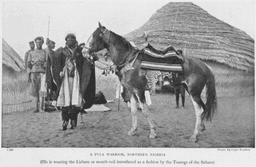
Modibbo Adama
Emperor · Modern
50.8Total
Basic Information
Born
1533
1786
Died
1577
1847
Era
Modern
Modern
Nationality
Sweden
Adamawa
Occupation
Emperor
Emperor
Civilization
Western
Other
Score Comparison
Military (10%)
25.0
10.0
Political (20%)
45.1
68.0
Influence (20%)
49.4
53.3
Legacy (20%)
40.8
47.5
Leadership (15%)
48.4
68.0
Strategy (15%)
60.0
41.7
TOTAL
45.1
50.8
Eric XIV of Sweden — Complete Timeline
1561 AD
Coronation of Eric XIVPolitical Action◆ Major
Eric XIV was crowned King of Sweden in Uppsala, succeeding his father Gustav Vasa. His coronation marked the beginning of a reign characterized by centralization of power, expansion of the nobility's privileges, and increasing paranoia.
CoronationSuccession
Impact: national
1567 AD
Murder of the Sture FamilyPolitical Action◆ Major
In a paranoid rage, Eric XIV personally killed the nobleman Nils Sture and ordered the execution of several members of the Sture family, including the elderly Svante Sture. This act of violence against the aristocracy deepened his isolation and led to rebellion.
MurderNobilityParanoia
Impact: nationaltragic
1568 AD
Deposition of Eric XIVPolitical Action
Eric XIV was deposed by his half-brothers John and Charles, who led a rebellion against his increasingly erratic rule. He was imprisoned at Gripsholm Castle, and John III was proclaimed king.
DepositionRebellionImprisonment
Impact: nationaldestructive
1577 AD
Death by PoisoningOther
Eric XIV died in prison at
DeathPoisoningImprisonment
Impact: nationaltragic
Modibbo Adama — Complete Timeline
1809 AD
Receipt of the Flag from Usman dan FodioPolitical Action
Modibbo Adama received a flag from Usman dan Fodio, authorizing him to lead the jihad in the eastern region. This act formally established the Adamawa Emirate as part of the Sokoto Caliphate. It gave Modibbo Adama religious and political legitimacy for his campaigns.
FlagAuthorizationAdamawa
Impact: regionalconstructive
1815 AD
Conquest of the Fombina RegionWar◆ Major
Modibbo Adama led a series of campaigns to conquer the Fombina region (the area south of the Benue River). He defeated local chieftaincies and incorporated their lands into the Adamawa Emirate. This conquest opened up new territories for Fulani settlement and trade.
ConquestFombinaExpansion
Impact: regional
1820 AD
Establishment of Yola as CapitalPolitical Action◆ Major
Modibbo Adama formally established Yola as the capital of the Adamawa Emirate, building a palace and a mosque. The city became the administrative and commercial center of the emirate. Its location on the Benue River facilitated trade and communication with other emirates.
CapitalYolaAdministration
Impact: regionalconstructive
1825 AD
Conflict with the Bata KingdomWar◆ Major
Modibbo Adama engaged in a prolonged conflict with the Bata kingdom, which resisted Fulani rule. The war involved multiple battles and sieges, eventually resulting in the subjugation of the Bata. The conflict caused significant destruction and loss of life on both sides.
ConflictBataSubjugation
destructive
Expert Analysis
Origins
Eric XIV of Sweden was born in 1533 to King Gustav Vasa and his first wife, Catherine of Saxe-Lauenburg. He received a thorough humanist education, studying languages, history, and statecraft, but his upbringing was marked by his father's strict discipline and the political turmoil of the Reformation. Eric's early exposure to court intrigues and his father's autocratic rule shaped his own governance style.
Modibbo Adama was born in 1786 in the Fombina region (present-day Cameroon/Nigeria) into a Fulani scholarly family. He studied under Usman dan Fodio, the leader of the Sokoto Caliphate's jihad, and became a respected Islamic teacher. His education focused on Islamic jurisprudence, theology, and military strategy, preparing him for leadership in the expanding caliphate.
Rise to Power
Eric XIV ascended to the throne in 1560 after his father's death. His coronation in Uppsala marked the beginning of a reign characterized by centralization and conflict with the nobility. He quickly alienated the powerful Sture family and his half-brothers John and Charles. His marriage to Karin Månsdotter, a commoner, further strained relations with the aristocracy.
Modibbo Adama rose to prominence through his association with Usman dan Fodio. In 1809, he received a flag from dan Fodio, authorizing him to lead the jihad in the eastern region. This event formally established the Adamawa Emirate. Adama then led campaigns to conquer the Fombina region, defeating local chieftaincies and incorporating them into the emirate.
Leadership & Governance
Eric XIV's leadership was erratic and paranoid. He centralized power, reduced the influence of the nobility, and attempted to modernize the Swedish army. However, his mental instability led to arbitrary violence, such as the murder of Nils Sture and the subsequent execution of several Sture family members in 1567 (the Sture Murders). His governance score is 48.4, reflecting his authoritarian but unstable rule.
Modibbo Adama's leadership was grounded in Islamic principles and scholarly authority. He established Yola as the capital in 1841, building a palace and mosque, and organized the emirate under a system of emirs and district heads. His political score of 68.0 reflects his effective administration and ability to maintain control through religious legitimacy and military force.
Triumph & Tragedy
Eric XIV's greatest achievement was his military reform and initial centralization, scoring 25.0 in military. However, his tragic downfall came from his own paranoia. He was deposed in 1568 by his half-brothers John and Charles, imprisoned at Gripsholm Castle, and died in 1577, likely poisoned on John III's orders. His failure to build alliances and his erratic violence destroyed his reign.
Modibbo Adama's triumph was the foundation of the Adamawa Emirate, which endured for over a century. He successfully conquered the Fombina region and integrated it into the Sokoto Caliphate. His tragedy was the prolonged conflict with the Bata kingdom, which resisted Fulani rule and involved multiple battles and sieges, draining resources and causing loss of life.
Character & Destiny
Eric XIV was intelligent but mentally unstable, exhibiting signs of paranoia and possibly schizophrenia. His character led him to isolate himself, distrust allies, and commit violent acts. His destiny was sealed by his inability to manage relationships with the nobility, leading to rebellion and imprisonment.
Modibbo Adama was a scholar-emir, combining religious devotion with political pragmatism. His character was marked by patience and strategic thinking, allowing him to build a stable emirate. His destiny was to be remembered as the founder of a state that lasted until European colonization.
Legacy
Eric XIV's legacy is mixed. He is remembered as a tragic figure, a king whose mental illness led to his downfall. His reforms were overshadowed by his tyranny. His influence score of 49.4 reflects limited long-term impact, as his half-brother John III reversed many of his policies.
Modibbo Adama's legacy is more enduring. The Adamawa Emirate became a major state in the Sokoto Caliphate, and Yola remains a city today. His influence score of 53.3 and legacy score of 47.5 indicate his lasting impact on the region's political and religious landscape. His model of Islamic governance influenced subsequent rulers.
Conclusion
Modibbo Adama had a greater impact than Eric XIV. Adama's total score of 50.8 surpasses Eric's 45.1, reflecting his more successful leadership and enduring legacy. While Eric's reign was a cautionary tale of mental instability, Adama founded a state that shaped West African history for generations. His political and leadership scores (68.0 each) contrast sharply with Eric's 45.1 and 48.4, demonstrating more effective governance. Thus, Modibbo Adama stands as the more consequential figure.
Rankings
🥇
Modibbo AdamaLeader
Mil: 10.0Pol: 68.0Inf: 53.3
50.8
🥈
Eric XIV of Sweden
Mil: 25.0Pol: 45.1Inf: 49.4
45.1
+5.7 behind
How This Comparison Works
Algorithm
Each figure is scored on 6 dimensions (0—100 scale) based on structured historical data: Military (10%), Political (20%), Influence (20%), Legacy (20%), Leadership (15%), Strategy (15%). The weighted total produces the final ranking.
Data Sources
Scores are computed from structured sub-indicators in the database. Scale factors adjust for era (Ancient ×0.85, Modern ×1.0) and civilization size (Eastern ×1.05, Other ×0.80) to account for differences in population and military scale.
Maximum 3 Figures
Comparisons are limited to 2—3 figures to ensure readability and statistical meaningfulness.
Error Margins
±5 points per dimension — Sub-scores are derived from historical records with inherent uncertainty. Two figures within 5 points on a dimension should be considered roughly equivalent in that area.
Total Score Accuracy
±3 points overall — The weighted combination of 6 dimensions produces a total score with approximately ±3 points of uncertainty. Differences of less than 3 points are not statistically significant— the figures are effectively tied.
Known Limitations
- Historical records are incomplete and uneven across civilizations
- Figures from oral-tradition societies may be underrepresented
- Occupation labels can misclassify multi-role figures
- Scores measure capability and impact, not moral character
- Quantitative scoring is a comparison tool, not absolute truth
Capability Radar
Military (10%) — Battles & Warfare
Battles
45
35
Win Rate
40
40
Expansion
40
45
Political (20%) — Governance & Reform
Reform
50
40
Diplomacy
25
50
Economy
35
30
Influence (20%) — Cultural & Global Reach
Cultural
30
40
Global
15
20
Legacy (20%) — Historical Impact
Historical
35
45
Longevity
20
40
Leadership (15%) — Power & Stability
Tenure
30
55
Stability
10
45
Strategy (15%) — Tactics & Innovation
Strategy
45
35
Tactics
50
30
Reform
55
25
Similar Comparisons
Comments & Discussion
No comments yet. Be the first to share your thoughts!