Loading...
Alexander I of Yugoslavia vs King Hyojong of Joseon
Alexander I of Yugoslavia leads by 3.1 pts · 2 figures compared
…
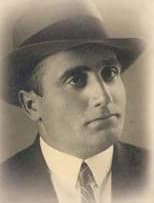
Alexander I of Yugoslavia
Emperor · Modern
51.4Total

King Hyojong of Joseon
Emperor · Modern
48.3Total
Basic Information
Born
1888
1619
Died
1934
1659
Era
Modern
Modern
Nationality
Yugoslavia
Korea
Occupation
Emperor
Emperor
Civilization
Western
Eastern
Score Comparison
Military (10%)
22.6
45.0
Political (20%)
68.0
46.6
Influence (20%)
53.3
48.6
Legacy (20%)
42.5
40.0
Leadership (15%)
74.0
74.0
Strategy (15%)
38.6
35.7
TOTAL
51.4
48.3
Alexander I of Yugoslavia — Complete Timeline
1928 AD
Assassination of Stjepan RadićPolitical Action◆ Major
During a parliamentary session in Belgrade, Montenegrin deputy Puni
AssassinationParliamentary CrisisCroat-Serb Conflict
Impact: nationaltragic
1929 AD
Proclamation of the January 6 DictatorshipPolitical Action◆ Major
Alexander I abolished the Vidovdan Constitution, dissolved parliament, and established a royal dictatorship. He renamed the country the Kingdom of Yugoslavia and sought to centralize power, suppress ethnic nationalism, and impose a unified Yugoslav identity, which intensified ethnic tensions.
DictatorshipCentralizationYugoslavia
Impact: nationaldestructive
Creation of the Kingdom of YugoslaviaPolitical Action◆ Major
Alexander I officially renamed the Kingdom of Serbs, Croats, and Slovenes to the Kingdom of Yugoslavia on October 3, 1929. This was part of his effort to promote national unity and centralize the state, but it failed to resolve deep ethnic divisions.
State FormationNational IdentityYugoslavia
Impact: national
1934 AD
Assassination in MarseillePolitical Action◆ Major
Alexander I was assassinated in Marseille, France, by Vlado Chernozemski, a member of the Internal Macedonian Revolutionary Organization. The assassination, which also killed French Foreign Minister Louis Barthou, destabilized the Balkan region and contributed to rising tensions before World War II.
AssassinationBalkan PoliticsInterwar Period
Impact: regionaltragic
King Hyojong of Joseon — Complete Timeline
1650 AD
Planned Northern Expedition against QingPolitical Action◆ Major
King Hyojong initiated a plan to launch a military campaign against the Qing dynasty to avenge the fall of the Ming and Joseon's subjugation. He expanded the army and fortified northern defenses, but the expedition was never carried out due to his death and lack of support.
Military PlanningQing-Joseon RelationsUnfulfilled Ambition
Impact: national
Reign during Factional StrifePolitical Action
Hyojong's reign was marked by ongoing factional struggles between the Westerners and Southerners factions at court. These conflicts hindered his ability to implement reforms and pursue his northern expedition plans, contributing to political instability.
FactionalismCourt PoliticsJoseon Dynasty
Impact: national
Expert Analysis
Origins
Alexander I of Yugoslavia was born on December 16, 1888, in Cetinje, Montenegro, as the second son of King Peter I of Serbia and Princess Zorka of Montenegro. He was educated in Geneva and at the Imperial Page Corps in Saint Petersburg, Russia, which instilled in him a strong sense of autocratic rule and Serbian nationalism. His early life was shaped by the Balkan Wars and World War I, where he served as a commander, earning him military credentials despite his later low military score of 22.6.
King Hyojong of Joseon was born on July 3, 1619, in Hanyang (now Seoul), Korea, as the second son of King Injo. His early years were marked by the Manchu invasions of Korea, particularly the 1636 Qing invasion that forced his father to submit to the Qing emperor. Hyojong was taken as a hostage to the Qing court for several years, an experience that fueled his lifelong desire for revenge and a planned northern expedition against the Qing. His military score of 45.0 reflects his focus on military buildup.
Rise to Power
Alexander I rose to power after his father's death in 1921, but he had already served as regent for his mentally unstable brother, Crown Prince George, from 1914. He became king in 1921 and faced immediate challenges of unifying the newly created Kingdom of Serbs, Croats, and Slovenes, which was fraught with ethnic tensions. On January 6, 1929, he abolished the constitution and established a royal dictatorship, renaming the country the Kingdom of Yugoslavia. This move was a turning point, centralizing power but alienating non-Serb groups.
Hyojong ascended the throne in 1649 after his father's death. His rise was overshadowed by the national humiliation of Joseon's submission to the Qing. He immediately began planning a northern expedition, expanding the army and fortifying borders. However, his reign was plagued by factional strife between the Westerners and Southerners, which hindered his ability to execute his plans. He never launched the expedition, dying in 1659 before realizing his goal.
Leadership & Governance
Alexander I's leadership was autocratic. He scored 74.0 in leadership, reflecting his decisive but divisive style. He imposed a centralized government, banned ethnic political parties, and promoted a unified Yugoslav identity. His dictatorship suppressed dissent but failed to resolve underlying ethnic conflicts. For example, he arrested Croatian leader Vladko Maček in 1929, deepening Croat-Serb animosity. His political score of 68.0 indicates his ability to maintain control, but at the cost of long-term stability.
Hyojong's leadership score of 74.0 matches Alexander's, but his approach was different. He focused on military preparedness and sought to reduce factional infighting. He appointed reform-minded officials and strengthened the military, but his efforts were undermined by court factions. His political score of 46.6 reflects his inability to overcome these internal divisions. He attempted to balance power between factions but ultimately failed to achieve his primary goal.
Triumph & Tragedy
Alexander's greatest triumph was the creation of the Kingdom of Yugoslavia, which unified South Slavs under one state. He also maintained stability during the Great Depression. His greatest tragedy was his assassination in Marseille on October 9, 1934, by Vlado Chernozemski, a member of the Internal Macedonian Revolutionary Organization. This event destabilized Yugoslavia and contributed to its eventual collapse in World War II.
Hyojong's triumph was his military buildup and the construction of fortresses like the one on Namhansanseong. He also reformed the military and expanded the army. His tragedy was his failure to launch the northern expedition against the Qing. He died suddenly in 1659, possibly from illness, leaving his plans unfulfilled. His reign is remembered as one of unfulfilled potential. His legacy score of 40.0 reflects this.
Character & Destiny
Alexander I was resolute and authoritarian, believing that a strong central government could overcome ethnic divisions. His character led him to impose a dictatorship, which ultimately isolated him and made him a target. His assassination was the direct result of his policies against Macedonian and Croatian nationalists. His influence score of 53.3 shows his impact on the region, but his legacy is mixed.
Hyojong was determined and vengeful, driven by his hostage experience. His character made him focus on revenge against the Qing, but his inability to navigate factional politics doomed his plans. He was cautious and deliberative, which prevented him from taking risky action. His influence score of 48.6 reflects his limited impact on Korean history.
Legacy
Alexander I's legacy is the creation of Yugoslavia, which lasted until 1991. His dictatorship set a precedent for authoritarian rule in the Balkans. However, his failure to resolve ethnic tensions contributed to the wars of the 1990s. His legacy score of 42.5 is moderate, as his achievements were overshadowed by later conflicts.
Hyojong's legacy is minimal. He is remembered as a king who dreamed of revenge but never achieved it. His military preparations did little to change Joseon's status as a Qing tributary. His legacy score of 40.0 reflects his lack of concrete accomplishments. He is often overshadowed by his father Injo and his successor Hyeonjong.
Conclusion
Alexander I of Yugoslavia had a greater impact than King Hyojong of Joseon. Despite a lower military score (22.6 vs 45.0), Alexander's political (68.0 vs 46.6) and influence (53.3 vs 48.6) scores are higher, contributing to a total score of 51.4 vs 48.3. Alexander created a state that lasted over six decades, while Hyojong's plans never materialized. Alexander's assassination had international repercussions, whereas Hyojong's death was a domestic event. Therefore, Alexander's impact, though flawed, was more significant.
Rankings
🥇
Alexander I of YugoslaviaLeader
Mil: 22.6Pol: 68.0Inf: 53.3
51.4
🥈
King Hyojong of Joseon
Mil: 45.0Pol: 46.6Inf: 48.6
48.3
+3.1 behind
How This Comparison Works
Algorithm
Each figure is scored on 6 dimensions (0—100 scale) based on structured historical data: Military (10%), Political (20%), Influence (20%), Legacy (20%), Leadership (15%), Strategy (15%). The weighted total produces the final ranking.
Data Sources
Scores are computed from structured sub-indicators in the database. Scale factors adjust for era (Ancient ×0.85, Modern ×1.0) and civilization size (Eastern ×1.05, Other ×0.80) to account for differences in population and military scale.
Maximum 3 Figures
Comparisons are limited to 2—3 figures to ensure readability and statistical meaningfulness.
Error Margins
±5 points per dimension — Sub-scores are derived from historical records with inherent uncertainty. Two figures within 5 points on a dimension should be considered roughly equivalent in that area.
Total Score Accuracy
±3 points overall — The weighted combination of 6 dimensions produces a total score with approximately ±3 points of uncertainty. Differences of less than 3 points are not statistically significant— the figures are effectively tied.
Known Limitations
- Historical records are incomplete and uneven across civilizations
- Figures from oral-tradition societies may be underrepresented
- Occupation labels can misclassify multi-role figures
- Scores measure capability and impact, not moral character
- Quantitative scoring is a comparison tool, not absolute truth
Capability Radar
Military (10%) — Battles & Warfare
Battles
15
0
Win Rate
10
0
Expansion
10
0
Political (20%) — Governance & Reform
Reform
60
40
Diplomacy
50
30
Economy
40
30
Influence (20%) — Cultural & Global Reach
Cultural
30
20
Global
30
10
Legacy (20%) — Historical Impact
Historical
40
30
Longevity
25
20
Leadership (15%) — Power & Stability
Tenure
55
50
Stability
30
40
Strategy (15%) — Tactics & Innovation
Strategy
25
20
Tactics
20
10
Reform
30
30
Similar Comparisons
Comments & Discussion
No comments yet. Be the first to share your thoughts!