Loading...
Alexander I of Yugoslavia vs Bahadir I Giray
Alexander I of Yugoslavia leads by 4.0 pts · 2 figures compared
…
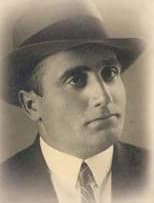
Alexander I of Yugoslavia
Emperor · Modern
51.4Total
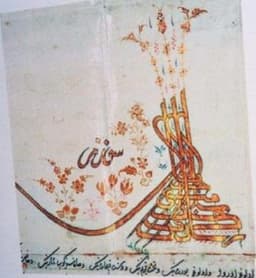
Bahadir I Giray
Emperor · Modern
47.4Total
Basic Information
Born
1888
1602
Died
1934
1641
Era
Modern
Modern
Nationality
Yugoslavia
Crimean Khanate
Occupation
Emperor
Emperor
Civilization
Western
Eastern
Score Comparison
Military (10%)
22.6
40.0
Political (20%)
68.0
45.1
Influence (20%)
53.3
51.8
Legacy (20%)
42.5
41.7
Leadership (15%)
74.0
65.0
Strategy (15%)
38.6
35.0
TOTAL
51.4
47.4
Alexander I of Yugoslavia — Complete Timeline
1928 AD
Assassination of Stjepan RadićPolitical Action◆ Major
During a parliamentary session in Belgrade, Montenegrin deputy Puni
AssassinationParliamentary CrisisCroat-Serb Conflict
Impact: nationaltragic
1929 AD
Proclamation of the January 6 DictatorshipPolitical Action◆ Major
Alexander I abolished the Vidovdan Constitution, dissolved parliament, and established a royal dictatorship. He renamed the country the Kingdom of Yugoslavia and sought to centralize power, suppress ethnic nationalism, and impose a unified Yugoslav identity, which intensified ethnic tensions.
DictatorshipCentralizationYugoslavia
Impact: nationaldestructive
Creation of the Kingdom of YugoslaviaPolitical Action◆ Major
Alexander I officially renamed the Kingdom of Serbs, Croats, and Slovenes to the Kingdom of Yugoslavia on October 3, 1929. This was part of his effort to promote national unity and centralize the state, but it failed to resolve deep ethnic divisions.
State FormationNational IdentityYugoslavia
Impact: national
1934 AD
Assassination in MarseillePolitical Action◆ Major
Alexander I was assassinated in Marseille, France, by Vlado Chernozemski, a member of the Internal Macedonian Revolutionary Organization. The assassination, which also killed French Foreign Minister Louis Barthou, destabilized the Balkan region and contributed to rising tensions before World War II.
AssassinationBalkan PoliticsInterwar Period
Impact: regionaltragic
Bahadir I Giray — Complete Timeline
1637 AD
Capture of AzovWar◆ Major
Bahadir I Giray, in alliance with the Don Cossacks, led a campaign to capture the Ottoman fortress of Azov. The combined forces besieged and took the fortress after a fierce battle. This victory gave the Crimean Khanate control of a key strategic point on the Don River.
WarAzovCossack AllianceFortress
Impact: regional
1640 AD
Raid on the Polish-Lithuanian CommonwealthWar
Bahadir I Giray led a large-scale raid into the Polish-Lithuanian Commonwealth. The Crimean forces penetrated deep into Ukrainian territories, capturing thousands of slaves and causing widespread destruction. This raid was one of the largest of the era.
RaidPoland-LithuaniaUkraineSlave Raiding
Impact: regionaldestructive
1641 AD
Siege of Azov by the OttomansWar◆ Major
The Ottoman Empire sent a large army to recapture Azov from the Crimean-Cossack forces. Bahadir I Giray led the defense of the fortress. After a prolonged siege, the Ottomans were unable to retake it, and the defenders eventually abandoned the fortress under a negotiated settlement.
WarAzovOttoman SiegeDefense
Impact: regional
Expert Analysis
Origins
**Alexander I of Yugoslavia** was born on December 16, 1888, in Cetinje, Montenegro, the second son of King Peter I of Serbia and Zorka of Montenegro. He was raised in the Karađorđević dynasty, which had a history of struggle for Serbian independence. Alexander was educated in Geneva and at the Imperial Page Corps in Saint Petersburg, Russia, where he absorbed autocratic and militaristic ideals. His early life was marked by the Balkan Wars and World War I, during which he served as regent for his aging father.
**Bahadir I Giray** was born around 1602 in the Crimean Khanate, a vassal state of the Ottoman Empire. He was a member of the Giray dynasty, which had ruled Crimea since the 15th century. His father was Selamet I Giray, a former khan. Bahadir received traditional education in Islamic law, military tactics, and governance. His early career involved participation in raids and campaigns under his predecessors, gaining experience in steppe warfare and diplomacy with the Ottoman Empire and the Polish-Lithuanian Commonwealth.
Rise to Power
**Alexander I** became regent of Serbia in 1914 after his father's health declined. He led the Serbian army through World War I, including the retreat across Albania in 1915 and the subsequent breakthrough at the Salonika front in 1918. After the war, he played a key role in the creation of the Kingdom of Serbs, Croats, and Slovenes (later Yugoslavia) and ascended the throne in 1921 upon his father's death. His rise was tied to his military leadership during the war and his dynastic position.
**Bahadir I Giray** became khan in 1637 after the death of his brother Inayet Giray. His rise was facilitated by his military reputation and the support of the Crimean nobility. He quickly asserted his authority by leading campaigns against the Polish-Lithuanian Commonwealth and the Ottoman fortress of Azov. His capture of Azov in 1637, in alliance with Don Cossacks, marked a significant early achievement that solidified his power.
Leadership & Governance
**Alexander I** governed as a constitutional monarch initially but grew frustrated with parliamentary gridlock and ethnic tensions. On January 6, 1929, he proclaimed a royal dictatorship, abolished the constitution, and banned political parties. He renamed the country the Kingdom of Yugoslavia in an effort to foster national unity. His rule was authoritarian, centralizing power and suppressing regional identities. He attempted to create a unified Yugoslav identity but alienated Croats and other minorities.
**Bahadir I Giray** led the Crimean Khanate with a focus on military expansion and maintaining autonomy from the Ottoman Empire. He balanced relations with the Ottomans, the Polish-Lithuanian Commonwealth, and the Tsardom of Russia. His governance was typical of Crimean khans: relying on raids for economic gain and maintaining a feudal system. He struggled to hold Azov after its capture, facing a prolonged Ottoman siege that drained resources.
Triumph & Tragedy
**Alexander I's** greatest success was leading Serbia through World War I and achieving the unification of South Slavs into Yugoslavia. His greatest failure was the political instability and ethnic strife that followed his dictatorship; his assassination in 1934 in Marseille by a Macedonian revolutionary highlighted the unresolved tensions. He scored 68.0 in political, but his legacy score of 42.5 reflects the fragility of his state.
**Bahadir I Giray's** triumph was the capture of Azov in 1637, a major fortress that boosted his prestige. However, his inability to hold it against the Ottoman siege in 1641-1642 was a tragedy; he died in 1641 during the siege. His military score of 40.0 and strategy score of 35.0 indicate limited effectiveness in prolonged campaigns.
Character & Destiny
**Alexander I** was determined and autocratic, believing centralization was necessary for stability. His character led him to impose a dictatorship, which ultimately failed and contributed to his assassination. He was seen as a strong leader but inflexible.
**Bahadir I Giray** was ambitious and militarily active, but his overreach in Azov and reliance on Cossack allies led to his downfall. His death during a siege reflects a pattern of aggressive but unsustainable campaigns.
Legacy
**Alexander I** is remembered as the king who tried to forge a unified Yugoslavia but whose methods sowed discord. His dictatorship set a precedent for authoritarian rule in the region. The Kingdom of Yugoslavia collapsed in World War II, partly due to unresolved ethnic tensions.
**Bahadir I Giray** is a minor figure in Crimean history, known for the capture of Azov but overshadowed by later khans. His legacy is limited to military exploits that had no lasting impact.
Conclusion
Alexander I of Yugoslavia, with a total score of 51.4, had a greater impact than Bahadir I Giray (47.4). Alexander's actions shaped the creation and governance of a state that lasted until the 1990s, while Bahadir's achievements were ephemeral. Alexander's political score (68.0) and leadership (74.0) outweigh Bahadir's marginal military advantage (40.0 vs 22.6). The scale and duration of Alexander's influence on European history are far larger.
Rankings
🥇
Alexander I of YugoslaviaLeader
Mil: 22.6Pol: 68.0Inf: 53.3
51.4
🥈
Bahadir I Giray
Mil: 40.0Pol: 45.1Inf: 51.8
47.4
+4.0 behind
How This Comparison Works
Algorithm
Each figure is scored on 6 dimensions (0—100 scale) based on structured historical data: Military (10%), Political (20%), Influence (20%), Legacy (20%), Leadership (15%), Strategy (15%). The weighted total produces the final ranking.
Data Sources
Scores are computed from structured sub-indicators in the database. Scale factors adjust for era (Ancient ×0.85, Modern ×1.0) and civilization size (Eastern ×1.05, Other ×0.80) to account for differences in population and military scale.
Maximum 3 Figures
Comparisons are limited to 2—3 figures to ensure readability and statistical meaningfulness.
Error Margins
±5 points per dimension — Sub-scores are derived from historical records with inherent uncertainty. Two figures within 5 points on a dimension should be considered roughly equivalent in that area.
Total Score Accuracy
±3 points overall — The weighted combination of 6 dimensions produces a total score with approximately ±3 points of uncertainty. Differences of less than 3 points are not statistically significant— the figures are effectively tied.
Known Limitations
- Historical records are incomplete and uneven across civilizations
- Figures from oral-tradition societies may be underrepresented
- Occupation labels can misclassify multi-role figures
- Scores measure capability and impact, not moral character
- Quantitative scoring is a comparison tool, not absolute truth
Capability Radar
Military (10%) — Battles & Warfare
Battles
15
45
Win Rate
10
50
Expansion
10
50
Political (20%) — Governance & Reform
Reform
60
30
Diplomacy
50
45
Economy
40
35
Influence (20%) — Cultural & Global Reach
Cultural
30
30
Global
30
20
Legacy (20%) — Historical Impact
Historical
40
35
Longevity
25
25
Leadership (15%) — Power & Stability
Tenure
55
40
Stability
30
40
Strategy (15%) — Tactics & Innovation
Strategy
25
45
Tactics
20
40
Reform
30
30
Similar Comparisons
Comments & Discussion
No comments yet. Be the first to share your thoughts!