Loading...
Alexander II of Russia vs Mongkut
Mongkut leads by 3.4 pts · 2 figures compared
…

Alexander II of Russia
Emperor · Modern
54.6Total
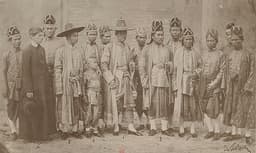
Mongkut
Emperor · Modern
58.0Total
Basic Information
Born
1818
1804
Died
1881
1868
Era
Modern
Modern
Nationality
Russia
Thailand
Occupation
Emperor
Emperor
Civilization
Western
Eastern
Score Comparison
Military (10%)
30.0
21.2
Political (20%)
62.7
78.0
Influence (20%)
55.0
56.7
Legacy (20%)
52.0
58.0
Leadership (15%)
66.0
78.0
Strategy (15%)
55.0
38.3
TOTAL
54.6
58.0
Alexander II of Russia — Complete Timeline
1861 AD
Emancipation of the SerfsReform
Alexander II signed the Emancipation Reform, freeing over 23 million serfs from personal bondage. The reform granted peasants legal rights and the ability to own land, though they had to pay redemption payments. This was the most significant social reform in 19th-century Russia.
EmancipationSerfdomSocial Reform
Impact: nationalprogressive
1864 AD
Judicial Reform of 1864Reform◆ Major
Alexander II introduced a new judicial system based on Western principles, including trial by jury, independent judges, and public proceedings. This reform established equality before the law and reduced the power of the nobility in legal matters.
Judicial ReformLegal SystemModernization
Impact: nationalprogressive
1867 AD
Sale of Alaska to the United StatesPolitical Action◆ Major
Alexander II approved the sale of Russian America to the United States for $7.2 million. The decision was motivated by financial difficulties and the difficulty of defending the remote territory. The acquisition was criticized by some Russians as a loss of imperial territory.
Alaska PurchaseTerritorial SaleDiplomacy
Impact: global
1881 AD
Assassination of Alexander IIPolitical Action
Alexander II was killed by a bomb thrown by Ignacy Hryniewiecki of the revolutionary group Narodnaya Volya in St. Petersburg. The assassination occurred hours after he approved a plan for a representative assembly, ending hopes for constitutional reform.
AssassinationNarodnaya VolyaTerrorism
Impact: nationaltragic
Mongkut — Complete Timeline
1851 AD
Corresponded with Western leaders and scholarsCultural
Mongkut engaged in extensive correspondence with Western leaders, including President James Buchanan and Pope Pius IX, and with missionaries and scholars. He sought to learn about Western science, technology, and governance.
DiplomacyIntellectual ExchangeModernization
Impact: nationalconstructive
Reformed Buddhist monastic educationCultural
As a former monk, Mongkut reformed Buddhist monastic education by emphasizing Pali studies and scriptural accuracy. He founded the Dhammayuttika Nikaya order, which focused on strict adherence to Buddhist teachings.
BuddhismReligious ReformEducation
Impact: nationalconstructive
1855 AD
Hired Western advisors to modernize SiamReform
Mongkut employed Western advisors, including Anna Leonowens, to teach his children and assist in modernizing the court. He also hired European experts to help with military, legal, and administrative reforms.
AdvisorsModernizationEducation
Impact: nationalconstructive
Signed the Bowring Treaty with BritainPolitical Action◆ Major
King Mongkut signed the Bowring Treaty with Britain, opening Siam to free trade and granting extraterritorial rights to British subjects. This treaty ended Siam's isolation and set a precedent for relations with other Western powers.
TreatyTradeWestern Influence
Impact: regional
Expert Analysis
Origins
**Alexander II of Russia** (1818-1881) was born into the Romanov dynasty, the eldest son of Nicholas I. His education was rigorous, overseen by the poet Vasily Zhukovsky, instilling a sense of duty but also exposing him to liberal ideas. He ascended the throne in 1855 during the Crimean War, a conflict that revealed Russia's backwardness.
**Mongkut** (1804-1868) was born as Prince Mongkut, son of King Rama II of Siam. He spent 27 years as a Buddhist monk before becoming king, during which he studied Western languages and sciences with missionaries. This unique background gave him a deep understanding of both traditional Thai culture and modern Western knowledge.
Rise to Power
Alexander II became Tsar upon his father's death in 1855, inheriting a disastrous war. The Crimean War (1853-1856) ended with Russia's defeat, exposing systemic weaknesses. Alexander used this crisis to push for reforms, beginning with the Emancipation of the Serfs in 1861, which freed 23 million serfs and marked a turning point.
Mongkut became king in 1851 after his half-brother Rama III died. His ascension was smooth, but he faced pressure from Western colonial powers. To avoid colonization, he skillfully negotiated the Bowring Treaty with Britain in 1855, opening Siam to free trade while granting extraterritorial rights. This treaty set the pattern for Siam's survival as an independent state.
Leadership & Governance
Alexander II's leadership was characterized by a series of 'Great Reforms': the Emancipation, judicial reform (1864) introducing trial by jury, local self-government (zemstvos), and military reforms. However, these reforms were incomplete; serfs gained freedom but little land, leading to continued unrest. His political score of 62.7 reflects his progressive yet cautious approach.
Mongkut's governance focused on modernization while preserving Siam's sovereignty. He hired Western advisors, including Anna Leonowens, to educate his children, and reformed Buddhist monastic education by founding the Dhammayuttika Nikaya. His political score of 78.0 indicates his adeptness at navigating colonial pressures and implementing controlled change.
Triumph & Tragedy
Alexander II's greatest triumph was the Emancipation of the Serfs, a monumental step that abolished a feudal system. His judicial and military reforms also modernized Russia. However, his tragedy was his assassination in 1881 by the revolutionary group Narodnaya Volya, just as he was considering a representative assembly. This set back reform and led to reactionary policies under his son.
Mongkut's triumph was preserving Siam's independence through treaties and modernization. He successfully played European powers against each other. His tragedy was that some treaties, like the Bowring Treaty, granted extraterritorial rights that limited Siam's sovereignty, though these were later renegotiated. He died in 1868 from malaria, before seeing the full fruits of his policies.
Character & Destiny
Alexander II was a reluctant reformer, driven by necessity rather than conviction. His motto 'Reform from above to prevent revolution from below' reflected his aim to preserve autocracy. Yet his concessions only fueled demands for more change. His assassination showed the limits of top-down reform without addressing fundamental political freedoms.
Mongkut was a pragmatic, intellectually curious monarch. His monastic background gave him patience and a scholarly disposition. He corresponded with Western leaders and embraced science, but he was also a devout Buddhist. His ability to adapt while maintaining cultural identity helped Siam survive colonialism. His leadership score of 78.0 underscores his effectiveness.
Legacy
Alexander II is remembered as the 'Tsar Liberator' in Russia, but his legacy is mixed. The Emancipation did not create a prosperous peasantry; it led to rural poverty and revolutionary sentiment. However, his judicial and local government reforms laid groundwork for later developments. His total score of 54.6 reflects the incomplete nature of his reforms.
Mongkut's legacy is more positive. He is revered as the father of modern Thailand, who set the kingdom on a path to modernization without colonization. His son Chulalongkorn continued his reforms. Mongkut's total score of 58.0, higher than Alexander's, reflects his more successful navigation of challenges.
Conclusion
While Alexander II enacted more dramatic reforms, his failure to complete them and his assassination led to a backlash that stunted Russia's development. Mongkut, with a lower military score of 21.2 but higher political (78.0) and leadership (78.0) scores, achieved his primary goal: preserving Siam's independence and beginning modernization. His impact was more lasting and positive. Mongkut had greater impact relative to his circumstances, making him the more effective ruler.
Rankings
🥇
MongkutLeader
Mil: 21.2Pol: 78.0Inf: 56.7
58.0
🥈
Alexander II of Russia
Mil: 30.0Pol: 62.7Inf: 55.0
54.6
+3.4 behind
How This Comparison Works
Algorithm
Each figure is scored on 6 dimensions (0—100 scale) based on structured historical data: Military (10%), Political (20%), Influence (20%), Legacy (20%), Leadership (15%), Strategy (15%). The weighted total produces the final ranking.
Data Sources
Scores are computed from structured sub-indicators in the database. Scale factors adjust for era (Ancient ×0.85, Modern ×1.0) and civilization size (Eastern ×1.05, Other ×0.80) to account for differences in population and military scale.
Maximum 3 Figures
Comparisons are limited to 2—3 figures to ensure readability and statistical meaningfulness.
Error Margins
±5 points per dimension — Sub-scores are derived from historical records with inherent uncertainty. Two figures within 5 points on a dimension should be considered roughly equivalent in that area.
Total Score Accuracy
±3 points overall — The weighted combination of 6 dimensions produces a total score with approximately ±3 points of uncertainty. Differences of less than 3 points are not statistically significant— the figures are effectively tied.
Known Limitations
- Historical records are incomplete and uneven across civilizations
- Figures from oral-tradition societies may be underrepresented
- Occupation labels can misclassify multi-role figures
- Scores measure capability and impact, not moral character
- Quantitative scoring is a comparison tool, not absolute truth
Capability Radar
Military (10%) — Battles & Warfare
Battles
30
10
Win Rate
40
10
Expansion
60
10
Political (20%) — Governance & Reform
Reform
85
75
Diplomacy
70
85
Economy
65
70
Influence (20%) — Cultural & Global Reach
Cultural
55
55
Global
65
60
Legacy (20%) — Historical Impact
Historical
75
65
Longevity
60
60
Leadership (15%) — Power & Stability
Tenure
75
65
Stability
40
75
Strategy (15%) — Tactics & Innovation
Strategy
45
20
Tactics
35
15
Reform
70
30
Similar Comparisons
Comments & Discussion
No comments yet. Be the first to share your thoughts!