Loading...
Ludwig III of Bavaria vs Mongkut
Mongkut leads by 13.2 pts · 2 figures compared
…

Ludwig III of Bavaria
Emperor · Modern
44.8Total
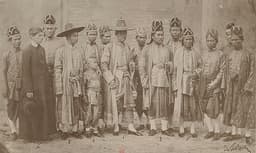
Mongkut
Emperor · Modern
58.0Total
Basic Information
Born
1845
1804
Died
1921
1868
Era
Modern
Modern
Nationality
Bavaria
Thailand
Occupation
Emperor
Emperor
Civilization
Western
Eastern
Score Comparison
Military (10%)
45.0
21.2
Political (20%)
39.4
78.0
Influence (20%)
48.6
56.7
Legacy (20%)
35.8
58.0
Leadership (15%)
58.8
78.0
Strategy (15%)
45.0
38.3
TOTAL
44.8
58.0
Ludwig III of Bavaria — Complete Timeline
1913 AD
Accession as King of BavariaPolitical Action◆ Major
Ludwig III became King of Bavaria on 5 November 1913, following the deposition of his cousin Otto I, who had been declared mentally unfit. Ludwig's accession was approved by the Bavarian parliament, ending the regency that had ruled since 1886.
Bavarian monarchySuccession
Impact: national
1914 AD
World War I leadershipWar◆ Major
As King of Bavaria, Ludwig III supported the German Empire's entry into World War I in August 1914. He mobilized Bavarian troops and maintained wartime administration, but his influence was limited by the Prussian-dominated imperial government.
World War IBavaria
Impact: national
1918 AD
Deposition in the German RevolutionPolitical Action
On 7 November 1918, during the German Revolution, Kurt Eisner proclaimed the People's State of Bavaria in Munich. Ludwig III fled the city and was formally deposed on 13 November, ending the 738-year Wittelsbach rule in Bavaria.
German RevolutionEnd of monarchyBavaria
Impact: nationaltragic
1921 AD
Exile and deathOther
After his deposition, Ludwig III lived in exile in Hungary and later in Liechtenstein. He died on 18 October 1921 at N
ExileDeath
tragic
Mongkut — Complete Timeline
1851 AD
Corresponded with Western leaders and scholarsCultural
Mongkut engaged in extensive correspondence with Western leaders, including President James Buchanan and Pope Pius IX, and with missionaries and scholars. He sought to learn about Western science, technology, and governance.
DiplomacyIntellectual ExchangeModernization
Impact: nationalconstructive
Reformed Buddhist monastic educationCultural
As a former monk, Mongkut reformed Buddhist monastic education by emphasizing Pali studies and scriptural accuracy. He founded the Dhammayuttika Nikaya order, which focused on strict adherence to Buddhist teachings.
BuddhismReligious ReformEducation
Impact: nationalconstructive
1855 AD
Hired Western advisors to modernize SiamReform
Mongkut employed Western advisors, including Anna Leonowens, to teach his children and assist in modernizing the court. He also hired European experts to help with military, legal, and administrative reforms.
AdvisorsModernizationEducation
Impact: nationalconstructive
Signed the Bowring Treaty with BritainPolitical Action◆ Major
King Mongkut signed the Bowring Treaty with Britain, opening Siam to free trade and granting extraterritorial rights to British subjects. This treaty ended Siam's isolation and set a precedent for relations with other Western powers.
TreatyTradeWestern Influence
Impact: regional
Expert Analysis
Origins
Ludwig III of Bavaria was born on 7 January 1845 in Munich, the eldest son of Prince Regent Luitpold and Archduchess Auguste Ferdinande of Austria. He was educated in a conservative Catholic environment and served in the Bavarian army, becoming a general. His family had ruled Bavaria since 1805, but his cousin King Otto I was declared mentally unfit in 1886, leading Luitpold to serve as regent. Ludwig became regent in 1912 and king in 1913 after Otto's formal deposition.
Mongkut was born on 18 October 1804 in Bangkok, the son of King Rama II and Queen Sri Suriyendra. He was ordained as a Buddhist monk at age 13 and spent 27 years in monastic life, studying Pali scriptures and Western sciences with missionaries. This unique background gave him a deep understanding of both traditional Siamese culture and Western knowledge, which he later used to modernize Siam.
Rise to Power
Ludwig III's rise was gradual. He served as regent from 1912 after his father's death, then became king on 5 November 1913 when the Bavarian parliament approved a constitutional amendment to depose Otto I. His accession was controversial but legal. He maintained close ties with the German Empire and supported Kaiser Wilhelm II.
Mongkut's path was dramatic. He became king in 1851 after the death of his half-brother Rama III, but he had been passed over earlier due to his monastic vows. His long training as a monk gave him legitimacy among the Buddhist clergy and intellectuals. He immediately began reforms, including hiring Western advisors and signing the Bowring Treaty with Britain in 1855, which opened Siam to free trade while preserving sovereignty.
Leadership & Governance
Ludwig III ruled as a constitutional monarch but with significant influence. He supported Bavarian particularism within the German Empire, often clashing with Prussian centralization. During World War I, he mobilized Bavarian troops and maintained morale, but his government faced food shortages and political unrest. He was not a reformer; his leadership score of 58.8 reflects his role as a caretaker king in a turbulent era.
Mongkut was a proactive reformer. He scored 78.0 in political skill and 78.0 in leadership. He used Western knowledge to modernize Siam's administration, military, and education without losing sovereignty. He corresponded with President James Buchanan and Pope Pius IX, and hired Anna Leonowens to teach his children. His governance balanced tradition and modernity, preserving Siam's independence when neighboring countries were colonized.
Triumph & Tragedy
Ludwig III's greatest success was maintaining Bavarian autonomy within Germany until 1918. His greatest failure was being unable to prevent the revolution that deposed him. On 7 November 1918, Kurt Eisner proclaimed the People's State of Bavaria, and Ludwig fled to Hungary. He died in exile in 1921, a tragic end for a monarch who had ruled for only five years.
Mongkut's triumph was the Bowring Treaty, which opened Siam to trade while avoiding colonization. He also reformed Buddhist education and promoted astronomy, accurately predicting a solar eclipse in 1868. However, his openness to Western influence caused tension with conservative factions. He died in 1868 from malaria contracted during the eclipse expedition, a tragic irony.
Character & Destiny
Ludwig III was cautious and conservative, preferring stability over reform. His character scored 44.8 total, reflecting a ruler who lacked the vision to adapt. He remained loyal to the German Empire, which cost him his throne. His destiny was shaped by the forces of revolution he could not control.
Mongkut was intellectually curious and pragmatic. His total score of 58.0 reflects his ability to navigate between East and West. He was a scholar-king who used knowledge as a tool of diplomacy. His character ensured Siam's survival as an independent nation.
Legacy
Ludwig III is remembered as the last king of Bavaria, a symbol of a bygone era. His legacy score of 35.8 is low; his reign was brief and overshadowed by World War I and revolution. Bavaria became a republic after him, and his dynasty ended.
Mongkut's legacy score of 58.0 is enduring. He set Siam on a path of modernization that allowed it to remain independent. His diplomatic tactics were continued by his son Chulalongkorn. He is revered in Thailand as a wise king who opened the country to the world.
Conclusion
Mongkut had a greater impact than Ludwig III. With a total score of 58.0 versus 44.8, Mongkut's leadership and political acumen preserved Siam's independence, while Ludwig's failure to adapt led to his dynasty's collapse. Mongkut's reforms had lasting effects on Thailand, while Ludwig's reign was a footnote in German history. The data supports Mongkut as the more significant historical figure.
Rankings
🥇
MongkutLeader
Mil: 21.2Pol: 78.0Inf: 56.7
58.0
🥈
Ludwig III of Bavaria
Mil: 45.0Pol: 39.4Inf: 48.6
44.8
+13.2 behind
How This Comparison Works
Algorithm
Each figure is scored on 6 dimensions (0—100 scale) based on structured historical data: Military (10%), Political (20%), Influence (20%), Legacy (20%), Leadership (15%), Strategy (15%). The weighted total produces the final ranking.
Data Sources
Scores are computed from structured sub-indicators in the database. Scale factors adjust for era (Ancient ×0.85, Modern ×1.0) and civilization size (Eastern ×1.05, Other ×0.80) to account for differences in population and military scale.
Maximum 3 Figures
Comparisons are limited to 2—3 figures to ensure readability and statistical meaningfulness.
Error Margins
±5 points per dimension — Sub-scores are derived from historical records with inherent uncertainty. Two figures within 5 points on a dimension should be considered roughly equivalent in that area.
Total Score Accuracy
±3 points overall — The weighted combination of 6 dimensions produces a total score with approximately ±3 points of uncertainty. Differences of less than 3 points are not statistically significant— the figures are effectively tied.
Known Limitations
- Historical records are incomplete and uneven across civilizations
- Figures from oral-tradition societies may be underrepresented
- Occupation labels can misclassify multi-role figures
- Scores measure capability and impact, not moral character
- Quantitative scoring is a comparison tool, not absolute truth
Capability Radar
Military (10%) — Battles & Warfare
Battles
0
10
Win Rate
0
10
Expansion
0
10
Political (20%) — Governance & Reform
Reform
20
75
Diplomacy
30
85
Economy
25
70
Influence (20%) — Cultural & Global Reach
Cultural
20
55
Global
10
60
Legacy (20%) — Historical Impact
Historical
15
65
Longevity
10
60
Leadership (15%) — Power & Stability
Tenure
40
65
Stability
15
75
Strategy (15%) — Tactics & Innovation
Strategy
0
20
Tactics
0
15
Reform
5
30
Similar Comparisons
Comments & Discussion
No comments yet. Be the first to share your thoughts!