Loading...
Alexander III of Scotland vs Napoleon Bonaparte
Napoleon Bonaparte leads by 15.5 pts · 2 figures compared
…
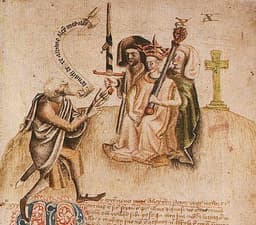
Alexander III of Scotland
Emperor · Medieval
55.4Total

Napoleon Bonaparte
General · Modern
70.9Total
Basic Information
Born
1241
1769
Died
1286
1821
Era
Medieval
Modern
Nationality
Scotland
France
Occupation
Emperor
General
Civilization
Western
Western
Score Comparison
Military (10%)
50.0
94.0
Political (20%)
68.0
72.0
Influence (20%)
54.1
40.0
Legacy (20%)
49.2
80.0
Leadership (15%)
72.0
78.0
Strategy (15%)
35.7
90.0
TOTAL
55.4
70.9
Alexander III of Scotland — Complete Timeline
1251 AD
Marriage to Margaret of EnglandPolitical Action
Alexander III married Margaret, daughter of Henry III of England, at York Minster. The marriage was intended to secure peace between Scotland and England, but it also gave English kings a claim to interfere in Scottish affairs.
MarriageDiplomacyAnglo-Scottish Relations
Impact: national
1263 AD
Battle of LargsWar◆ Major
Alexander III's forces repelled a Norwegian invasion led by King Haakon IV at Largs in Ayrshire. The battle was indecisive but marked the end of Norwegian attempts to control the Hebrides and the Isle of Man.
BattleNorwegian InvasionHebrides
Impact: regionalconstructive
1266 AD
Treaty of PerthPolitical Action
Alexander III signed the Treaty of Perth with Norway, purchasing the Hebrides and the Isle of Man for 4,000 marks plus an annual payment of 100 marks. This extended Scottish sovereignty over the Western Isles.
TreatyTerritorial ExpansionHebrides
Impact: regionalconstructive
1286 AD
Death of Alexander IIIOther
Alexander III died after falling from his horse while riding from Edinburgh to Kinghorn in Fife during a storm. His death left no surviving legitimate children, triggering a succession crisis that led to the Wars of Scottish Independence.
DeathSuccession CrisisWars of Independence
Impact: nationaltragic
Napoleon Bonaparte — Complete Timeline
1799 AD
Coup of 18 BrumaireOther◆ Major
Napoleon Bonaparte, with support from his brother Lucien and key political figures, overthrew the Directory in a bloodless coup. He established the Consulate with himself as First Consul, effectively becoming the ruler of France. This event ended the French Revolution's most unstable period.
French RevolutionCoupRise to Power
Impact: regional
1804 AD
Promulgation of the Napoleonic CodeOther◆ Major
Napoleon enacted the Civil Code of the French, known as the Napoleonic Code, a comprehensive set of laws that replaced the fragmented feudal legal systems. The code established legal equality, protected property rights, and secularized law. It became the basis for legal systems in many European and world countries.
Legal ReformNapoleonic CodeCivil Law
Impact: globalconstructive
1805 AD
Battle of AusterlitzWar◆ Major
Napoleon's Grande Arm
Napoleonic WarsBattleDecisive Victory
Impact: global
1812 AD
Invasion of RussiaWar◆ Major
Napoleon led the Grande Arm
Napoleonic WarsInvasionDisaster
Impact: globaldestructive
1815 AD
Battle of WaterlooWar◆ Major
Napoleon's French army was defeated by the combined forces of the Duke of Wellington's Anglo-Allied army and Gebhard Leberecht von Bl
Napoleonic WarsBattleFinal Defeat
Impact: globaldestructive
Expert Analysis
alexander-iii-of-scotland-vs-napoleon-bonaparte
# The Emperor and the King: Two Paths to Power, Two Ends of Destiny
On a stormy night in March 1286, a king rode through the darkness along the cliffs of Fife, Scotland, desperate to reach his young bride. He never arrived. The next morning, Alexander III lay dead at the foot of a rocky precipice, his neck broken, his kingdom thrown into a succession crisis that would echo for centuries. Five hundred years later and a thousand miles south, another figure of destiny stood before his troops in the Italian Alps, pointing toward the plains of Lombardy and declaring, "You are the victors of a hundred battles, but you have yet to win the greatest one." Napoleon Bonaparte would conquer Europe, reshape law and society, and die a prisoner on a remote Atlantic island. Two men who wore crowns, separated by half a millennium, yet their stories reveal how character, circumstance, and sheer ambition can lead to radically different historical outcomes.
Origins
Alexander III was born into a world of feudal certainties. His father, Alexander II, ruled a Scotland that was poor, fragmented, and perpetually overshadowed by England. The young prince inherited the throne at age seven in 1249, a child king in an age when kingship meant constant vigilance against ambitious nobles and foreign predators. His Scotland was a land of clans, castles, and precarious alliances, where a monarch's power depended on personal loyalty and the sword.
Napoleon's origins could not have been more different. Born in 1769 on the island of Corsica, just months after France annexed it, he was an outsider from the start. His family were minor Corsican nobility who spoke Italian, not French. The French Revolution of 1789 shattered the old order and opened paths that would have been unthinkable under the ancien régime. A young artillery officer of modest birth could rise on talent alone. Napoleon seized that opportunity with a ferocity born of hunger—both literal and figurative. Where Alexander inherited a throne, Napoleon would have to forge his own.
Rise to Power
Alexander's ascent was quiet, almost invisible. He spent his early years under regents, learning the arts of kingship through careful observation. His first major act was his marriage in 1251 at York Minster to Margaret, daughter of Henry III of England—a political union designed to secure peace between the two kingdoms. His power grew not through conquest but through patience, diplomacy, and the slow accumulation of authority as he reached adulthood.
Napoleon's rise was a thunderclap. At age 24, he drove the British out of Toulon in 1793. At 26, he suppressed a royalist uprising in Paris with a "whiff of grapeshot." At 27, he took command of the French army in Italy and, in a single dazzling campaign of 1796-1797, crushed the Austrians and redrew the map of northern Europe. He was not elected, not born into power—he took it. The difference is crucial: Alexander inherited a system and learned to work within it; Napoleon saw the system in ruins and built his own.
Leadership & Governance
Alexander III ruled as a medieval king, which meant ruling through personal presence and feudal contract. His greatest achievement was the Treaty of Perth in 1266, by which he purchased the Hebrides and the Isle of Man from Norway for 4,000 marks—a diplomatic masterstroke that expanded Scotland's territory without a decisive battle. The Battle of Largs in 1263, though indecisive, demonstrated his willingness to defend his realm against King Haakon IV's invasion. His governance was conservative, focused on stability, law, and the careful management of noble factions.
Napoleon governed as a revolutionary emperor. His Napoleonic Code of 1804 standardized French law, abolished feudal privileges, and established principles of meritocracy and property rights that influenced legal systems across Europe. He built roads, founded banks, reformed education, and centralized the state with ruthless efficiency. His military genius—scoring 94.0 in military capability and 93.0 in strategy—was matched by political acumen that scored 75.0. Yet his governance was inseparable from his ambition. He appointed his brothers as kings, created a new nobility, and treated Europe as a chessboard for his own glory.
Triumph & Tragedy
Alexander's triumph was the peaceful expansion of his kingdom. He died at age 44, leaving a Scotland that was larger, more stable, and more respected than when he had inherited it. His tragedy was not of his own making: his children had died before him, and his sudden death in 1286 left no clear heir, plunging Scotland into the Wars of Independence that would produce William Wallace and Robert the Bruce. His legacy score of 65.2 reflects a reign that was successful but fragile—a house built on sand.
Napoleon's triumph was the conquest of Europe. He crowned himself Emperor in 1804, defeated Austria, Prussia, and Russia in succession, and by 1810 ruled an empire that stretched from Spain to Poland. His tragedy was the invasion of Russia in 1812, where 600,000 men marched east and fewer than 100,000 returned. He was exiled to Elba in 1814, returned for the Hundred Days in 1815, and met final defeat at Waterloo—a battle he might have won had not Prussian reinforcements arrived at the critical moment. His total score of 82.4 reflects a life of staggering achievement and catastrophic overreach.
Character & Destiny
Alexander was cautious, pragmatic, and devoted to his kingdom. He understood that medieval kingship was a balancing act—between England and Norway, between nobles and clergy, between tradition and necessity. His character suited his times: steady, patient, and wise enough to know that survival was victory.
Napoleon was restless, brilliant, and insatiable. "Impossible is a word to be found only in the dictionary of fools," he once said. He could not stop—not after Austerlitz, not after Jena, not after Wagram. His character drove him to conquer, but also to destroy what he had built. He was a man of the modern age, where the individual could reshape history, but he was also a prisoner of his own ambition. Alexander died by accident; Napoleon died by design, consumed by the world he had created.
Legacy
Alexander III is remembered as a good king, but his legacy is overshadowed by what followed. He is a footnote in Scottish history, a bridge between the Dunkeld dynasty and the chaos of the Wars of Independence. His influence score of 72.0 reflects a reign that mattered, but only within the narrow bounds of medieval Scotland.
Napoleon's legacy is global. His legal reforms, military tactics, and concept of the modern state shaped the nineteenth and twentieth centuries. He is studied in every military academy, debated in every history seminar, and remembered—whether as hero or tyrant—as one of the most transformative figures in Western civilization. His influence score of 82.0 and legacy score of 78.0 place him among the giants of history.
Conclusion
What drove these two men to such different outcomes? Not talent alone—Alexander was competent, Napoleon was extraordinary. Not opportunity—both had their eras. The difference lay in ambition and context. Alexander ruled a small kingdom in a world of limits; Napoleon commanded a continent in an age of revolution. One sought to preserve what he had inherited; the other sought to create what had never existed. Alexander died and his kingdom fell apart. Napoleon died and his empire shattered. But Napoleon's ideas survived, while Alexander's vanished into the mist of Scottish legend.
Perhaps the deepest lesson is this: history rewards not only greatness, but the fit between the man and his moment. Alexander was perfect for medieval Scotland; Napoleon was perfect for revolutionary France. And when that moment passed, both were destroyed—one by a horse, the other by the world he had tried to master.
Rankings
🥇
Napoleon BonaparteLeader
Mil: 94.0Pol: 72.0Inf: 40.0
70.9
🥈
Alexander III of Scotland
Mil: 50.0Pol: 68.0Inf: 54.1
55.4
+15.5 behind
How This Comparison Works
Algorithm
Each figure is scored on 6 dimensions (0—100 scale) based on structured historical data: Military (10%), Political (20%), Influence (20%), Legacy (20%), Leadership (15%), Strategy (15%). The weighted total produces the final ranking.
Data Sources
Scores are computed from structured sub-indicators in the database. Scale factors adjust for era (Ancient ×0.85, Modern ×1.0) and civilization size (Eastern ×1.05, Other ×0.80) to account for differences in population and military scale.
Maximum 3 Figures
Comparisons are limited to 2—3 figures to ensure readability and statistical meaningfulness.
Error Margins
±5 points per dimension — Sub-scores are derived from historical records with inherent uncertainty. Two figures within 5 points on a dimension should be considered roughly equivalent in that area.
Total Score Accuracy
±3 points overall — The weighted combination of 6 dimensions produces a total score with approximately ±3 points of uncertainty. Differences of less than 3 points are not statistically significant— the figures are effectively tied.
Known Limitations
- Historical records are incomplete and uneven across civilizations
- Figures from oral-tradition societies may be underrepresented
- Occupation labels can misclassify multi-role figures
- Scores measure capability and impact, not moral character
- Quantitative scoring is a comparison tool, not absolute truth
Capability Radar
Military (10%) — Battles & Warfare
Battles
20
95
Win Rate
25
90
Expansion
15
95
Political (20%) — Governance & Reform
Reform
55
95
Diplomacy
65
80
Economy
60
85
Influence (20%) — Cultural & Global Reach
Cultural
30
85
Global
25
90
Legacy (20%) — Historical Impact
Historical
55
95
Longevity
40
90
Leadership (15%) — Power & Stability
Tenure
60
85
Stability
70
70
Strategy (15%) — Tactics & Innovation
Strategy
20
95
Tactics
15
98
Reform
10
92
Similar Comparisons
Comments & Discussion
Corsican Fire6/17/2026
Napoleon's rise from minor Corsican nobility to Emperor of Europe proves that meritocracy works—when you're willing to burn down the old order. Alexander rode a cliff to his death because his kingdom's fate hung on biology and luck. Napoleon created his own luck at Austerlitz, Jena, and Wagram. One man inherited chaos; the other forged empires from revolutionary fire. History remembers the builder, not the unfortunate rider.
数据铁匠6/17/2026
把亚历山大三世和拿破仑放一起比较?这是把跳棋和国际象棋混为一谈。苏格兰在1286年的人口不到50万,农业产出仅够糊口;拿破仑统治的法国有2800万人口,是欧洲最富强的国家。亚历山大连一场像样的征服战争都没打过,而拿破仑打了60多场战役。两人唯一的共同点:都死在流放或意外中。统计上看,这是维度完全不同的人生。
Toga and Dagger6/17/2026
The real tragedy isn't Alexander's fall—it's that Scotland's feudal system made succession a game of dice. When he fathered no surviving male heir, the kingdom's fate turned on a cliffside misstep. Napoleon, drawing on Roman precedent and Enlightenment law, institutionalized succession through the Civil Code and created a meritocratic nobility. One man's death triggered a war of succession; the other's exile still gave France the Napoleonic Code. Systems outlast rulers.
烽火史官6/17/2026
拿破仑要是活在13世纪,他会在苏格兰边境战争中迅速陨落。别被军事天才的神话骗了——亚历山大三世在1284年以封建契约制稳定了苏格兰王权,避免了贵族内战,而拿破仑的帝国在他被流放后三年就崩塌了。基佐说过,拿破仑是"制度的儿子"而非父亲。亚历山大才是那个在没有常备军和官僚体系的情况下,维持了37年统治的真正政治家。稳固比闪耀更持久。
Legacy Tracker6/17/2026
Let's talk death scenes: Alexander's midnight ride to impregnate his wife—a desperate gamble for an heir that killed him instantly. Napoleon's slow decline on Saint Helena, dictating memoirs and curating his legend. Alexander's legacy vanished into civil wars and English invasion; Napoleon's reshaped Europe's legal systems, military strategy, and national borders. One died chasing a future he couldn't secure; the other died writing the history he knew he'd win.