Loading...
This comparison has not been analyzed yet.
One-time AI generation (~1 minute). Scores and timeline are already available below.
Alexander Jagiellon vs Louis VIII of France
Alexander Jagiellon leads by 3.2 pts · 2 figures compared
…
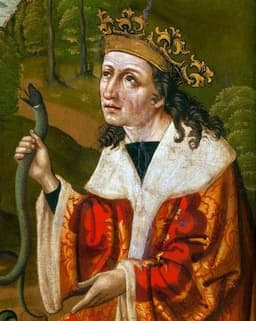
Alexander Jagiellon
Emperor · Medieval
41.8Total

Louis VIII of France
Emperor · Medieval
38.6Total
Basic Information
Born
1461
1187
Died
1506
1226
Era
Medieval
Medieval
Nationality
Poland
France
Occupation
Emperor
Emperor
Civilization
Western
Western
Score Comparison
Military (10%)
22.6
25.0
Political (20%)
37.9
27.9
Influence (20%)
49.4
49.4
Legacy (20%)
40.8
38.3
Leadership (15%)
58.8
39.0
Strategy (15%)
25.0
41.7
TOTAL
41.8
38.6
Alexander Jagiellon — Complete Timeline
1500 AD
War with MuscovyWar◆ Major
Alexander Jagiellon, as Grand Duke of Lithuania, fought a war against Ivan III of Muscovy. The conflict ended with the Truce of 1503, which ceded significant Lithuanian territories to Muscovy, including Chernigov and Starodub.
MuscovyTerritorial LossEastern Europe
Impact: regionaldestructive
1501 AD
Union of MielnikPolitical Action
Alexander Jagiellon signed the Union of Mielnik, which attempted to create a closer union between Poland and Lithuania. The agreement was never fully implemented but represented an early effort to formalize the relationship between the two states.
UnionPoland-LithuaniaDiplomacy
Impact: regional
Coronation as King of PolandPolitical Action
Alexander Jagiellon was crowned King of Poland following the death of his brother John I Albert. His reign was marked by conflict with the Polish nobility, who sought to limit royal power through the Mielnik Privileges.
CoronationSuccessionNobility
Impact: national
Granting of the Mielnik PrivilegesPolitical Action◆ Major
Alexander Jagiellon was forced to grant the Mielnik Privileges, which gave the Polish Senate significant control over royal decisions. This weakened the monarchy and strengthened the nobility's political influence.
NobilityConstitutional ReformRoyal Power
Impact: nationaldestructive
Louis VIII of France — Complete Timeline
1216 AD
Invasion of EnglandWar◆ Major
Louis VIII led a French invasion of England at the invitation of English barons rebelling against King John. He was proclaimed King of England in London but failed to consolidate control after John's death and the barons' shift of allegiance to Henry III.
InvasionEnglish Civil WarCapetian
Impact: regional
1217 AD
Treaty of LambethPolitical Action◆ Major
Louis VIII signed the Treaty of Lambeth, formally abandoning his claim to the English throne. He renounced his invasion and received a financial settlement, ending the First Barons' War and securing peace between France and England.
TreatyPeaceCapetian
Impact: regional
1226 AD
Albigensian Crusade CampaignsWar◆ Major
Louis VIII led a royal campaign in the Albigensian Crusade against the Cathars in southern France. He captured Avignon and several strongholds, extending Capetian authority into Languedoc, but died before completing the conquest.
CrusadeCatharTerritorial Expansion
Impact: regionaldestructive
This comparison has not been analyzed yet.
One-time AI generation (~1 minute). Scores and timeline are already available below.
Rankings
🥇
Alexander JagiellonLeader
Mil: 22.6Pol: 37.9Inf: 49.4
41.8
🥈
Louis VIII of France
Mil: 25.0Pol: 27.9Inf: 49.4
38.6
+3.2 behind
How This Comparison Works
Algorithm
Each figure is scored on 6 dimensions (0—100 scale) based on structured historical data: Military (10%), Political (20%), Influence (20%), Legacy (20%), Leadership (15%), Strategy (15%). The weighted total produces the final ranking.
Data Sources
Scores are computed from structured sub-indicators in the database. Scale factors adjust for era (Ancient ×0.85, Modern ×1.0) and civilization size (Eastern ×1.05, Other ×0.80) to account for differences in population and military scale.
Maximum 3 Figures
Comparisons are limited to 2—3 figures to ensure readability and statistical meaningfulness.
Error Margins
±5 points per dimension — Sub-scores are derived from historical records with inherent uncertainty. Two figures within 5 points on a dimension should be considered roughly equivalent in that area.
Total Score Accuracy
±3 points overall — The weighted combination of 6 dimensions produces a total score with approximately ±3 points of uncertainty. Differences of less than 3 points are not statistically significant— the figures are effectively tied.
Known Limitations
- Historical records are incomplete and uneven across civilizations
- Figures from oral-tradition societies may be underrepresented
- Occupation labels can misclassify multi-role figures
- Scores measure capability and impact, not moral character
- Quantitative scoring is a comparison tool, not absolute truth
Capability Radar
Military (10%) — Battles & Warfare
Battles
15
35
Win Rate
10
40
Expansion
10
40
Political (20%) — Governance & Reform
Reform
30
10
Diplomacy
40
25
Economy
30
10
Influence (20%) — Cultural & Global Reach
Cultural
20
15
Global
15
10
Legacy (20%) — Historical Impact
Historical
25
20
Longevity
20
10
Leadership (15%) — Power & Stability
Tenure
50
15
Stability
25
10
Strategy (15%) — Tactics & Innovation
Strategy
15
35
Tactics
10
30
Reform
10
10
Similar Comparisons
Comments & Discussion
No comments yet. Be the first to share your thoughts!