Loading...
Alexander Kerensky vs Georges Clemenceau
Georges Clemenceau leads by 20.3 pts · 2 figures compared
…

Alexander Kerensky
Politician · Modern
43.5Total
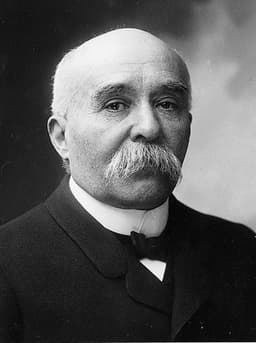
Georges Clemenceau
Politician · Modern
63.8Total
Basic Information
Born
1881
1841
Died
1970
1929
Era
Modern
Modern
Nationality
Russia
France
Occupation
Politician
Politician
Civilization
Western
Western
Score Comparison
Military (10%)
48.5
49.1
Political (20%)
35.1
70.3
Influence (20%)
52.5
65.0
Legacy (20%)
45.0
65.0
Leadership (15%)
31.2
78.0
Strategy (15%)
42.9
41.4
TOTAL
43.5
63.8
Alexander Kerensky — Complete Timeline
1917 AD
Appointment as Minister of JusticePolitical Action◆ Major
After the February Revolution, Kerensky was appointed Minister of Justice in the Provisional Government. He was the only socialist in the cabinet and became a key figure in the government, advocating for continued war effort and gradual reforms.
Provisional GovernmentMinister of JusticeFebruary Revolution
Impact: national
Kornilov AffairPolitical Action
Kerensky, as Prime Minister, accused General Lavr Kornilov of attempting a coup and dismissed him. Kornilov then marched troops toward Petrograd. Kerensky armed the Bolshevik Red Guards to defend the city, which strengthened the Bolsheviks' position and undermined the Provisional Government.
Kornilov AffairCoup AttemptProvisional Government
Impact: nationaldestructive
Overthrow by the BolsheviksPolitical Action
During the October Revolution, Bolshevik forces led by Lenin seized key points in Petrograd and stormed the Winter Palace. Kerensky fled the city in a car provided by the American embassy, leaving the Provisional Government to collapse. He later went into exile.
October RevolutionBolsheviksProvisional Government
Impact: globaltragic
1918 AD
Exile and Anti-Bolshevik ActivitiesPolitical Action
After fleeing Russia, Kerensky settled in Paris and later the United States. He wrote memoirs and continued to advocate for democratic socialism, but failed to gain significant support. He remained a controversial figure, blamed by both the left and right for the failure of the Provisional Government.
ExileAnti-BolshevikMemoirs
Impact: national
Georges Clemenceau — Complete Timeline
1917 AD
Became Prime Minister of France for the second timePolitical Action◆ Major
Clemenceau was appointed premier during a critical phase of World War I, after the failure of the Nivelle Offensive and mutinies in the French army. He formed a war government and vowed to pursue the war to victory, restoring morale and discipline.
World War ILeadershipWar Government
Impact: global
Suppressed the French army mutinies of 1917Political Action◆ Major
Clemenceau took a hard line against mutineers, ordering arrests and courts-martial. He also improved soldiers' conditions and leave. His actions restored order in the French army, allowing it to continue fighting effectively for the remainder of the war.
World War IMutinyDiscipline
Impact: nationaldestructive
1919 AD
Played a leading role in the Paris Peace ConferencePolitical Action◆ Major
Clemenceau chaired the Paris Peace Conference and was a key figure in drafting the Treaty of Versailles. He insisted on harsh terms for Germany, including reparations, territorial losses, and military restrictions, to ensure French security.
World War IPeace TreatyVersailles
Impact: global
1920 AD
Resigned as Prime MinisterPolitical Action
Clemenceau lost the presidential election to Paul Deschanel and subsequently resigned as prime minister. His departure marked the end of his wartime leadership. He retired from politics, having achieved his goal of victory and a punitive peace.
ResignationPoliticsPost-War
Impact: national
Expert Analysis
Origins
Alexander Kerensky was born in 1881 in Simbirsk, Russia, the son of a schoolteacher. He studied law at St. Petersburg University, graduating in 1904. His father was a friend of Vladimir Lenin's father, a curious link to his future nemesis. Kerensky became a lawyer and gained fame defending political prisoners, which propelled him into the Duma in 1912 as a member of the Trudovik faction, a moderate socialist group.
Georges Clemenceau was born in 1841 in Mouilleron-en-Pareds, France, to a physician father. He studied medicine in Paris but turned to politics. He was a radical republican, serving as mayor of Montmartre during the Paris Commune in 1871. His early career was marked by fierce opposition to the Second Empire and later to colonialism, earning him the nickname "The Tiger" for his aggressive debating style.
Rise to Power
Kerensky's rise was meteoric during the 1917 February Revolution. He was a leading figure in the Petrograd Soviet and the Provisional Government, first as Minister of Justice (March 1917), then Minister of War (May 1917), and finally Prime Minister in July 1917. His oratory skills made him a popular figure, but his power base was fragile, relying on coalition with liberals and socialists.
Clemenceau's path was longer. He became Prime Minister for the first time in 1906, but his tenure was short-lived. His second premiership came in November 1917, at age 76, during the darkest hour of World War I. He was called to lead after the failure of the Nivelle Offensive and the French army mutinies. His political score of 70.3 reflects his mastery of parliamentary maneuvering.
Leadership & Governance
Kerensky's leadership style was indecisive and rhetorical. He failed to address land reform, continue the war, or suppress the Bolsheviks. He alienated the military by dismissing General Kornilov in the Kornilov Affair (August 1917), which left the army disorganized. He scored 31.2 in leadership and 42.9 in strategy.
Clemenceau was the opposite: decisive, ruthless, and focused. He suppressed the 1917 mutinies by arresting leaders and improving conditions, restoring order. He led with a war cabinet and visited the front lines. His leadership score of 78.0 is among the highest. He famously said, "War is a series of catastrophes that ends in victory."
Triumph & Tragedy
Kerensky's triumph was leading the only democratic government in Russia before the Soviet era. He was the first leader to grant Finland independence (December 1917). His tragedy was his inability to control events: he fled Petrograd in disguise during the October Revolution, and his government fell after just eight months. He spent 50 years in exile, his influence score of 52.5 undermined by his failure.
Clemenceau's triumph was leading France to victory in World War I. He restored morale and pushed for the Treaty of Versailles, demanding harsh reparations from Germany. His tragedy was failing to secure lasting peace; his treaty terms contributed to German resentment and WWII. He lost the 1920 presidential election and died in 1929, his legacy mixed.
Character & Destiny
Kerensky was a charismatic speaker but a poor strategist. He believed in democracy but was caught between the right (Kornilov) and left (Lenin). His character—principled but impractical—led to his downfall. He scored 35.1 politically, reflecting his inability to build a durable coalition.
Clemenceau was a fierce patriot, a duelist, and a journalist. His character was uncompromising, earning him enemies but also respect. He was called "The Tiger" for his ferocity. His destiny was to be France's savior in war, but his peace terms were criticized. His political score of 70.3 shows his effectiveness.
Legacy
Kerensky's legacy is that of a democratic alternative that failed. He is remembered as a tragic figure who could not stop Lenin. His influence score of 52.5 reflects his role in early 20th-century history, but his impact is overshadowed by the Bolsheviks. He died in 1970 in New York.
Clemenceau's legacy is more enduring. He is a national hero in France, with streets and schools named after him. His leadership during WWI is studied, and his role at Versailles shaped the 20th century. His legacy score of 65.0 is higher, but his military score of 49.1 is similar to Kerensky's 48.5, indicating neither was a military strategist.
Conclusion
Georges Clemenceau had a greater impact than Alexander Kerensky. Clemenceau's total score of 63.8 versus Kerensky's 43.5 reflects his superior leadership, political skill, and lasting legacy. Clemenceau led France through a world war and shaped the post-war order, while Kerensky's democratic experiment collapsed in months. Clemenceau's decisiveness contrasts with Kerensky's indecision. While both faced crises, Clemenceau mastered his; Kerensky was overwhelmed. The data supports Clemenceau as the more effective leader.
Rankings
🥇
Georges ClemenceauLeader
Mil: 49.1Pol: 70.3Inf: 65.0
63.8
🥈
Alexander Kerensky
Mil: 48.5Pol: 35.1Inf: 52.5
43.5
+20.3 behind
How This Comparison Works
Algorithm
Each figure is scored on 6 dimensions (0—100 scale) based on structured historical data: Military (10%), Political (20%), Influence (20%), Legacy (20%), Leadership (15%), Strategy (15%). The weighted total produces the final ranking.
Data Sources
Scores are computed from structured sub-indicators in the database. Scale factors adjust for era (Ancient ×0.85, Modern ×1.0) and civilization size (Eastern ×1.05, Other ×0.80) to account for differences in population and military scale.
Maximum 3 Figures
Comparisons are limited to 2—3 figures to ensure readability and statistical meaningfulness.
Error Margins
±5 points per dimension — Sub-scores are derived from historical records with inherent uncertainty. Two figures within 5 points on a dimension should be considered roughly equivalent in that area.
Total Score Accuracy
±3 points overall — The weighted combination of 6 dimensions produces a total score with approximately ±3 points of uncertainty. Differences of less than 3 points are not statistically significant— the figures are effectively tied.
Known Limitations
- Historical records are incomplete and uneven across civilizations
- Figures from oral-tradition societies may be underrepresented
- Occupation labels can misclassify multi-role figures
- Scores measure capability and impact, not moral character
- Quantitative scoring is a comparison tool, not absolute truth
Capability Radar
Military (10%) — Battles & Warfare
Battles
32
30
Win Rate
34
32
Expansion
32
34
Political (20%) — Governance & Reform
Reform
40
80
Diplomacy
20
90
Economy
15
70
Influence (20%) — Cultural & Global Reach
Cultural
15
60
Global
30
80
Legacy (20%) — Historical Impact
Historical
40
85
Longevity
20
70
Leadership (15%) — Power & Stability
Tenure
10
85
Stability
5
75
Strategy (15%) — Tactics & Innovation
Strategy
38
35
Tactics
40
38
Reform
45
46
Similar Comparisons
Comments & Discussion
No comments yet. Be the first to share your thoughts!