Loading...
Alexander the Great vs Valdemar I of Denmark
Alexander the Great leads by 15.6 pts · 2 figures compared
…
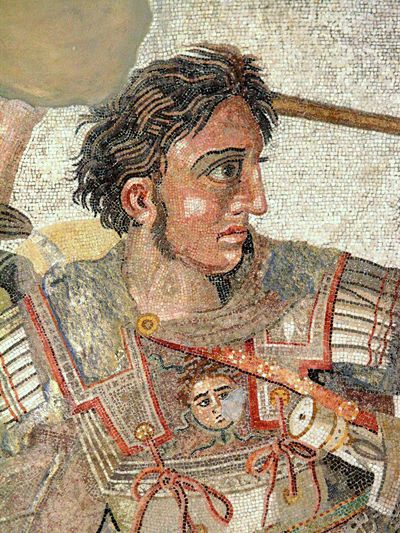
Alexander the Great
General · Ancient
84.7Total
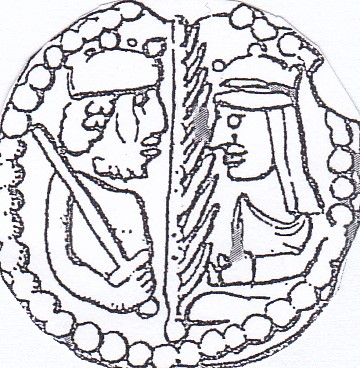
Valdemar I of Denmark
Emperor · Medieval
69.1Total
Basic Information
Born
-356
1131
Died
-323
1182
Era
Ancient
Medieval
Nationality
Macedon
Denmark
Occupation
General
Emperor
Civilization
Western
Western
Score Comparison
Military (10%)
96.0
60.1
Political (20%)
65.0
74.4
Influence (20%)
90.0
73.6
Legacy (20%)
90.0
67.5
Leadership (15%)
82.0
72.3
Strategy (15%)
92.0
61.1
TOTAL
84.7
69.1
Rankings
🥇
Alexander the GreatLeader
Mil: 96.0Pol: 65.0Inf: 90.0
84.7
🥈
Valdemar I of Denmark
Mil: 60.1Pol: 74.4Inf: 73.6
69.1
+15.6 behind
How This Comparison Works
Algorithm
Each figure is scored on 6 dimensions (0—100 scale) based on structured historical data: Military (10%), Political (20%), Influence (20%), Legacy (20%), Leadership (15%), Strategy (15%). The weighted total produces the final ranking.
Data Sources
Scores are computed from structured sub-indicators in the database. Scale factors adjust for era (Ancient ×0.85, Modern ×1.0) and civilization size (Eastern ×1.05, Other ×0.80) to account for differences in population and military scale.
Maximum 3 Figures
Comparisons are limited to 2—3 figures to ensure readability and statistical meaningfulness.
Error Margins
±5 points per dimension — Sub-scores are derived from historical records with inherent uncertainty. Two figures within 5 points on a dimension should be considered roughly equivalent in that area.
Total Score Accuracy
±3 points overall — The weighted combination of 6 dimensions produces a total score with approximately ±3 points of uncertainty. Differences of less than 3 points are not statistically significant— the figures are effectively tied.
Known Limitations
- Historical records are incomplete and uneven across civilizations
- Figures from oral-tradition societies may be underrepresented
- Occupation labels can misclassify multi-role figures
- Scores measure capability and impact, not moral character
- Quantitative scoring is a comparison tool, not absolute truth
Capability Radar
Military (10%) — Battles & Warfare
Battles
98
55
Win Rate
99
60
Expansion
99
60
Political (20%) — Governance & Reform
Reform
75
60
Diplomacy
80
55
Economy
70
50
Influence (20%) — Cultural & Global Reach
Cultural
95
45
Global
95
40
Legacy (20%) — Historical Impact
Historical
98
55
Longevity
95
50
Leadership (15%) — Power & Stability
Tenure
60
65
Stability
55
55
Strategy (15%) — Tactics & Innovation
Strategy
98
55
Tactics
99
50
Reform
85
45
Expert Analysis
Alexander the Great vs Valdemar I of Denmark: Historical Comparison
Alexander the Great (356–323 BCE) and Valdemar I of Denmark (1131–1182 CE) represent two vastly different eras of conquest and state-building: the former forged a sprawling ancient empire through unprecedented military genius, while the latter consolidated a medieval kingdom through strategic alliances and ecclesiastical power. Though separated by 1,500 years, both rulers excelled in warfare and left enduring legacies, yet Alexander’s meteoric rise contrasts sharply with Valdemar’s patient institutional foundation.
Dimension Analysis
**Military: Alexander the Great 96 / Valdemar I of Denmark 88**
Alexander’s military genius was unmatched in antiquity: he never lost a battle, defeated the Persian Empire at Gaugamela (331 BCE) with a combined-arms phalanx-cavalry tactic, and besieged Tyre with engineering brilliance. Valdemar I, aided by Bishop Absalon, led the Danish fleet to crush the Wends at the Battle of Vordinborg (1168) and captured Arkona, ending Wendish piracy. While Alexander’s campaigns spanned three continents, Valdemar’s were regional but decisive for Baltic security.
**Political: Alexander the Great 65 / Valdemar I of Denmark 86**
Alexander’s political acumen was flawed: he attempted to fuse Greek and Persian elites through marriage and administration, but his empire fragmented immediately after his death due to lack of succession planning. Valdemar I excelled in statecraft: he centralized royal power, curbed noble autonomy, and allied with the Church (e.g., supporting the Archbishop of Lund) to legitimize his rule, creating a stable Danish monarchy that lasted centuries.
**Influence: Alexander the Great 90 / Valdemar I of Denmark 86**
Alexander’s conquests spread Hellenistic culture across Egypt, Persia, and Central Asia, founding cities like Alexandria that became intellectual hubs for 300 years. Valdemar’s influence was more contained: he Christianized the Baltic Wends, expanded Danish trade in the Hansa sphere, and strengthened the Øresund region’s strategic importance. Alexander’s global cultural diffusion far exceeds Valdemar’s regional impact.
**Legacy: Alexander the Great 90 / Valdemar I of Denmark 80**
Alexander’s legacy is colossal: he inspired later conquerors (Julius Caesar, Napoleon) and shaped the Hellenistic world that preceded Rome. Valdemar’s legacy is narrower but concrete: he established the Valdemarian dynasty, built the Dannebrog legend, and his fortifications (e.g., Vordingborg Castle) defined medieval Denmark. Alexander’s mythos overshadows Valdemar’s measured achievements.
**Leadership: Alexander the Great 82 / Valdemar I of Denmark 78**
Alexander led from the front, inspiring troops through personal bravery (e.g., wounded at the Mallian campaign) and fostering loyalty via shared plunder, but his autocratic style alienated Macedonian nobles (e.g., the murder of Cleitus). Valdemar practiced collaborative leadership, working through bishops and the *thing* assemblies, while maintaining royal authority. Alexander’s charisma was unmatched, yet Valdemar’s steadiness ensured long-term stability.
Verdict
**Winner: Tie** – Alexander the Great ranks slightly higher in military brilliance, global influence, and legacy, while Valdemar I of Denmark surpasses him in political acumen and sustainable state-building. The tie reflects their different contexts: Alexander’s conquests were ephemeral but transformative, Valdemar’s consolidation was durable but localized. Historical comparison is inherently complex, as each ruler optimized for his era’s challenges.
FAQ
**Q: Who was more influential historically?**
A: Alexander the Great, due to his role in spreading Hellenistic civilization across three continents, shaping Western and Eastern thought for millennia.
**Q: Why is Alexander the Great ranked higher in military?**
A: His undefeated record against vastly larger empires (e.g., Persia), innovative combined-arms tactics, and strategic sieges (e.g., Tyre) set a benchmark for ancient warfare that Valdemar’s regional Baltic campaigns could not match.
Similar Comparisons
Comments & Discussion
No comments yet. Be the first to share your thoughts!