Loading...
Alexei Rykov vs Jorge Batlle
Alexei Rykov leads by 2.9 pts · 2 figures compared
…

Alexei Rykov
Politician · Modern
54.6Total
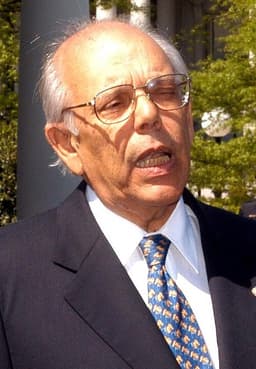
Jorge Batlle
Politician · Modern
51.7Total
Basic Information
Born
1881
1927
Died
1938
—
Era
Modern
Modern
Nationality
Russia
Uruguay
Occupation
Politician
Politician
Civilization
Western
Western
Score Comparison
Military (10%)
49.4
50.0
Political (20%)
68.0
68.0
Influence (20%)
53.3
49.4
Legacy (20%)
43.3
40.8
Leadership (15%)
74.0
64.0
Strategy (15%)
42.2
43.2
TOTAL
54.6
51.7
Alexei Rykov — Complete Timeline
1924 AD
Chairman of the Council of People's Commissars (Premier)Political Action◆ Major
After Lenin's death, Rykov succeeded him as Chairman of the Council of People's Commissars (Premier) of the Soviet Union in February 1924. He held this position until 1930, overseeing the government during the NEP period and the early stages of Stalin's rise.
Soviet GovernmentPremierNEP
Impact: national
1928 AD
Support for the Right OppositionPolitical Action◆ Major
Rykov aligned with Bukharin and the Right Opposition, opposing Stalin's forced collectivization and rapid industrialization. He argued for a continuation of the NEP and a more moderate economic approach, but was forced to recant and lost his position as Premier in 1930.
Soviet PoliticsOppositionNEP
Impact: national
1937 AD
Expulsion from the Communist PartyPolitical Action◆ Major
During the Great Purge, Rykov was expelled from the Communist Party in February 1937. He was arrested and accused of involvement in a 'Right-Trotskyist bloc', marking the final stage of his political downfall and leading to his trial.
Great PurgeExpulsionArrest
Impact: nationaldestructive
1938 AD
Execution in the Great PurgePolitical Action◆ Major
Rykov was tried alongside Bukharin in the third Moscow Show Trial in March 1938. Found guilty of treason and sabotage, he was executed on March 15, 1938, becoming one of the highest-ranking Soviet officials purged by Stalin.
Great PurgeShow TrialExecution
Impact: nationaltragic
Jorge Batlle — Complete Timeline
1999 AD
Elected President of UruguayPolitical Action◆ Major
Jorge Batlle was elected president of Uruguay in the 1999 general election as the Colorado Party candidate, defeating the Broad Front candidate Tabar
ElectionColorado PartyPresidential Victory
Impact: nationalconstructive
2002 AD
Faced Banking CrisisOther◆ Major
Uruguay experienced a severe banking crisis in 2002, triggered by the Argentine economic crisis. Depositors withdrew billions of dollars, leading to a bank run. Batlle's government imposed a freeze on bank deposits and negotiated a $3 billion loan from the IMF.
Banking CrisisEconomic CrisisIMF
Impact: nationaldestructive
2003 AD
Signed the Free Trade Agreement with MexicoPolitical Action
Batlle signed a free trade agreement with Mexico in November 2003, aiming to boost bilateral trade and investment. The agreement was part of Uruguay's strategy to diversify its trade relations beyond Mercosur.
Free TradeMexicoTrade Diversification
Impact: regionalconstructive
2005 AD
Ended Presidential Term with Low ApprovalPolitical Action
Batlle completed his presidential term in March 2005, handing power to Tabar
End of TermLow ApprovalEconomic Crisis
Impact: nationaldestructive
Expert Analysis
Origins
Alexei Rykov was born in 1881 in Saratov, Russia, into a peasant family. He joined the Russian Social Democratic Labour Party in 1899 and became a Bolshevik after the split. He was exiled multiple times for revolutionary activities, meeting Lenin abroad. His early experiences in the underground shaped his loyalty to the party.
Jorge Batlle was born in 1927 in Montevideo, Uruguay, into a political dynasty. His great-grandfather, José Batlle y Ordóñez, was a transformative president. He studied law and social sciences, entering politics early. His family background gave him a network but also high expectations.
Rise to Power
Rykov rose after the October Revolution, becoming People's Commissar for Internal Affairs in 1917. He held key economic posts during the Civil War. After Lenin's death in 1924, he became Chairman of the Council of People's Commissars (Premier). He was a leading figure in the Right Opposition, opposing Stalin's radical policies.
Batlle rose through the Colorado Party, serving as deputy, senator, and minister. He ran for president in 1989 but lost. In 1999, he won the presidency in a runoff against Tabaré Vázquez, with 51.6% of the vote. His victory was helped by a coalition with the Blancos.
Leadership & Governance
Rykov governed as Premier from 1924 to 1930. He advocated for the New Economic Policy (NEP), supporting gradual industrialization and market mechanisms. He clashed with Stalin over collectivization, warning of famine. His governance was constrained by Stalin's growing power; he was forced to recant his views in 1929.
Batlle governed Uruguay from 2000 to 2005. He faced a severe banking crisis in 2002, with GDP falling 11%. He implemented austerity measures, secured IMF loans, and signed a free trade agreement with Mexico in 2003. His approval ratings dropped to 14% by 2004 due to economic hardship.
Triumph & Tragedy
Rykov's triumph was his role in stabilizing the Soviet economy after Lenin's death, continuing the NEP. His tragedy was his execution in 1938 after a show trial, accused of treason. He was posthumously rehabilitated in 1988.
Batlle's triumph was navigating the 2002 crisis without defaulting on debt, preserving Uruguay's financial stability. His tragedy was the collapse of his popularity and the loss of the presidency to the Broad Front, ending 170 years of two-party dominance.
Character & Destiny
Rykov was a pragmatic moderate, loyal to the party but critical of extremism. His opposition to Stalin sealed his fate. Historians note his lack of political ruthlessness, scoring 74.0 in leadership but 42.2 in strategy. He was executed despite recanting his views.
Batlle was a liberal reformer, committed to democracy and free trade. His character was seen as principled but inflexible. He scored 64.0 in leadership and 43.2 in strategy. His destiny was to oversee a crisis not of his making, ending his family's political legacy.
Legacy
Rykov's legacy is as a victim of Stalin's purges, representing the alternative path of NEP. He is remembered in Russia as a tragic figure. His influence on Soviet policy was erased until rehabilitation. His total score is 54.6.
Batlle's legacy is mixed: he is credited with economic stability but criticized for deepening inequality. He is remembered as the last Colorado president for decades. His reforms had limited long-term impact. His total score is 51.7.
Conclusion
Rykov had greater impact due to his role in Soviet history. Though his policies were reversed, his opposition to Stalinism represented a pivotal alternative. Batlle's crisis management was competent but did not alter Uruguay's trajectory. Rykov's total score of 54.6 vs Batlle's 51.7 reflects this: Rykov's political influence (68.0) and leadership (74.0) exceed Batlle's, despite his tragic end. The gap of 2.9 points is significant given the magnitude of their historical contexts.
Rankings
🥇
Alexei RykovLeader
Mil: 49.4Pol: 68.0Inf: 53.3
54.6
🥈
Jorge Batlle
Mil: 50.0Pol: 68.0Inf: 49.4
51.7
+2.9 behind
How This Comparison Works
Algorithm
Each figure is scored on 6 dimensions (0—100 scale) based on structured historical data: Military (10%), Political (20%), Influence (20%), Legacy (20%), Leadership (15%), Strategy (15%). The weighted total produces the final ranking.
Data Sources
Scores are computed from structured sub-indicators in the database. Scale factors adjust for era (Ancient ×0.85, Modern ×1.0) and civilization size (Eastern ×1.05, Other ×0.80) to account for differences in population and military scale.
Maximum 3 Figures
Comparisons are limited to 2—3 figures to ensure readability and statistical meaningfulness.
Error Margins
±5 points per dimension — Sub-scores are derived from historical records with inherent uncertainty. Two figures within 5 points on a dimension should be considered roughly equivalent in that area.
Total Score Accuracy
±3 points overall — The weighted combination of 6 dimensions produces a total score with approximately ±3 points of uncertainty. Differences of less than 3 points are not statistically significant— the figures are effectively tied.
Known Limitations
- Historical records are incomplete and uneven across civilizations
- Figures from oral-tradition societies may be underrepresented
- Occupation labels can misclassify multi-role figures
- Scores measure capability and impact, not moral character
- Quantitative scoring is a comparison tool, not absolute truth
Capability Radar
Military (10%) — Battles & Warfare
Battles
27
29
Win Rate
34
29
Expansion
35
37
Political (20%) — Governance & Reform
Reform
55
45
Diplomacy
50
50
Economy
55
45
Influence (20%) — Cultural & Global Reach
Cultural
20
20
Global
30
15
Legacy (20%) — Historical Impact
Historical
40
25
Longevity
20
20
Leadership (15%) — Power & Stability
Tenure
60
40
Stability
30
35
Strategy (15%) — Tactics & Innovation
Strategy
35
40
Tactics
43
42
Reform
43
42
Similar Comparisons
Comments & Discussion
No comments yet. Be the first to share your thoughts!