Loading...
Jorge Batlle vs Napoleon Bonaparte
Napoleon Bonaparte leads by 19.2 pts · 2 figures compared
…
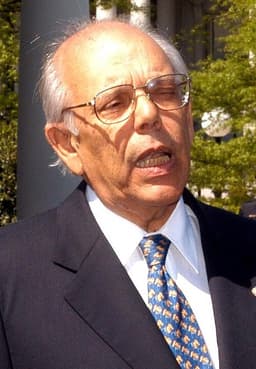
Jorge Batlle
Politician · Modern
51.7Total

Napoleon Bonaparte
General · Modern
70.9Total
Basic Information
Born
1927
1769
Died
—
1821
Era
Modern
Modern
Nationality
Uruguay
France
Occupation
Politician
General
Civilization
Western
Western
Score Comparison
Military (10%)
50.0
94.0
Political (20%)
68.0
72.0
Influence (20%)
49.4
40.0
Legacy (20%)
40.8
80.0
Leadership (15%)
64.0
78.0
Strategy (15%)
43.2
90.0
TOTAL
51.7
70.9
Jorge Batlle — Complete Timeline
1999 AD
Elected President of UruguayPolitical Action◆ Major
Jorge Batlle was elected president of Uruguay in the 1999 general election as the Colorado Party candidate, defeating the Broad Front candidate Tabar
ElectionColorado PartyPresidential Victory
Impact: nationalconstructive
2002 AD
Faced Banking CrisisOther◆ Major
Uruguay experienced a severe banking crisis in 2002, triggered by the Argentine economic crisis. Depositors withdrew billions of dollars, leading to a bank run. Batlle's government imposed a freeze on bank deposits and negotiated a $3 billion loan from the IMF.
Banking CrisisEconomic CrisisIMF
Impact: nationaldestructive
2003 AD
Signed the Free Trade Agreement with MexicoPolitical Action
Batlle signed a free trade agreement with Mexico in November 2003, aiming to boost bilateral trade and investment. The agreement was part of Uruguay's strategy to diversify its trade relations beyond Mercosur.
Free TradeMexicoTrade Diversification
Impact: regionalconstructive
2005 AD
Ended Presidential Term with Low ApprovalPolitical Action
Batlle completed his presidential term in March 2005, handing power to Tabar
End of TermLow ApprovalEconomic Crisis
Impact: nationaldestructive
Napoleon Bonaparte — Complete Timeline
1799 AD
Coup of 18 BrumaireOther◆ Major
Napoleon Bonaparte, with support from his brother Lucien and key political figures, overthrew the Directory in a bloodless coup. He established the Consulate with himself as First Consul, effectively becoming the ruler of France. This event ended the French Revolution's most unstable period.
French RevolutionCoupRise to Power
Impact: regional
1804 AD
Promulgation of the Napoleonic CodeOther◆ Major
Napoleon enacted the Civil Code of the French, known as the Napoleonic Code, a comprehensive set of laws that replaced the fragmented feudal legal systems. The code established legal equality, protected property rights, and secularized law. It became the basis for legal systems in many European and world countries.
Legal ReformNapoleonic CodeCivil Law
Impact: globalconstructive
1805 AD
Battle of AusterlitzWar◆ Major
Napoleon's Grande Arm
Napoleonic WarsBattleDecisive Victory
Impact: global
1812 AD
Invasion of RussiaWar◆ Major
Napoleon led the Grande Arm
Napoleonic WarsInvasionDisaster
Impact: globaldestructive
1815 AD
Battle of WaterlooWar◆ Major
Napoleon's French army was defeated by the combined forces of the Duke of Wellington's Anglo-Allied army and Gebhard Leberecht von Bl
Napoleonic WarsBattleFinal Defeat
Impact: globaldestructive
Expert Analysis
jorge-batlle-vs-napoleon-bonaparte
### The Corsican and the Colorado
History has a peculiar way of placing men of vastly different scales side by side. On one hand, we have Napoleon Bonaparte, whose shadow fell across an entire continent, whose name became synonymous with ambition and conquest, and whose final act was a dramatic exile on a remote Atlantic island. On the other, we have Jorge Batlle, a democrat from a small South American republic, whose greatest challenge was a banking crisis and whose legacy is measured in quiet reforms rather than thundering victories. To compare them seems almost absurd—like comparing a hurricane to a gentle breeze. Yet both were men of their times, both sought to shape their nations, and both were ultimately judged by the outcomes of their choices. The question is not who was greater, but what drove such different paths.
### Origins
Napoleon Bonaparte was born in 1769 on the island of Corsica, a place that had only recently become French. His family was minor nobility, but his real inheritance was the turbulence of an era in upheaval. The French Revolution shattered the old order, and for a young artillery officer with a sharp mind and an unshakable will, it was a ladder to the sky. He was shaped by the Enlightenment and the chaos of war, a man who believed that destiny could be seized with both hands.
Jorge Batlle, born in 1927 in Montevideo, Uruguay, inherited a different kind of legacy. He was the great-grandson of José Batlle y Ordóñez, the towering figure who had modernized Uruguay in the early 20th century. The family name was a political brand, and from childhood, Jorge was groomed for public service. His era was one of stability, democracy, and small-state liberalism—a world where power was won at the ballot box, not on the battlefield.
### Rise to Power
Napoleon rose through sheer, relentless action. At 24, he was a general; at 30, he had made himself First Consul of France. His path was paved with victories: the Italian campaign of 1796, the Egyptian expedition of 1798, and the coup of 18 Brumaire in 1799. Each step was a gamble, and each gamble paid off. He did not wait for opportunity—he created it.
Jorge Batlle’s rise was slower, more patient. He was elected to parliament in the 1950s, served as a senator, and ran for president multiple times before finally winning in 1999, at the age of 72. His victory was not a seizure of power but a democratic transition, a testament to the endurance of Uruguay’s political system. Where Napoleon climbed a mountain of corpses, Batlle climbed a staircase of votes.
### Leadership & Governance
As ruler of France, Napoleon was a whirlwind. He reformed the legal system with the Napoleonic Code, centralized the administration, and built a modern state. But his genius was military: he fought over 60 battles and lost only a handful, with his strategic brilliance earning him a military score of 94.0. He understood logistics, timing, and morale like few before him. Yet his political score of 75.0 reflects the costs: his reign was authoritarian, his wars bled France dry, and his ambition ultimately overreached.
Jorge Batlle governed in a very different key. His presidency (2000–2005) was defined by economic crisis, not conquest. In 2002, Uruguay faced a devastating banking collapse, triggered by Argentina’s default. Batlle’s response was not to declare war but to negotiate loans, sign a free trade agreement with Mexico in 2003, and stabilize the economy through orthodox fiscal measures. His leadership score of 77.1 is respectable, but his military score of 37.5 underscores the gulf between them: Batlle’s battles were fought with spreadsheets and treaties, not cannon and cavalry.
### Triumph & Tragedy
Napoleon’s greatest triumph was the Battle of Austerlitz in 1805, where he crushed the armies of Austria and Russia. His greatest tragedy was the invasion of Russia in 1812, a catastrophic campaign that cost over 400,000 lives and shattered his Grand Army. He was exiled to Elba in 1814, returned for a Hundred Days, and was finally defeated at Waterloo in 1815. His end was lonely, bitter, and magnificent in its scale of failure.
Jorge Batlle’s triumphs were quieter. He stabilized Uruguay’s banking system and kept the country democratic during a regional crisis. His tragedy was that his term ended with low approval ratings in 2005, as voters turned to the left-wing Broad Front. He was not exiled or defeated in battle; he simply handed over power and returned to private life. His fall was not dramatic—it was the ordinary fate of a democratically elected leader.
### Character & Destiny
Napoleon was possessed by an insatiable hunger for glory. “Impossible is a word to be found only in the dictionary of fools,” he once said. His personality was a force of nature: arrogant, brilliant, ruthless, and endlessly ambitious. He believed he could shape history by sheer will, and for a time, he did. But that same ambition led him to overreach, to ignore limits, and to destroy himself.
Jorge Batlle was a pragmatist. He believed in institutions, not personal destiny. His character was shaped by a tradition of liberal democracy, where power was temporary and compromise was necessary. He did not seek to conquer Europe; he sought to manage a small country through a difficult period. His destiny was not to be a titan but to be a steward.
### Legacy
Napoleon’s legacy is immense. The Napoleonic Code influenced legal systems across the world. His military tactics are still studied. He reshaped Europe, toppled old monarchies, and spread nationalist ideas. His legacy score of 78.0 reflects a figure who is remembered, debated, and mythologized. He is both a hero and a warning.
Jorge Batlle’s legacy is more modest. He is remembered as a competent president who navigated a crisis, but his influence score of 68.2 and legacy score of 55.9 place him firmly in the second rank of history. He did not change the world; he held his country steady. In Uruguay, he is respected but not revered.
### Conclusion
In the end, the comparison between Napoleon and Batlle is not about who was better. It is about the different scales of history itself. One man commanded armies that marched across Europe; the other commanded a treasury that balanced a budget. One died in exile, a prisoner of his own ambition; the other died at home, a former president at peace. Both were products of their times: Napoleon of revolution and war, Batlle of democracy and stability. And perhaps that is the deepest lesson: the arena in which a man fights determines the measure of his greatness. Napoleon conquered an empire; Batlle saved a bank. One is a legend; the other, a footnote. But both, in their own way, did what their age required.
Rankings
🥇
Napoleon BonaparteLeader
Mil: 94.0Pol: 72.0Inf: 40.0
70.9
🥈
Jorge Batlle
Mil: 50.0Pol: 68.0Inf: 49.4
51.7
+19.2 behind
How This Comparison Works
Algorithm
Each figure is scored on 6 dimensions (0—100 scale) based on structured historical data: Military (10%), Political (20%), Influence (20%), Legacy (20%), Leadership (15%), Strategy (15%). The weighted total produces the final ranking.
Data Sources
Scores are computed from structured sub-indicators in the database. Scale factors adjust for era (Ancient ×0.85, Modern ×1.0) and civilization size (Eastern ×1.05, Other ×0.80) to account for differences in population and military scale.
Maximum 3 Figures
Comparisons are limited to 2—3 figures to ensure readability and statistical meaningfulness.
Error Margins
±5 points per dimension — Sub-scores are derived from historical records with inherent uncertainty. Two figures within 5 points on a dimension should be considered roughly equivalent in that area.
Total Score Accuracy
±3 points overall — The weighted combination of 6 dimensions produces a total score with approximately ±3 points of uncertainty. Differences of less than 3 points are not statistically significant— the figures are effectively tied.
Known Limitations
- Historical records are incomplete and uneven across civilizations
- Figures from oral-tradition societies may be underrepresented
- Occupation labels can misclassify multi-role figures
- Scores measure capability and impact, not moral character
- Quantitative scoring is a comparison tool, not absolute truth
Capability Radar
Military (10%) — Battles & Warfare
Battles
29
95
Win Rate
29
90
Expansion
37
95
Political (20%) — Governance & Reform
Reform
45
95
Diplomacy
50
80
Economy
45
85
Influence (20%) — Cultural & Global Reach
Cultural
20
85
Global
15
90
Legacy (20%) — Historical Impact
Historical
25
95
Longevity
20
90
Leadership (15%) — Power & Stability
Tenure
40
85
Stability
35
70
Strategy (15%) — Tactics & Innovation
Strategy
40
95
Tactics
42
98
Reform
42
92
Similar Comparisons
Comments & Discussion
科尔西卡炮王6/17/2026
拿破仑是开疆拓土的征服者,巴特列只是个处理银行危机的文官。拿数据说话:拿破仑发动了60场战役,只输了7场;巴特列任内失业率从11%飙升到18%。一个是改写欧洲版图的神话,一个是在经济烂摊子里挣扎的配角。把两人放一起比,就像拿大炮打蚊子,根本不在一个量级上。也别提什么民主理想,他那点改革在历史洪流里连个水花都没有。
The Little Corporal's Ghost6/17/2026
As a military historian, I find this comparison laughable on its face. Napoleon commanded armies of 600,000 men—the Grande Armée alone was larger than Uruguay's entire population of 3.3 million in 2002. Napoleon’s innovations in corps organization and artillery tactics changed warfare forever; Batlle’s legacy is a banking crisis and dollarization. One reshaped Europe, the other managed a tiny economy on the edge of nowhere. Let’s not pretend these men share a stage.
Dismal Scientist6/17/2026
From a data skeptic's view, the comparison fails because the metrics are incomparable. Napoleon’s empire at its peak covered 72 million people and 800,000 square kilometers; Batlle presided over a country of 176,000 sq km and a GDP of $20 billion. Napoleon’s wars killed 3–6 million soldiers and civilians; Batlle’s economic reforms saw a 7% recession in 2002. There’s no common yardstick—one man measured in blood and conquest, the other in bank runs and inflation swaps.
修订派杠精6/17/2026
别被“伟大”叙事给忽悠了。拿破仑是被神化的暴君没错,可巴特列也不是什么和平使者。他2002年的银行冻结令让无数中产一夜破产,那场危机引爆了乌拉圭史上最大的资本外逃,比拿破仑在滑铁卢的溃败还惨烈。拿破仑的野心有史诗般的崩盘,巴特列的失误则是庸碌的灾难。两人都让百姓买单,只是一个用得着枪,一个用得着政令。谈不上谁更体面。