Loading...
Habib Bourguiba vs Jorge Batlle
Habib Bourguiba leads by 12.7 pts · 2 figures compared
…
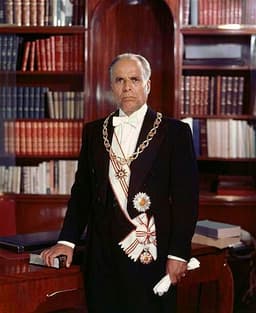
Habib Bourguiba
Politician · Modern
64.4Total
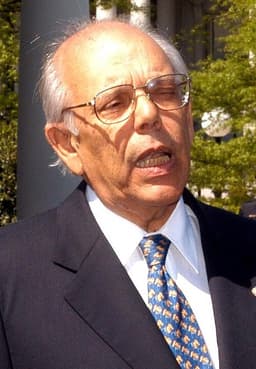
Jorge Batlle
Politician · Modern
51.7Total
Basic Information
Born
1903
1927
Died
2000
—
Era
Modern
Modern
Nationality
Tunisia
Uruguay
Occupation
Politician
Politician
Civilization
Middle Eastern
Western
Score Comparison
Military (10%)
39.9
50.0
Political (20%)
82.0
68.0
Influence (20%)
68.0
49.4
Legacy (20%)
55.0
40.8
Leadership (15%)
80.0
64.0
Strategy (15%)
53.8
43.2
TOTAL
64.4
51.7
Habib Bourguiba — Complete Timeline
1956 AD
Code of Personal StatusReform◆ Major
Bourguiba enacted the Code of Personal Status, a progressive family law that abolished polygamy, established legal minimum age for marriage, and granted women rights to divorce and custody. This reform was unprecedented in the Arab world and modernized Tunisian society.
Women's RightsLegal ReformSocial Change
Impact: nationalprogressive
Tunisian IndependencePolitical Action
Habib Bourguiba led Tunisia to independence from France through a combination of political negotiation and nationalist pressure. He became the first Prime Minister of independent Tunisia, ending 75 years of French protectorate rule.
IndependenceDecolonizationNationalism
Impact: nationalconstructive
1957 AD
Proclamation of the RepublicPolitical Action◆ Major
Bourguiba abolished the Tunisian monarchy and proclaimed the Republic of Tunisia, with himself as President. This move consolidated his power and established a presidential system that would dominate Tunisian politics for decades.
RepublicConstitutional ChangePresidency
Impact: national
1961 AD
Bizerte CrisisWar◆ Major
Bourguiba demanded the evacuation of the French naval base at Bizerte. When negotiations failed, Tunisian forces blockaded the base, leading to a violent confrontation with French troops. The crisis resulted in hundreds of Tunisian casualties and strained Franco-Tunisian relations.
ConflictDecolonizationBizerte
Impact: regionaltragic
1987 AD
Removal from PowerPolitical Action◆ Major
Prime Minister Zine El Abidine Ben Ali removed Bourguiba from office in a bloodless coup, citing his failing health and inability to govern. Bourguiba was placed under house arrest, ending his 30-year presidency and his role as Tunisia's founding father.
CoupSuccessionBen Ali
Impact: nationaltragic
Jorge Batlle — Complete Timeline
1999 AD
Elected President of UruguayPolitical Action◆ Major
Jorge Batlle was elected president of Uruguay in the 1999 general election as the Colorado Party candidate, defeating the Broad Front candidate Tabar
ElectionColorado PartyPresidential Victory
Impact: nationalconstructive
2002 AD
Faced Banking CrisisOther◆ Major
Uruguay experienced a severe banking crisis in 2002, triggered by the Argentine economic crisis. Depositors withdrew billions of dollars, leading to a bank run. Batlle's government imposed a freeze on bank deposits and negotiated a $3 billion loan from the IMF.
Banking CrisisEconomic CrisisIMF
Impact: nationaldestructive
2003 AD
Signed the Free Trade Agreement with MexicoPolitical Action
Batlle signed a free trade agreement with Mexico in November 2003, aiming to boost bilateral trade and investment. The agreement was part of Uruguay's strategy to diversify its trade relations beyond Mercosur.
Free TradeMexicoTrade Diversification
Impact: regionalconstructive
2005 AD
Ended Presidential Term with Low ApprovalPolitical Action
Batlle completed his presidential term in March 2005, handing power to Tabar
End of TermLow ApprovalEconomic Crisis
Impact: nationaldestructive
Expert Analysis
Origins
Habib Bourguiba was born on August 3, 1903, in Monastir, Tunisia, then a French protectorate. His father was a former army officer. Bourguiba studied at the Sadiki College and later at the University of Paris, where he earned a law degree. His exposure to French political thought shaped his nationalist views.
Jorge Batlle was born on October 25, 1927, in Montevideo, Uruguay, into a political dynasty. His great-grandfather, José Batlle y Ordóñez, was a transformative president. He studied law at the University of the Republic but left before graduating to pursue politics. His background gave him deep ties to the Colorado Party.
Rise to Power
Bourguiba rose to prominence in the 1930s as a leader of the Tunisian nationalist movement. He founded the Neo Destour party in 1934, advocating for independence through negotiation. Key turning points included his imprisonment by France in 1938 and his exile during World War II. His strategy of phased negotiations led to internal autonomy in 1955 and full independence on March 20, 1956. He then abolished the monarchy and became president in 1957.
Batlle rose through the Colorado Party ranks, serving as a deputy, senator, and minister. He ran for president unsuccessfully in 1971 and 1989. In 1999, he won the presidency in a runoff against Tabaré Vázquez, taking office on March 1, 2000. His rise was marked by coalition-building and a centrist platform.
Leadership & Governance
Bourguiba was a strong executive who centralized power. He enacted the Code of Personal Status in 1956, granting women rights and banning polygamy, scoring 82.0 in political leadership. He suppressed political opposition and maintained a cult of personality. His foreign policy was pro-Western, but he clashed with France over the Bizerte base in 1961, leading to a crisis that killed hundreds.
Batlle governed as a democrat during a severe economic crisis. He faced the 2002 banking crisis, implementing austerity measures and securing an IMF loan. His leadership score of 64.0 reflects his crisis management, though his approval ratings plummeted. He signed a free trade agreement with Mexico in 2003, but his governance was hampered by a divided legislature.
Triumph & Tragedy
Bourguiba's greatest triumph was securing independence and modernizing Tunisia. The Code of Personal Status was a landmark for women's rights in the Arab world. His tragedy was his authoritarian turn and the 1961 Bizerte crisis, which damaged his reputation. He was removed in a bloodless coup in 1987 after his health declined, scoring 55.0 in legacy.
Batlle's triumph was steering Uruguay through the banking crisis without collapsing the economy. He completed his term peacefully. His tragedy was the deep recession and high unemployment, with his term ending with approval ratings below 30%. He scored 40.8 in legacy, reflecting limited lasting achievements.
Character & Destiny
Bourguiba was charismatic, pragmatic, and autocratic. He believed in strong leadership and was willing to suppress dissent. His character drove Tunisia's modernization but also led to his downfall when he refused to delegate. Historians note his skill in negotiation but also his vanity.
Batlle was a moderate conciliator, but his indecisiveness during the crisis hurt his presidency. He remained committed to democratic norms, avoiding authoritarian measures. His character suited a stable era but struggled in a crisis. He handed power to his opponent, a mark of democratic maturity.
Legacy
Bourguiba's legacy is mixed: he is revered as the father of Tunisia but criticized for authoritarianism. His legal reforms endure, and Tunisia's relatively secular society traces to his policies. He scored 68.0 in influence, with his model of state-led modernization being studied.
Batlle's legacy is modest. He is remembered for the 2002 crisis and his family name. His free trade agreement had limited impact. Uruguay's democratic stability continued, but his policies did not transform the economy. He scored 49.4 in influence.
Conclusion
Habib Bourguiba had a greater impact than Jorge Batlle. Bourguiba shaped a nation's identity and laws, scoring 82.0 in politics and 80.0 in leadership. Batlle managed a crisis but left few lasting changes. Bourguiba's total score of 64.4 versus Batlle's 51.7 reflects his deeper influence. While Batlle upheld democracy, Bourguiba's nation-building was more transformative.
Rankings
🥇
Habib BourguibaLeader
Mil: 39.9Pol: 82.0Inf: 68.0
64.4
🥈
Jorge Batlle
Mil: 50.0Pol: 68.0Inf: 49.4
51.7
+12.7 behind
How This Comparison Works
Algorithm
Each figure is scored on 6 dimensions (0—100 scale) based on structured historical data: Military (10%), Political (20%), Influence (20%), Legacy (20%), Leadership (15%), Strategy (15%). The weighted total produces the final ranking.
Data Sources
Scores are computed from structured sub-indicators in the database. Scale factors adjust for era (Ancient ×0.85, Modern ×1.0) and civilization size (Eastern ×1.05, Other ×0.80) to account for differences in population and military scale.
Maximum 3 Figures
Comparisons are limited to 2—3 figures to ensure readability and statistical meaningfulness.
Error Margins
±5 points per dimension — Sub-scores are derived from historical records with inherent uncertainty. Two figures within 5 points on a dimension should be considered roughly equivalent in that area.
Total Score Accuracy
±3 points overall — The weighted combination of 6 dimensions produces a total score with approximately ±3 points of uncertainty. Differences of less than 3 points are not statistically significant— the figures are effectively tied.
Known Limitations
- Historical records are incomplete and uneven across civilizations
- Figures from oral-tradition societies may be underrepresented
- Occupation labels can misclassify multi-role figures
- Scores measure capability and impact, not moral character
- Quantitative scoring is a comparison tool, not absolute truth
Capability Radar
Military (10%) — Battles & Warfare
Battles
5
29
Win Rate
5
29
Expansion
5
37
Political (20%) — Governance & Reform
Reform
90
45
Diplomacy
85
50
Economy
75
45
Influence (20%) — Cultural & Global Reach
Cultural
70
20
Global
65
15
Legacy (20%) — Historical Impact
Historical
75
25
Longevity
65
20
Leadership (15%) — Power & Stability
Tenure
85
40
Stability
70
35
Strategy (15%) — Tactics & Innovation
Strategy
5
40
Tactics
5
42
Reform
10
42
Similar Comparisons
Comments & Discussion
No comments yet. Be the first to share your thoughts!