Loading...
This comparison has not been analyzed yet.
One-time AI generation (~1 minute). Scores and timeline are already available below.
Alexios III Angelos vs King Yeonsangun of Joseon
King Yeonsangun of Joseon leads by 1.6 pts · 2 figures compared
…
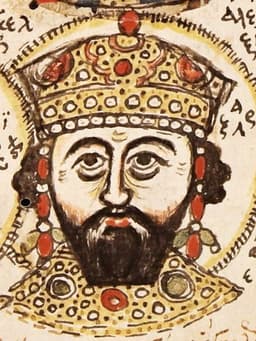
Alexios III Angelos
Emperor · Medieval
37.5Total
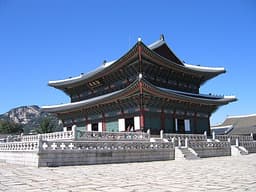
King Yeonsangun of Joseon
Emperor · Medieval
39.1Total
Basic Information
Born
1153
1476
Died
1211
1506
Era
Medieval
Medieval
Nationality
Byzantine Empire
Korea
Occupation
Emperor
Emperor
Civilization
Western
Eastern
Score Comparison
Military (10%)
20.0
20.0
Political (20%)
32.1
32.1
Influence (20%)
45.5
48.6
Legacy (20%)
35.8
41.7
Leadership (15%)
39.0
34.6
Strategy (15%)
45.0
45.0
TOTAL
37.5
39.1
Alexios III Angelos — Complete Timeline
1195 AD
Usurpation of the throne from Isaac IIPolitical Action◆ Major
Alexios III Angelos overthrew his brother Isaac II in a palace coup, blinding and imprisoning him. Alexios III then ruled as emperor, but his reign was marked by corruption, fiscal mismanagement, and the weakening of Byzantine defenses.
CoupDynastic ConflictUsurpation
Impact: nationaldestructive
1203 AD
Flight from Constantinople during the Fourth CrusadePolitical Action◆ Major
When the Fourth Crusade besieged Constantinople in 1203, Alexios III fled the city with the imperial treasury, abandoning his subjects. His cowardly flight left the capital defenseless and allowed the crusaders to restore Isaac II and Alexios IV, but also set the stage for the eventual sack of Constantinople in 1204.
Fourth CrusadeFlightAbandonment
Impact: regionaltragic
1211 AD
Capture and death in Nicaean captivityPolitical Action
Alexios III was captured by Theodore I Laskaris, the Nicaean emperor, after attempting to regain power with Seljuk support. He was imprisoned in a monastery in Nicaea, where he died later that year, ending his attempts to reclaim the Byzantine throne.
CaptivityNicaean EmpireSeljuk Alliance
tragic
King Yeonsangun of Joseon — Complete Timeline
1498 AD
First Literati Purge of 1498Political Action◆ Major
Yeonsangun ordered the execution and exile of many scholar-officials from the Sarim faction, accusing them of criticizing his rule. This purge intensified factional conflict and established his reputation for tyranny.
Political PurgeFactionalismTyranny
Impact: nationaldestructive
1504 AD
Second Literati Purge of 1504Political Action◆ Major
Yeonsangun launched a second, more brutal purge, executing hundreds of officials and their families. He targeted those involved in his mother's death and anyone who opposed his excesses, further destabilizing the court.
Political PurgeMassacreTyranny
Impact: nationaldestructive
Destruction of the Office of Special CounselorsPolitical Action
Yeonsangun abolished the Office of Special Counselors (Hongmungwan) and other advisory bodies, centralizing power in his own hands. This act removed checks on royal authority and allowed his tyranny to go unchecked.
Institutional DestructionAutocracy
Impact: nationaldestructive
1506 AD
Deposition by the Jungjong CoupPolitical Action
A group of officials and military leaders staged a coup, deposing Yeonsangun and exiling him to Ganghwa Island. He was the first Joseon king to be forcibly removed from power, and his half-brother Jungjong was installed as king.
CoupDepositionJoseon Dynasty
Impact: nationaldestructive
This comparison has not been analyzed yet.
One-time AI generation (~1 minute). Scores and timeline are already available below.
Rankings
🥇
King Yeonsangun of JoseonLeader
Mil: 20.0Pol: 32.1Inf: 48.6
39.1
🥈
Alexios III Angelos
Mil: 20.0Pol: 32.1Inf: 45.5
37.5
+1.6 behind
How This Comparison Works
Algorithm
Each figure is scored on 6 dimensions (0—100 scale) based on structured historical data: Military (10%), Political (20%), Influence (20%), Legacy (20%), Leadership (15%), Strategy (15%). The weighted total produces the final ranking.
Data Sources
Scores are computed from structured sub-indicators in the database. Scale factors adjust for era (Ancient ×0.85, Modern ×1.0) and civilization size (Eastern ×1.05, Other ×0.80) to account for differences in population and military scale.
Maximum 3 Figures
Comparisons are limited to 2—3 figures to ensure readability and statistical meaningfulness.
Error Margins
±5 points per dimension — Sub-scores are derived from historical records with inherent uncertainty. Two figures within 5 points on a dimension should be considered roughly equivalent in that area.
Total Score Accuracy
±3 points overall — The weighted combination of 6 dimensions produces a total score with approximately ±3 points of uncertainty. Differences of less than 3 points are not statistically significant— the figures are effectively tied.
Known Limitations
- Historical records are incomplete and uneven across civilizations
- Figures from oral-tradition societies may be underrepresented
- Occupation labels can misclassify multi-role figures
- Scores measure capability and impact, not moral character
- Quantitative scoring is a comparison tool, not absolute truth
Capability Radar
Military (10%) — Battles & Warfare
Battles
5
5
Win Rate
5
5
Expansion
5
5
Political (20%) — Governance & Reform
Reform
10
10
Diplomacy
10
10
Economy
10
10
Influence (20%) — Cultural & Global Reach
Cultural
5
20
Global
5
10
Legacy (20%) — Historical Impact
Historical
10
30
Longevity
5
20
Leadership (15%) — Power & Stability
Tenure
20
30
Stability
5
10
Strategy (15%) — Tactics & Innovation
Strategy
5
5
Tactics
5
5
Reform
5
5
Similar Comparisons
Comments & Discussion
No comments yet. Be the first to share your thoughts!