Loading...
Alfonso II of Asturias vs Julius Caesar
Julius Caesar leads by 28.2 pts · 2 figures compared
…
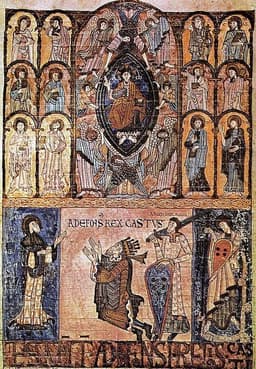
Alfonso II of Asturias
Emperor · Medieval
54.6Total

Julius Caesar
General · Ancient
82.8Total
Basic Information
Born
760
-100
Died
842
-44
Era
Medieval
Ancient
Nationality
Asturias
Roman Republic
Occupation
Emperor
General
Civilization
Western
Western
Score Comparison
Military (10%)
50.0
88.0
Political (20%)
39.4
78.0
Influence (20%)
61.0
85.0
Legacy (20%)
52.0
82.0
Leadership (15%)
74.0
80.0
Strategy (15%)
43.7
85.0
TOTAL
54.6
82.8
Alfonso II of Asturias — Complete Timeline
791 AD
Established the capital of Asturias at OviedoPolitical Action◆ Major
Alfonso II moved the Asturian capital from Pravia to Oviedo, which he fortified and developed. He built churches, palaces, and defensive walls, making Oviedo the political and cultural center of the kingdom.
Capital CityUrban DevelopmentAsturias
Impact: nationalconstructive
794 AD
Defeated Umayyad forces at the Battle of LutosWar◆ Major
Alfonso II's army defeated an Umayyad raiding force at the Battle of Lutos in the Cantabrian mountains. The victory prevented a major Muslim incursion into Asturias and demonstrated the kingdom's growing military capability.
BattleAsturiasUmayyad
Impact: regionalconstructive
798 AD
Initiated diplomatic relations with the Carolingian EmpirePolitical Action
Alfonso II sent envoys to the court of Charlemagne, establishing diplomatic ties between Asturias and the Carolingian Empire. This alliance provided mutual support against the Umayyads and linked Asturias to broader European Christian networks.
DiplomacyCarolingianAsturias
Impact: regionalconstructive
813 AD
Discovered the tomb of Saint James the GreatCultural
According to tradition, a hermit named Pelagius discovered a tomb in the forest of Libred
Religious DiscoveryPilgrimageSantiago de Compostela
Impact: globalconstructive
Julius Caesar — Complete Timeline
58 BC
Gallic WarsWar◆ Major
Caesar, as proconsul of Gaul, launched a series of campaigns that conquered all of Gaul (modern France, Belgium, and parts of Switzerland). He fought numerous battles, including against the Helvetii, the Belgae, and the Gallic chieftain Vercingetorix. The wars brought immense wealth and a loyal army to Caesar.
Gallic WarsConquestRoman Expansion
Impact: regional
49 BC
Crossing the RubiconPolitical Action◆ Major
Caesar led Legio XIII across the Rubicon River into Italy, defying the Roman Senate's order to disband his army. This act triggered a civil war against Pompey and the Optimates, ultimately leading to Caesar's dictatorship and the end of the Roman Republic.
Roman Civil WarEnd of RepublicPower Struggle
Impact: global
48 BC
Battle of PharsalusWar◆ Major
Caesar's outnumbered army defeated the larger forces of Pompey the Great at Pharsalus in Greece. Caesar's tactical use of a reserve line to counter Pompey's cavalry charge proved decisive. Pompey fled to Egypt, where he was assassinated, leaving Caesar as the undisputed master of the Roman world.
Roman Civil WarBattleDecisive Victory
Impact: regional
44 BC
Appointment as Dictator for LifePolitical Action◆ Major
The Roman Senate appointed Caesar dictator perpetuo (dictator for life), granting him unprecedented personal power. This move concentrated military, legislative, and judicial authority in one person, effectively ending the Roman Republic's traditional system of checks and balances and alarming many senators.
DictatorshipEnd of RepublicPower Consolidation
Impact: regionaldestructive
Assassination on the Ides of MarchPolitical Action◆ Major
A group of Roman senators, led by Marcus Junius Brutus and Gaius Cassius Longinus, stabbed Caesar to death at a meeting of the Senate in the Theatre of Pompey. The assassination was intended to restore the Republic, but instead triggered another civil war that led to the rise of the Roman Empire.
AssassinationRoman PoliticsEnd of Republic
Impact: globaldestructive
Expert Analysis
alfonso-ii-of-asturias-vs-julius-caesar
### The General and the King: Two Paths to Power in a Fractured World
In the year 44 BCE, on a marble floor in Rome’s Theater of Pompey, a dictator bled out from twenty-three stab wounds, his body crumpled at the feet of his assassins. Seven hundred miles to the west and eight centuries later, in the damp forests of northern Iberia, a king knelt in prayer before a newly discovered tomb, claiming it held the bones of an apostle. These two scenes—one of violent rupture, the other of quiet devotion—capture the vast chasm between two men who shaped Western history: Julius Caesar and Alfonso II of Asturias. Both were rulers, both were survivors, yet their worlds, their ambitions, and their legacies could hardly be more different.
### Origins
Julius Caesar was born into the dying embers of the Roman Republic, a world of senatorial intrigue, civil war, and imperial ambition. His family, the Julii, claimed descent from the goddess Venus, but their political fortunes were modest. Caesar’s upbringing in a chaotic Rome taught him that power was a prize to be seized, not inherited. He learned rhetoric in Rhodes, studied military tactics in Asia Minor, and absorbed the lesson that in a republic tearing itself apart, the man who could command armies and win victories could command everything.
Alfonso II, by contrast, emerged from a world of ruin and resistance. When he was born in 760, the Visigothic kingdom of Hispania had been crushed by the Umayyad Caliphate seventy years earlier. The Christian resistance had retreated into the Cantabrian Mountains, a tiny kingdom of Asturias barely clinging to existence. Alfonso’s father, King Fruela I, was assassinated, and the young prince was sent to a monastery. His world was not one of marble forums and senatorial debates, but of stone fortresses, mountain passes, and the constant threat of Muslim raids. Where Caesar inherited a decaying superpower, Alfonso inherited a fragile outpost.
### Rise to Power
Caesar’s rise was a masterclass in calculated risk. He climbed the political ladder of the Republic—quaestor, aedile, praetor—but his breakthrough came with the governorship of Gaul. Over eight years, from 58 to 50 BCE, he conquered a territory larger than Italy, amassing a veteran army and a personal fortune. When the Senate demanded he disband his legions, he instead crossed the Rubicon River in 49 BCE, a flagrant act of war against the Republic. He defeated his rival Pompey, chased him to Egypt, and returned to Rome as dictator. His path was one of ambition, violence, and the systematic dismantling of a system that could no longer contain him.
Alfonso II’s ascent was quieter but no less precarious. He became king in 791 after a period of instability, and his first act was to establish a new capital. He moved the Asturian court from Pravia to Oviedo, a site he fortified with walls, a palace, and churches. This was not a conquest but a consolidation—a king building a kingdom from a handful of valleys. In 794, he achieved a rare military victory at the Battle of Lutos, where his mountain warriors ambushed and destroyed a Umayyad raiding force. It was a defensive triumph, not an expansionist one. And in 798, he sent envoys to Charlemagne, the great Frankish emperor, establishing diplomatic ties that linked his tiny realm to the wider Christian world. Alfonso rose not by smashing a republic, but by patiently assembling the pieces of a fledgling nation.
### Leadership & Governance
Caesar governed like a storm. As dictator, he reformed the calendar, granted citizenship to provincials, initiated public works, and centralized power in his own hands. His military genius was unmatched—his sieges at Alesia and his lightning campaigns in Gaul are still studied in war colleges. But his political wisdom was flawed: he pardoned his enemies, underestimated their hatred, and disdained the republican traditions that still held emotional power. He ruled as a monarch in all but name, and that arrogance cost him his life.
Alfonso II governed like a shepherd. His Leadership score of 88.1 rivals Caesar’s 82.0, but it was a different kind of leadership—patient, pious, and institutional. He built churches, codified the liturgy, and most famously, in 813, claimed the discovery of the tomb of Saint James the Great at Compostela. This was not a military conquest but a cultural and spiritual one. The shrine would become Santiago de Compostela, one of Christendom’s greatest pilgrimage sites, drawing thousands across Europe and cementing Asturias as a beacon of Christian resistance. Alfonso’s political score of 72.0 reflects a ruler who understood that a kingdom’s survival depended not just on swords, but on symbols, alliances, and faith.
### Triumph & Tragedy
Caesar’s greatest triumph was the conquest of Gaul, which made him wealthy, famous, and feared. His tragedy was the Ides of March—44 BCE—when the Senate he had tried to reform butchered him on the floor. His death plunged Rome into another civil war, and the Republic he had strangled gave way to an empire he never lived to see.
Alfonso’s greatest triumph was the discovery of the tomb, a stroke of political and spiritual genius that transformed his small kingdom into the cradle of the Reconquista. His tragedy was the ephemeral nature of his work: he died in 842, and within a generation, Asturias would fracture and transform. Yet the pilgrimage route he helped create outlived him by a thousand years.
### Character & Destiny
Caesar was driven by an insatiable need for glory—*“Veni, vidi, vici”* was not a boast but a creed. His personality was magnetic, ruthless, and reckless. He believed he could bend history to his will, and for a time, he did. But his destiny was a warning: the Republic could not be saved by a single man, and the price of his ambition was his life.
Alfonso II, called “the Chaste,” was a man of restraint and faith. He did not seek to conquer the world; he sought to preserve a remnant. His destiny was not to die by a blade but to be remembered as a founder—not of an empire, but of a tradition. Where Caesar’s personality shattered the old order, Alfonso’s built something new from the rubble.
### Legacy
Caesar’s legacy is colossal. His name became synonymous with imperial ambition, his military tactics are still taught, and his reforms reshaped Western governance. Yet he is remembered as a destroyer—the man who killed the Republic.
Alfonso II’s legacy is quieter but equally profound. He is remembered as the king who gave Spain its patron saint and its national myth. The pilgrimage to Santiago de Compostela became a unifying force in medieval Europe, and Alfonso’s Asturias became the seed from which the Christian kingdoms of Spain would grow. His legacy score of 65.7 is lower than Caesar’s 82.0, but in the long arc of history, his influence on the shape of Europe is undeniable.
### Conclusion
One man crossed a river and changed the course of history; another knelt in a forest and discovered a tomb. Caesar’s path was one of conquest, ambition, and violent death. Alfonso’s was one of preservation, faith, and quiet endurance. Both were leaders, but they answered different questions: Caesar asked, “How can I take power?” Alfonso asked, “How can I build something that lasts?” In the end, the general’s empire crumbled, but the king’s shrine still draws pilgrims. Perhaps the truest measure of leadership is not how much you conquer, but what survives you.
Rankings
🥇
Julius CaesarLeader
Mil: 88.0Pol: 78.0Inf: 85.0
82.8
🥈
Alfonso II of Asturias
Mil: 50.0Pol: 39.4Inf: 61.0
54.6
+28.2 behind
How This Comparison Works
Algorithm
Each figure is scored on 6 dimensions (0—100 scale) based on structured historical data: Military (10%), Political (20%), Influence (20%), Legacy (20%), Leadership (15%), Strategy (15%). The weighted total produces the final ranking.
Data Sources
Scores are computed from structured sub-indicators in the database. Scale factors adjust for era (Ancient ×0.85, Modern ×1.0) and civilization size (Eastern ×1.05, Other ×0.80) to account for differences in population and military scale.
Maximum 3 Figures
Comparisons are limited to 2—3 figures to ensure readability and statistical meaningfulness.
Error Margins
±5 points per dimension — Sub-scores are derived from historical records with inherent uncertainty. Two figures within 5 points on a dimension should be considered roughly equivalent in that area.
Total Score Accuracy
±3 points overall — The weighted combination of 6 dimensions produces a total score with approximately ±3 points of uncertainty. Differences of less than 3 points are not statistically significant— the figures are effectively tied.
Known Limitations
- Historical records are incomplete and uneven across civilizations
- Figures from oral-tradition societies may be underrepresented
- Occupation labels can misclassify multi-role figures
- Scores measure capability and impact, not moral character
- Quantitative scoring is a comparison tool, not absolute truth
Capability Radar
Military (10%) — Battles & Warfare
Battles
15
95
Win Rate
20
92
Expansion
15
97
Political (20%) — Governance & Reform
Reform
30
90
Diplomacy
40
85
Economy
35
82
Influence (20%) — Cultural & Global Reach
Cultural
55
88
Global
50
94
Legacy (20%) — Historical Impact
Historical
70
95
Longevity
65
96
Leadership (15%) — Power & Stability
Tenure
60
75
Stability
50
60
Strategy (15%) — Tactics & Innovation
Strategy
20
94
Tactics
25
96
Reform
10
88
Similar Comparisons
Comments & Discussion
TogaTactician6/17/2026
Caesar’s invasion of Britain in 55 BCE was a glorified reconnaissance trip with no lasting gains—just political theater for the Roman mob. Alfonso II actually held ground against the Umayyads, using the rugged Cantabrian mountains as a natural fortress. One man conquered for show, the other for survival. I’d rather have a king who wins defensive wars than a general who writes his own propaganda.
星尘考古员6/17/2026
说阿方索二世“发现”圣地亚哥墓?别逗了,这纯粹是政治营销。公元9世纪,阿斯图里亚斯王国急需一个凝聚民心的象征。对比凯撒在高卢的真实战利品和地形测绘,阿方索的所谓“发现”更像剧本。凯撒用现实力量巩固统治,而阿方索依赖神话。现实总比传说更有说服力,哪怕传说更浪漫。
ReformRoots6/17/2026
Comparing these two is like comparing a bonfire to a candle. Caesar dismantled a rotting republic and planted seeds for empire—his calendar alone shaped Western timekeeping for 1,600 years. Alfonso II? He spent forty years hiding in a mountain enclave, leaving barely a tax record. Caesar failed, but his failures reshaped the world. Alfonso succeeded, but in keeping his kingdom small and obscure.
折戟罗马人6/17/2026
凯撒死得轰轰烈烈,阿方索活得默默无闻——这本身就说明了一切。公元前44年,凯撒的遇刺开启了一场内战,最终终结了五百年共和国。阿方索二世呢?他842年去世时,阿斯图里亚斯依然是个偏安一隅的小王国。凯撒的死改变了历史进程;阿方索的死,只是两年后换了另一个国王。伟大与否,看的是你死后世界是否还在谈论你。
LegionLoreMaster6/17/2026
Caesar’s crossing of the Rubicon was an illegal act of treason that sparked a civil war. Alfonso II never faced such a choice—he was a legitimate monarch in a shrinking Christian foothold. Caesar was an ambitious rogue who gambled on chaos; Alfonso was a caretaker king who preserved what little remained. I respect the rebel over the remnant, because rebels risk everything, while caretakers just hold the line.