Loading...
Alfonso VII of Leon vs Julius Caesar
Julius Caesar leads by 27.0 pts · 2 figures compared
…
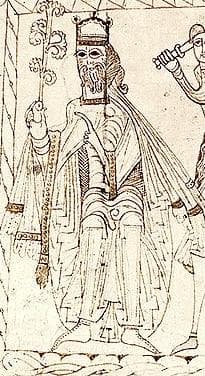
Alfonso VII of Leon
Emperor · Medieval
55.8Total

Julius Caesar
General · Ancient
82.8Total
Basic Information
Born
1105
-100
Died
1157
-44
Era
Medieval
Ancient
Nationality
Leon
Roman Republic
Occupation
Emperor
General
Civilization
Western
Western
Score Comparison
Military (10%)
72.5
88.0
Political (20%)
68.0
78.0
Influence (20%)
58.0
85.0
Legacy (20%)
48.3
82.0
Leadership (15%)
40.0
80.0
Strategy (15%)
57.5
85.0
TOTAL
55.8
82.8
Alfonso VII of Leon — Complete Timeline
1135 AD
Coronation as Emperor of All SpainPolitical Action◆ Major
Alfonso VII was crowned Emperor of All Spain in the Cathedral of Leon, claiming imperial authority over all Christian and Muslim rulers in the Iberian Peninsula. This coronation asserted Leon's supremacy over Castile, Aragon, and Navarre.
CoronationImperial TitleLeon
Impact: regionalconstructive
1147 AD
Conquest of AlmeriaWar◆ Major
Alfonso VII led a coalition of Leon, Castile, Genoese, and Pisan forces to capture the wealthy Moorish port city of Almeria. The conquest opened the Mediterranean to Christian trade and was a major victory in the Reconquista.
ReconquistaConquestAlmeria
Impact: regionalconstructive
1151 AD
Treaty of TudejénPolitical Action
Alfonso VII signed the Treaty of Tudej
TreatyReconquistaPartition
Impact: regionalconstructive
1157 AD
Death and Division of the KingdomPolitical Action◆ Major
Alfonso VII died, dividing his kingdom between his sons: Sancho III received Castile and Ferdinand II received Leon. This division reversed the union achieved by his father and weakened Christian power in Iberia.
SuccessionDivisionLeonCastile
Impact: regionaldestructive
Julius Caesar — Complete Timeline
58 BC
Gallic WarsWar◆ Major
Caesar, as proconsul of Gaul, launched a series of campaigns that conquered all of Gaul (modern France, Belgium, and parts of Switzerland). He fought numerous battles, including against the Helvetii, the Belgae, and the Gallic chieftain Vercingetorix. The wars brought immense wealth and a loyal army to Caesar.
Gallic WarsConquestRoman Expansion
Impact: regional
49 BC
Crossing the RubiconPolitical Action◆ Major
Caesar led Legio XIII across the Rubicon River into Italy, defying the Roman Senate's order to disband his army. This act triggered a civil war against Pompey and the Optimates, ultimately leading to Caesar's dictatorship and the end of the Roman Republic.
Roman Civil WarEnd of RepublicPower Struggle
Impact: global
48 BC
Battle of PharsalusWar◆ Major
Caesar's outnumbered army defeated the larger forces of Pompey the Great at Pharsalus in Greece. Caesar's tactical use of a reserve line to counter Pompey's cavalry charge proved decisive. Pompey fled to Egypt, where he was assassinated, leaving Caesar as the undisputed master of the Roman world.
Roman Civil WarBattleDecisive Victory
Impact: regional
44 BC
Appointment as Dictator for LifePolitical Action◆ Major
The Roman Senate appointed Caesar dictator perpetuo (dictator for life), granting him unprecedented personal power. This move concentrated military, legislative, and judicial authority in one person, effectively ending the Roman Republic's traditional system of checks and balances and alarming many senators.
DictatorshipEnd of RepublicPower Consolidation
Impact: regionaldestructive
Assassination on the Ides of MarchPolitical Action◆ Major
A group of Roman senators, led by Marcus Junius Brutus and Gaius Cassius Longinus, stabbed Caesar to death at a meeting of the Senate in the Theatre of Pompey. The assassination was intended to restore the Republic, but instead triggered another civil war that led to the rise of the Roman Empire.
AssassinationRoman PoliticsEnd of Republic
Impact: globaldestructive
Expert Analysis
alfonso-vii-of-leon-vs-julius-caesar
# The Emperor and the Dictator: Two Paths to Power in Divided Worlds
On a winter morning in 49 BCE, a middle-aged Roman general stood with his army on the banks of a small river in northern Italy. The Rubicon was little more than a stream, but crossing it meant civil war—an act of treason against the Roman Senate. Julius Caesar hesitated, then uttered a phrase that would echo through history: "The die is cast." He crossed.
Almost twelve hundred years later, in the spring of 1135, another ruler entered the Cathedral of Leon in northern Spain. Crowned with a diadem that had not been seen in centuries, Alfonso VII proclaimed himself Emperor of All Spain. Unlike Caesar, his coronation was a moment of unity, not rebellion—a claim to lead a fractured Christian world against the Moors. Two men, both claiming supreme authority. Two worlds, both poised on the edge of transformation. Why did one end in assassination and the other in quiet division?
Origins
Julius Caesar was born into a patrician family that had lost much of its political clout. Rome in the first century BCE was a republic in name only, torn apart by civil wars between populists and oligarchs. The young Caesar grew up watching his uncle Gaius Marius purge political enemies, then saw Marius's rival Sulla do the same. Survival meant cunning, ambition, and a willingness to break rules. Caesar learned early that in Rome, reputation was currency and risk was the only path to greatness.
Alfonso VII came into a very different world. Born in 1105, he inherited not a republic but a patchwork of Christian kingdoms fighting for survival against Muslim al-Andalus. His grandfather, Alfonso VI, had conquered Toledo; his father, Raymond of Burgundy, was a French nobleman. Young Alfonso lost his father at two and his mother at three, becoming a pawn in the power games of Galician nobles. While Caesar learned politics in the streets of Rome, Alfonso learned it in the shadow of castle walls and the constant threat of Moorish raids.
Rise to Power
Caesar’s path was a masterclass in calculated ambition. He climbed the Roman political ladder—quaestor, aedile, praetor—borrowing enormous sums to fund games and bribes. At forty, he secured the governorship of Gaul, a backwater province that became his launching pad. Over eight years, he conquered modern France and Belgium, built a loyal army, and wrote his own propaganda in the *Commentaries*. When the Senate ordered him to disband his army, he chose war.
Alfonso VII’s rise was quieter but no less determined. Crowned king of Leon at twenty-one in 1126, he faced rebellious nobles and a rival kingdom in Castile. Unlike Caesar, he could not conquer his way to power—he had to negotiate. Through marriage alliances, treaties, and patient diplomacy, he reunited Leon and Castile. His greatest moment came in 1135 when he claimed the title Emperor of All Spain. But this was not Caesar’s imperium. Alfonso’s empire was a federation of Christian kingdoms, each with its own laws and lords. He was first among equals, not a dictator.
Leadership and Governance
Caesar governed as a revolutionary. As dictator, he reformed the calendar, granted citizenship to Gauls, and redistributed land to veterans. He centralized power, weakened the Senate, and packed it with his supporters. His military genius was unmatched—at Alesia, he defeated a Gallic army three times his size through siegecraft and discipline. But his political wisdom was flawed. He pardoned enemies who would later kill him, and he humiliated the Senate by treating it as a rubber stamp.
Alfonso VII governed as a unifier. His military campaigns were coalition efforts: in 1147, he captured the Moorish port of Almería with Genoese and Pisan allies, splitting the spoils. His Treaty of Tudején in 1151 with Ramon Berenguer IV of Barcelona divided future conquests, creating a framework for the Reconquista that would last centuries. Where Caesar broke institutions, Alfonso built them. His empire was a network of mutual obligations, not a single command.
Triumph and Tragedy
Caesar’s triumph was his conquest of Gaul and his victory in the civil war. His tragedy was the Ides of March, 44 BCE, when sixty senators stabbed him to death. He had achieved supreme power but failed to secure its legitimacy. His assassins called themselves liberators; history calls them the architects of the empire Caesar’s heir Augustus would build.
Alfonso’s triumph was his imperial coronation, a moment of Christian unity against the Moors. His tragedy came after his death in 1157. Fearing civil war, he divided his kingdom between his sons: Castile for Sancho III, Leon for Ferdinand II. The division weakened Christian Spain for a generation. Where Caesar’s death led to consolidation, Alfonso’s led to fragmentation.
Character and Destiny
Caesar was a gambler. He crossed the Rubicon, fought at Pharsalus against overwhelming odds, and trusted his luck. His arrogance made him great and killed him. "It is not the well-fed long-haired men I fear," he said of his assassins, "but the pale and hungry-looking ones." He saw the threat but could not bring himself to act.
Alfonso was a builder. He thought in generations, not moments. His alliances, his treaties, his careful division of conquests—all aimed at creating a durable Christian Spain. He lacked Caesar’s charisma and military genius, but he had something Caesar did not: a sense of limits. He knew he could not rule alone.
Legacy
Caesar’s legacy is the Roman Empire. His name became a title—Kaiser, Tsar. He transformed Western politics by showing that one man could seize absolute power and, through reform, make it acceptable. But his path also showed the cost: the death of a republic.
Alfonso VII’s legacy is more modest but more enduring. He kept the idea of a unified Spain alive during a fractured age. His imperial title may have been hollow, but it foreshadowed the Catholic Monarchs who would complete the Reconquista three centuries later. He proved that great things could be done through patience and coalition.
Conclusion
Standing at the Rubicon, Caesar chose to gamble everything on his own genius. Standing in the Cathedral of Leon, Alfonso VII chose to share power and build slowly. One died by the sword, the other in his bed. One created an empire that lasted five centuries, the other a kingdom that would take three hundred years to reunite. Their stories remind us that greatness is not just about what you achieve, but how you achieve it—and that the most dramatic paths are not always the ones that last.
Rankings
🥇
Julius CaesarLeader
Mil: 88.0Pol: 78.0Inf: 85.0
82.8
🥈
Alfonso VII of Leon
Mil: 72.5Pol: 68.0Inf: 58.0
55.8
+27.0 behind
How This Comparison Works
Algorithm
Each figure is scored on 6 dimensions (0—100 scale) based on structured historical data: Military (10%), Political (20%), Influence (20%), Legacy (20%), Leadership (15%), Strategy (15%). The weighted total produces the final ranking.
Data Sources
Scores are computed from structured sub-indicators in the database. Scale factors adjust for era (Ancient ×0.85, Modern ×1.0) and civilization size (Eastern ×1.05, Other ×0.80) to account for differences in population and military scale.
Maximum 3 Figures
Comparisons are limited to 2—3 figures to ensure readability and statistical meaningfulness.
Error Margins
±5 points per dimension — Sub-scores are derived from historical records with inherent uncertainty. Two figures within 5 points on a dimension should be considered roughly equivalent in that area.
Total Score Accuracy
±3 points overall — The weighted combination of 6 dimensions produces a total score with approximately ±3 points of uncertainty. Differences of less than 3 points are not statistically significant— the figures are effectively tied.
Known Limitations
- Historical records are incomplete and uneven across civilizations
- Figures from oral-tradition societies may be underrepresented
- Occupation labels can misclassify multi-role figures
- Scores measure capability and impact, not moral character
- Quantitative scoring is a comparison tool, not absolute truth
Capability Radar
Military (10%) — Battles & Warfare
Battles
55
95
Win Rate
60
92
Expansion
65
97
Political (20%) — Governance & Reform
Reform
50
90
Diplomacy
60
85
Economy
45
82
Influence (20%) — Cultural & Global Reach
Cultural
45
88
Global
35
94
Legacy (20%) — Historical Impact
Historical
50
95
Longevity
40
96
Leadership (15%) — Power & Stability
Tenure
65
75
Stability
50
60
Strategy (15%) — Tactics & Innovation
Strategy
55
94
Tactics
50
96
Reform
40
88
Similar Comparisons
Comments & Discussion
LEGIO_XIII6/17/2026
Caesar crossing the Rubicon was a calculated gamble by a military genius who understood that hesitation loses wars. Alfonso’s "coronation" was a theatrical farce—he never controlled Toledo properly, let alone all Spain. Caesar annexed Gaul with 60 battles; Alfonso barely held his coalition together for a single campaign. One changed history; the other performed a costume party for bishops. Fact: Caesar’s reforms outlasted him by centuries; Alfonso’s empire dissolved within his own lifetime. Real